

5 Rules for Japanese Gifts & Souvenirs: Smooth Living in Japan 🇯🇵🎁
Hello, future Japan adventurers! Are you dreaming of living and working in the beautiful land of the rising sun? As your teacher from a Japanese language school, I know that understanding Japanese culture is just as important as mastering its language. And when it comes to culture, few things are as central as the art of gift-giving, known as 「お土産」(omiyage)!
For us Filipinos, giving and receiving gifts is a big part of our culture. We love sharing our blessings and showing appreciation, just like our Japanese friends. However, the nuances in Japan can be a little different. Don’t worry, though! With this guide, you’ll not only understand the “why” and “how” of Japanese gift-giving but also feel confident embracing this beautiful tradition. Let’s learn these 5 essential rules to make your life in Japan smoother and more enjoyable! 🎉
1. Rule No. 1: Understanding “Omiyage” – More Than Just a Souvenir 💡
When you hear 「お土産」(omiyage), you might think “souvenir.” While it is a souvenir, its cultural meaning in Japan goes much deeper. An omiyage is a thoughtful gift, often a local specialty, brought back from a trip or outing for family, friends, neighbors, or colleagues. It’s a way to:
- Express Gratitude: Thank someone for looking after your home, plants, or pets while you were away.
- Share an Experience: Share a taste of your trip with those who couldn’t come.
- Show Respect: Acknowledge a host’s hospitality or a colleague’s hard work.
- Build Relationships: Maintain harmony and positive connections within your community.
💡 Teacher’s Tip: “Omiyage” vs. “Souvenir”
In English, we often buy souvenirs for ourselves. In Japan, an omiyage is primarily bought for others. Think of it as a gesture of appreciation and sharing. When you travel, consider who you’ll be giving omiyage to, especially your future colleagues and neighbors!
What makes a good Omiyage?
-
Local Specialties (地元の特産品 – jimoto no tokusanhin):
This is key! Whether it’s a specific type of sweet from Kyoto or a regional snack from Hokkaido, choosing something unique to the place you visited is highly appreciated. This shows you thought about where you went and those you’re giving it to.
-
Individually Wrapped Items (個包装 – ko-housou):
Most Japanese sweets and snacks are already individually wrapped, which is perfect for sharing in an office or classroom. It’s hygienic and convenient, preventing contamination and making distribution easy.
-
Edible Goods (食べ物 – tabemono):
Snacks, cookies, chocolates, and local alcoholic beverages are very common. Edible gifts are consumed and don’t take up space, making them a safe choice. Make sure to check expiration dates!
Common Omiyage Situations & Phrases
| Situation | Japanese Phrase | Meaning/Context |
|---|---|---|
| Returning from a trip | これ、つまらないものですが… (Kore, tsumaranai mono desu ga…) |
“This is just a trifle…” (A humble way to present a gift, despite its value). |
| Thanking for help | いつもお世話になっております。 (Itsumo osewa ni natte orimasu.) |
“Thank you for always taking care of me.” (Often said when giving a gift of thanks). |
| Giving as a housewarming gift | 引っ越しのご挨拶です。 (Hikkoshi no go-aisatsu desu.) |
“This is a greeting for our move.” (When moving into a new neighborhood, often give small gifts to neighbors). |
2. Rule No. 2: The Art of Presentation – Packaging is Key! 🎀
In Japan, the presentation of a gift can be just as important as the gift itself. This isn’t about extravagance, but about showing respect and care. Think about how much effort goes into wrapping even simple items in Japanese stores; it’s part of the culture of hospitality and consideration.
Key Elements of Japanese Gift Presentation:
-
Beautiful Wrapping (包装 – housou):
A gift should be neatly and beautifully wrapped. Many department stores offer exquisite gift wrapping services. Even if you wrap it yourself, aim for neatness. Wrinkled or messy wrapping can imply a lack of care.
-
Noshi (のし) and Mizuhiki (水引):
These traditional decorative elements are crucial for formal gifts. Noshi is a folded paper decoration, and Mizuhiki are decorative cords made from stiffened paper. The type of Mizuhiki knot and color indicate the occasion.
-
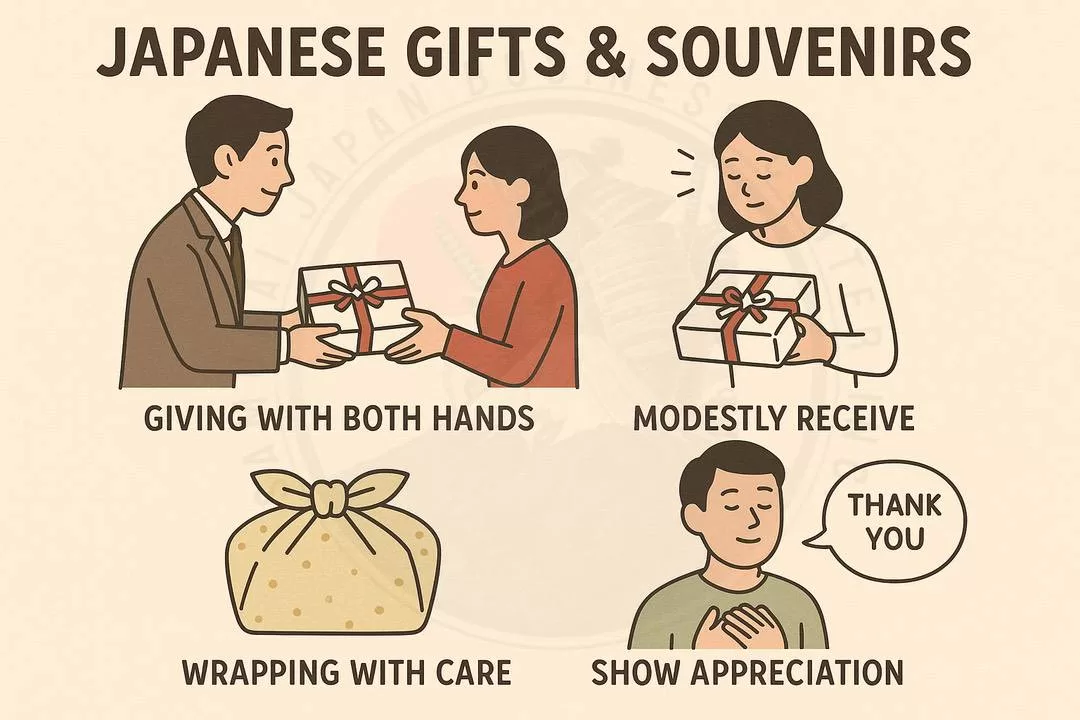
Giving with Both Hands:
Always present a gift with both hands. This gesture signifies respect and sincerity. When giving something, avoid tossing it or sliding it across a table. A slight bow while presenting the gift adds to the respectful gesture.
⚠️ Common Mistake Alert: Numbers to Avoid!
Be careful with the number of items you give. Avoid giving gifts in sets of 4 (四 – shi), which sounds like “death” (死 – shi), and 9 (九 – ku), which sounds like “suffering” (苦 – ku). These are considered unlucky. Even numbers are generally preferred, but odd numbers other than 9 are fine too.
3. Rule No. 3: Timing is Everything – When to Give (and Not to Give) ⏱️
The timing of your gift can be as important as the gift itself. Being mindful of when to present your gift shows thoughtfulness and cultural awareness.
-
Upon Arrival (到着時 – touchaku-ji):
If you’re visiting someone’s home, present your omiyage shortly after you’ve been welcomed, typically before sitting down to eat or talk for too long. It’s a formal greeting and a thank you for their hospitality.
-
Seasonal Gifts: Oseibo (お歳暮) & Ochugen (お中元):
These are traditional gift-giving seasons:
- Ochugen (お中元): Given in mid-summer (usually July 15) to express gratitude to those who have helped you.
- Oseibo (お歳暮): Given at year-end (usually December 13-20) as a token of appreciation for continued support.
These are often given to superiors, important clients, or people you are indebted to. While you might not participate in this immediately, understanding them is crucial.
-
When NOT to Give:
Avoid giving gifts in situations where it might cause awkwardness or imply bribery. For instance, do not give gifts right before or during an important negotiation, or if it might put the receiver in an uncomfortable position. Also, avoid giving gifts that are overly expensive, as this might burden the receiver with an obligation to reciprocate.
💡 Teacher’s Tip: “Modest” Gifts
While the monetary value isn’t the primary focus, the thought behind the gift is. Generally, gifts aren’t meant to be extravagant. A reasonable price range shows thoughtfulness without creating a burden of reciprocity. Focus on quality and appropriateness over luxury.
4. Rule No. 4: The Art of Receiving Gifts – Humility & Gratitude 🙏
Just as important as giving is knowing how to receive a gift gracefully. Japanese etiquette often involves a humble and appreciative response, even if you are truly delighted.
-
Express Humility & Gratitude:
When offered a gift, it’s polite to initially decline it once or twice, saying something like 「恐縮です」(kyoushuku desu – “I’m humbled”) or 「お構いなく」(okamai naku – “Please don’t bother”) before accepting with profound thanks. This shows you don’t take their generosity for granted.
Once accepted, a sincere 「ありがとうございます」(Arigato gozaimasu) is essential, accompanied by a bow.
-
Do Not Open Immediately:
Unless the giver specifically encourages you to open the gift right away, it’s generally considered polite to set it aside and open it later in private. This avoids any awkward reactions (positive or negative) and keeps the focus on the social interaction rather than the gift itself.
-
Display or Acknowledge:
If the gift is something you can display (like a decorative item), showing it in your home when the giver visits again is a nice gesture. For consumables, a follow-up “Thank you, the (item) was delicious!” can be sent via message or said in person.
⚠️ Cultural Insight: Reciprocity (お返し – Okaeshi)
In Japan, there’s a strong culture of お返し (okaeshi), or returning a favor/gift. If someone gives you a gift, especially for a formal occasion (like a wedding or childbirth), it’s expected to give a gift of lesser value in return. For casual omiyage, a simple thank you is usually enough, but being mindful of situations where an okaeshi might be expected is part of showing good etiquette.
5. Rule No. 5: Souvenirs for Yourself & Loved Ones Back Home ✈️
While the focus has been on gifts for others in Japan, don’t forget to pick up some wonderful souvenirs for yourself and your family and friends back in the Philippines! This is where you can truly let your personality shine and bring home a piece of Japan.
Ideas for Personal Souvenirs & Gifts for Home:
-
Unique Japanese Snacks & Sweets:
Beyond `omiyage`, there are countless delicious and visually appealing snacks. Kit Kat flavors unique to Japan, mochi, Pocky, and local instant noodles are always a hit.
-
Traditional Crafts (伝統工芸品 – dentou kougeihin):
From beautiful pottery (e.g., Arita-yaki, Mino-yaki), lacquerware, and woodblock prints (`ukiyo-e`) to intricate textiles and paper products, these make meaningful and lasting gifts.
-
Stationery (文房具 – bunbougu):
Japan is famous for its high-quality and innovative stationery. Pens, notebooks, sticky notes, and unique erasers are popular and practical souvenirs.
-
Green Tea Products (お茶 – ocha):
Matcha powder, sencha, or even green tea flavored sweets are excellent choices for tea lovers. Remember to check import regulations for food items into the Philippines.
-
Anime & Pop Culture Merchandise:
If your friends or family are fans, figures, manga, plush toys, or apparel related to popular anime or video games are fantastic souvenirs.
💡 Teacher’s Tip: Souvenir Shopping Spots!
Don’t limit yourself to tourist shops! Look for local markets (市場 – ichiba), 100-yen shops (百円ショップ – hyakuen shoppu like Daiso or Can Do), or even large supermarkets (スーパー – suupaa) for unique and affordable gifts. Department store basements (デパ地下 – depachika) are also fantastic for gourmet food souvenirs!
Final Thoughts: Embrace the Spirit of Giving! ✨
Mastering the art of Japanese gift-giving might seem daunting at first, but remember, the core principle is always thoughtfulness and sincerity. By understanding these 5 rules, you’re not just learning etiquette; you’re learning to connect with people on a deeper cultural level, which is invaluable for a smooth and happy life in Japan.
Every gift you give or receive is an opportunity to practice your Japanese, learn more about the culture, and strengthen your relationships. Don’t be afraid to ask questions or observe how Japanese people exchange gifts. They will appreciate your effort to understand and participate in their traditions. You’ve got this! Keep studying, keep learning, and keep embracing every new experience Japan has to offer. We are here to support you every step of the way. Ganbatte kudasai! 🎉
Contact & Follow Us
お問い合わせ
📞 電話: +63 997 093 4550
📧 メール: samuraijapan.bc@gmail.com
🏠 住所: Room D3, Freb Bldg, Villa Donata Subd, Muntinlupa
🏢 会社名: SAMURAI Japan Business Center Inc.
SNSでフォロー
🎵 Tiktok: @samuraijapan0221
📸 Instagram: @samuraijapan.bc
▶️ Youtube: @SamuraiJapan-bc
📘 Facebook: Visit our Page

Leave a Reply