

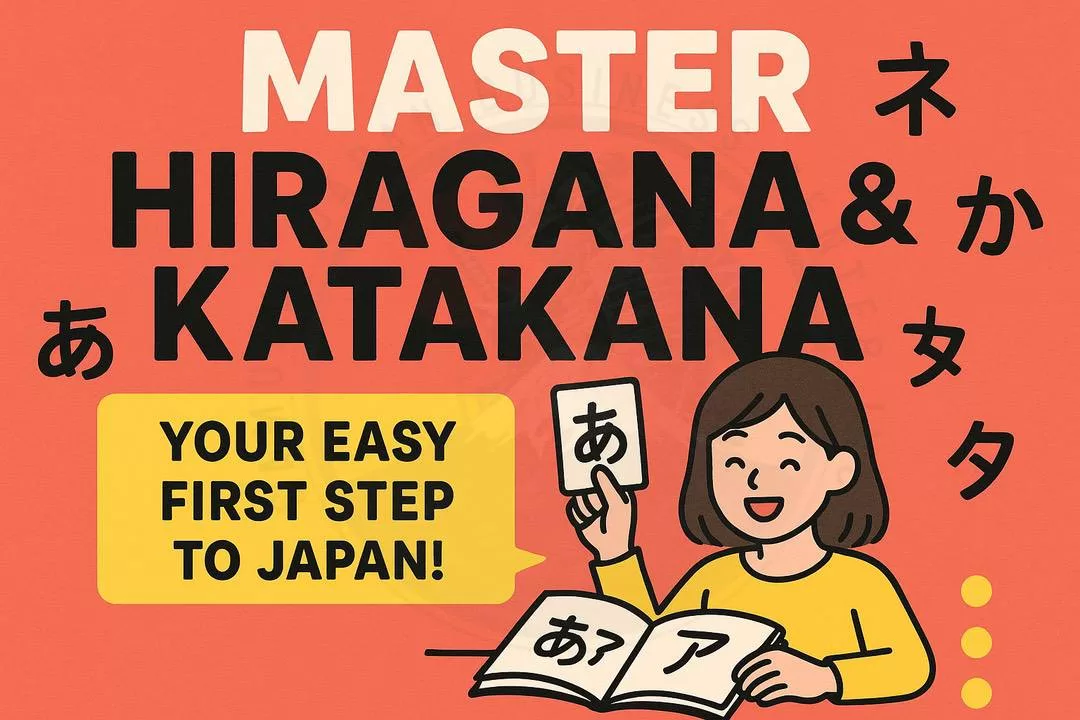
Master Hiragana & Katakana: Your Easy First Step to Japan! 🇯🇵📚🎉
Kon’nichiwa, future Japan adventurers! 👋 Are you dreaming of living, studying, or working in the Land of the Rising Sun? Many Filipinos share this wonderful dream, and the first exciting step on this journey is to master the foundational Japanese scripts: Hiragana and Katakana. Don’t worry, you don’t need to be a language genius to conquer them! Think of them as your friendly guides to unlocking the world of Japanese.
As your teacher from a Japanese language school, I know exactly what it takes to get you started on the right foot. We’ll explore why these scripts are so crucial, dive into their unique characteristics, and equip you with practical, easy-to-follow strategies tailored for Filipino learners. Get ready to transform those seemingly complex characters into familiar friends!
💡 Teacher’s Tip: Your Mindset is Key!
Approach learning Hiragana and Katakana not as a chore, but as a fun puzzle! Each character you learn is like collecting a new piece of the Japanese language map. Consistency, even just 15-20 minutes a day, will lead to amazing progress. You’ve got this!
Why Mastering Hiragana & Katakana is Your Superpower! 💪
You might be wondering, “Why do I need to learn these two scripts when there’s also Kanji?” That’s a great question! Here’s why Hiragana and Katakana are not just important, but absolutely essential for any aspiring Japanese speaker:
-
Foundation for All Japanese:
Almost every Japanese sentence you encounter will use Hiragana, especially for grammatical particles (like は, が, を), verb endings, and native Japanese words. Katakana is everywhere too, particularly for words borrowed from English and other foreign languages.
-
Pronunciation Perfection:
Unlike English, Japanese is a phonetic language, meaning sounds generally correspond directly to characters. Learning Hiragana and Katakana helps you grasp the correct Japanese pronunciation, which is crucial for clear communication. No more guessing how to say that new word!
-
Unlocking Basic Reading:
Once you know these two scripts, you can start reading simple sentences, children’s books, signs, and even restaurant menus! This builds immense confidence and makes daily life in Japan much easier and more enjoyable. Imagine ordering your favorite ramen with confidence! 🍜
-
Boosting Your Confidence:
Successfully learning these scripts provides a huge motivational boost. It proves to yourself that you can learn Japanese, setting a positive tone for your entire language journey. It’s the first major milestone!
Hiragana: Your Guide to Native Japanese Words and Grammar 🌸
Hiragana is the most fundamental script and consists of 46 basic characters, each representing a distinct sound (usually a consonant followed by a vowel, or just a vowel). It’s used for:
- Native Japanese words (e.g., さくら – sakura, cherry blossom)
- Grammatical particles (e.g., は – wa, topic marker)
- Verb and adjective endings (e.g., たべる – taberu, to eat)
- Furigana (small Hiragana characters written above or next to Kanji to show their pronunciation)
Learning Hiragana is like learning the alphabet for a Filipino child. It’s the building block!
Essential Hiragana Characters (A-Row & K-Row Examples)
| Character | Romaji | Mnemonic Tip |
|---|---|---|
| あ | a | Looks like an angry man. |
| い | i | Two insects. |
| う | u | Looks like a U-turn. |
| え | e | A sturdy elephant’s trunk. |
| お | o | Like a fishing hook catching an octopus. |
| か | ka | The top looks like two kites flying. |
| き | ki | A key that unlocks a door. |
Katakana: Mastering Foreign Words and Emphasis 🗣️
Katakana is the second phonetic script, also consisting of 46 basic characters. While it sounds the same as Hiragana, its appearance is more angular and simpler. Katakana is primarily used for:
- Words borrowed from foreign languages (e.g., コーヒー – koohii, coffee; フィリピン – Firipin, Philippines)
- Onomatopoeia (sound effects, e.g., ワンワン – wanwan, dog bark)
- Scientific or technical terms, and plant/animal names
- Emphasis (like using italics in English)
- Company names and some personal names
For Filipinos, Katakana is especially useful because so many modern Japanese words are derived from English! You’ll be surprised how many words you can already recognize once you learn Katakana.
⚠️ Common Mistake Alert for Filipinos:
Many Filipino learners often confuse similar-looking Katakana characters like シ (shi) and ツ (tsu), or ソ (so) and ン (n). Pay close attention to the stroke order and the direction of the short strokes! Practice writing them repeatedly to embed the correct form in your muscle memory.
Tricky Katakana Pairs (Focus on Distinctions!)
| Character | Romaji | Distinguishing Feature |
|---|---|---|
| シ | shi | Short strokes go upwards. Looks like a smiling face. |
| ツ | tsu | Short strokes go downwards. Looks like a tsunami wave. |
| ソ | so | Starts from top-right, short stroke goes downwards. |
| ン | n | Starts from bottom-left, short stroke goes upwards. |
Effective Learning Strategies for Filipino Learners 💡✍️
Now that you know what they are, how do you learn them efficiently? Here are some proven strategies, keeping in mind the common learning styles and challenges of Filipino students:
-
Mnemonic Devices & Visual Associations:
As shown in the table, associating characters with familiar objects or actions can be incredibly effective. For instance, 「の」(no) looks like a fishing hook, while 「へ」(he) looks like a nose. Filipino learners often have a strong visual memory, so capitalize on this!
-
Daily, Consistent Practice (Little by Little):
Dedicate 15-30 minutes every day. Consistency beats cramming! Review a few new characters, then review old ones. Use flashcards (physical or digital like Anki) for active recall.
-
Writing Practice is Non-Negotiable:
Don’t just look at them; write them! Pay attention to stroke order, as it affects readability and can prevent confusion between similar characters. Use a notebook with squares or a practice sheet. Many Filipino learners find kinesthetic learning (learning by doing) very effective.
-
Immerse Yourself with Digital Tools:
Utilize language learning apps like Duolingo, Memrise, or Bunpro (Bunpro is more for grammar but often includes kana practice). There are also many free Hiragana/Katakana specific apps available on iOS and Android. They make learning feel like a game!
-
Read Simple Japanese Aloud:
Once you have a grasp of the characters, try reading simple words, sentences, or even children’s books written entirely in Hiragana. Reading aloud reinforces both recognition and pronunciation. This helps with the phonetic challenges many Filipino learners face, especially with certain Japanese sounds that don’t have direct Tagalog equivalents.
-
Find Katakana Everywhere:
Look for Katakana in your daily life! When you watch anime, pause and try to read the English words written in Katakana. When you go to a Japanese restaurant, try to read the menu items. You’ll be amazed at how many words you already know!
Beyond Memorization: Connecting to Your Dream Life in Japan 🏙️✈️
Learning Hiragana and Katakana isn’t just about passing tests; it’s about making your future life in Japan smoother, more enjoyable, and truly immersive. Here’s how these scripts will empower you:
Cultural Insight: The Beauty of Japanese Scripts
Did you know that the use of three scripts (Hiragana, Katakana, and Kanji) is unique to Japanese? Each serves a distinct purpose, making the language incredibly rich and nuanced. By mastering the first two, you’re not just learning characters; you’re gaining a deeper appreciation for Japanese culture and how they express ideas. It’s a key to understanding their communication style!
Imagine:
- Reading signs at the train station or understanding announcements.
- Effortlessly ordering your favorite ラーメン (raamen – ramen) or カレー (karee – curry) from a menu.
- Filling out basic forms with your name in Katakana (例: マリア – Maria).
- Understanding simple product labels at the konbini (convenience store).
- Recognizing sounds in anime or J-pop lyrics and truly understanding them.
These small victories will accumulate, building your confidence and making you feel truly at home in Japan.
Overcoming Challenges and Staying Motivated! ✨💖
It’s completely normal to feel overwhelmed at times, especially when you start encountering all 46 characters for each script. Some characters might look similar, or your mind might feel cluttered. This is part of the learning process! Here’s how to push through:
-
Break it Down:
Don’t try to learn all 46 in one day. Focus on one row (e.g., the ‘A’ row: あいうえお) at a time. Master it before moving on. This bite-sized approach is much less daunting.
-
Celebrate Small Wins:
Every character you successfully recall, every word you manage to read – that’s a victory! Acknowledge your progress, no matter how small. Treat yourself to a small reward (maybe some Japanese snacks? 😋).
-
Connect with Fellow Learners:
Join study groups, online communities, or talk to classmates. Sharing tips, practicing together, and encouraging each other can make a huge difference. You’re not alone in this journey!
-
Remember Your “Why”:
When motivation dips, think about your dream life in Japan. Visualize yourself confidently navigating the bustling streets of Tokyo, enjoying delicious food, or conversing with locals. Hiragana and Katakana are the essential keys to unlocking those experiences.
Your dream of living in Japan is within reach, and mastering Hiragana and Katakana is not just a stepping stone—it’s the first leap towards making that dream a reality. You have the dedication, and with these strategies, you have the tools. Keep practicing, stay positive, and embrace every character. Ganbatte kudasai! (Good luck, do your best!)
Contact & Follow Us
お問い合わせ
📞 電話: +63 997 093 4550
📧 メール: samuraijapan.bc@gmail.com
🏠 住所: Room D3, Freb Bldg, Villa Donata Subd, Muntinlupa
🏢 会社名: SAMURAI Japan Business Center Inc.
SNSでフォロー
🎵 Tiktok: @samuraijapan0221
📸 Instagram: @samuraijapan.bc
▶️ Youtube: @SamuraiJapan-bc
📘 Facebook: Visit our Page
