

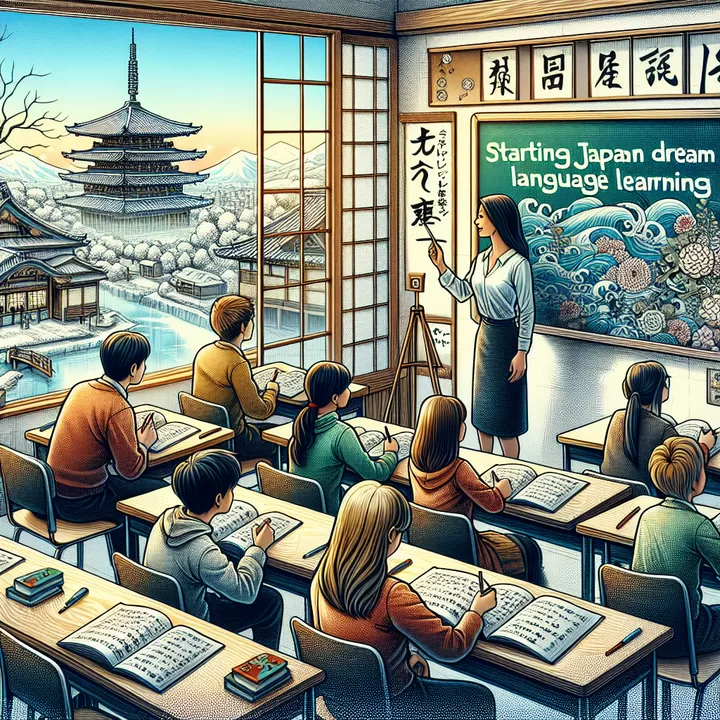
Teacher’s Guide: Free Japanese Lessons to Start Your Japan Dream
Konnichiwa, aspiring Japan Dreamers! 🇯🇵 Are you a Filipino looking to embark on an incredible journey to Japan, whether for study, travel, or to experience its vibrant culture? Learning Japanese is your first, most crucial step, and guess what? You don’t always need to spend a fortune to begin! As your language teacher, I’m here to guide you through the amazing world of free Japanese lessons that can truly kickstart your dream.
Many of my students from the Philippines share the same aspiration: to live and thrive in Japan. They often ask, “Sensei, where do I even begin?” My answer is always the same: start with the accessible resources around you! This guide is designed specifically for you, providing practical tips, valuable resources, and the encouraging push you need to make your Japan dream a reality. Let’s dive in!
Why Free Resources Are Your Best Friends on This Journey 💡
Learning a new language can seem daunting, especially when thinking about tuition fees and learning materials. However, in today’s digital age, a wealth of high-quality Japanese learning resources are available completely free of charge. This is fantastic news for anyone with a strong motivation and a stable internet connection!
Here’s why these free tools are incredibly beneficial for you:
* **Accessibility:** No matter where you are in the Philippines, if you have internet, you have access to a world of Japanese learning.
* **Cost-Effectiveness:** You can test the waters, build a strong foundation, and even reach intermediate levels without a significant financial investment. This allows you to save your resources for potential future studies or your life in Japan.
* **Flexibility:** Learn at your own pace, on your own schedule. This is perfect for those balancing work, studies, or family commitments.
💡 Teacher’s Tip: Consistency is Key!
The biggest challenge with free learning is often motivation. My advice? Dedicate at least 15-30 minutes every single day. Even small, consistent efforts compound over time. Treat your free lessons like a paid class – show up, engage, and do your “homework”!
Top Free Online Platforms & Apps for Japanese Learning ✅
The internet is overflowing with tools that can help you learn Japanese. Here are some of my top recommendations that I often share with my students:
- Duolingo:
A popular gamified language learning app. Duolingo is fantastic for beginners to get started with basic vocabulary and simple sentence structures. Its short lessons make it easy to fit into a busy schedule.
- Memrise:
Excellent for vocabulary acquisition through spaced repetition and various learning modes, including videos of native speakers. This helps with pronunciation and understanding natural speech.
- Anki:
While requiring a bit of setup, Anki is a powerful customizable flashcard system based on spaced repetition. You can download pre-made Japanese decks or create your own, which is great for memorizing kanji, vocabulary, and even grammar patterns.
- YouTube Channels:
Many channels offer free, structured Japanese lessons. Look for channels like “JapanesePod101,” “Misa sensei (Japanese Ammo with Misa),” or “Learn Japanese with Tanaka-san.” They often break down complex topics into easy-to-understand videos.
- Tae Kim’s Guide to Japanese Grammar:
This is a legendary free online resource. It offers a comprehensive and clear explanation of Japanese grammar, starting from the very basics. It’s an invaluable reference point as you progress.
- NHK World Japan “Easy Japanese”:
Offered by Japan’s public broadcaster, this program provides daily lessons focusing on practical conversations. It’s available in many languages, including English, and comes with audio and scripts. Perfect for learning functional phrases!
Quick Comparison: Popular Free Resources
| Resource | Key Strength | Best For |
|---|---|---|
| Duolingo | Gamified, daily practice | Absolute beginners, habit building |
| Memrise | Vocabulary with native speaker audio/video | Vocabulary expansion, listening practice |
| Tae Kim’s Guide | Comprehensive grammar explanations | In-depth grammar study, reference |
| NHK World Japan | Practical daily conversations | Functional Japanese, listening, cultural context |
Leveraging Free Japanese Lessons: A Teacher’s Strategy 🎯
Having access to free resources is one thing; using them effectively is another. Here’s how to maximize your learning potential:
1. **Set Clear, Achievable Goals:** Don’t try to learn everything at once. Start with Hiragana and Katakana. Then, move to basic greetings and self-introduction. Your goal for the first month might be: “Master Hiragana and Katakana” or “Learn 50 common phrases.”
2. **Combine Resources:** Don’t rely on just one app. Use Duolingo for daily practice, Memrise for vocabulary, and Tae Kim for grammar explanations when you encounter something confusing. This multi-faceted approach reinforces learning.
3. **Active Learning over Passive Consumption:** It’s not enough to just watch videos or read explanations.
* **Write:** Practice writing Hiragana and Katakana repeatedly. Write down new vocabulary.
* **Speak:** Repeat after native speakers. Record yourself and compare. Don’t be shy!
* **Create:** Try to form your own simple sentences with new grammar and vocabulary.
4. **Focus on Pronunciation:** Filipino languages share some sounds with Japanese, but others are quite different. Pay close attention to pitch accent and consonant sounds. For example, the Japanese “R” sound is often somewhere between an English “L” and “D” – it’s not the same as the strong Filipino “R”!
⚠️ Common Mistake Alert for Filipinos:
Many Filipino learners sometimes struggle with the distinction between long and short vowels (e.g., おばさん [aunt] vs. おばあさん [grandmother]). Also, the Japanese “L” sound doesn’t exist, so practice the “R” sound carefully! Another common point of confusion is the particles 「は」(wa) and 「が」(ga). Dedicate extra time to understanding their nuances.
Mastering the Basics: Hiragana, Katakana, and Essential Phrases 🎉
Before you can build a house, you need a strong foundation. In Japanese, that foundation is Hiragana and Katakana.
* **Hiragana:** Used for native Japanese words and grammatical endings. It’s the most common writing system you’ll encounter.
* **Katakana:** Primarily used for foreign loanwords (like カメラ – kamera for “camera” or フィリピン – Firipin for “Philippines”), onomatopoeia, and for emphasis.
There are many free apps and websites specifically designed to help you memorize these syllabaries. Look for ones that include writing practice and audio.
Once you have a grasp of the basic scripts, focus on essential phrases for daily communication. These will give you immediate confidence!
Essential Japanese Phrases for Beginners
| Japanese Phrase | Romaji | English Meaning |
|---|---|---|
| こんにちは | Konnichiwa | Hello / Good afternoon |
| ありがとうございます | Arigatou gozaimasu | Thank you (polite) |
| すみません | Sumimasen | Excuse me / Sorry |
| ごめんなさい | Gomen nasai | I’m sorry |
| はい / いいえ | Hai / Iie | Yes / No |
| 〜です | ~ desu | ~ is / am / are (polite ending) |
🌸 Cultural Insight: Politeness Levels
Japanese society highly values politeness. Always try to use polite forms (ending in です [desu] or ます [masu]) with people you don’t know well, elders, or those in positions of authority. This shows respect and will be greatly appreciated in Japan.
Beyond the Books: Immersion on a Budget 🎧
Formal lessons are great, but real language acquisition happens through exposure. You can create your own immersive environment even in the Philippines!
* **Japanese Media:**
* **Anime & Dramas:** Watch with Japanese audio and English subtitles first, then switch to Japanese subtitles (if available) as you improve. This trains your ear and helps you pick up natural phrasing.
* **Music:** Listen to Japanese songs. Look up the lyrics and try to understand them.
* **Podcasts:** Find beginner-friendly Japanese podcasts. Many provide transcripts, which are excellent for reading practice.
* **Language Exchange Partners:** Websites like iTalki (some free features for finding partners) or apps like HelloTalk allow you to connect with native Japanese speakers who want to learn English (or Filipino languages!). This is a fantastic way to practice speaking for free.
* **Online Communities:** Join Facebook groups dedicated to Japanese language learning for Filipinos. You can share tips, ask questions, and sometimes even find study partners.
💡 Teacher’s Tip: Use entertainment actively!
Don’t just passively watch anime. When you hear a phrase you like or don’t understand, pause it! Look it up, write it down, and try to use it later. This turns entertainment into a powerful learning tool.
Preparing for the JFT-Basic & N5 (Self-Study Approach) 📝
For many Filipinos aspiring to work or live in Japan, passing exams like the JFT-Basic (Japan Foundation Test for Basic Japanese) or the JLPT N5 (Japanese Language Proficiency Test N5) is often a necessary step. While these are entry-level exams, they require a solid grasp of basic Japanese. The good news is, free resources can be incredibly helpful in your preparation!
These exams typically assess:
* **Vocabulary (語彙 – Goi):** Everyday words.
* **Grammar (文法 – Bunpou):** Basic sentence structures and particles.
* **Reading Comprehension (読解 – Dokkai):** Understanding simple texts like notices or short letters.
* **Listening Comprehension (聴解 – Choukai):** Understanding short conversations and announcements.
How Free Resources Aid JFT-Basic/N5 Prep
| Exam Section | Free Resource Strategy | Specific Resource Examples |
|---|---|---|
| Vocabulary | Use spaced repetition apps daily. Create custom decks for common N5 words. | Anki, Memrise |
| Grammar | Study clear grammar explanations and do practice exercises. | Tae Kim’s Guide, YouTube grammar lessons |
| Reading | Read simple Japanese texts with furigana (pronunciation guides). | NHK News Web Easy, simple children’s stories online |
| Listening | Listen to Japanese audio daily, even if you don’t understand everything at first. | NHK World Japan “Easy Japanese”, Japanese podcasts for beginners |
✅ Key Takeaway for Exam Prep:
Consistency and systematic review are vital. Take advantage of free online sample tests for JFT-Basic and JLPT N5 to familiarize yourself with the format and identify your weak areas. Don’t be afraid to make mistakes; they are part of the learning process!
Learning Japanese is a journey, not a race. With dedication, smart use of free resources, and a positive attitude, you are more than capable of building a strong Japanese foundation. Remember, every little step you take brings you closer to your dream life in Japan. You’ve got this, future Japan residents! Ganbatte kudasai! (Good luck!)
Contact & Follow Us
お問い合わせ
📞 電話: +63 997 093 4550
📧 メール: samuraijapan.bc@gmail.com
🏠 住所: Room D3, Freb Bldg, Villa Donata Subd, Muntinlupa
🏢 会社名: SAMURAI Japan Business Center Inc.
SNSでフォロー
🎵 Tiktok: @samuraijapan0221
📸 Instagram: @samuraijapan.bc
▶️ Youtube: @SamuraiJapan-bc
📘 Facebook: Visit our Page
