

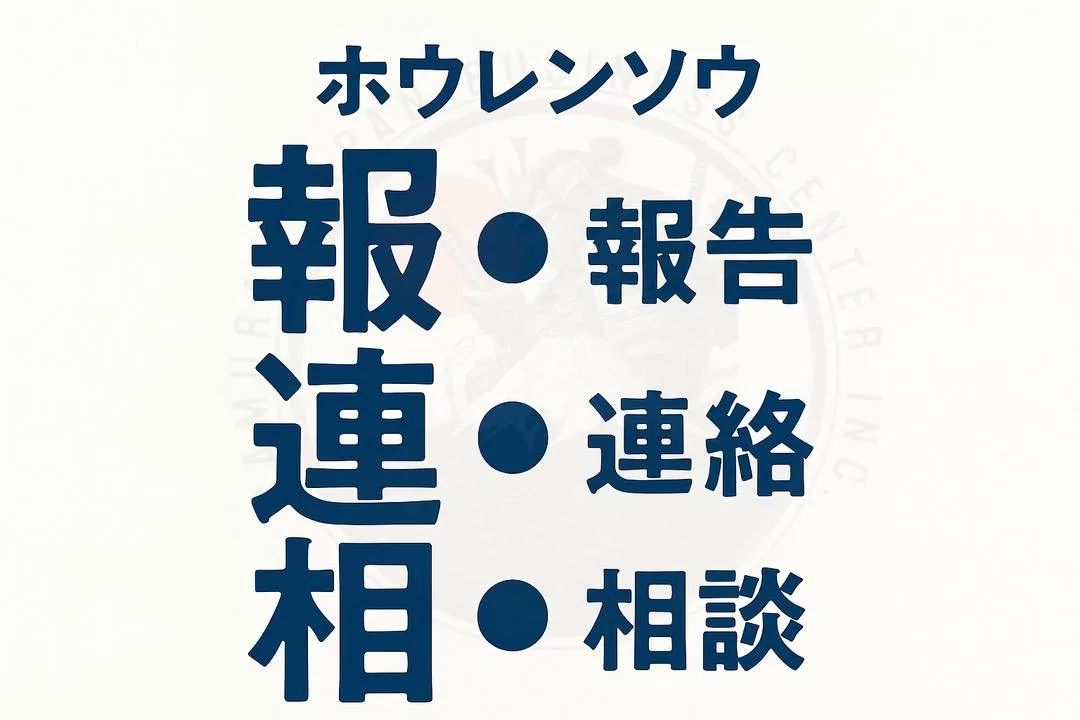
Horenso: The Japanese Communication Secret for Your Dream Life 🔑🇯🇵
Hello, future Japan adventurers! As your Japanese language teacher, I often see the sparkle in your eyes when you talk about your dream of thriving in Japan. But one of the biggest keys to a successful life there isn’t just grammar—it’s understanding the unspoken rules of communication. Today, I want to introduce you to a concept that is fundamental to Japanese society: Horenso (報連相).
It might sound like a secret code, and in a way, it is! It’s the secret to smooth interactions and building trust. Horenso is a powerful framework made of three pillars: Houkoku (報告 – Reporting), Renraku (連絡 – Contact), and Soudan (相談 – Consultation). Mastering this will not only help you navigate situations with confidence but also earn you respect, paving the way for the wonderful life you envision. Let’s dive in! ✨
What is Horenso? Unpacking the 3 Pillars 🧐
Let’s break down Horenso. These aren’t just three similar words; they are distinct actions with specific purposes. Understanding the difference is your first step to mastering Japanese-style communication.
| Pillar (Kanji) | Meaning | Your Action |
|---|---|---|
| 報告 (Houkoku) | Reporting | Update your teacher or supervisor on the progress or result of a task. Report good news, bad news, and delays promptly. |
| 連絡 (Renraku) | Contact / Informing | Share factual information quickly with everyone involved to keep them in the loop (e.g., “The meeting time has changed.”). |
| 相談 (Soudan) | Consultation / Discussion | Ask for advice or discuss a problem with a teacher or senior *before* you get stuck or make a decision you’re unsure about. |
In essence, Horenso is about creating a “no surprises” environment through proactive, clear, and timely communication. It’s a team approach to solving problems and making progress.
Why Horenso is Your Superpower in Japan 💪
As Filipinos, our communication style is often characterized by warmth and a desire to maintain harmony (“pakikisama”). While wonderful, it can sometimes differ from the direct, proactive Horenso framework. Understanding this difference is key!
💡 Cultural Bridge: From “Pakikisama” to Horenso
In the Philippines, we might hesitate to report bad news or ask for help to avoid being a “bother.” In Japan, not communicating is often seen as the bigger problem. Horenso is your tool to bridge this gap. By practicing it, you show respect and responsibility, which builds deep trust—the foundation of all good relationships in Japan.
Embracing Horenso isn’t about changing who you are. It’s about adding a powerful tool to your communication toolkit that will help you build trust, prevent misunderstandings, and integrate smoothly into Japanese society. ✅
Horenso in Action: Practical Scenarios 🎬
Let’s see how Horenso works in situations you’ll definitely encounter in Japan.
Scenario 1: At Your Japanese Language School 🏫
- Houkoku (Report): You feel sick and can’t attend class. Don’t just be absent. Report it immediately to the school office. “体調が悪いので、休みます” (Taichō ga warui node, yasumimasu).
- Renraku (Inform): The teacher announces a test next week. You acknowledge it by saying “はい、分かりました” (Hai, wakarimashita). This confirms you received the information.
- Soudan (Consult): You’re struggling with a grammar point. Don’t suffer in silence! Consult your teacher: “先生、この文法が分かりません。教えてください” (Sensei, kono bunpō ga wakarimasen. Oshiete kudasai).
Scenario 2: In Daily Life 🏡
- Houkoku (Report): You accidentally break something you borrowed from a neighbor. Report it immediately with an apology and offer to replace it.
- Renraku (Inform): Your apartment building will have a water outage. You inform your housemates so everyone is prepared.
- Soudan (Consult): You’re unsure how to separate your trash correctly. Instead of guessing, you consult your landlord or a knowledgeable neighbor.
Overcoming Horenso Challenges: Teacher’s Tips 👨🏫
Adapting to a new communication style is a challenge, but you can do it! Here are some tips to overcome common hurdles.
⚠️ Common Mistake Alert: The “I’m Afraid to Bother Them” Syndrome
Many Filipinos are hesitant to ask for help. But in Japan, silence can cause bigger problems. Remember: Horenso is not “bothering” someone; it’s helping them by providing necessary information. It shows you are responsible, not weak.
You don’t need perfect Japanese to start. The effort to communicate is what truly matters. Here are some simple phrases to get you started:
Your Horenso Phrase Cheat Sheet 📝
| For… | Phrase | Meaning |
|---|---|---|
| 報告 (Houkoku) | ~が終わりました。 | ~ is finished. |
| 連絡 (Renraku) | 承知しました。 | I understand / Noted. |
| 相談 (Soudan) | どうしたらいいですか? | What should I do? |
A Universal Skill for Your Future 🌍
While Horenso is a Japanese concept, its principles are universal. It teaches responsibility, clarity, and teamwork—skills valued everywhere. Think of it as a powerful life skill that will make you a more effective communicator and a more confident individual, wherever your journey takes you.
Your dream life in Japan is within reach. Horenso is more than a set of rules; it’s a mindset of collaboration and respect. As your teacher, I encourage you to embrace it, practice it, and see how it transforms your interactions. You’ve got this! Ganbatte kudasai! 👍
Contact & Follow Us
お問い合わせ
📞 電話: +63 997 093 4550
📧 メール: samuraijapan.bc@gmail.com
🏠 住所: Room D3, Freb Bldg, Villa Donata Subd, Muntinlupa
🏢 会社名: SAMURAI Japan Business Center Inc.
SNSでフォロー
🎵 Tiktok: @samuraijapan0221
📸 Instagram: @samuraijapan.bc
▶️ Youtube: @SamuraiJapan-bc
📘 Facebook: Visit our Page
