

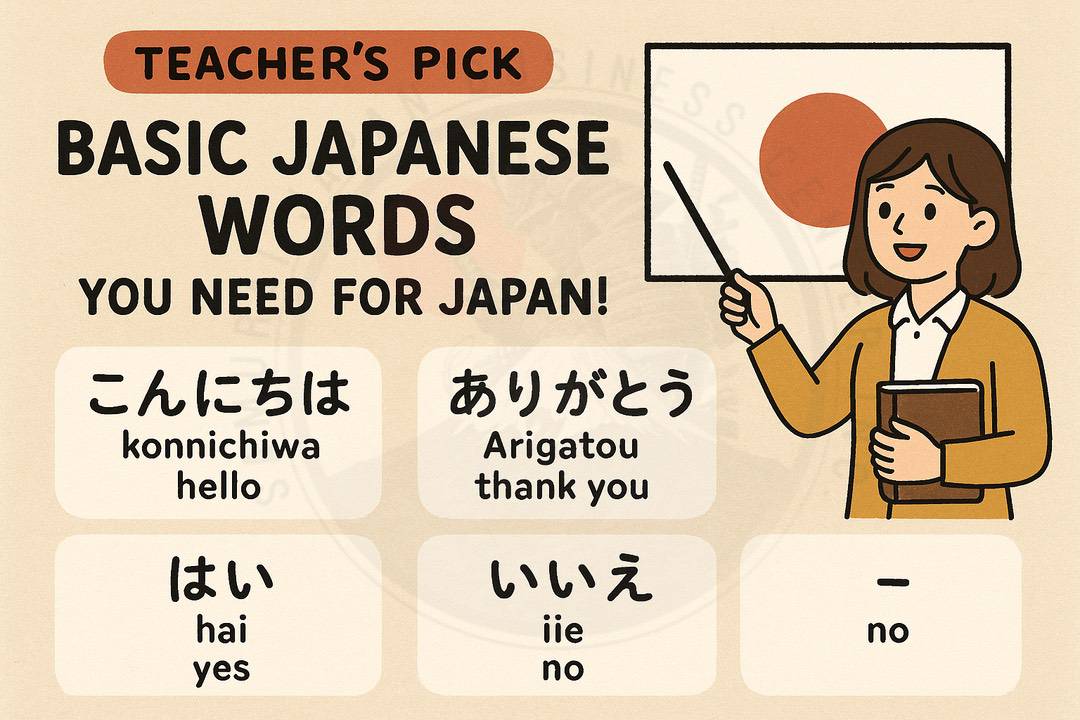
Teacher’s Pick: Basic Japanese Words You Need for Japan!
Mabuhay, future Nihongo speakers! Are you dreaming of experiencing the vibrant culture, delicious food, and bustling cities of Japan? Perhaps you’re preparing for a new life there, or simply want to enrich your travel experiences. Whatever your goal, one thing is certain: learning basic Japanese words and phrases is your first, most important step! As your language teacher, I often see the spark in students’ eyes when they realize they can actually communicate in Japanese, even with just a few words.
It might seem daunting at first, but trust me, every journey begins with a single step. And in language learning, that step is often a simple greeting or a polite thank you. This article is your personal guide to the essential Japanese vocabulary that will not only help you navigate daily life but also open doors to deeper cultural connections. Let’s dive in!
The Power of Greetings and Basic Etiquette
In Japan, greetings are more than just words; they are expressions of respect and a crucial part of social interaction. Mastering these will immediately make a positive impression.
-
おはようございます (Ohayou Gozaimasu)
This is the standard polite morning greeting, used until around noon. You might hear the shorter 「おはよう (Ohayou)」 among close friends or family. Always use the full version for people you don’t know well or in formal settings.
-
こんにちは (Konnichiwa)
The universal daytime greeting, used from morning until late afternoon. It literally means “today is…” and implies “how are you today?”. It’s versatile and safe to use in most situations.
-
こんばんは (Konbanwa)
Your evening greeting, used once the sun sets. Just like Konnichiwa, it’s polite and widely understood.
-
おやすみなさい (Oyasuminasai)
Good night. Use this when you’re parting ways for the evening, especially if someone is going to sleep. The casual form is 「おやすみ (Oyasumi)」.
-
ありがとうございます (Arigatou Gozaimasu)
This is “Thank you” in its polite form. Filipinos often use “Arigato” informally, but adding “gozaimasu” is essential for politeness, especially with strangers or in service situations. Practice saying it clearly and sincerely!
-
どういたしまして (Dou Itashimashite)
You’re welcome. This is the standard polite response to “Arigato gozaimasu.”
-
すみません (Sumimasen)
This incredibly versatile word can mean “Excuse me,” “I’m sorry,” or even “Thank you” (when someone goes out of their way for you). Use it to get attention, apologize for a minor inconvenience, or express gratitude. It’s a lifesaver!
-
ごめんなさい (Gomen nasai)
I’m sorry. This is a more direct apology than Sumimasen, used for more significant mistakes. You can also use the casual 「ごめん (Gomen)」 with friends.
-
お願いします (Onegai Shimasu)
This phrase is golden! It means “Please,” “I humbly ask,” or “I request.” Use it when asking for something, making a request, or even when handing over money at a store (as in, “Please take this”). It shows respect and humility.
Navigating Daily Life: Shopping, Numbers, and Asking for Directions
Once you’ve mastered the greetings, let’s talk about practical situations you’ll encounter daily. From buying souvenirs to finding your way around, these phrases will be invaluable.
-
これ (Kore), それ (Sore), あれ (Are)
These are demonstrative pronouns: “Kore” means “this one” (near me), “Sore” means “that one” (near you), and “Are” means “that one over there” (far from both of us). Pointing while saying these can be very effective in shops!
-
いくらですか (Ikura desu ka?)
“How much is it?” Essential for shopping! When combined with “Kore wa…” (This is…), you can simply ask, 「これはいくらですか?」 (Kore wa ikura desu ka? – How much is this one?).
-
~ください (~ Kudasai)
Please give me ~. Add this after the name of an item you want to buy. For example, 「コーヒーください」 (Kohi kudasai – Coffee, please) or 「水ください」 (Mizu kudasai – Water, please). Remember the polite 「お願いします」 can also be used for requests.
-
Numbers (一 to 十: Ichi, Ni, San, Shi/Yon, Go, Roku, Shichi/Nana, Hachi, Kyu/Ku, Juu)
Knowing your numbers is crucial for prices, times, and counting. While 「し (Shi)」 and 「きゅう (Kyuu)」 are common, many Japanese avoid them for being associated with death (死 – shi) and suffering (苦 – ku) respectively, preferring 「よん (Yon)」 for 4 and 「なな (Nana)」 for 7, and sometimes 「く (Ku)」 for 9 depending on context. Practice counting out loud!
-
どこですか (Doko desu ka?)
“Where is it?” or “Where is…?” This is your go-to phrase for asking directions. For instance, 「トイレはどこですか?」 (Toire wa doko desu ka? – Where is the restroom?).
-
~まで (~ made)
Used to indicate “up to” or “until.” For example, 「東京まで」 (Tokyo made – Up to Tokyo). Useful when buying train tickets or asking about destinations.
-
まっすぐ (Massugu)
Straight ahead. You’ll hear this often when asking for directions.
-
右 (Migi), 左 (Hidari)
Right and Left. Important for understanding directions. 「右に曲がってください」 (Migi ni magatte kudasai – Please turn right).
Exploring Japanese Cuisine: Food and Restaurant Phrases
Japan is a food lover’s paradise! Knowing these phrases will enhance your dining experience, from ordering to expressing satisfaction.
-
いらっしゃいませ (Irrashaimase!)
Welcome! You’ll hear this energetic greeting the moment you step into any shop or restaurant. It’s not something you say, but it’s important to recognize.
-
おすすめはなんですか (Osusume wa nan desu ka?)
“What do you recommend?” A great way to discover new dishes, especially if the menu is entirely in Japanese.
-
~をください (~ o Kudasai)
Please give me ~. (when ordering food). For example, 「ラーメンをください」 (Ramen o kudasai – Ramen, please).
-
おいしいです (Oishii desu)
“It’s delicious!” A simple but powerful phrase that will make the chef and staff happy. Don’t be shy to say it!
-
お会計お願いします (Okaikei onegai shimasu)
“The check, please.” Used when you’re ready to pay at a restaurant. You can also make a cross sign with your index fingers, but saying this is clearer.
-
いただきます (Itadakimasu)
Said before eating. It’s a respectful expression of gratitude for the food and all who contributed to it (from farmers to chefs). It’s similar to “Let’s eat” or “Thank you for the meal.”
-
ごちそうさまでした (Gochisousama deshita)
Said after eating. This expresses gratitude for the meal, the host, and the hard work involved. Always say this when leaving a restaurant or after being treated to a meal.
-
アレルギーがあります (Arerugi ga arimasu)
“I have an allergy (to…).” Crucial for your safety if you have dietary restrictions. You can add the specific allergen before “no arerugi” (e.g., 「ピーナッツのアレルギーがあります」 – Piinattsu no arerugi ga arimasu – I have a peanut allergy).
Essential Phrases for Safety and Well-being
While Japan is incredibly safe, it’s always wise to be prepared for unexpected situations. Knowing how to express basic needs or call for help can give you peace of mind.
-
助けてください (Tasukete kudasai!)
“Please help me!” This is a direct plea for help in an emergency.
-
英語が話せますか (Eigo ga hanasemasu ka?)
“Do you speak English?” If you’re in a pinch and your Japanese isn’t enough, this is your go-to question. Many Japanese, especially in urban areas, have some English proficiency.
-
病院はどこですか (Byouin wa doko desu ka?)
“Where is the hospital?” In case of a medical emergency, this phrase is critical.
-
気分が悪いです (Kibun ga warui desu)
“I feel sick.” An important phrase to convey if you’re not feeling well.
-
薬 (Kusuri)
Medicine. You might point to yourself and say 「薬」 if you need medication and can’t explain further.
-
警察 (Keisatsu)
Police. If you need to report something or seek police assistance.
Teacher’s Tips for Filipino Learners!
As your teacher, I’ve noticed a few things that can really help Filipino learners excel in Japanese:
-
Embrace the “R” Sound Difference
The Japanese ‘R’ sound (ら, り, る, れ, ろ – ra, ri, ru, re, ro) is often a mix between the English ‘L’ and ‘D’ sounds. It’s not a hard ‘R’ like in Spanish or Filipino. Practice words like 「ありがとう」 (arigatou) and 「ラーメン」 (raamen) to get the hang of it. Don’t be afraid to sound a little “soft” with your Rs!
-
Mastering Particles (は, が, を, に, で)
These small words are the glue of Japanese sentences and are often tricky for beginners. 「は (wa)」 marks the topic, 「が (ga)」 marks the subject, 「を (o)」 marks the direct object, 「に (ni)」 indicates location/direction/time, and 「で (de)」 indicates means/location of action. Don’t just memorize their meanings; pay attention to how they are used in example sentences. They are fundamental!
-
Don’t Be Afraid to Make Mistakes
This is perhaps the most important advice. Filipinos are often very polite and sometimes shy about speaking imperfectly. But remember, every mistake is a learning opportunity! Japanese people are generally very appreciative of foreigners who try to speak their language. Even a few words, spoken with confidence, go a long way.
-
Practice Active Listening
Immerse yourself! Watch Japanese dramas or anime with Japanese subtitles, listen to Japanese music, or try out simple Japanese podcasts. Even if you don’t understand everything, your ear will get used to the rhythm, intonation, and common phrases.
-
Consistency is Key
Learning a language is a marathon, not a sprint. Dedicate even 15-30 minutes a day to reviewing vocabulary, practicing phrases, or listening to Japanese. Small, consistent efforts lead to significant progress over time.
Your Journey Starts Now!
Learning Japanese isn’t just about memorizing words; it’s about opening yourself up to a new culture and connecting with people on a deeper level. The basic words and phrases we’ve covered today are more than just vocabulary—they are your keys to politely navigating daily life, expressing gratitude, and building confidence in Japan. Remember, even a little effort to speak Japanese will be greatly appreciated by the locals, turning a simple interaction into a memorable experience.
Don’t be overwhelmed by the vastness of the Japanese language. Start with these fundamentals, practice them daily, and celebrate every small victory. You’ve got this! We’re here to support you every step of the way on your exciting journey to mastering Japanese and making your dream life in Japan a reality.
Contact & Follow Us
お問い合わせ
📞 電話: +63 997 093 4550
📧 メール: samuraijapan.bc@gmail.com
🏠 住所: Room D3, Freb Bldg, Villa Donata Subd, Muntinlupa
🏢 会社名: SAMURAI Japan Business Center Inc.
SNSでフォロー
🎵 Tiktok: @samuraijapan0221
📸 Instagram: @samuraijapan.bc
▶️ Youtube: @SamuraiJapan-bc
📘 Facebook: Visit our Page
