

Mastering the Art of Omikuji: Your Guide to Japanese Fortunes
Welcome, future Japan residents! Have you ever visited a Japanese shrine or temple and seen people shaking wooden boxes or unfolding small strips of white paper? That is the tradition of Omikuji (おみくじ). For many Filipinos planning to live in Japan, visiting a shrine during New Year (Hatsumode) or before a big life event is a wonderful way to connect with Japanese culture. In this guide, we will explore how to read these fortunes, the vocabulary you need to know, and the cultural etiquette involved.
日本での生活を夢見る皆さん、こんにちは!日本の神社や寺院で、人々が木箱を振ったり、小さな白い紙を広げたりしているのを見たことがありますか?それは「おみくじ」という伝統です。日本で暮らす予定の多くのフィリピン人にとって、初詣や人生の大きなイベントの前に神社を訪れることは、日本文化に触れる素晴らしい方法です。このガイドでは、おみくじの読み方、必要な語彙、そして文化的なマナーについて解説します。
💡 Teacher’s Insight:
Think of Omikuji not just as “luck,” but as a set of friendly advice from the gods. Even if the result isn’t what you hoped for, the written message tells you how to improve your situation! It’s great reading practice for your Kanji, too.
おみくじを単なる「運」としてではなく、神様からのアドバイスとして捉えてみてください。たとえ結果が望んでいたものでなくても、書かれているメッセージはどうすれば状況が良くなるかを教えてくれます。漢字の読みの練習にも最適ですよ。
1. How to Get Your Fortune: Step-by-Step
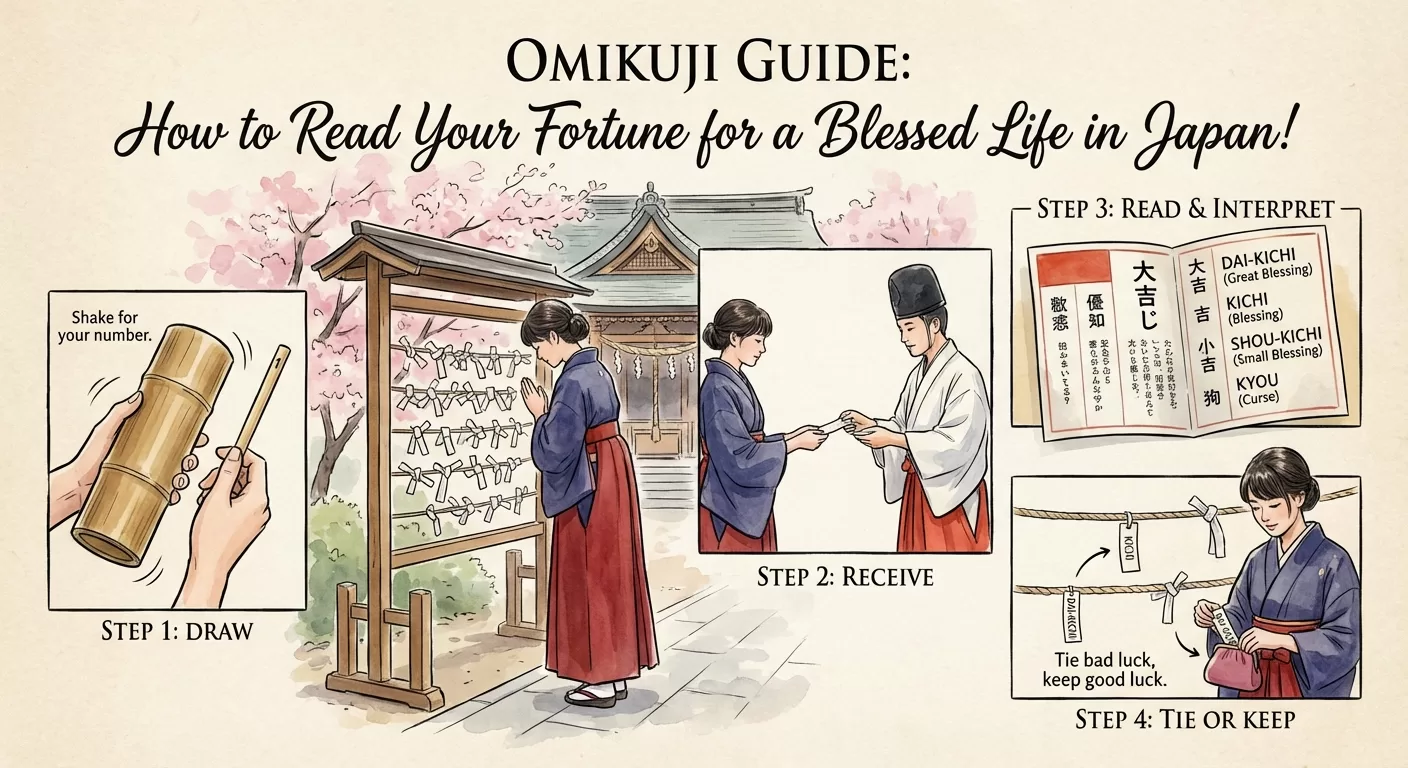
Getting an Omikuji is a simple process, but there are some polite steps to follow. Usually, you will find a counter or a wooden box near the main shrine building. Most Omikuji cost between 100 and 200 yen. First, make your prayer at the shrine (bow twice, clap twice, pray, and bow once). After that, head to the Omikuji station. Some shrines have “omikuji-zutsu” (cylindrical boxes) that you shake until a bamboo stick with a number falls out. You then give that number to the shrine staff to receive your paper.
おみくじを引く手順は簡単ですが、礼儀正しいステップがあります。通常、本殿の近くに受付や木箱があります。ほとんどのおみくじは100円から200円程度です。まず、神社で参拝をしましょう(二礼二拍手一礼)。その後、おみくじ売り場へ向かいます。神社によっては、番号の書かれた竹の棒が出るまで振る「おみくじ筒」があります。その番号を巫女さんや神職の方に伝えて、おみくじの紙を受け取ります。
Essential Vocabulary for Shrine Visits
| Japanese (Kanji/Kana) | Romaji | English Meaning |
|---|---|---|
| 神社 / 寺 | Jinja / Tera | Shrine / Temple |
| 初詣 | Hatsumode | First shrine visit of the year |
| お賽銭 | Osaisen | Offertory money (monetary offering) |
2. Understanding the Luck Rankings
When you unfold the paper, the first thing you will see is a large Kanji character indicating your overall luck ranking. This is the most exciting part! However, don’t just focus on the rank. The ranking system can vary slightly between shrines, but generally follows a specific order from “Great Blessing” to “Curse.” In Japan, even a “Middle Blessing” is considered very lucky!
紙を広げると、最初に目に飛び込んでくるのは、全体の運勢を示す大きな漢字です。これが一番ワクワクする瞬間ですね!しかし、ランクだけに注目してはいけません。ランクのシステムは神社によって多少異なりますが、一般的には「大吉」から「凶」までの特定の順序があります。日本では「中吉」でも十分にラッキーだと考えられています。
The Luck Hierarchy (Ranking)
| Kanji | Romaji | Meaning |
|---|---|---|
| 大吉 | Daikichi | Excellent Luck (Great Blessing) |
| 吉 | Kichi | Good Luck (Blessing) |
| 中吉 | Chukichi | Middle Luck (Middle Blessing) |
| 小吉 | Shokichi | Small Luck (Small Blessing) |
| 末吉 | Suekichi | Ending Luck (Future Blessing) |
| 凶 | Kyo | Bad Luck (Curse) |
⚠️ Don’t Panic!
If you get 「凶」(Kyo – Bad Luck), do not worry! It doesn’t mean something terrible will happen. It is often seen as a message to be cautious and humble. Many people believe that getting a “Kyo” means your luck has nowhere to go but up!
もし「凶」を引いてしまっても、心配しないでください!悪いことが起こるという意味ではありません。注意深く、謙虚に過ごしなさいというメッセージとして受け取られることが多いです。多くの人は、「凶」を引いたらこれからは運気が上がるだけだと信じていますよ!
3. Decoding the Details: Specific Categories
Below the general rank, you will see specific sections for different areas of life. For Filipinos moving to Japan, certain categories are especially relevant. For example, 「学問」(Gakumon) is crucial for those studying Japanese, and 「転居」(Tenkyo) is important for your relocation plans. Understanding these specific Kanji will help you navigate your new life more confidently.
全体のランクの下には、生活のさまざまな場面ごとの詳細なセクションがあります。日本へ移住するフィリピンの方々にとって、いくつかのカテゴリーは特に重要です。例えば、日本語を勉強している人には「学問」、引っ越しを予定している人には「転居」が大切です。これらの特定の漢字を理解することで、新しい生活をより自信を持って送ることができます。
- 願事 (Negaigoto):
Your wishes or desires. If it says “叶う” (Kanau), your wish will come true!
- 待人 (Machibito):
The person you are waiting for. This doesn’t just mean a romantic partner; it can be a mentor or someone who helps you find a path.
- 失物 (失せ物 – Usemono):
Lost items. It tells you if you will find what you lost.
- 健康 (Kenko):
Health. Look for words like “慎め” (Tsutsushime – be careful/moderate) or “良好” (Ryoko – good).
- 商売 (Shobai):
Business or trade. Very relevant for your professional growth.
4. Kanji Cheat Sheet for Your Fortune
Omikuji often use slightly formal or old-fashioned language. Here are some key phrases you might find. If you see these, you can get a quick idea of what the “gods” are advising you to do. Learning these will significantly boost your Kanji recognition skills!
おみくじには、少し硬い表現や古い言葉が使われていることが多いです。よく見かける重要なフレーズをいくつか紹介します。これらを知っていれば、神様が何をアドバイスしているのかすぐに分かります。これらの漢字を覚えることは、漢字の認識能力を大幅に向上させることにも繋がります!
✅ 「よし」(Yoshi): Good / All right. (Often written as 「善し」 or 「吉」)
✅ 「さわりなし」(Sawari nashi): No problem / No obstacle.
⚠️ 「用心せよ」(Yojin seyo): Be careful / Be cautious.
⚠️ 「急ぐな」(Isogu na): Do not hurry / Be patient.
✨ 「時を待て」(Toki wo mate): Wait for the right time.
5. What to Do with the Paper?
Once you have finished reading, you have two choices. If the fortune is Daikichi (Great Luck), many Japanese people like to keep it in their wallet or bag as a lucky charm. If the result is Kyo (Bad Luck), the custom is to tie the paper to a designated fence or tree branch at the shrine. This is a symbolic way of “leaving the bad luck behind” so the gods can take care of it.
読み終わったら、2つの選択肢があります。もし「大吉」なら、多くの日本人はお守りとして財布やバッグに入れて持ち歩きます。もし「凶」なら、神社の指定された場所(紐や木の枝)に結びつけるのが習慣です。これは「悪い運をその場に留める」という象徴的な意味があり、神様に悪い運を引き受けてもらうためです。
💡 Cultural Tip:
When tying your Omikuji, use your non-dominant hand (if possible) to show extra effort and sincerity to the gods. It’s a small challenge that shows your determination!
おみくじを結ぶとき、(可能であれば)利き手ではない方の手を使って結んでみてください。これは神様に対して努力と誠実さを示すためです。あなたの決意を示すちょっとした挑戦ですね!
Conclusion: Embrace Your Future in Japan!
Reading an Omikuji is more than just a game; it is a way to reflect on your current state of mind and your goals for the future. As a Filipino learner of Japanese, these small slips of paper represent a beautiful bridge to understanding the Japanese heart. Whether you get “Great Luck” or “Bad Luck,” remember that you have the power to shape your own destiny through hard work and a positive attitude. We are here to support you every step of the way as you prepare for your blessed life in Japan!
おみくじを読むことは、単なる遊びではありません。それは今の自分の心の状態や将来の目標を振り返る方法です。日本語を学ぶフィリピン人の皆さんにとって、この小さな紙は日本人の心を理解するための美しい架け橋となります。「大吉」でも「凶」でも、自分の運命を切り開く力は、皆さんの努力と前向きな姿勢の中にあることを忘れないでください。日本での幸せな生活に向けて準備する皆さんを、私たちは全力で応援しています!
🚀 Start Your Journey to Japan!
Ready to learn Japanese? Apply for our programs now!
Contact & Follow Us
お問い合わせ
📞 電話: +63 997 093 4550
📧 メール: samuraijapan.bc@gmail.com
🏠 住所: Room D3, Freb Bldg, Villa Donata Subd, Muntinlupa
🏢 会社名: SAMURAI Japan Business Center Inc.
SNSでフォロー
🎵 Tiktok: @samuraijapan0221
📸 Instagram: @samuraijapan.bc
▶️ Youtube: @SamuraiJapan-bc
📘 Facebook: Visit our Page
