

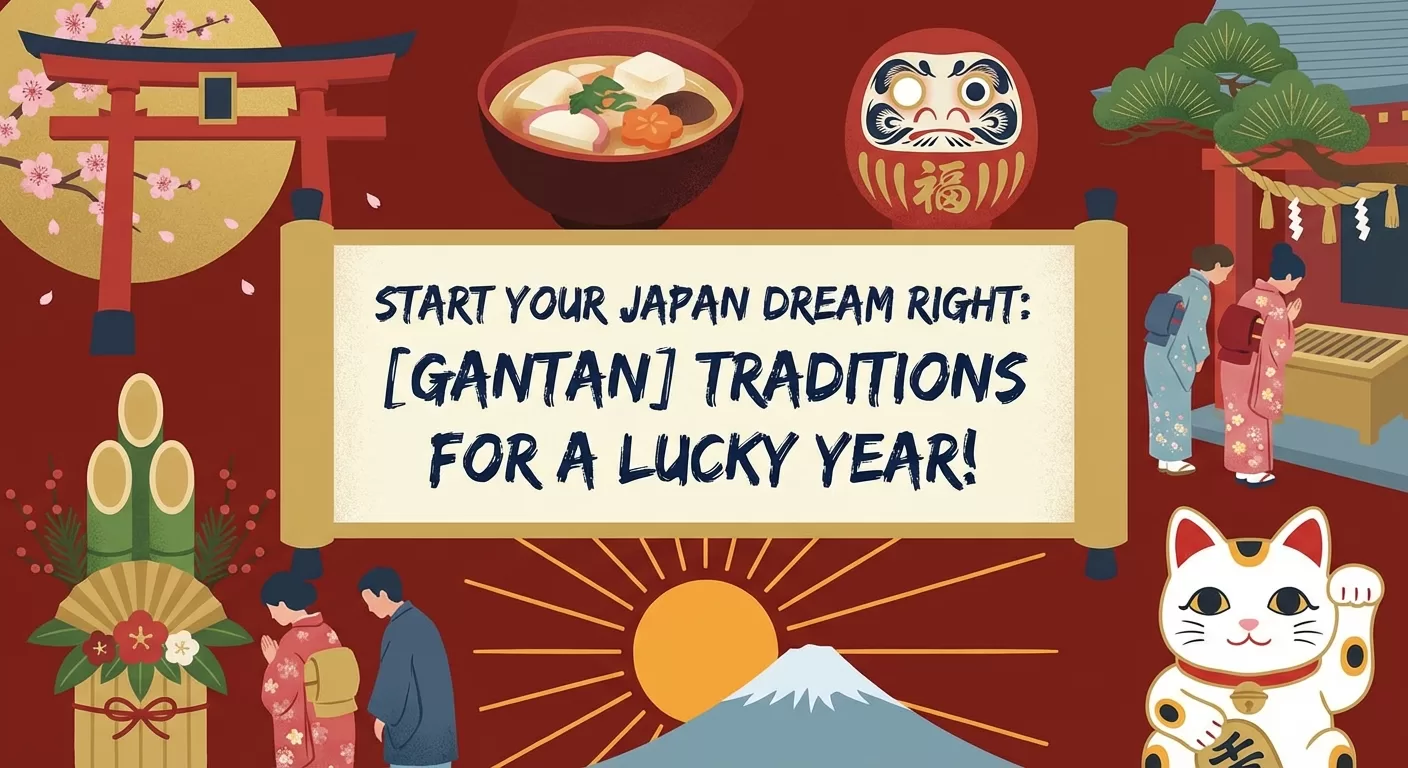
Start Your Japan Dream Right: Gantan Traditions for a Lucky Year!
Happy New Year, everyone! Or as we say in Japan, “Akemashite Omedetou Gozaimasu!” 🎍 If you are a Filipino student dreaming of living and working in Japan, understanding the New Year traditions is one of the best ways to connect with Japanese culture. While New Year in the Philippines is often filled with loud firecrackers and big parties, the Japanese New Year, or Oshogatsu, is a time of quiet reflection, family gatherings, and ancient rituals to welcome good luck for the coming year.
皆さん、明けましておめでとうございます!🎍 日本での生活を夢見ているフィリピンの学生の皆さんにとって、正月の伝統を理解することは、日本文化と繋がる絶好の機会です。フィリピンの正月は爆竹やにぎやかなパーティーで盛り上がりますが、日本の「お正月」は、静かに自分を振り返り、家族で集まり、新しい年の幸運を願う神聖な時間です。
In this guide, we will explore the concept of Gantan (the morning of January 1st) and the various customs that make the Japanese New Year so unique. Whether you are studying for the JFT-Basic or just preparing for your future life in Japan, these cultural insights will help you feel right at home when you finally arrive. Let’s start your journey to a lucky year! 🇯🇵✨
このガイドでは、「元旦」(1月1日の朝)の概念と、日本の正月をユニークにしている様々な習慣について探っていきます。JFT-Basicの勉強をしている方も、将来の日本生活を準備している方も、これらの文化的な知識があれば、日本に来た時にきっと役立つはずです。幸運な一年に向けて、あなたの旅を始めましょう!🇯🇵✨
💡 Teacher’s Tip: Gantan vs. Ganjitsu
You might hear both “Ganjitsu” and “Gantan.” While Ganjitsu refers to the entire day of January 1st, Gantan specifically refers to the morning or sunrise of New Year’s Day. The Kanji 「旦」 represents the sun rising over the horizon!
💡 先生からのアドバイス:「元旦」と「元日」の違い
「元日」と「元旦」の両方の言葉を聞くことがあるかもしれません。「元日」は1月1日の丸一日を指しますが、「元旦」は特に「元日の朝、あるいは日の出」を指します。「旦」という漢字は、地平線から太陽が昇る様子を表しているんですよ!
1. Hatsumode: The First Visit to a Shrine or Temple ⛩️
The most important tradition during the first few days of the year is Hatsumode. This is the first visit of the year to a Shinto shrine or Buddhist temple to pray for health, safety, and success. Many people go at the stroke of midnight on December 31st, while others visit during the first three days of January (called Sanganichi). For Filipinos who are used to visiting churches, you will find the spiritual atmosphere very beautiful and peaceful. 🙏
一年の最初の数日間で行われる最も重要な行事が「初詣」です。これは、健康、安全、そして成功を願って、その年初めて神社や寺院に参拝することを指します。多くの人が12月31日の深夜0時に合わせて行きますが、1月1日から3日までの「三が日」の間に訪れる人も多いです。教会に行く習慣があるフィリピンの皆さんにとっても、この精神的な雰囲気はとても美しく、穏やかに感じられるはずです。🙏
When you go for Hatsumode, there is a specific etiquette to follow at shrines. First, you purify your hands and mouth at the water pavilion (Chozuya). Then, at the main altar, you toss a coin—usually a 5-yen coin because “Go-en” sounds like the word for “good connection” or “fate.” After that, you perform the ritual: Bowing twice, clapping your hands twice, making a silent prayer, and bowing once more.
初詣に行く際は、神社特有の作法があります。まず、「手水舎(ちょうずや)」で手と口を清めます。次に、本殿でお賽銭を投げます。一般的には「5円玉」が良いとされています。これは「五円」が「ご縁(良い繋がり)」と同じ響きだからです。その後、「二礼二拍手一礼(二回お辞儀、二回拍手、静かに祈り、最後にもう一度お辞儀)」の作法を行います。
⚠️ Common Mistake Alert:
Don’t forget that Buddhist temples have different rules! At a temple, you do NOT clap your hands. Simply put your hands together in prayer (Gassho) and bow silently. Observe what the locals are doing if you aren’t sure!
⚠️ よくある間違い:
お寺では作法が異なることを忘れないでください!お寺では「拍手」はしません。静かに手を合わせ(合掌)、お辞儀をします。もし分からなくなったら、周りの日本人がどうしているか観察してみましょう!
2. Omikuji and Omamori: Predicting Your Luck 🍀
After praying, many people buy an Omikuji, which is a paper fortune. You shake a wooden box and pick a stick with a number, which corresponds to a fortune. It tells you your luck for the year in areas like health, love, and studies. If you get a bad fortune, don’t worry! You can tie it to a designated tree or wire fence at the shrine to “leave the bad luck behind.”
参拝の後は、多くの人が「おみくじ」を引きます。木箱を振って番号が書かれた棒を取り出し、その番号に応じた運勢の紙をもらいます。そこには健康、恋愛、学問など、その一年の運勢が書かれています。もし悪い運勢(凶など)を引いてしまっても大丈夫!神社の指定された木や柵に結びつけることで、「悪い運をその場に残して去る」ことができます。
Quick Guide to Omikuji Rankings
| Rank (Kanji) | Reading | Meaning |
|---|---|---|
| 大吉 | Dai-kichi | Great Blessing (Best Luck!) |
| 中吉 | Chu-kichi | Middle Blessing |
| 小吉 | Sho-kichi | Small Blessing |
| 吉 | Kichi | Good Luck |
| 凶 | Kyo | Bad Luck (Be careful!) |
You can also purchase an Omamori (amulet). These are small colorful pouches containing prayers. There are specific Omamori for everything, such as “Gokaku-kigan” (success in passing exams—perfect for your JFT-Basic!), “Kotsu-anzen” (traffic safety), and “En-musubi” (finding love). Keep these in your bag to protect you throughout the year.
また、「お守り」を購入することもできます。お守りは中に祈祷された札などが入っている色鮮やかな小さな袋です。試験合格を願う「合格祈願」(JFT-Basicを受ける皆さんにぴったりですね!)や、交通事故を防ぐ「交通安全」、良縁を願う「縁結び」など、目的別にたくさんあります。これらをカバンに入れて、一年中身を守ってもらいましょう。
3. Osechi-ryori: The Symbolic Feast 🍱
Food is a huge part of New Year celebrations. In the Philippines, we have the Noche Buena; in Japan, we have Osechi-ryori. These are traditional foods packed in beautiful lacquered boxes called jubako. Each ingredient has a special meaning and represents a wish for the New Year. Because shops were traditionally closed during the first few days of January, Osechi is made of preserved foods that can last several days.
食事は正月の祝いにおいて非常に大きな役割を果たします。フィリピンには「ノーチェ・ブエナ」がありますが、日本には「おせち料理」があります。「重箱」と呼ばれる美しい漆塗りの箱に詰められた伝統料理です。それぞれの食材には特別な意味があり、新年の願いが込められています。昔は正月三が日はお店が休みだったので、おせちは数日間保存できる料理で作られています。
Meanings of Popular Osechi Ingredients
| Food Item | Symbolism | Wish for You |
|---|---|---|
| Kuromame (Black Beans) | Working hard and being healthy (Mame) | Success in your studies! |
| Kazunoko (Herring Roe) | Many children and family prosperity | A happy family life. |
| Kuri-kinton (Sweet Chestnut) | The golden color represents wealth | Financial stability in Japan. |
| Ebi (Shrimp) | Long life (until your back is curved like a shrimp) | A long and healthy life. |
Another must-eat dish is Ozoni, a soup containing mochi (rice cakes). Each region in Japan has a different style of Ozoni. Some use clear broth, while others use miso paste. Be careful when eating mochi—it’s very sticky! In Japan, it’s a symbol of longevity because it stretches.
もう一つ欠かせないのが「お雑煮」です。お餅が入ったスープで、日本の地域によってスタイルが異なります。おすまし仕立て(透明なスープ)のところもあれば、味噌仕立てのところもあります。お餅を食べる時は喉に詰めないように気をつけてくださいね!日本では、お餅はよく伸びることから「長寿」の象徴とされています。
4. Essential New Year Greetings 🗣️
As a student of Japanese, you must know how to greet people correctly. In English, we say “Happy New Year” both before and after January 1st. In Japanese, however, we use different phrases depending on whether the New Year has actually arrived yet.
日本語を学ぶ学生として、正しい挨拶の仕方を知っておくことは大切です。英語では1月1日の前後どちらでも “Happy New Year” と言いますが、日本語では、実際に新年を迎えたかどうかで使うフレーズが異なります。
- Before January 1st:
「良いお年をお迎えください」(Yoi otoshi wo omukae kudasai) – Meaning: “Please have a good year (as you head into the new one).” You say this when leaving school or work for the winter break.
- On or after January 1st:
「明けましておめでとうございます」(Akemashite omedetou gozaimasu) – Meaning: “New Year has dawned, congratulations!” This is followed by 「今年もよろしくお願いします」(Kotoshi mo yoroshiku onegaishimasu), which means “Please treat me well again this year.”
💡 Teacher’s Tip: Politeness Matters!
With your friends, you can shorten it to “Ake-ome!” But with your teachers or future colleagues in Japan, always use the full polite form. Japanese people really appreciate it when foreigners use formal language correctly!
💡 先生からのアドバイス:丁寧さが大切です!
友達同士なら「あけおめ!」と短く言ってもいいですが、先生や将来の日本の同僚に対しては、必ず丁寧な表現を使いましょう。外国の方が敬語を正しく使えると、日本人はとても感心してくれますよ!
5. Other Fun Gantan Activities: Hatsuhinode and Otoshidama 🧧
There are many other small but meaningful activities on Gantan. Some people wake up very early to see the Hatsuhinode (the first sunrise of the year). It is believed that observing the first sunrise brings good luck and a fresh start. If you are in Japan, you might go to a beach or a mountaintop to see it!
元旦には他にも、小さくても意味のある行事がたくさんあります。多くの人が「初日の出」(一年の最初の日の出)を見るために早起きします。初日の出を拝むことは、幸運をもたらし、新たな気持ちで一年をスタートさせると信じられています。日本にいたら、海辺や山頂へ見に行くのもいいですね!
For children (and even some young adults), the best part of Gantan is Otoshidama. This is money given to children by parents, grandparents, and relatives in small, decorated envelopes called pochibukuro. It’s similar to the “Ampao” or “Angpao” tradition during Chinese New Year, which many Filipinos are familiar with!
子供たち(そして一部の若者)にとって、元旦の最大の楽しみは「お年玉」です。両親や祖父母、親戚から「ポチ袋」という小さな可愛い袋に入れてもらうお祝い金のことです。フィリピンの皆さんもよく知っている、旧正月の「アンパオ」の習慣に似ていますね!
Finally, there are the Nengajo (New Year’s postcards). Even in the digital age, many Japanese people send postcards to friends, family, and coworkers to express their gratitude. These cards are guaranteed to be delivered exactly on January 1st! Getting a physical card in your mailbox is a very warm and happy feeling.
そして最後に「年賀状」があります。デジタル時代になっても、多くの日本人が友人や家族、同僚に感謝を伝えるためにハガキを送ります。これらのハガキは必ず1月1日に届くようになっています。郵便受けに年賀状が届いているのを見つけるのは、とても温かくて幸せな気持ちになります。
⚠️ Important Cultural Note:
If someone in your family passed away during the previous year, you should NOT send Nengajo or celebrate New Year loudly. Instead, you send a “Mochu Hagaki” (mourning postcard) in December to let people know you won’t be sending New Year greetings.
⚠️ 重要な文化的注意点:
もし前の年に家族に不幸があった場合は、年賀状を送ったり派手にお祝いしたりしてはいけません。代わりに12月に「喪中ハガキ」を送り、新年の挨拶を控えることを伝えます。
Conclusion: Your Bright Future Awaits! 🌅
Learning about Gantan and New Year traditions is your first step toward integrating into Japanese society. These customs show that Japan values gratitude, family, and a fresh start—values that many Filipinos share! While the silence of a Japanese New Year might feel different from the loud celebrations in the Philippines, you will soon find beauty in the peaceful ritual of welcoming a new beginning.
「元旦」や正月の伝統を学ぶことは、日本社会に溶け込むための第一歩です。これらの習慣は、日本人が「感謝」「家族」「新たな始まり」を大切にしていることを示しています。これはフィリピンの皆さんも共有している価値観ではないでしょうか。日本の静かな正月はフィリピンのにぎやかなお祝いとは違って感じるかもしれませんが、新しい始まりを迎える平和な儀式の中に、きっと美しさを見つけられるはずです。
Stay focused on your studies, keep practicing your Japanese, and visualize yourself visiting a shrine next year for your own Hatsumode. You have the strength and the passion to make your dreams come true! We are here to support you every step of the way. Ganbatte kudasai! 💪✨
勉強に集中し、日本語の練習を続け、来年の正月には自分自身で初詣に行っている姿を想像してみてください。あなたには夢を実現させる強さと情熱があります!私たちは、あなたの道のりのあらゆる一歩をサポートするためにここにいます。頑張ってください! 💪✨
🚀 Start Your Journey to Japan!
Ready to learn Japanese? Apply for our programs now!
Contact & Follow Us
お問い合わせ
📞 電話: +63 997 093 4550
📧 メール: samuraijapan.bc@gmail.com
🏠 住所: Room D3, Freb Bldg, Villa Donata Subd, Muntinlupa
🏢 会社名: SAMURAI Japan Business Center Inc.
SNSでフォロー
🎵 Tiktok: @samuraijapan0221
📸 Instagram: @samuraijapan.bc
▶️ Youtube: @SamuraiJapan-bc
📘 Facebook: Visit our Page
