

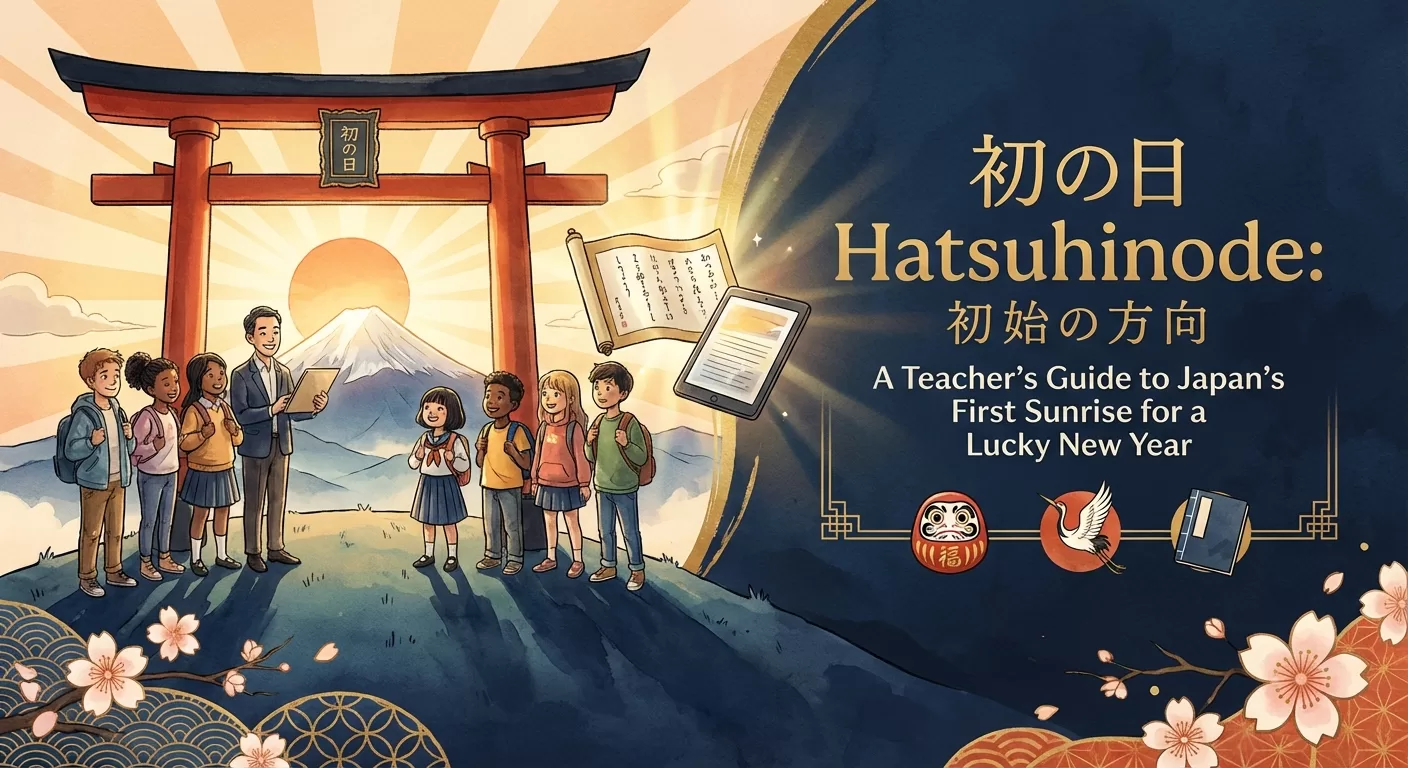
【Hatsuhinode】 A Teacher’s Guide to Japan’s First Sunrise for a Lucky New Year 🇯🇵🌅
Kumusta, students! As your Japanese language teacher, I am so excited to share one of the most beautiful and spiritually significant traditions in Japan: Hatsuhinode (初日の出). If you are planning to live in Japan or are currently studying the language, understanding the New Year traditions is essential. It is not just about the change of the calendar; it is about a fresh start, gratitude, and welcoming good fortune into your life.
In the Philippines, we usually celebrate the New Year with loud fireworks and festive music. In contrast, Japan’s New Year, or “Oshogatsu” (お正月), is a much quieter and more solemn affair. One of the highlights of this period is watching the very first sunrise of the year. This act is believed to bring luck, health, and happiness for the next 365 days. Let’s dive into everything you need to know about this magical experience! 💡
💡 Teacher’s Insight:
In Japanese culture, the “firsts” of the year are very important. We have Hatsuhinode (first sunrise), Hatsumode (first shrine visit), and even Kakizome (first calligraphy). Embracing these “firsts” shows your respect for the new beginning!
1. What exactly is Hatsuhinode? 🌅
The word Hatsuhinode (初日の出) literally translates to “first sun emergence.” While people all over the world watch sunrises, in Japan, this specific sunrise is tied to the Shinto belief in Toshigami-sama (歳神様), the deity of the New Year. It is said that the deity arrives with the first rays of the sun, bringing blessings to those who welcome it.
Historically, Japanese people would travel to high places like mountains or coastlines to witness the sun peaking over the horizon. Even today, thousands of people wake up as early as 3:00 AM on January 1st to find the perfect “spot.” As the sun rises, it is common to see people clasping their hands in prayer and making a silent wish for the year ahead. This moment is called “Goraiko” (御来光) when viewed from a high mountain like Mt. Fuji.
- The Spiritual Connection: Watching the sunrise is a way to “reset” your spirit. For many Filipinos, this might feel similar to attending a Misa de Gallo, where we prepare our hearts for a new season.
- Wishes and Prayers: When the sun appears, don’t forget to close your eyes and think about your goals—perhaps passing your Japanese language exams or finding a great community in Japan!
2. Essential Japanese Vocabulary for New Year 🏮
Before you head out to see the sunrise, you need to know how to greet people! Remember, greetings change depending on whether it is before or after the clock strikes midnight.
Japanese New Year Greeting Guide
| Japanese Phrase | Romaji | When to Use |
|---|---|---|
| 良いお年を | Yoi otoshi wo | Before Jan 1st (Wishing someone a good year end). |
| 明けましておめでとうございます | Akemashite omedetou gozaimasu | On or after Jan 1st (Happy New Year). |
| 今年もよろしくお願いします | Kotoshi mo yoroshiku onegaishimasu | After Jan 1st (Please be kind to me again this year). |
⚠️ Common Mistake Alert:
Never say “Akemashite omedetou” before the sun comes up on January 1st! It is strictly for after the New Year has begun. If you say it on December 31st, Japanese people will be very surprised!
3. Top Spots to Witness the First Sunrise 🗼🏔️
Japan has thousands of beautiful locations for Hatsuhinode, but some are more iconic than others. Depending on where you live or where you plan to travel, here are some recommendations:
- Mount Fuji (Yamanashi/Shizuoka): “Diamond Fuji” is the most sought-after view, where the sun sits perfectly on the tip of the mountain. It looks like a glowing diamond!
- Inubosaki (Chiba): This is the easternmost point of the Kanto region. Because it is so far east, it is one of the very first places in mainland Japan to see the sun rise!
- Tokyo Skytree & Tokyo Tower: Many observation decks in Tokyo hold special “Hatsuhinode” events. You have to buy tickets in advance through a lottery system because they are so popular. Seeing the sun rise over the cityscape of Tokyo is breathtaking.
- Cape Nosappu (Hokkaido): For those in the north, this is the earliest sunrise spot in all of Japan. Be prepared for extreme cold, though! ❄️
Viewing from the base (like Lake Motosu) is popular because climbing to the summit in winter is restricted and very dangerous.
🏯 Cultural Note:
Many people combine Hatsuhinode with Hatsumode. After watching the sun rise, they head straight to a nearby shrine to offer their first prayer of the year. It’s a busy but fulfilling morning!
4. How to Prepare for the Big Morning: A Practical Guide ✅
If you decide to participate in Hatsuhinode, you need to be prepared. Japanese winters, especially in the early morning, are incredibly cold. Here is your checklist to ensure a safe and “lucky” experience:
- Check the Timing: The sunrise usually happens between 6:45 AM and 7:15 AM, depending on your location. Use a weather app to check the exact “Hinode” (sunrise) time.
- Dress in Layers: It is not enough to just wear one thick jacket. Use the “Layering System”:
- Inner layer: Heattech (Uniqlo is your best friend here!)
- Middle layer: Fleece or sweater.
- Outer layer: Windproof and waterproof down jacket.
- Bring “Kairo” (Disposable Heat Packs): These are life-savers! You can buy them at any convenience store (Konbini). Stick them on your back or keep them in your pockets to keep your hands warm.
- Charge Your Camera: You will definitely want to take photos. However, cold weather drains phone batteries very quickly, so bring a power bank!
- Check Transportation: Most trains in Japan run all night from Dec 31st to Jan 1st, but they are often crowded. Check the special holiday schedules on apps like Google Maps or Jorudan.
What to Bring: The Filipino Survival Kit for Hatsuhinode
| Item | Why You Need It |
|---|---|
| Hot Thermos | Fill it with tea or coffee to stay warm from the inside out. |
| Gloves and Scarf | Your fingers and neck are the first to get cold! |
| Small Coins (5 yen) | For your first prayer at the shrine later. “Go-en” (5 yen) sounds like “good connection.” |
5. Other Traditions to Enjoy on New Year’s Day 🍱
Watching the sunrise is just the beginning of the Oshogatsu celebrations. To truly live like a local, you should also experience these traditions:
- Osechi Ryori (おせち料理): These are traditional Japanese New Year foods packed in beautiful lacquer boxes called *jubako*. Each food has a meaning. For example, Kuromame (black beans) are for health/hard work, and Kazunoko (herring roe) is for fertility.
- Otoshidama (お年玉): This is a favorite for children! Adults give money in small, decorated envelopes to their younger relatives. It’s similar to “Aguinaldo” in the Philippines.
- Nengajo (年賀状): These are New Year postcards. While many people use social media now, sending physical cards is still a very respected tradition in Japan.
- Toshikoshi Soba: Eaten on the night of December 31st. The long noodles symbolize a long and healthy life. Be sure to finish your bowl before midnight, or it’s considered bad luck!
6. A Special Message for Our Filipino Students 🇵🇭❤️🇯🇵
I know that spending New Year away from the Philippines can sometimes feel a bit lonely. You might miss the *Media Noche* with your family or the noise of firecrackers. However, I want to encourage you to embrace the beauty of Japanese silence.
There is something incredibly peaceful about standing in the cold, crisp morning air, surrounded by hundreds of people all waiting in silence for the sun to appear. When that first golden ray hits your face, you will feel a sense of renewed hope. It is a moment to reflect on your journey—how far you’ve come in your Japanese studies and the exciting future that awaits you in the Land of the Rising Sun.
As your teacher, my wish for you this year is that you stay healthy, continue to be curious, and never give up on your dreams. The Japanese language can be challenging, but just like the sun rising after a long, dark night, your hard work will eventually shine! 🌟
Let’s make this year the best one yet! Ganbatte kudasai! (Keep doing your best!)
Contact & Follow Us
お問い合わせ
📞 電話: +63 997 093 4550
📧 メール: samuraijapan.bc@gmail.com
🏠 住所: Room D3, Freb Bldg, Villa Donata Subd, Muntinlupa
🏢 会社名: SAMURAI Japan Business Center Inc.
SNSでフォロー
🎵 Tiktok: @samuraijapan0221
📸 Instagram: @samuraijapan.bc
▶️ Youtube: @SamuraiJapan-bc
📘 Facebook: Visit our Page
