

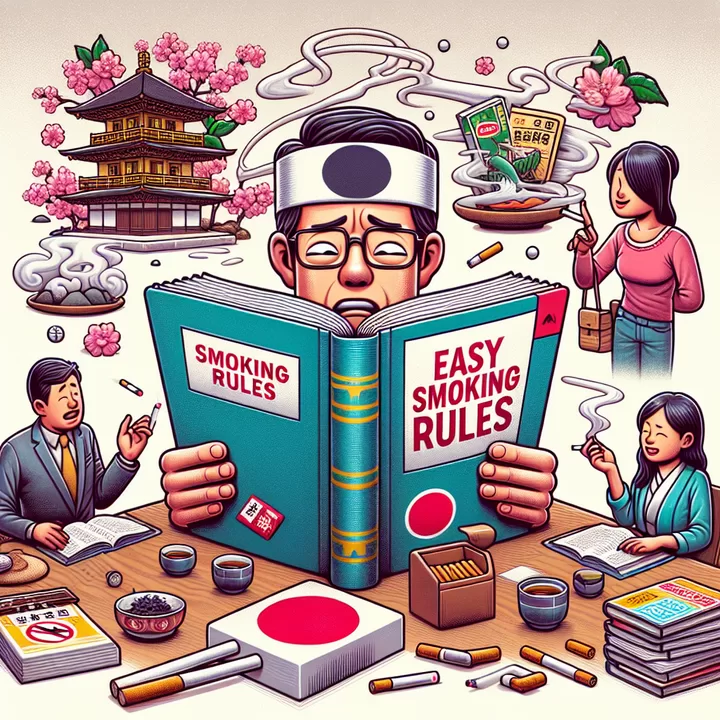
Don’t Get Confused! Japan’s Smoking Rules Made Easy 🇯🇵🚭
Hello there, future Japan adventurers! Are you excited about your dream life in Japan? Preparing for a new chapter means understanding not just the language, but also the daily customs and rules that make Japanese society so unique. Today, we’re tackling a topic that often confuses newcomers: smoking rules in Japan!
You might have heard stories about Japan being a “smoker’s paradise” in the past, but times have changed dramatically. With recent law revisions, Japan has become much stricter about where and when you can light up. Understanding these rules is crucial for a smooth and respectful experience, whether you’re living, working, or simply visiting. As your language teacher, my goal is to break down complex information into easy-to-understand tips, so let’s clear the smoke and get started! 🎉
The Big Picture: Why Japan’s Rules Changed (and Why They Matter to YOU!) 💡
For a long time, smoking was widely accepted in many indoor spaces in Japan, including restaurants and offices. However, with growing global health awareness and the lead-up to the 2020 Tokyo Olympics, Japan introduced significant changes to its Health Promotion Act. These revisions aimed to protect people from secondhand smoke, particularly in public places.
💡 Teacher’s Tip:
These rule changes are a big deal for public health and comfort. As a visitor or resident, respecting these rules shows your understanding and appreciation for Japanese society. It’s not just about avoiding fines; it’s about being a considerate member of the community. Plus, knowing these rules helps you avoid awkward situations and misunderstandings!
The core principle behind the new rules is “no smoking in principle indoors.” This means that most indoor public places are now completely smoke-free, or have very strictly separated smoking areas. This shift aligns Japan more closely with international standards for public health and environmental protection.
Understanding the Main Rules: Where Can You Smoke? 🤔
Let’s break down the general rules. Remember, these are nationwide guidelines, and local governments can impose even stricter regulations (we’ll cover that later!).
General Smoking Rule Overview in Japan
| Location Type | Traditional Cigarettes (紙巻たばこ) | Heated Tobacco (加熱式たばこ) | Key Japanese Terms |
|---|---|---|---|
| Restaurants & Bars | Generally prohibited indoors, except in designated 「喫煙専用室」 (Smoking Rooms) or places established before 2020 that meet specific criteria (rare). | Generally prohibited indoors. Some establishments might have 「加熱式たばこ専用喫煙室」 (Heated Tobacco Smoking Rooms) where food/drink is allowed. |
禁煙 (Kinen): No Smoking 喫煙可 (Kitsuen Ka): Smoking Permitted (rare indoors now) 喫煙専用室 (Kitsuen Sen’yō Shitsu): Smoking Room (no food/drink) 加熱式たばこ専用喫煙室 (Kanetsushiki Tabako Sen’yō Kitsuen Shitsu): Heated Tobacco Smoking Room (food/drink often allowed) |
| Workplaces & Public Facilities (Schools, Hospitals, etc.) | Strictly prohibited indoors. Designated outdoor smoking areas might exist. | Strictly prohibited indoors. |
敷地内禁煙 (Shichinai Kinen): No Smoking on Premises |
| Public Spaces (Streets, Parks, Train Stations) | Often prohibited in general outdoor areas. Designated smoking areas are the norm. Littering cigarette butts is a big NO! | Same as traditional cigarettes, often prohibited outside designated areas. |
路上喫煙禁止 (Rojō Kitsuen Kinshi): No Smoking on the Street 喫煙所 (Kitsuenjo): Smoking Area |
| Private Residences & Hotels | Allowed in private homes. Hotels often have designated smoking rooms or floors. Check upon booking. | Allowed in private homes. Same as traditional cigarettes in hotels. |
喫煙室 (Kitsuen Shitsu): Smoking Room (in hotels) 禁煙ルーム (Kinen Rūmu): Non-smoking Room (in hotels) |
💡 Cultural Insight:
In Japan, avoiding 「迷惑」(meiwaku), which means “nuisance” or “trouble to others,” is a core social value. This is especially true for secondhand smoke. Even if a small area *seems* permissible, if you’re causing discomfort to others (especially children or the elderly), it’s best to refrain or move to a designated spot. Your consideration will be greatly appreciated!
Traditional vs. Heated Tobacco: Are They Different? 🌬️
This is a common point of confusion. In Japan, there are two main categories of tobacco products that often come up in discussions about smoking rules:
* 「紙巻たばこ」(Kamimaki tabako): These are traditional paper cigarettes that burn tobacco.
* 「加熱式たばこ」(Kanetsushiki tabako): These are heated tobacco products (like IQOS, glo, Ploom TECH) that heat tobacco without combustion, producing vapor rather than smoke.
While heated tobacco products emit less odor and no ash, the general trend in Japan is to treat them similarly to traditional cigarettes regarding smoking bans. This means:
* **Most indoor public places are smoke-free for both.**
* Some restaurants or cafes might have a specific 「加熱式たばこ専用喫煙室」(kanetsushiki tabako sen’yō kitsuen shitsu) where you can use heated tobacco and sometimes even eat or drink. These rooms are clearly marked.
* Outdoor street smoking rules typically apply to both as well.
⚠️ Common Mistake Alert:
Don’t assume that because heated tobacco doesn’t produce smoke, it’s allowed everywhere traditional cigarettes are banned! Always look for signs or ask staff if you’re unsure. When in doubt, it’s always safer to assume no smoking is allowed unless you see a clear sign indicating otherwise.
The Lifesaver: Finding a Designated Smoking Area (喫煙所 – Kitsuenjo) ✅
Since smoking is largely restricted outdoors in many areas and indoors almost everywhere, designated smoking areas (喫煙所 – kitsuenjo) are your best friends. These are special, often enclosed, areas where smoking is permitted. They are designed to concentrate smoke and prevent it from bothering non-smokers.
**How to find a kitsuenjo:**
* **Look for signs:** They are usually marked with clear pictograms of a cigarette or smoke, often with Japanese characters for 「喫煙所」.
* **Use smartphone apps:** There are apps available (some in English) that map out designated smoking areas in major cities. A quick search for “Japan smoking area map” might yield useful results.
* **Ask for directions:** If you’re struggling, you can politely ask staff at a convenience store or train station: 「喫煙所はどこですか?」(Kitsuenjo wa doko desu ka? – Where is the smoking area?)
**Common places to find kitsuenjo:**
1. Train Stations: Many larger train stations, especially those with outdoor platforms or concourses, have designated smoking rooms or outdoor areas.
2. Convenience Stores (コンビニ – Konbini): Some convenience stores, particularly those with a small seating area, might have a designated smoking corner or a small booth outside.
3. Shopping Malls & Department Stores: Large commercial complexes usually have dedicated smoking rooms, often on specific floors or near restrooms.
4. Airports & Major Tourist Spots: Always have clearly marked smoking areas.
5. Cafes & Restaurants: While most are smoke-free, some chain cafes (like Excelsior Cafe, Doutor Coffee) and certain restaurants still maintain smoking sections or separate rooms. Look for signs indicating 「喫煙可」(kitsuen ka) or 「喫煙専用室」(kitsuen sen’yō shitsu).
6. Pachinko Parlors: These entertainment establishments often have very lenient smoking rules, sometimes even allowing smoking throughout the premises, though this is becoming less common.
Local Rules Matter: Beyond the National Law 🏙️
While the national Health Promotion Act sets a baseline, individual prefectures and cities in Japan have the power to enact their own, stricter ordinances. Tokyo, for example, is known for having some of the most stringent smoking rules, especially regarding street smoking.
For instance, in many parts of central Tokyo (like Shinjuku, Shibuya, Chiyoda Ward), 「路上喫煙禁止」(rojō kitsuen kinshi – no smoking on the street) signs are ubiquitous. Violating these local ordinances can result in fines, often ranging from 1,000 to 5,000 yen. These bans are not just about health; they’re also about preventing litter (cigarette butts) and maintaining cleanliness.
💡 Teacher’s Tip:
When you arrive in a new city or district in Japan, take a moment to observe the surroundings. Look for signs, especially near train stations and busy shopping streets. If you see people smoking, they are almost certainly in a designated area. When in doubt, look for a 「喫煙所」 or simply refrain until you can confirm the rules.
Always keep an eye out for local signs, especially in busy urban areas. It’s a small effort that goes a long way in showing your respect for Japanese rules and culture.
Japanese Vocabulary You’ll Need! 🗣️
To help you navigate these rules, here’s a quick vocabulary list. Learning these phrases will empower you to understand signs and ask questions confidently.
Essential Smoking-Related Japanese Vocabulary
| Kanji/Kana | Romaji | Meaning / Context |
|---|---|---|
| 禁煙 | Kinen | No Smoking (most common sign you’ll see) |
| 喫煙所 | Kitsuenjo | Designated Smoking Area (your go-to place!) |
| 喫煙室 | Kitsuen Shitsu | Smoking Room (often in hotels, some restaurants) |
| 路上喫煙禁止 | Rojō Kitsuen Kinshi | No Smoking on the Street (common in big cities) |
| 加熱式たばこ | Kanetsushiki Tabako | Heated Tobacco (e.g., IQOS, glo, Ploom TECH) |
| 灰皿 | Haizara | Ashtray (look for these in smoking areas) |
| 喫煙可 | Kitsuen Ka | Smoking Permitted (rarely seen indoors now, mostly for the specific heated tobacco rooms or very old establishments) |
| 喫煙席 | Kitsuen Seki | Smoking Seats (often implying a separated area or room) |
| 禁煙席 | Kinen Seki | Non-smoking Seats |
| 喫煙所はどこですか? | Kitsuenjo wa doko desu ka? | Where is the smoking area? (polite question) |
⚠️ Remember:
Always dispose of your cigarette butts properly in an ashtray. Littering is not only illegal in many places but also considered extremely impolite in Japan.
Conclusion: Smoke Smart, Live Smooth in Japan! 🌟
Navigating Japan’s smoking rules might seem a bit complicated at first, especially with the different types of tobacco and local variations. However, by understanding the core principle – “no smoking indoors in principle” and “use designated smoking areas” – you’ll be well on your way to a smooth and respectful experience.
The most important thing is to always be observant, look for clear signs, and when in doubt, just ask! Japanese people appreciate efforts to understand and follow their rules. By doing so, you’re not just avoiding penalties; you’re showing consideration for those around you, a deeply valued aspect of Japanese culture.
Keep studying, keep exploring, and keep embracing these small but significant cultural nuances. Every bit of knowledge you gain now will make your future life in Japan even more enjoyable and fulfilling! Ganbatte kudasai! (Good luck!) 🎉
Contact & Follow Us
お問い合わせ
📞 電話: +63 997 093 4550
📧 メール: samuraijapan.bc@gmail.com
🏠 住所: Room D3, Freb Bldg, Villa Donata Subd, Muntinlupa
🏢 会社名: SAMURAI Japan Business Center Inc.
SNSでフォロー
🎵 Tiktok: @samuraijapan0221
📸 Instagram: @samuraijapan.bc
▶️ Youtube: @SamuraiJapan-bc
📘 Facebook: Visit our Page

Leave a Reply