
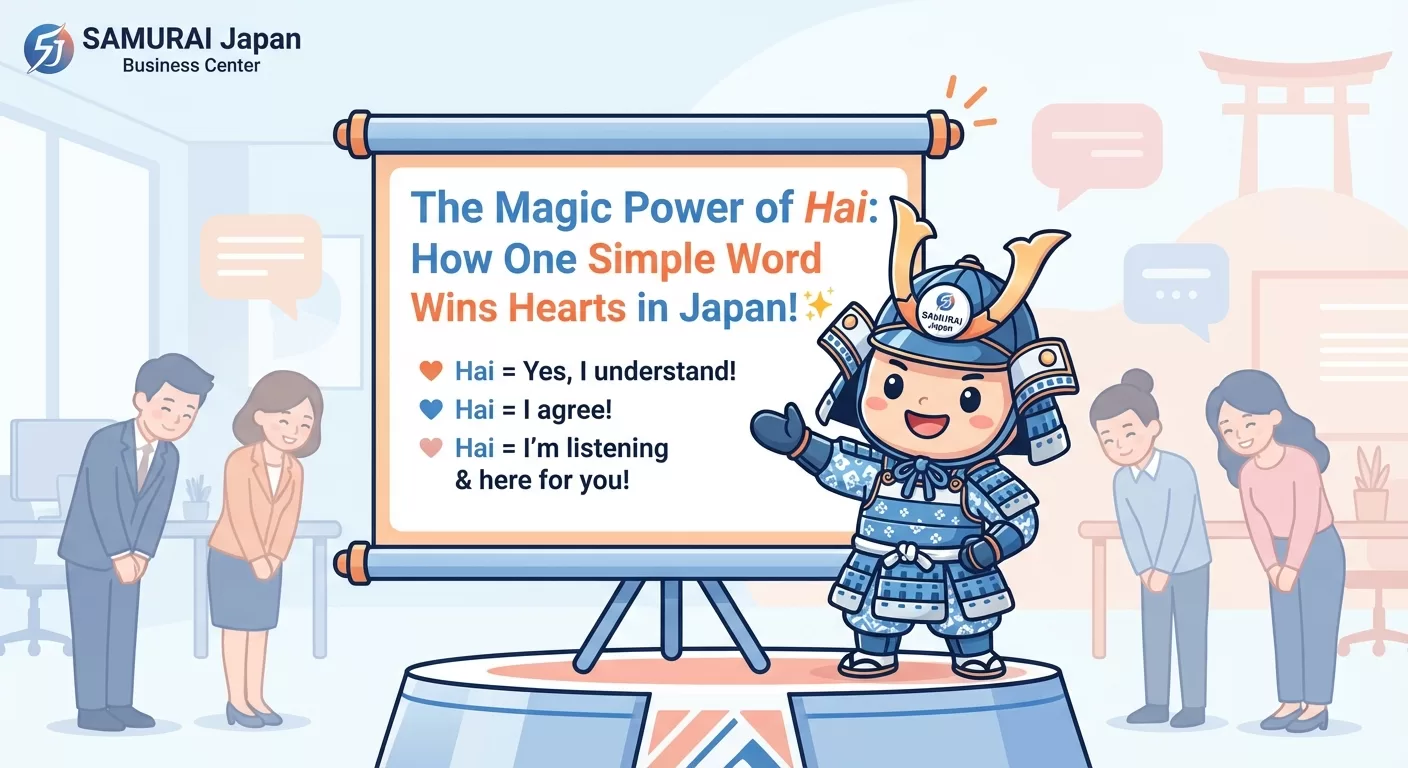
The Magic Power of Hai: How One Simple Word Wins Hearts in Japan! ✨ / 「はい」の魔法:たった一言で日本の心を掴むコミュニケーション術! ✨
Executive Summary / エグゼクティブサマリー
In Japanese professional culture, the simple word “Hai” (はい) is far more than a direct translation of “Yes.” It functions as a dynamic communicative anchor that signals active listening, emotional readiness, mutual respect, and operational alignment. For global talent, particularly Filipino learners and professionals training for Japanese business environments, mastering the vocal projection, posture, and contextual nuances of “Hai” is the fastest way to earn credibility and trust. At SAMURAI Japan Business Center, our business curriculum integrates intensive vocal and situational drills to transform basic language acquisition into polished corporate soft skills.
日本のビジネス文化において、「はい」という言葉は単なる「Yes」の直訳をはるかに超えた役割を果たします。それは、積極的傾聴、業務への前向きな姿勢、相互尊重、そして認識の一致を示す動的なコミュニケーションの要です。日本のビジネス環境を目指すグローバル人材、とりわけフィリピンの学習者や社会人にとって、「はい」の発声、姿勢、そして文脈に応じたニュアンスを習得することは、職場での信頼を最速で獲得する鍵となります。SAMURAI Japan Business Centerでは、実践的な発声指導と状況別ロールプレイを通じ、基礎的な語学学習を洗練されたビジネスマナーへと昇華させるトレーニングを実施しています。
When entering a Japanese workplace, beginners often focus heavily on mastering complex honorifics (Keigo) or memorizing technical terminology. While those elements are certainly valuable, Japanese business veterans often evaluate a professional’s foundational attitude through their basic response habits. A crisp, energetic, and timely “Hai!” creates an immediate impression of competence and dependability before a single sentence of complex grammar is spoken.
日本の職場に足を踏み入れる際、多くの初心者は複雑な敬語や専門用語の暗記に気を取られがちです。もちろんそれらも重要ですが、現場のリーダーや経営陣が何よりも最初に見極めるのは、基礎的な「返事」の質です。歯切れよく、明るく、適切なタイミングで発せられる「はい!」は、難しい文法を駆使する前に、プロフェッショナルとしての意欲と信頼性を瞬時に相手へ伝えます。
💡 Instructor’s Strategic Insight / 指導員の戦略的視点:
In professional Japanese training, “Hai” is categorized not merely as vocabulary, but as an operational response system. Just as polite greetings define first impressions (as explored in our guide on 5 Simple Japanese Greetings to Make a Great Impression), the resonance of your response establishes psychological safety for your supervisor and team.
実践的なビジネス日本語指導において、「はい」は単なる単語ではなく「業務応答システム」として位置づけられます。第一印象を決定づける挨拶と同様に、返事の響き一つが、上司やチーム全体に心理的安全性と安心感をもたらします。
The Multi-Faceted Nature of “Hai” / 単なる「Yes」を超えた「はい」の多機能性
In English and Tagalog, words like “Yes” or “Opo” are primarily transactional—they confirm agreement or truth. In Japanese, however, “Hai” operates across linguistic, psychological, and organizational dimensions. It signals to the speaker that their voice has been received, processed, and respected.
英語やタガログ語における「Yes」や「Opo」は、主に事実の肯定や合意を示す機能を持っています。しかし日本語の「はい」は、言語的、心理的、そして組織的な複数の次元で作用します。相手の声を受け止め、理解し、敬意を払っているという事実をリアルタイムで相手にフィードバックする役割を担っているのです。
Understanding these distinct functions prevents misunderstandings between international personnel and Japanese management. When a supervisor speaks, silence is rarely perceived as deep contemplation; rather, it is often misinterpreted as confusion, hesitation, or disinterest. Maintaining a steady current of responsive “Hai” creates continuous communicative flow.
これらの機能を正しく理解することは、外国人材と日本人管理者との間のミスコミュニケーションを防ぐ上で不可欠です。上司が指示を出している際の「沈黙」は、熟考ではなく、理解不足や消極性と受け取られてしまうリスクがあります。適切な「はい」のリズムを保つことが、円滑な対話の土台を形成します。
The Three Core Dimensions of “Hai” in Business / ビジネスにおける「はい」の3大機能
To deploy this phrase effectively in professional settings, trainees must master its three core operational uses:
職場で「はい」を効果的に使いこなすためには、以下の3つの基本的役割を理解し、使い分ける必要があります。
- 1. 返事 (Henji) – The Acknowledgment of Presence and Readiness
When your name is called in an office, on a manufacturing floor, or in a client meeting, “Hai!” signifies immediate readiness to act. A sharp, clear tone shows that your attention is 100% focused on the person calling you.
1. 返事(へんじ) – 存在と初動態勢の表明
オフィスや現場、商談の場で名前を呼ばれた際の発声です。ハキハキとした張りのあるトーンは、相手に全神経を集中させ、いつでも行動できる態勢が整っていることを示します。 - 2. 相槌 (Aizuchi) – The Rhythm of Active Listening
During explanations or training, soft and periodic “hai… hai…” insertions confirm comprehension. This reassuring cadence allows the speaker to proceed smoothly without pausing to verify if you are listening. For deeper study on conversational rhythm, review our comprehensive breakdown of The Magic Secret of Aizuchi for Japanese Conversations.
2. 相槌(あいづち) – 傾聴と理解のリズム
業務指示や研修を受ける際、要所で挟む穏やかな「はい…はい…」は、理解の進行を示します。この相槌があることで、話し手は不安を感じることなく説明を継続できます。 - 3. 承諾・肯定 (Shoudaku / Koutei) – Clear Consent and Affirmation
When an instruction or task deadline is given, a resolute “Hai, wakarimashita” (Yes, understood) closes the feedback loop. It represents an official acceptance of responsibility for the assigned task.
3. 承諾・肯定(しょうだく・こうてい) – 責任ある受諾の意思表示
具体的な指示や納期を提示された際、力強い「はい、わかりました」で応答することは、業務の引き継ぎを完了させ、責任を持って完遂するという誓約を意味します。
| Role (役割) | Vocal Tone & Demeanor (発声と所作) | Business Impact (ビジネス上の効果) |
|---|---|---|
| 返事 (Henji / Calling) | Crisp, energetic, higher pitch, eye contact | Projects enthusiasm, alertness, and reliability. |
| 相槌 (Aizuchi / Listening) | Gentle, moderate volume, synchronized with small nod | Provides reassurance that information is being retained. |
| 承諾 (Shoudaku / Affirming) | Firm, composed, paired with a formal bow (Ojigi) | Confirms task acceptance and operational clarity. |
Acoustics and Posture: The Non-Verbal Power of “Hai” / 声のトーンと姿勢:「はい」の非言語的コミュニケーション力
Linguistic accuracy is only half the equation in Japanese business manners. The acoustic quality—volume, clarity, and resonance—combined with posture dictates how sincerity is judged. In Japanese training methodology, vocal production starts from the diaphragm, accompanied by an upright posture and immediate eye contact before executing a polite bow.
日本のビジネスマナーにおいて、正しい言葉遣いは全体の半分に過ぎません。声の張り、明瞭さ、響きといった音響的要素と、背筋を伸ばした姿勢が合わさって初めて「誠実さ」として評価されます。ビジネス研修では、丹田(腹部)から声を出し、相手の目を見て返事をした後にお辞儀をするという一連の動作を徹底して訓練します。
A weak or dragged “ha~i” sounds unmotivated, whereas a harsh, clipped response can sound defensive or irritated. Aligning your vocal pitch to a bright “Do-Re-Mi” scale (aiming for the “Sol” note) conveys proactive energy and positive team spirit. Mastering this non-verbal alignment is closely related to the operational communication framework taught in our guide on How to Master the Magic of Hourensou.
語尾が伸びた「は〜い」はやる気の欠如を感じさせ、逆に鋭すぎる返事は不快感や反抗心と誤認される恐れがあります。「ソ」の音階を意識した明るいトーンで発声することで、前向きなエネルギーと協調性が伝わります。こうした非言語コミュニケーションの調整は、報連相(報告・連絡・相談)の円滑な運用にも直結しています。
Common Pitfalls for Foreign Professionals and How to Overcome Them / 外国人プロフェッショナルが陥りやすい落とし穴と対策
Even highly skilled professionals frequently stumble over cultural communication habits when transitioning into Japanese corporate structures. Here are three critical pitfalls and their professional corrections:
専門スキルの高い人材であっても、文化的な応答習慣の違いによって思わぬ摩擦を生むことがあります。以下に代表的な3つの落とし穴と、その改善策をまとめました。
- 1. Saying “Hai” When You Do Not Understand (分かっていないのに「はい」と言う)
The biggest risk in a Japanese workplace is nodding and saying “Hai” out of politeness when the instructions are unclear. In Japanese business, “Hai” during a task handover implies full comprehension. If you are uncertain, immediately transition to polite clarification: “Sumimasen, mou ichido oshiete itadakemasu ka?” (Excuse me, could you please explain that once more?). Reviewing foundational phrases like those in our article on Mastering the Versatile Word Sumimasen is vital here.
1. 理解していない状態での返事
指示内容が曖昧なまま、礼儀のつもりで「はい」と答えてしまうことは最大のミスにつながります。業務受諾時の「はい」は完全な理解を意味するため、不明点がある場合は即座に「すみません、もう一度教えていただけますでしょうか」と確認する勇気が必要です。 - 2. Confusing “Hai” with Informal Slang (「うん」「ええ」などの口語表現との混同)
In casual conversations, native speakers frequently use “Un” or “Ee.” However, using these in a professional workplace or toward superiors is considered unprofessional. Professional training establishes “Hai” as an unbroken standard for formal business hierarchy.
2. くだけた返答表現の使用
日常会話では「うん」や「ええ」といった表現も使われますが、職場や目上の人に対してこれらを用いるのは不作法と見なされます。ビジネスシーンでは常に「はい」で統一する習慣を身につけることが肝要です。 - 3. Repetitive Multitasking Replies (「はいはい」と二度繰り返す癖)
Saying “Hai, hai!” twice in rapid succession often carries a dismissive or annoyed undertone in Japanese culture, akin to saying “Yeah, yeah, I get it.” Cultivate the discipline of a single, crisp, focused “Hai!”
3. 「はいはい」という二重返事
「はいはい」と繰り返す返事は、日本語では「分かっているから急かさないでほしい」という投げやりな印象を与えてしまいます。真心を込めた単発の「はい!」を徹底することが求められます。
The SAMURAI Japan Training Methodology / SAMURAI Japan Business Centerの実践的指導メソッド
At SAMURAI Japan Business Center, language training is never treated as isolated textbook memorization. We recognize that international professionals require complete situational competence—combining linguistic precision, vocal projection, body language, and cultural understanding.
SAMURAI Japan Business Centerでは、語学教育を単なる机上の暗記作業として捉えていません。グローバル人材が真に活躍するためには、正確な文法知識に加え、発声法、身体所作、そして文化的背景への深い理解が一体となった総合的なスキルが必要です。
Our curriculum implements real-time workplace simulations where trainees practice taking instructions, answering emergency calls, participating in team meetings, and executing professional bows simultaneously with vocal responses. By conditioning these habits until they become second nature, we ensure that every trainee meets the rigorous standards expected by Japanese corporate leaders.
当センターのカリキュラムでは、指示受け、電話対応、朝礼、お辞儀と連動した発声など、実際の職場を模したシミュレーショントレーニングを反復実施しています。頭で考える前に自然と正しいビジネスマナーが実践できるレベルまで身体に定着させることで、日本企業の高い期待に応える人材育成を実現しています。
Frequently Asked Questions (FAQ) / よくある質問 (FAQ)
Q1: If I say “Hai” while listening, does my boss think I agree with everything? / 話を聞きながら「はい」と相槌を打つと、すべてに賛成したと見なされますか?
A1: Not necessarily. During the listening phase, “Hai” functions as an active backchannel (Aizuchi), meaning “I am following your words.” However, when a direct proposal or task is finalized, “Hai” does signify official agreement and acceptance. If you have concerns, wait for the speaker to finish and politely raise your points.
A1: 必ずしもそうではありません。説明を聞いている最中の「はい」は相槌(傾聴のサイン)であり、「話を聞いています」という意味です。ただし、指示や提案の締めくくりでの「はい」は承諾を意味します。懸念がある場合は、相手の話が終わった段階で丁寧に質問や意見を述べましょう。
Q2: Why do Japanese companies emphasize response tone so strictly during onboarding? / なぜ日本企業は入社時や研修時に返事のトーンをこれほど厳しく指導するのですか?
A2: In organizational operations, quick and clear responses are the primary indicators of safety, communication efficiency, and team cohesion. A team member who responds clearly eliminates ambiguity, prevents operational errors, and fosters a transparent, dependable work environment.
A2: 組織運営において、迅速で明瞭な返事は、安全性、伝達効率、そしてチームの結束力を測る最大の指標だからです。ハキハキとした返答ができる人材は業務上の曖昧さを排除し、ミスを未然に防ぎ、信頼関係を強固にします。
Q3: How can beginner learners practice natural “Hai” projection at home? / 初心者が自宅で自然な「はい」の発声を練習するにはどうすればよいですか?
A3: Practice in front of a mirror: stand with your spine straight, take a breath from your stomach, look directly at your own reflection, and produce a clear, vibrant “Hai!” at a slightly elevated musical pitch. Recording your voice on a smartphone and comparing it with professional audio helps refine your tone rapidly.
A3: 鏡の前での練習が最も効果的です。背筋を伸ばし、腹式呼吸を意識しながら、鏡の中の自分と目を合わせて明るいトーン(少し高めの音階)で「はい!」と発声します。スマホで録音し、客観的に自分の声を確認することで、短期間で劇的に改善します。
Conclusion: Building Unshakeable Trust One “Hai” at a Time / 結び:確かな信頼を築く「はい」の力
Mastering the Japanese language is a journey built on steady daily practice and cultural awareness. While large goals like passing the JLPT or leading high-level meetings take time, winning the hearts and trust of your Japanese colleagues begins with the very first word you speak each day. Embrace the power of a vibrant, sincere, and perfectly timed “Hai!”—it is your most powerful tool to bridge cultures and unlock your professional potential.
日本語の習得は、日々の地道な練習と異文化への理解の上に築かれる素晴らしい旅です。JLPTの合格や高度なビジネス交渉には一定の時間を要しますが、周囲の人々の心を掴み、確かな信頼関係を築く最初の一歩は、毎日交わす何気ない返事の中にあります。明るく、誠実で、心のこもった「はい!」の力を信じて実践してください。その一言が、文化の架け橋となり、あなたのキャリアの可能性を大きく広げていくはずです。
🇯🇵 日本語で新しい可能性を広げよう! ✨
SAMURAI Japan Business Centerは、あなたの日本語学習を全力でサポートします。
🚀 Start Your Learning Journey Today!
Ready to learn Japanese? Apply for our programs now!
🏫 お問い合わせ (Contact Us)
📞 Phone: +63 997 093 4550
📧 Email: samuraijapan.bc@gmail.com
🏢 Address: Room D3, Freb Bldg, Villa Donata Subd, Muntinlupa
📱 SNSで楽しく学ぼう!
Related posts:
 Win Hearts in Japan! The Magic Phrase for a Perfect End to Your Work Day ✨
 “Iru” or “Aru”? Master the Secret of Existence in Japanese!
 Cute or Scary?
 Try It On with Confidence! Easy Japanese Phrases for Your First Shopping Trip in Japan 👗✨
 Tick-Tock! 🕰️ Mastering the “Ji” and “Fun” Mystery in Japanese!
 Maria: The Elevator Captain
