
📋 Executive Summary / エグゼクティブ・サマリー
This lesson explores the five foundational secrets of Japanese cooking: Sa-Shi-Su-Se-So (seasoning order), Dashi (umami soul), Shun (seasonal respect), Ichiju-Sansai (nutritional balance), and Omotenashi (cooking with heart). Each concept bridges language, culture, and daily life in Japan.
本記事では、日本料理の基本となる5つの秘密を学びます。さしすせそ(調味料の順序)、だし(旨味の魂)、旬(季節への敬意)、一汁三菜(栄養バランス)、おもてなし(心を込める料理)。言語・文化・生活がつながる学びです。
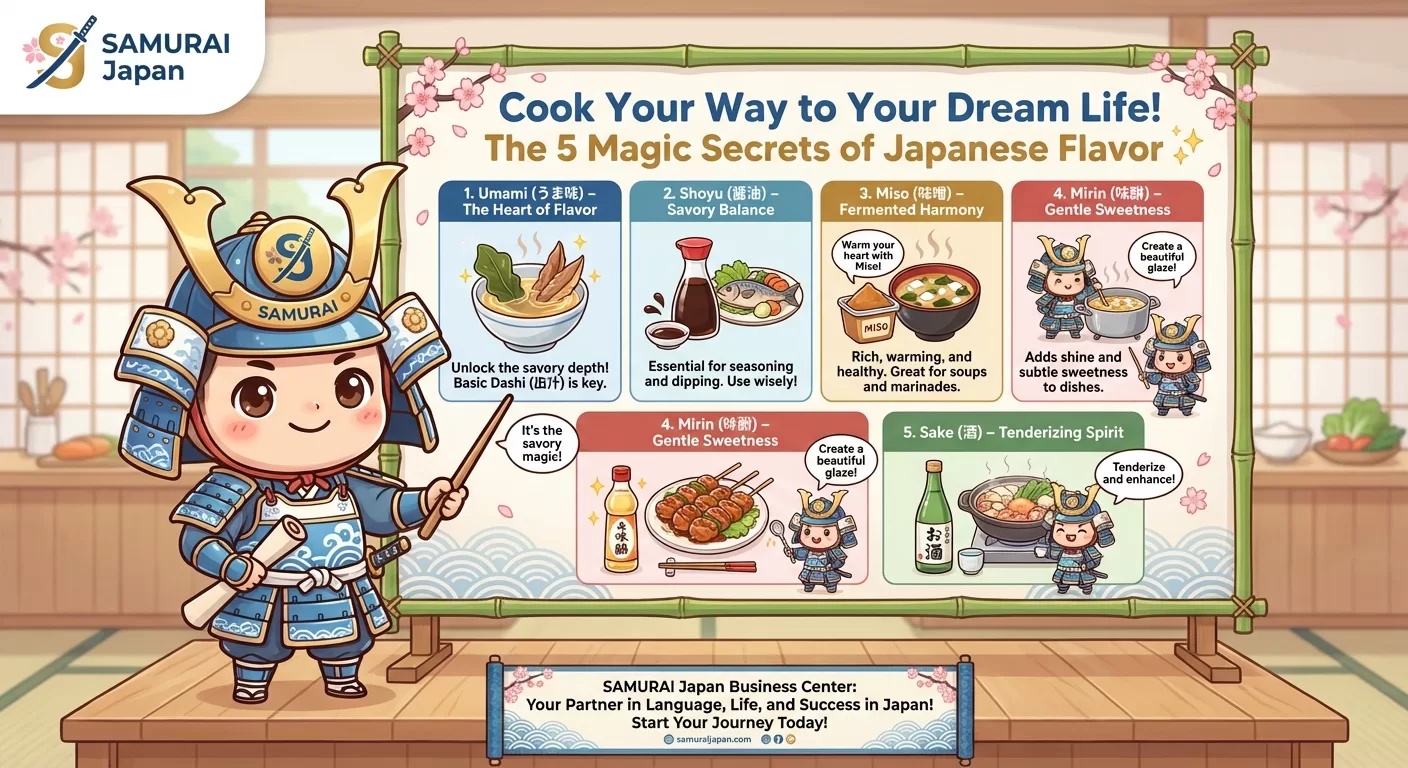
Cook Your Way to Your Dream Life! The 5 Magic Secrets of Japanese Flavor ✨
Hello everyone! Welcome to another lesson from your instructors at SAMURAI Japan Business Center. Are you excited to live and work in Japan? Today, let’s talk about something delicious—food! Understanding Japanese flavors is a great way to prepare for your new life and connect deeply with the local culture.
皆さん、こんにちは!SAMURAI Japan Business Centerの講師です。日本で生活したり働いたりするのが楽しみですか?今日は「食」についてお話ししましょう!日本の味を理解することは、新しい生活の準備をし、現地の文化とつながるための素晴らしい方法です。
Cooking is not just about eating; it is a bridge to the Japanese heart. By mastering these 5 magic secrets, your dream life in Japan will be much more flavorful and fun!
料理はただ食べるだけではなく、日本の「心」への架け橋です。この5つの魔法の秘密をマスターすれば、日本での夢の生活はもっと味わい深く、楽しいものになるでしょう!
1. The Magic Order: Sa-Shi-Su-Se-So ✨ / 魔法の順番:「さしすせそ」 ✨
In Japan, there is a traditional mnemonic called Sa-Shi-Su-Se-So to remember the correct order of seasonings. Adding them in this specific sequence allows flavors to layer properly, making home cooking taste noticeably better.
日本には、調味料を入れる正しい順番を覚える「さしすせそ」という伝統的な合言葉があります。この順番で入れると味が layers よく重なり、家庭料理がぐっと美味しくなります。
| Character | Japanese | English |
|---|---|---|
| さ (Sa) | 砂糖 (Sato) | Sugar |
| し (Shi) | 塩 (Shio) | Salt |
| す (Su) | 酢 (Su) | Vinegar |
| せ (Se) | 醤油 (Shoyu) | Soy Sauce |
| そ (So) | 味噌 (Miso) | Fermented Soybean Paste |
💡 Pro-Tip / 学習のポイント
Sugar takes longer to soak into ingredients, while Miso loses its aroma if boiled too long. That is why the order begins with Sa and ends with So.
砂糖は味が染み込むのに時間がかかり、味噌は煮込みすぎると香りが飛びます。だから「さ」から始まり「そ」で終わるのです。
2. The Soul of Umami: Dashi 🐟 / 旨味の魂:「だし」 🐟
The secret behind the savory depth of Japanese cuisine is Dashi, the traditional soup stock. It is extracted from ingredients such as kombu (kelp) and katsuobushi (bonito flakes). Dashi is the foundation of miso soup, ramen, and simmered dishes.
日本料理の奥深い旨味の秘密は「だし」です。昆布やかつお節などから取られる伝統的な出汁で、味噌汁、ラーメン、煮物の土台となります。
Learning to use dashi will elevate your home cooking to the level of a real Japanese restaurant. When shopping for ingredients, our guide on mastering Japanese supermarkets will help you find authentic pantry staples with confidence.
だしを使いこなせるようになると、自炊の料理が本物の日本料理店の味になります。食材探しには、日本のスーパーをマスターするガイドが役立ちます。
3. Respecting the Seasons: Shun 🌸 / 季節を敬う:「旬」 🌸
Japanese cuisine places great value on Shun, the peak season of an ingredient. Eating food at its Shun means it is freshest, most nutritious, and most affordable. For example, Sakura-dai (sea bream) is celebrated in spring, while Sanma (mackerel pike) is loved in autumn.
日本料理では「旬」を大切にします。旬とは食材が最も美味しい時期のこと。旬の食べ物は新鮮で栄養価が高く、価格も手頃です。春の桜鯛、秋のさんまなど、季節ごとに楽しみがあります。
4. Balance of Health: Ichiju-Sansai 🍱 / 健康のバランス:「一汁三菜」 🍱
A traditional Japanese meal follows Ichiju-Sansai, literally “one soup and three side dishes,” served with rice. This structure ensures balanced nutrition, which is essential for students and professionals working hard in Japan.
伝統的な和食は、ご飯とともに「一汁三菜」(1つの汁物と3つのおかず)を基本とします。この構成で栄養バランスが整い、日本で勉強や仕事に励む方の健康を支えます。
📝 Useful Vocabulary / 役立つ単語
Gohan (ご飯): Rice / Okazu (おかず): Side dish / Oishii (美味しい): Delicious
5. Cooking with Love: Omotenashi ❤️ / 愛を込めて料理する:「おもてなし」 ❤️
The final secret is Omotenashi, the Japanese spirit of hospitality. It means thinking about the person who will eat the food. Is the temperature right? Is the presentation thoughtful? Even when cooking for yourself, applying Omotenashi builds gratitude and self-care—the first step toward your dream life.
最後の秘密は「おもてなし」、日本のホスピタリティの心です。食べる人のことを考え、温度や盛り付けに心を配ります。自分のための料理でもおもてなしを実践すれば、感謝と自己ケアが育まれ、夢の生活への第一歩となります。
The SAMURAI Japan Methodology / サムライジャパンの指導法
At SAMURAI Japan Business Center, we teach food vocabulary not as isolated words but as living cultural concepts. Our curriculum pairs language drills with real-life scenarios—reading supermarket labels, ordering at ramen shops, and understanding recipe instructions. This is why our students learn how to communicate, not just memorize.
SAMURAI Japan Business Centerでは、食べ物の語彙を単なる単語としてではなく、生きた文化の概念として教えます。スーパーのラベルを読む、ラーメン店で注文する、レシピを理解するといった実生活の場面を言語ドリルと組み合わせることで、単なる暗記ではなく「伝える力」を育てます。
For dining-out training, we use our own guide to ordering and paying in Japanese restaurants, and for everyday cooking, our students practice with the essential kitchen tools available at 100-yen shops.
外食の練習にはレストランでの注文・会計ガイドを、日常の料理には100円ショップで揃うキッチン用品を使い、実践的に学びます。
Q&A (FAQ) / よくある質問
- Do I need to memorize these five secrets before coming to Japan?
No—but understanding them beforehand helps you adapt faster. Even just knowing the word dashi will make shopping and dining easier once you arrive.
日本に来る前に暗記する必要はありませんが、事前に理解していると適応が早まります。だしという言葉を知っているだけでも、買い物や外食がスムーズになります。
- Are these concepts useful for workplace communication?
Yes. Food is a common icebreaker in Japanese offices. Being able to discuss Shun or compliment a colleague’s bento shows cultural awareness and builds trust.
はい。食べ物は職場の雑談でよく使われます。旬の話やお弁当への感想を伝えられると、文化的な理解を示し、信頼関係を築けます。
- Can I learn cooking Japanese while studying Japanese simultaneously?
Absolutely. Reading recipes in Japanese is one of the most rewarding ways to practice Kanji and Katakana. Many students begin with 100-yen shop cookware and simple miso soup recipes.
もちろんです。日本語でレシピを読むことは、漢字やカタカナの練習に最適です。まずは100円ショップの調理道具と簡単な味噌汁から始める学生が多いです。
Conclusion / まとめ
Learning to cook Japanese food is just like learning the Japanese language: it takes practice, patience, and heart—but the results are deeply rewarding. Whether you are preparing for language training or professional upskilling at SAMURAI Japan Business Center, these five secrets will enrich your daily life in Japan.
日本料理を学ぶことは、日本語を学ぶこととよく似ています。練習と忍耐、そして心が必要ですが、その成果はとても素晴らしいものです。SAMURAI Japan Business Centerでの語学研修やビジネスマナー・スキルアップを目指す皆さんにとって、この5つの秘密は日本での毎日の生活を豊かにしてくれます。
Keep practicing, keep tasting, and keep growing. We are here to support you every step of your journey. Ganbatte kudasai!
練習を続け、味わい、成長し続けましょう。私たちは皆さんの歩みを全力でサポートします。頑張ってください!
🇯🇵 日本語で新しい可能性を広げよう! ✨
SAMURAI Japan Business Centerは、あなたの日本語学習を全力でサポートします。
🚀 Start Your Learning Journey Today!
Ready to learn Japanese? Apply for our programs now!
🏫 お問い合わせ (Contact Us)
📞 Phone: +63 997 093 4550
📧 Email: samuraijapan.bc@gmail.com
🏢 Address: Room D3, Freb Bldg, Villa Donata Subd, Muntinlupa
📱 SNSで楽しく学ぼう!
Related posts:
 Your Japan Dream is Calling! 5 Simple Secrets to Start Learning Japanese Today 🇯🇵✨
 Be a Workplace Superstar! Easy Japanese Greetings and Manners to Help You Shine 🇯🇵
 Start Your Dream Life in Japan! 5 Must-Have 100-Yen Shop Finds for Your New Home 🇯🇵
 Shine at Your Dream Workplace! 5 Simple Japanese Greetings to Make a Great Impression 🇯🇵
 Master the Konbini! Easy Tips and Phrases for Your Dream Life in Japan 🏪
 Master Japan’s Trains Like a Pro! Easy Tips and Phrases for Your Big Dream 🇯🇵
