
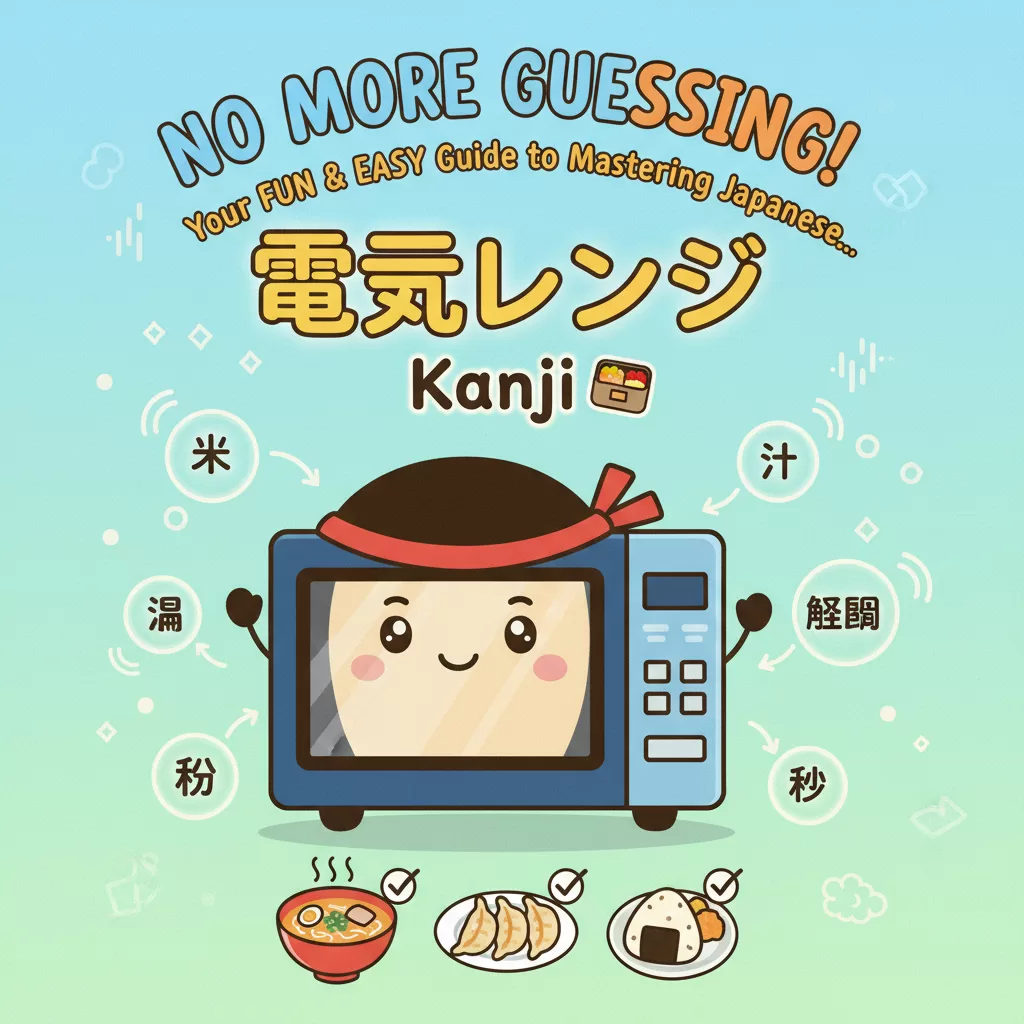
No More Guessing! Your Fun & Easy Guide to Mastering Japanese Microwave Kanji 🍱
Executive Summary (English): The Japanese microwave is one of the first appliances you will face in your new home, and its control panel is covered in kanji. This guide, prepared by the senior training consultants of SAMURAI Japan Business Center Inc., breaks down the essential characters — from あたため (reheat) and 解凍 (defrost) to 停止 (stop) and 金属 (metal) — so that you can cook, defrost, and stay safe without guessing. You will also see how our Business Center trains learners to read real appliance panels through hands-on practice, and you will find a short bilingual FAQ at the end.
エグゼクティブ・サマリー(日本語): 日本の電子レンジは、新しい生活で最初に向き合う家電のひとつであり、操作パネルは漢字だらけです。このガイドは、SAMURAI Japan Business Center Inc. のシニアトレーニングコンサルタントが作成したもので、「あたため」「解凍」「停止」「金属」といった必須の漢字を、当てずっぽうに頼らず理解できるように整理しています。さらに、当ビジネスセンターが実際の家電パネルを使って受講生をどのように指導しているか、最後には日英のFAQもご紹介します。
Why the Japanese Microwave Panel Feels Like a Puzzle / なぜ電子レンジのパネルはパズルのように見えるのか
For many Filipino learners arriving in Japan, the microwave is both a lifesaver and a source of quiet stress. Unlike the simple “Power Level” and “Start” dials common back home, Japanese models combine microwave, oven, grill, and steam functions in a single unit. The buttons are grouped by purpose rather than by frequency of use, and almost everything is printed in kanji, hiragana, and katakana at once. This is not designed to confuse you — it is designed for a household that cooks rice, grills fish, steams vegetables, and reheats bento every single day.
日本に到着した多くのフィリピン人学習者にとって、電子レンジは頼もしい味方でありながら、静かなストレスの種でもあります。フィリピンでよく見る「出力」と「スタート」だけのシンプルな機器とは異なり、日本の機種は電子レンジ・オーブン・グリル・スチームの機能を一台に統合しています。ボタンは使用頻度ではなく用途ごとにまとめられており、表示は漢字・ひらがな・カタカナが混在しています。これは決して混乱させるためではなく、毎日ご飯を炊き、魚を焼き、野菜を蒸し、お弁当を温める家庭のために設計された結果なのです。
The good news is that the number of characters you truly need is small. Once you recognise roughly fifteen of them, the entire panel becomes readable. The rest of this guide focuses on exactly those characters.
良いお知らせは、本当に必要な文字の数はごくわずかだということです。およそ15文字を覚えるだけで、パネル全体が読めるようになります。このガイドでは、まさにその文字だけに絞って解説します。
💡 Pro-Tip / プロのヒント: Before you press anything, read the panel from left to right and look for the largest button. On almost every Japanese microwave, that big button is あたため (Atatame — Reheat). It usually runs a sensor that measures steam and stops automatically. If you learn only one button this week, learn this one.
💡 プロのヒント: 何かを押す前に、パネルを左から右へ見て、一番大きなボタンを探してください。日本の電子レンジのほとんどで、その大きなボタンは「あたため」です。多くの場合、蒸気を感知するセンサーが内蔵されており、自動で停止します。今週ひとつだけ覚えるなら、これを覚えてください。
The Essential Kanji You Must Know / 必ず覚えておきたい必須漢字
The table below covers the characters that appear on nearly every Japanese microwave. Read the “Reading” column aloud as you study — pronunciation practice and kanji recognition improve together.
以下の表は、ほぼすべての日本の電子レンジに表示される文字をまとめたものです。「読み方」の列は声に出して読んでみてください。発音の練習と漢字の認識は、同時に伸びていきます。
| Kanji / Kana | Reading | English Meaning |
|---|---|---|
| あたため / スタート | Atatame / Sutāto | Reheat / Start |
| 停止 / とりけし | Teishi / Torikeshi | Stop / Cancel |
| 解凍 | Kaitō | Defrost |
| 出力 / ワット | Shutsuryoku / Watto | Power output / Watts |
| 強 / 中 / 弱 | Kyō / Chū / Jaku | High / Medium / Low |
| 分 / 秒 | Fun / Byō | Minute / Second |
| 飲み物 | Nomimono | Drinks (milk, tea, sake) |
| お弁当 | Obentō | Lunch box (convenience store bento) |
| 自動 / 手動 | Jidō / Shudō | Automatic / Manual |
| 金属 | Kinzoku | Metal (never place inside) |
| 禁止 / 注意 | Kinshi / Chūi | Prohibited / Caution |
Reading the Panel Like a Story, Not a List / リストではなく「物語」としてパネルを読む
A useful habit is to group the characters by the order in which you actually use them. When you reheat a bento, the flow is: open the door → place the box → press お弁当 → wait for the beep → press 停止 or simply open the door. When you defrost chicken for sinigang, the flow is: place the meat → press 解凍 → if the machine offers strength options, choose 弱 for thin cuts and 中 for thick ones → turn the meat over when the machine prompts you. Suddenly, the panel is not a wall of characters; it is a sequence.
おすすめの習慣は、実際に使う順番で文字をグループ化することです。お弁当を温めるときの流れは、扉を開ける → お弁当を入れる → 「お弁当」を押す → 音が鳴るのを待つ → 「停止」を押すか、そのまま扉を開ける、という順番です。シニガン用に鶏肉を解凍するときは、肉を入れる → 「解凍」を押す → 強さの選択があれば、薄い切り身は「弱」、厚いものは「中」を選ぶ → 途中で裏返す、という流れになります。こうして覚えると、パネルは文字の壁ではなく「手順」になります。
Another point worth noticing is that Japanese microwaves are usually also ovens. A single button labelled オーブン (Ōbun) will heat the interior to a very high temperature. Never assume that pressing a kanji you do not recognise is harmless. If you are unsure, press 停止 and start again from the largest button.
もう一つ注意したいのは、日本の電子レンジはたいていオーブン機能も備えていることです。「オーブン」ボタンを押すと庫内が非常に高温になります。読めない漢字を「とりあえず押す」のは安全ではありません。迷ったら「停止」を押し、一番大きなボタンからやり直しましょう。
💡 Pro-Tip / プロのヒント: Keep a small sticky note on your microwave door for the first month. Write only the five characters you use most, with romaji underneath. By the time the note falls off, you will no longer need it.
💡 プロのヒント: 最初の一か月は、電子レンジの扉に小さな付箋を貼っておきましょう。よく使う5文字だけを、下にローマ字を添えて書きます。その付箋が落ちるころには、もう必要なくなっていますよ。
Safety Kanji You Should Never Ignore / 絶対に無視してはいけない安全漢字
Reading food labels is useful; reading safety warnings is essential. The character 金属 (kinzoku) means metal, and placing foil, cutlery, or a metal-rimmed plate inside a microwave-heating cycle can damage the machine and start a fire. The word 禁止 (kinshi) means “prohibited” and is used for actions you must never take. The word 注意 (chūi) means “caution” and is used on high-temperature surfaces such as the door after an oven cycle. Treat these three words as your emergency vocabulary.
食品ラベルを読むことは役に立ちますが、安全警告を読むことは必須です。「金属」は金属を意味し、アルミホイルやカトラリー、金属の縁がついた皿をレンジ加熱すると、故障や発火の原因になります。「禁止」は「してはいけないこと」に使われる言葉です。「注意」は、オーブン使用後の扉など高温になる部分に表示されます。この3語は「緊急用語彙」として必ず覚えてください。
- 金属 (Kinzoku) — Metal
This warning appears in the manual and often on the door itself. Even a small piece of foil can cause sparks. Before you press start, glance at the plate: no metal rim, no aluminium lid, no fork left inside.
この警告は取扱説明書や扉に表示されています。小さなアルミホイルでも火花が出ることがあります。スタートを押す前に、皿を確認しましょう。金属の縁、アルミの蓋、フォークの置き忘れがないかを見てください。
- 禁止 (Kinshi) — Prohibited
You will see this word paired with illustrations, such as “禁止: heating sealed containers.” Learning the character means you can read the manual’s short warning pages without a translation app.
この言葉は「禁止:密閉容器の加熱」のように、イラストと一緒に表示されることが多いです。この文字を覚えれば、説明書の警告ページを翻訳アプリなしで読めるようになります。
- 注意 (Chūi) — Caution
Often used for hot surfaces and steam. It is a milder word than 禁止, but it still tells you that careless handling will hurt.
高温の表面や蒸気に対して使われることが多い言葉です。「禁止」よりやわらかい表現ですが、注意して扱わなければ危険であることを示しています。
Applying This Skill to the Rest of Your Home / 家じゅうの家電に応用する
The microwave is only the first appliance. The same principle — learn a small set of repeated characters — applies to your rice cooker, your air conditioner remote, and even the touchscreen tablet at a sushi restaurant. Once you can read 出力 on a microwave, you can read 出力 on almost anything.
電子レンジは最初の家電にすぎません。「よく使われる文字を少数だけ覚える」という同じ原則は、炊飯器やエアコンのリモコン、そして回転寿司のタッチパネルにも当てはまります。電子レンジで「出力」が読めれば、ほとんどどんな機器でも「出力」が読めます。
- Rice Cooker Panels / 炊飯器のパネル
Look for 白米 (hakumai, white rice), 早炊き (hayadaki, quick cook), and 保温 (hoon, keep warm). These three characters will cover the majority of your daily cooking. Our detailed walkthrough is available here: Master Your Rice Cooker Kanji.
「白米」「早炊き」「保温」を探しましょう。この3つで日常の炊飯のほとんどをカバーできます。詳しい解説はこちらの記事でご覧いただけます:炊飯器の漢字マスターガイド。
- Air Conditioner Remotes / エアコンのリモコン
The words 冷房 (reibō, cooling), 暖房 (danbō, heating), and 除湿 (joshitsu, dehumidify) appear on every remote in the country. Our seasonal guide is here: Stay Comfy in Japan: Mastering AC Remote Kanji.
「冷房」「暖房」「除湿」は、日本中のリモコンに表示されています。季節ごとの使い方はこちら:日本のエアコンリモコンの漢字ガイド。
- Restaurant Touchscreens / 飲食店のタッチパネル
The same characters repeat: 注文 (chūmon, order), 会計 (kaikei, bill), 数量 (sūryō, quantity). If you can navigate a microwave, you can order at a sushi counter. See our guide: Your Fun & Easy Kanji Guide to Restaurant Touchscreens.
同じ文字が繰り返し登場します。「注文」「会計」「数量」などです。電子レンジの操作ができれば、回転寿司の注文も怖くありません。詳しくはこちら:飲食店タッチパネルの漢字ガイド。
- Modern Washlet Panels / 温水洗浄便座のパネル
The characters 止 (tome, stop), 大 (dai, large flush), and 小 (shō, small flush) are worth learning before your first visit to a Japanese restroom. Our guide: Master the High-Tech Toilet: 5 Simple Kanji.
「止」「大」「小」は、日本のトイレを初めて使う前に覚えておきたい文字です。詳しくはこちら:ハイテクトイレの漢字5選。
How the SAMURAI Japan Business Center Teaches Appliance Kanji / サムライジャパンビジネスセンターの家電漢字指導法
At SAMURAI Japan Business Center Inc., we do not treat daily-life kanji as an optional extra. We treat it as core professional upskilling. A trainee who can read a factory safety sign, a kitchen appliance panel, or a workplace notice is a trainee who can be trusted with responsibility from the first week. Our methodology has three parts.
SAMURAI Japan Business Center Inc. では、生活漢字を「おまけ」とは考えていません。これは中核となるプロフェッショナル・スキルアップだと考えています。工場の安全表示、厨房機器のパネル、職場の掲示物が読める受講生は、最初の週から責任ある仕事を任せられる人材です。私たちの指導法は3つの柱で構成されています。
- Context-First Introduction / 文脈から入る導入
We never hand out a bare kanji list. Each character is introduced inside the task it belongs to: reading a bento label, following a defrost instruction, or checking a safety warning. Learners remember meaning because they remember the moment.
むき出しの漢字リストを配ることはしません。それぞれの文字は、それが使われる作業の中に組み込んで導入します。お弁当の表示を読む、解凍の手順を追う、安全警告を確認する、といった場面とセットで学びます。意味は「その瞬間」と一緒に記憶されるからです。
- Hands-On Panel Practice / 実機パネルでの実習
Our sessions use real control panels — microwave, rice cooker, air conditioner remote, washlet — so that learners physically press the correct button while naming it aloud in Japanese. Reading, speaking, and doing happen at the same time.
授業では実際の操作パネル(電子レンジ、炊飯器、エアコンのリモコン、温水洗浄便座)を使用します。受講生は正しいボタンを日本語で声に出しながら押します。読む・話す・行うを同時に行うのです。
- Accuracy Under Pressure / 緊張下での正確さ
Anyone can read a kanji in a quiet classroom. The skill matters when a machine is beeping and someone is waiting. We simulate those moments so that learners stay calm and accurate when it counts.
静かな教室で漢字が読めるのは当たり前です。本当に問われるのは、機械が鳴っていて、誰かが待っている場面です。私たちはそうした状況を再現し、いざという時に落ち着いて正確に対応できる力を養います。
Frequently Asked Questions / よくある質問
- Q1: Is a Japanese microwave really that different from one in the Philippines? / 日本の電子レンジはフィリピンのものとそんなに違うのですか?
A: Mechanically, no — the microwaves are the same. The difference is the interface. A Philippine unit usually has English labels and fewer modes. A Japanese unit has multiple cooking modes, sensor heating, and safety warnings printed in kanji. Learning about fifteen characters closes almost the entire gap.
A: 仕組みは同じです。違うのは「表示と機能」です。フィリピンの機種は英語表示で機能が少なめですが、日本仕様は調理モードが多く、センサー加熱や安全警告が漢字で表示されます。約15文字を覚えれば、ほぼその差は埋まります。
- Q2: What is the single most dangerous mistake beginners make? / 初心者が最も危険な間違いは何ですか?
A: Pressing an unfamiliar button just to see what happens. Many Japanese microwaves also function as high-temperature ovens. If you do not recognise a kanji, press 停止 (stop) and read the panel again before continuing. Never place metal or sealed containers inside.
A: 分からないボタンを「とりあえず押す」ことです。日本の電子レンジの多くは高温のオーブン機能も備えています。読めない漢字があれば「停止」を押し、もう一度パネルを確認してから操作しましょう。金属や密閉容器は絶対に入れないでください。
- Q3: How long does it take to learn the necessary kanji? / 必要な漢字を覚えるのにどれくらいかかりますか?
A: With daily practice of ten to fifteen minutes, most of our trainees can read the core microwave panel within two to three weeks. The characters are few and they repeat across other appliances, so the second device is much easier than the first.
A: 1日10〜15分の練習を続ければ、受講生の多くは2〜3週間で電子レンジの主要パネルを読めるようになります。文字数が少なく、他の家電にも繰り返し出てくるため、2台目の機器は1台目よりずっと簡単です。
- Q4: Can I join a training program even if I am a complete beginner? / まったくの初心者でも受講できますか?
A: Yes. Our programs begin at hiragana and katakana and are structured for learners with no prior Japanese. Every lesson is designed to build professional competence step by step, and daily-life kanji is introduced as soon as the learner can read basic characters.
A: はい。プログラムはひらがな・カタカナから始まり、日本語未習者の方でも無理なく進められる構成になっています。各レッスンはプロとしての力を一歩ずつ積み上げるように設計されており、基本文字が読めるようになった段階で生活漢字も導入していきます。
Conclusion: From Confusion to Confidence in Your Own Kitchen / 結論:自分のキッチンで、戸惑いから自信へ
The microwave does not have to be a mystery. Fifteen characters, learned in the right context, turn a bewildering panel into a simple tool that serves you every day. That is exactly the kind of practical, professional learning we pursue at SAMURAI Japan Business Center Inc. — language training and business manners delivered with the rigor that Japanese companies expect and the warmth that Filipino learners deserve. Start with あたため today, add 解凍 tomorrow, and you will be reading the whole panel before you know it. If you would like to build these skills with professional guidance, we invite you to review our program information and complete the application form when you are ready.
電子レンジは、謎の箱である必要はありません。正しい文脈で学んだ15文字が、毎日あなたに役立つシンプルな道具へと変えてくれます。それが私たち SAMURAI Japan Business Center Inc. が追求している実践的でプロフェッショナルな学びです。日本語トレーニングとビジネスマナーを、日本企業が求める厳格さと、フィリピン人学習者に寄り添う温かさでお届けします。今日は「あたため」から、明日は「解凍」を。気づけばパネル全体が読めるようになっています。専門的なサポートとともに学びたい方は、ぜひプログラムのご案内をご覧いただき、準備ができたときに申請フォームからお申し込みください。
🇯🇵 日本語で新しい可能性を広げよう! ✨
SAMURAI Japan Business Centerは、あなたの日本語学習を全力でサポートします。
🚀 Start Your Learning Journey Today!
Ready to learn Japanese? Apply for our programs now!
🏫 お問い合わせ (Contact Us)
📞 Phone: +63 997 093 4550
📧 Email: samuraijapan.bc@gmail.com
🏢 Address: Room D3, Freb Bldg, Villa Donata Subd, Muntinlupa
📱 SNSで楽しく学ぼう!
Related posts:
 Your Japan Dream is Calling! 5 Simple Secrets to Start Learning Japanese Today 🇯🇵✨
 Be a Workplace Superstar! Easy Japanese Greetings and Manners to Help You Shine 🇯🇵
 Start Your Dream Life in Japan! 5 Must-Have 100-Yen Shop Finds for Your New Home 🇯🇵
 Shine at Your Dream Workplace! 5 Simple Japanese Greetings to Make a Great Impression 🇯🇵
 Master the Konbini! Easy Tips and Phrases for Your Dream Life in Japan 🏪
 Master Japan’s Trains Like a Pro! Easy Tips and Phrases for Your Big Dream 🇯🇵
