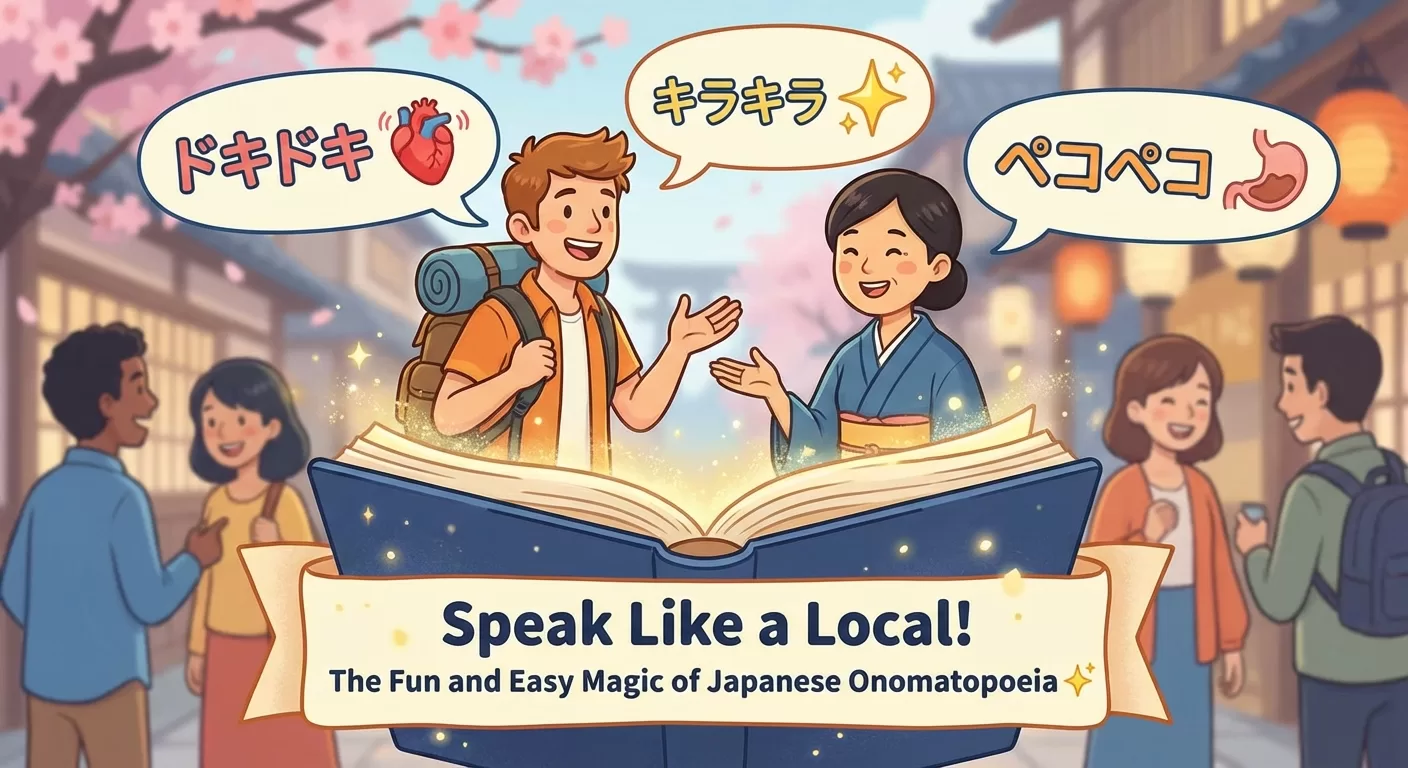
Speak Like a Local! The Fun and Easy Magic of Japanese Onomatopoeia ✨
Executive Summary / エグゼクティブサマリー
Discover the power of Japanese onomatopoeia—words that capture sounds, feelings, and even textures. Mastering these lively expressions will instantly make your Japanese more natural and expressive, helping you connect deeply with locals in everyday life and the workplace. This guide from SAMURAI Japan Business Center breaks down the most useful onomatopoeia, providing clear examples, cultural insights, and practical study methods designed for Filipino learners aiming to thrive in Japan.
日本語のオノマトペが持つ力を発見してください。音だけでなく感情や質感までも表現するこれらの生き生きとした言葉をマスターすれば、あなたの日本語はより自然で表現豊かになり、日常生活や職場で現地の人々と深くつながることができます。SAMURAI Japan Business Centerが提供するこのガイドでは、最も役立つオノマトペを分かりやすい例と文化的背景、そして日本で活躍したいフィリピン人学習者向けに実践的な勉強法を解説します。
Hello, everyone! I am your teacher from SAMURAI Japan Business Center. Have you ever wondered how to make your Japanese sound more natural and expressive? The secret lies in a magical category of words called Onomatopoeia! In Japanese, these are known as Giongo and Gitaigo.
皆さん、こんにちは!SAMURAI Japan Business Centerの講師です。自分の日本語をもっと自然に、表現豊かにしたいと思ったことはありませんか?その秘密は、「オノマトペ」という魔法のような言葉のカテゴリーにあります!日本語では、これらを「擬音語(ぎおんご)」や「擬態語(ぎたいご)」と呼びます。
Japanese is famous for having thousands of these sound-effect words. While English uses words like “bang” or “meow,” Japanese uses them to describe not only sounds but also feelings, textures, and even movements. Using them will instantly make you sound like a local, whether you’re chatting with friends, ordering at a restaurant, or collaborating with colleagues in a Japanese office.
日本語は、こうした擬音語が数千もあることで有名です。英語では「bang(ドン)」や「meow(ニャー)」といった言葉を使いますが、日本語では音だけでなく、感情、手触り、さらには動きまでも表現します。友達と話すとき、レストランで注文するとき、日本のオフィスで同僚と協力するとき、これらを使えばすぐに地元の人のような話し方になれますよ。
💡 先生のポイント (Teacher’s Tip):
Don’t try to memorize everything at once! Start with words that repeat the same sound, like “Niko niko” or “Waku waku.” They are much easier to remember, and their rhythm will make you smile every time you say them.
一度に全部覚えようとしなくて大丈夫ですよ!まずは「ニコニコ」や「ワクワク」のように、同じ音が繰り返される言葉から始めてみましょう。その方がずっと覚えやすいですし、そのリズムに口に出すたびに笑顔になりますよ。
1. Let’s Taste the Sounds! (Food & Textures) 😋
When you go to a restaurant in Japan, you will hear people describing their food using these fun words. It’s not just about the taste; it’s about how the food feels! Learning these will let you share your culinary experiences with Japanese friends and coworkers in a vivid, local way.
日本のレストランに行くと、人々がこれらの楽しい言葉を使って食べ物を表現しているのを耳にするでしょう。味だけでなく、食べ物の食感についても話しているのです!これらを学べば、あなたの食の体験を、友人や同僚と生き生きとした現地流のやり方で共有できるようになります。
| Onomatopoeia | Meaning | Usage |
|---|---|---|
| Pari pari (パリパリ) | Crunchy / Crispy | Potato chips or seaweed (ポテトチップスや海苔) |
| Fuwa fuwa (ふわふわ) | Fluffy / Soft | Pancakes or bread (パンケーキやパン) |
| Atsu atsu (アツアツ) | Piping hot | Freshly cooked ramen (作りたてのラーメン) |
| Neba neba (ねばねば) | Sticky / Slimy | Natto or okra (納豆やオクラ) |
2. Express Your Feelings! (Emotions & Actions) 💓
Sometimes, it is hard to explain exactly how you feel. In Japanese, onomatopoeia acts like a shortcut to describe your heart’s condition or your facial expressions. Mastering these will help you communicate subtle emotions that a simple “I am happy” cannot convey.
自分の気持ちを正確に説明するのが難しい時もありますよね。日本語では、オノマトペが心の状態や表情を説明する近道になります。これらをマスターすれば、「嬉しいです」だけでは伝えきれない微妙な感情まで伝えられるようになります。
| Onomatopoeia | Meaning | Example Sentence |
|---|---|---|
| Waku waku (ワクワク) | Excited | 日本での新生活にワクワクしています。 |
| Doki doki (ドキドキ) | Heart pounding (nervous) | JLPTの結果発表がドキドキです。 |
| Niko niko (ニコニコ) | Smiling | 先生はいつもニコニコしています。 |
| Goro goro (ゴロゴロ) | Lazing around | 休日は家でゴロゴロします。 |
3. Why is this important for your dream life in Japan? 🇯🇵
For many Filipino students, the goal is to work or live in Japan. Japanese coworkers and friends use these words every single day! If you can say “Pekopeko” when you are hungry or “Giri giri” when you are almost late, you will earn their respect and build warmer relationships. Onomatopoeia often acts as an “emotional bridge” that closes the gap between textbook Japanese and real-life communication.
多くのフィリピン人学生にとって、日本で働いたり住んだりすることが目標です。日本の同僚や友人は、毎日これらの言葉を使っています!お腹が空いた時に「ペコペコ」と言ったり、遅刻しそうな時に「ギリギリ」と言えれば、彼らからの信頼を得て、より温かい人間関係を築けます。オノマトペはしばしば、教科書の日本語と実際のコミュニケーションのギャップを埋める「感情の架け橋」のような役割を果たします。
💡 先生のポイント (Teacher’s Tip):
Think of onomatopoeia as the spice of Japanese conversation. Even if your grammar is imperfect, a well-placed “Pekopeko” or “Waku waku” shows that you really understand the Japanese way of expressing yourself. It’s the mark of an advanced communicator!
オノマトペは日本語会話のスパイスだと考えてください。文法が不完全でも、タイミングよく「ペコペコ」や「ワクワク」を使えば、あなたが日本語的な自己表現を本当に理解している証拠になります。それは上級コミュニケーターのしるしです!
4. The SAMURAI Japan Methodology: Learn Onomatopoeia with Confidence
At SAMURAI Japan Business Center, we integrate onomatopoeia into our curriculum from the very beginning, combining visual flashcards with real-life role-play scenarios. Our professional instructors, trained in both language teaching and Japanese business etiquette, ensure you learn not only the words but also the cultural context—knowing exactly when a “Ganbaru” needs a “Waku waku” spirit. For those interested in deepening their language skills, our introductory courses provide a structured path to fluency.
SAMURAI Japan Business Centerでは、カリキュラムの初期段階からオノマトペを取り入れ、視覚的なフラッシュカードと実生活に即したロールプレイを組み合わせています。言語教育と日本のビジネスマナーの両方に精通したプロの講師が、単語そのものだけでなく文化的背景も指導し、どんな場面で「頑張る」に「ワクワク」感が必要かをしっかり理解させます。言語スキルをさらに高めたい方は、入門コースで着実に流暢さへの道を歩めます。
5. Frequently Asked Questions (FAQ)
Q1: オノマトペを覚えるのに最適な方法は何ですか? (What is the best way to memorize onomatopoeia?)
A1: Pair them with real-life actions or physical sensations. For example, when you eat something crunchy, say “Pari pari” aloud. Your brain will link the sound to the experience. Also, watch Japanese variety shows or anime, which are filled with onomatopoeic expressions.
A1: 実際の行動や感触と結びつけることです。例えば、何かパリパリしたものを食べるときに「パリパリ」と声に出してみてください。脳が音と体験をつなげます。また、オノマトペが満載の日本のバラエティ番組やアニメを見るのも効果的です。
Q2: ビジネスシーンでもオノマトペは使えますか? (Can onomatopoeia be used in business settings?)
A2: Yes, but with caution. Words like “Ganbaru” are perfectly fine, but more casual or childish onomatopoeia like “Pekopeko” are best saved for casual lunch breaks with close colleagues. Our business manners training at SAMURAI Japan Business Center helps you navigate these nuances professionally.
A2: 使えますが、注意が必要です。「頑張る」のような言葉はまったく問題ありませんが、「ペコペコ」のようなカジュアルすぎる表現は、親しい同僚とのランチの時に取っておきましょう。SAMURAI Japan Business Centerのビジネスマナー研修では、こうしたニュアンスをプロフェッショナルに使いこなす方法を指導しています。
Q3: オノマトペを使うと、なぜ日本語が自然に聞こえるのですか? (Why does using onomatopoeia make my Japanese sound more natural?)
A3: Because native speakers use them constantly to add emotion and texture. Without them, speech can sound flat and textbook-like. Integrating onomatopoeia aligns your communication with the rhythm and expressiveness of natural Japanese conversation.
A3: ネイティブスピーカーは感情や質感を加えるために常に使っているからです。これがないと、話し方が平板で教科書のように聞こえてしまいます。オノマトペを取り入れることで、自然な日本語会話のリズムと表現力に合ったコミュニケーションができるようになります。
Conclusion / まとめ
Learning Japanese might feel difficult at first, but adding these fun sounds makes the process much more enjoyable. It’s like adding spices to a dish—it makes everything better! From expressing your hunger to sharing your excitement about a new job, onomatopoeia is your secret key to speaking like a true local. We at SAMURAI Japan Business Center are here to guide you every step of the way, ensuring you gain not just language skills but the cultural confidence to succeed in Japan. Let’s turn your dream of fluent, expressive Japanese into a reality together!
日本語の学習は最初は難しく感じるかもしれませんが、こうした楽しい音を加えることで、学習プロセスはずっと楽しくなります。料理にスパイスを加えるようなもので、すべてがより良くなります!空腹を伝えることから新しい仕事へのワクワク感を共有することまで、オノマトペはあなたが真のローカルのように話すための秘密の鍵です。SAMURAI Japan Business Centerは、皆さんが語学力だけでなく、日本で成功するための文化的な自信も身につけられるよう、あらゆる面でサポートします。流暢で表現豊かな日本語を話すという夢を、一緒に現実にしましょう!
🇯🇵 日本語で新しい可能性を広げよう! ✨
SAMURAI Japan Business Centerは、あなたの日本語学習を全力でサポートします。
🚀 Start Your Learning Journey Today!
Ready to learn Japanese? Apply for our programs now!
🏫 お問い合わせ (Contact Us)
📞 Phone: +63 997 093 4550
📧 Email: samuraijapan.bc@gmail.com
🏢 Address: Room D3, Freb Bldg, Villa Donata Subd, Muntinlupa

