
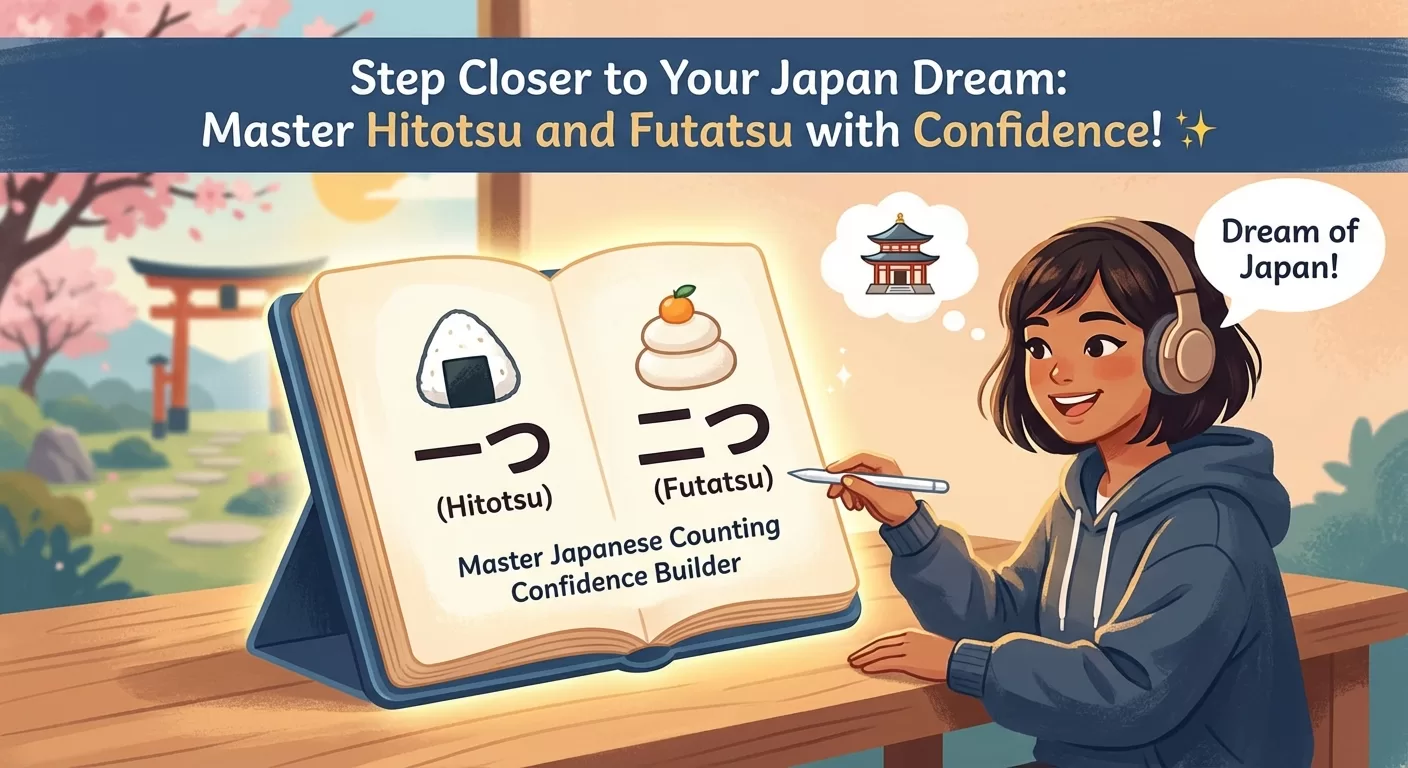
Step Closer to Your Japan Dream: Master Hitotsu and Futatsu with Confidence! ✨
In Japanese daily life, counting objects correctly is more than a language skill—it’s a sign of cultural respect and professionalism. The native Japanese counting system (Hitotsu, Futatsu…) acts as your universal key to ordering food, handling documents, and building trust in any workplace. This guide breaks down the system step by step, providing both the language and the cultural reasoning behind it. Whether you’re aiming for a Specified Skilled Worker (SSW) position or simply want to navigate a Japanese convenience store with ease, mastering these numbers is your first step toward confidence and competence.
日本の日常生活では、物を正しく数えることは単なる語学スキル以上の意味を持ちます。それは文化的敬意とプロフェッショナリズムの証です。和語の数え方(ひとつ、ふたつ…)は、レストランでの注文から書類の取扱い、職場での信頼構築まで、あらゆる場面で使える万能のツールです。特定技能(SSW)を目指す方も、単に日本のコンビニをスムーズに利用したい方も、この数の数え方をマスターすることが自信と能力への第一歩です。
Why the Hitotsu and Futatsu System Matters for Your Career in Japan
At SAMURAI Japan Business Center, we have seen countless Filipino students transform from nervous beginners into confident professionals. One of the most common challenges they face is not just learning vocabulary, but understanding which vocabulary to use in real business situations. The native Japanese counting system, known as 和語 (wago), is essential because it works universally for most physical objects, whether you are verifying inventory in a warehouse, ordering supplies for a restaurant, or simply counting documents in an office. Unlike the Chinese-derived numbers (ichi, ni, san), Hitotsu and Futatsu carry a softer, more natural tone that Japanese colleagues deeply appreciate.
SAMURAI Japan Business Centerでは、多くのフィリピン人学生が不安な初心者から自信に満ちたプロフェッショナルへと成長する姿を見てきました。彼らが直面する共通の課題の一つは、単に語彙を覚えることではなく、実際のビジネスシーンでどの語彙を使うべきかを理解することです。和語として知られるこの数え方は、倉庫で在庫を確認するとき、レストランで資材を発注するとき、あるいはオフィスで書類を数えるときなど、ほとんどの物理的な対象に普遍的に使えるため、必須の知識です。漢語由来の「いち、に、さん」と異なり、「ひとつ、ふたつ」はより柔らかく自然な響きを持ち、日本の同僚から深く感謝されるでしょう。
📘 Study Box: The Cultural Logic Behind Universal Counters
In Japanese business culture, clarity and respect are shown through using appropriate language levels. By choosing Hitotsu over ikko (one piece) when unsure, you demonstrate both humility and flexibility—two highly valued traits in Japanese teamwork. This system is a perfect example of how our training at SAMURAI Japan Business Center goes beyond textbooks, focusing on the real-world language choices that build trust and professional relationships.
📘 学習ボックス:ユニバーサルカウンターの背後にある文化的論理
日本のビジネス文化では、適切な言葉遣いを通じて明瞭さと敬意を示します。迷ったときに「一個」ではなく「ひとつ」を選ぶことで、謙虚さと柔軟性を示すことができます。これらは日本のチームワークにおいて非常に重視される特性です。このシステムは、SAMURAI Japan Business Centerのトレーニングが教科書を超えて、信頼とプロフェッショナルな関係を築くための実社会での言語選択に焦点を当てていることの完璧な例です。
The Complete Hitotsu-to-Too Chart: Memorize with Patterns
This table presents the complete native Japanese counting sequence. Note the pattern: most end with 「つ」 (tsu), and the pronunciation shifts smoothly from small to large objects. At SAMURAI Japan Business Center, we teach this using rhythm and physical associations to make it stick.
この表は、和語の数え方の完全なシーケンスを示しています。「つ」で終わるパターンに注目し、発音がスムーズに変化することを意識してください。SAMURAI Japan Business Centerでは、リズムと身体的な連想を用いて記憶に定着させる方法を教えています。
| Number | Hiragana / Kanji | Romaji | Memory Tip |
|---|---|---|---|
| 1 | ひとつ (一つ) | Hitotsu | Sounds like “he toasts” |
| 2 | ふたつ (二つ) | Futatsu | “Fu” like wind, “tatsu” like standing |
| 3 | みっつ (三つ) | Mittsu | Crisp double consonant |
| 4 | よっつ (四つ) | Yottsu | Similar to “yacht” with tsu |
| 5 | いつつ (五つ) | Itsutsu | “It’s Sue’s” sushi |
| 6 | むっつ (六つ) | Muttsu | “Moo” like a cow + tsu |
| 7 | ななつ (七つ) | Nanatsu | “Nana” (fruit) + tsu |
| 8 | やっつ (八つ) | Yattsu | “Yacht” with strong tsu |
| 9 | ここのつ (九つ) | Kokonotsu | “Coconut” without t |
| 10 | とお (十) | Too | Like “toe” |
Practical Application: Ordering and Handling Tasks with Confidence
Imagine you are working at a Japanese restaurant and need to request three more plates and two spoons. Instead of stumbling, you can calmly say: 「お皿をみっつ、スプーンをふたつ、お願いします。」 (Osara o mittsu, supuun o futatsu, onegaishimasu.) This simple sentence covers multiple items with the universal counters, and the polite ending shows your professionalism. Even better, if a busy manager asks you to confirm how many boxes are in storage, reply with 「よっつあります。」 (Yottsu arimasu.) — “There are four.” This direct, clear communication is what Japanese employers expect and value.
あなたが日本のレストランで働いていて、皿を3枚、スプーンを2本追加で頼む必要があると想像してください。迷わずに「お皿をみっつ、スプーンをふたつ、お願いします。」と落ち着いて言えます。この簡単な一文で複数のアイテムをユニバーサルカウンターで依頼し、丁寧な語尾がプロフェッショナリズムを示します。さらに、忙しいマネージャーから倉庫の箱の数を確認されたら、「よっつあります。」と答えれば、明確で直接的なコミュニケーションができます。これこそ日本の雇用主が期待し、評価するものです。
💡 Pro-Tip: Avoid Over-Counting
For numbers beyond ten, Japanese speakers often switch to the standard 11 (juuichi), 12 (juuni) pattern, but the native system remains useful for quantities up to ten. In many workplace scenarios, you rarely need to count beyond ten items at once, so mastering Hitotsu to Too is often enough for daily operations. Remember to always pair the number with the appropriate polite form, especially when speaking to seniors.
💡 プロのヒント:数え過ぎを避けよう
10を超える数には、標準的な「11(じゅういち)、12(じゅうに)」のパターンに切り替えることが多いですが、和語のシステムは10までの数量で今なお役立ちます。多くの職場シナリオでは、一度に10個以上のアイテムを数えることは稀なため、「ひとつ」から「とお」までをマスターするだけで日々の業務に十分です。特に目上の人に対しては、常に適切な丁寧形と組み合わせることを忘れないでください。
The SAMURAI Japan Methodology: How We Teach Universal Counting
At SAMURAI Japan Business Center, we train our students using a proprietary three-step method that ensures long-term retention. Step 1: Vocal Rhythm Practice. We recite the numbers 1–10 in a rhythmic chant, combining physical clapping and stepping. This engages both auditory and kinesthetic learning styles. Step 2: Real-World Simulation. Students role-play in simulated convenience stores and restaurant settings, using the counters to order items, check stock, and respond to supervisor instructions. Step 3: Cultural Reflection. We explain the historical and social reasons behind the native system, so students understand not just how to count, but why this method builds better relationships. This approach aligns with the rigorous standards we uphold, producing graduates who are culturally fluent and operationally ready.
SAMURAI Japan Business Centerでは、長期記憶に定着させる独自の三段階メソッドを用いて学生をトレーニングしています。第一段階:音声リズム練習。 1から10までの数字を、手拍子や歩行を交えたリズムチャンツで暗唱します。これにより、聴覚と運動感覚の学習スタイルが同時に活性化されます。第二段階:実社会シミュレーション。 模擬コンビニやレストラン環境でロールプレイを行い、カウンターを使って商品を注文し、在庫を確認し、上司の指示に対応します。第三段階:文化的省察。 和語システムの歴史的・社会的背景を説明することで、学生はどうやって数えるかだけでなく、なぜこの方法がより良い人間関係を築くのかを理解します。このアプローチは、私たちが掲げる厳格な基準に合致し、文化的に流暢で即戦力となる卒業生を輩出しています。
The Professional Edge: Counting in Business Manners
Using native Japanese counters is not merely a linguistic choice; it is a demonstration of ビジネスマナー (business manners). When you work in a Japanese company, the way you handle object counting reflects your attention to detail and your willingness to adapt to Japanese cultural norms. For example, during a meeting, if you say 「資料をひとつコピーしてください」 (Shiryou o hitotsu kopii shite kudasai) instead of using the more rigid Chinese-derived counter, your colleagues perceive you as more harmonious and cooperative. This small nuance can greatly enhance your reputation and open opportunities for leadership roles.
和語のカウンターを使うことは、単なる言語的選択ではなく、ビジネスマナーの実践です。日本企業で働く際、物の数え方は細部への注意力と日本文化への順応性を示します。例えば、会議中に「資料を一部コピーしてください」という代わりに「資料をひとつコピーしてください」と言えば、同僚はあなたをより協調的で協力的と捉えます。このささやかなニュアンスが信頼を高め、リーダーシップの機会を拓く可能性があります。
To further support your journey, we recommend reading our guide on 5 Simple Secrets to Start Learning Japanese Today. This resource will strengthen your foundational skills and complement the counting system taught here.
さらなる学びを深めるために、日本語学習を始めるための5つのシンプルな秘密のガイドをお読みいただくことをお勧めします。このリソースは基礎力を強化し、今回の数え方のシステムを補完します。
Q&A: Common Questions from Students and Companies
Q: Why can’t I just use “ikko, niko” for everything? / なぜ「一個、二個」だけを使わないのですか?
You can use “ikko, niko” for counting specific items, but it is not universally applicable. “Ikko” is limited to small, solid, often round objects. In contrast, “hitotsu” acts as a safe, all-purpose counter when you are unsure or when the object lacks a specific counter. Using “hitotsu” avoids sounding rude or incorrect, especially in customer-facing roles. / 「一個、二個」は特定の品物を数える際には使えますが、普遍的には使えません。「一個」は小さく固い、しばしば丸い物体に限られます。一方「ひとつ」は、確信が持てないときや特定の助数詞がないときに使える安全で万能なカウンターです。特に接客の役割では丁寧で誤りのない印象を与えます。
Q: How important is the Hitotsu system for passing the JLPT or SSW exams? / ひとつシステムはJLPTやSSW試験にどれほど重要ですか?
The native counting system frequently appears on the JLPT N5 and N4 levels, and it is essential for the SSW skills test in food service and manufacturing. However, its real importance goes beyond exams; it is a daily practical skill that instructors at SAMURAI Japan Business Center emphasize for workplace communication and successful on-the-job adaptation. / 和語の数え方はJLPT N5・N4に頻出し、SSWの技能試験(飲食料品製造業や製造業)でも必須です。しかし真の重要性は試験を超え、SAMURAI Japan Business Centerの講師が職場でのコミュニケーションと実務への適応成功のために強調する、日常的な実践スキルです。
Q: Can I mix the native and Chinese-derived systems in one sentence? / 和語と漢語のシステムを一文の中で混ぜても大丈夫ですか?
It is acceptable to mix systems if the context calls for it, but consistency is preferred to maintain a natural flow. For example, saying “ringo o futatsu to mikan o san-ko kudasai” (two apples and three oranges) is understandable, but using “ringo o futatsu to mikan o mittsu” sounds more elegant and native-like. At our Business Center, we train students to develop a consistent, native-sounding style that impresses Japanese colleagues. / 文脈によって混在させることは許容されますが、自然な流れを保つには一貫性が好まれます。例えば「りんごをふたつとみかんを三個ください」は理解できますが、「りんごをふたつとみかんをみっつください」と統一する方がよりエレガントでネイティブに近いです。当ビジネスセンターでは、一貫性のあるネイティブらしいスタイルを身につけ、日本の同僚を感心させるトレーニングを行っています。
Conclusion: Your Japan Dream Begins with One Word
Mastering “Hitotsu” through “Too” is more than memorizing numbers—it’s about stepping into the Japanese mindset of clarity, respect, and readiness. Each time you use these universal counters correctly, you demonstrate your commitment to professional excellence. At SAMURAI Japan Business Center, we are proud to guide you on this journey, offering expert training in language, business manners, and industry-specific skills. Keep practicing daily, and soon you will navigate Japan’s workplaces with the confidence of a true insider. We look forward to welcoming you to our program and helping you turn your dream into reality.
「ひとつ」から「とお」までをマスターすることは、単に数字を覚える以上の意味を持ちます。それは明瞭さ、敬意、そして準備万端という日本の考え方に足を踏み入れることです。これらのユニバーサルカウンターを正しく使うたびに、あなたはプロフェッショナルとしての卓越性へのコミットメントを示しています。SAMURAI Japan Business Centerでは、言語、ビジネスマナー、業種別スキルの専門トレーニングを提供し、この旅を誇りを持ってサポートします。毎日練習を続ければ、すぐに日本の職場を真の内側の人のように自信を持って動けるようになるでしょう。皆様のご参加を心よりお待ちし、夢を現実にするお手伝いをいたします。
🇯🇵 日本語で新しい可能性を広げよう! ✨
SAMURAI Japan Business Centerは、あなたの日本語学習を全力でサポートします。
🚀 Start Your Learning Journey Today!
Ready to learn Japanese? Apply for our programs now!
🏫 お問い合わせ (Contact Us)
📞 Phone: +63 997 093 4550
📧 Email: samuraijapan.bc@gmail.com
🏢 Address: Room D3, Freb Bldg, Villa Donata Subd, Muntinlupa
📱 SNSで楽しく学ぼう!
Related posts:
 Your Japan Dream is Calling! 5 Simple Secrets to Start Learning Japanese Today 🇯🇵✨
 Be a Workplace Superstar! Easy Japanese Greetings and Manners to Help You Shine 🇯🇵
 Start Your Dream Life in Japan! 5 Must-Have 100-Yen Shop Finds for Your New Home 🇯🇵
 Shine at Your Dream Workplace! 5 Simple Japanese Greetings to Make a Great Impression 🇯🇵
 Master the Konbini! Easy Tips and Phrases for Your Dream Life in Japan 🏪
 Master Japan’s Trains Like a Pro! Easy Tips and Phrases for Your Big Dream 🇯🇵
