
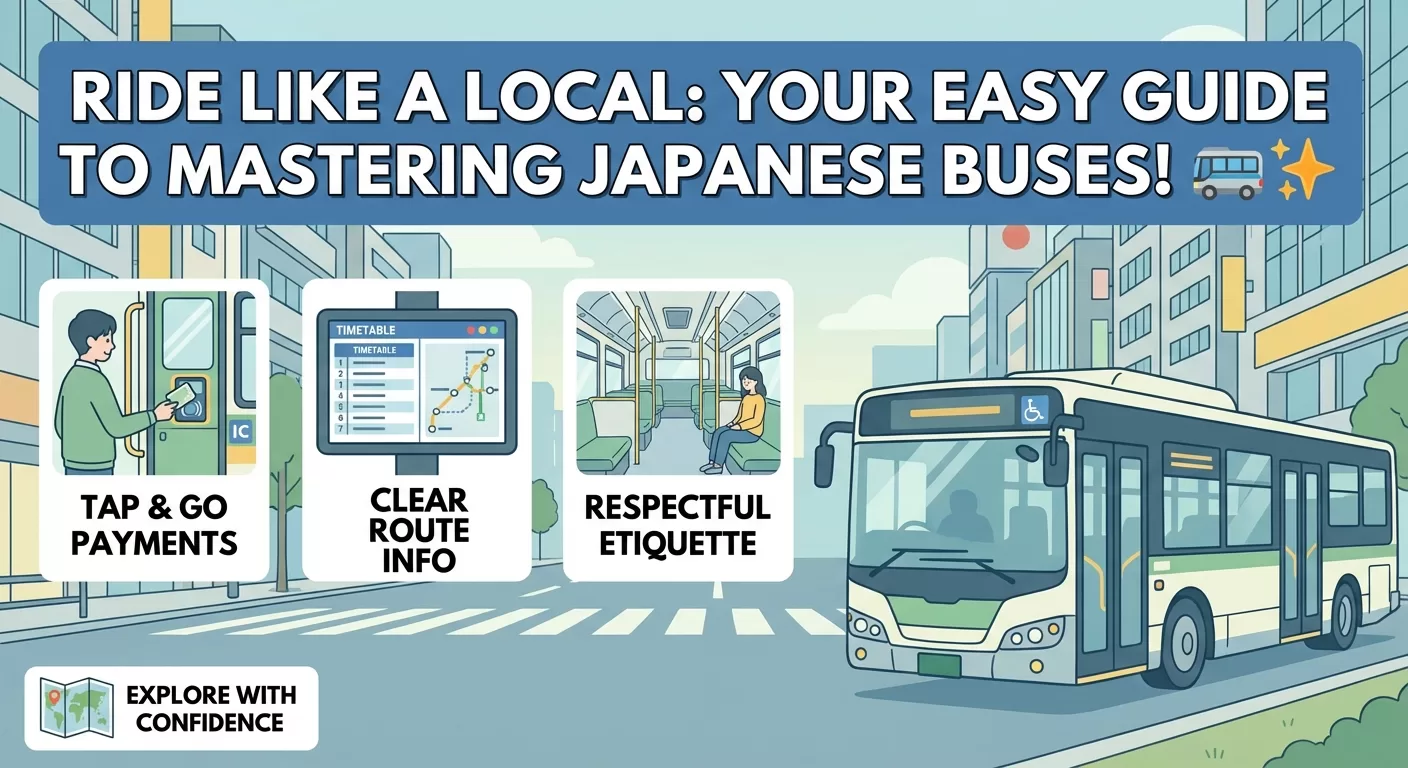
Ride Like a Local: Your Easy Guide to Mastering Japanese Buses! 🚌✨
Executive Summary / 概要
Moving around Japan by bus is an essential skill for anyone living, working, or studying here. While trains are iconic, buses unlock the hidden corners of cities and quiet neighborhoods that stations can’t reach. This guide, crafted by the Head Instructor of SAMURAI Japan Business Center, provides step-by-step English explanations and exact Japanese translations so you can board, pay, and alight with confidence. Master these key phrases and manners to ride like a true local.
バスでの移動は、日本で生活、仕事、勉強をする誰にとっても欠かせないスキルです。電車が象徴的なのは事実ですが、バスは駅だけではたどり着けない街の隠れた魅力や静かな住宅街への扉を開いてくれます。本ガイドは、SAMURAI Japan Business Centerの主任インストラクターが作成し、一人ひとりのステップを英語と正確な日本語訳で解説します。自信を持って乗車・支払い・降車ができるようになり、真の地元民のようにバスに乗りこなせるようになります。
Hello everyone! I am your instructor from SAMURAI Japan Business Center. When you imagine your daily life in Japan, the train map might come to mind first. However, buses are the secret weapon for exploring small temples, local shopping streets, and the places where everyday Japanese life truly unfolds. In this article, we will break down the key steps of using a Japanese bus—from the initial boarding to a polite farewell—so that you never feel lost again.
こんにちは!SAMURAI Japan Business Centerの講師です。日本での日常生活を想像するとき、真っ先に電車の路線図が浮かぶかもしれません。しかし、小さなお寺や地元の商店街、そして本当の日本人の暮らしが息づく場所を探索するには、バスこそが秘密兵器です。この記事では、乗車から丁寧な挨拶まで、日本のバスを使いこなすための重要なステップを詳しく解説します。これで迷うことはもうありません。
1. Identifying the Entrance and Boarding Style / 1. 入り口の確認と乗車スタイル
In Japan, boarding rules vary by city. In major hubs like Tokyo, you usually enter through the front door and pay a flat fare immediately. However, in many suburban and rural areas, you enter through the middle or rear door. Look for signs on the side of the bus or follow the flow of passengers. If you enter from the middle, be sure to take a small numbered ticket called a 整理券 (Seiriken). This ticket records the stop where you boarded and is essential for calculating the fare later.
日本では都市によって乗車ルールが異なります。東京のような大都市では、通常前のドアから乗り、その場で均一料金を支払います。しかし、多くの郊外や地方では中央または後ろのドアから乗車します。バスの側面にある案内表示を確認するか、周囲の人の流れに従いましょう。中央から乗る場合は、整理券(Seiriken)と呼ばれる小さな番号札を必ず取ってください。この券は乗車停留所を記録し、後ほど運賃を計算するために欠かせません。
💡 Instructor’s Tip / 先生のポイント
If you’re unsure which door to use, wait a moment and watch the people ahead of you. Japanese bus etiquette is highly consistent. If the person in front of you enters through the middle, follow suit. The Seiriken machine is usually a small box with a red or orange light. Don’t forget to take your ticket!
どのドアを使うべきか迷ったら、少し立ち止まって前の人の動きを観察しましょう。日本のバスマナーは非常に一貫しています。前の人が中央から乗ったら、同じように従ってください。整理券機は通常、赤やオレンジのランプがついた小さな箱です。券を取り忘れないように注意してください!
2. Paying Your Fare with Confidence / 2. 自信を持って運賃を支払う
The easiest method is to use an IC Card (Suica, PASMO, ICOCA, etc.). Simply tap your card on the reader when boarding, and tap again when alighting. The system automatically deducts the correct amount. If you are paying by cash, look at the large electronic display at the front of the bus. It shows the fare that corresponds to the number printed on your Seiriken. If you need to break a 1,000-yen bill into coins, use the 両替機 (ryogae-ki) exchange machine built into the fare box, but do so only when the bus is stopped or at a red light for safety.
一番簡単な方法はICカード(Suica、PASMO、ICOCAなど)を使うことです。乗車時にリーダーにタッチし、降車時にもう一度タッチするだけ。システムが自動的に正しい運賃を差し引きます。現金で支払う場合は、バス前方の大きな電光掲示板をご覧ください。そこには、整理券に印字された番号に対応した運賃が表示されています。千円札を小銭に両替する必要がある場合は、運賃箱に組み込まれた両替機(ryogae-ki)を使用しますが、安全のためバスが停止している時か信号待ちの時に行ってください。
| English | Japanese | Romaji |
|---|---|---|
| Bus Stop | バス停 | Basutei |
| Fare | 運賃 | Unchin |
| Numbered Ticket | 整理券 | Seiriken |
| Money Exchange | 両替 | Ryogae |
3. Alighting Gracefully / 3. スマートな降車
When you hear the name of your destination stop announced, press the “Stop” button (とまります) located on the walls, window sills, or handrails. This signals the driver that you wish to alight. Do not stand up until the bus has come to a complete halt—this is a firm rule in Japan for personal safety and the safety of others. Once stopped, move calmly to the front or the exit door, pay your fare (if not yet paid), and step down carefully.
目的地の停留所名がアナウンスされたら、壁や窓枠、手すりについている「とまります」ボタンを押してください。これは降車の意思を示す合図です。バスが完全に停車するまでは絶対に立ち上がらないでください。これは自身と周囲の安全を守る日本の重要なルールです。停車後、静かに前方または出口ドアへ移動し、まだ支払っていない場合は運賃を支払い、慎重に降ります。
✨ Politeness Tip / 丁寧さのヒント
When you get off, a cheerful 「ありがとうございました!」(Arigatou gozaimashita!) to the driver leaves a wonderful impression. Even if your Japanese is limited, this phrase shows respect and appreciation for the service.
降車の際、運転手さんに向かって明るく「ありがとうございました!」と伝えると、とても良い印象を与えます。日本語が限られていても、この一言でサービスに対する敬意と感謝を表せます。
4. The SAMURAI Japan Methodology / 4. SAMURAI Japan メソッド
At SAMURAI Japan Business Center, we believe language training must go beyond the classroom. Our curriculum integrates real-life transport simulations, including role-playing exercises where students practice taking a numbered ticket, calling out a stop, and paying exact fare under timed pressure. We also teach the cultural logic behind these actions, such as why the Seiriken system exists—it ensures fairness based on distance traveled. By combining linguistic precision with cultural awareness, our students develop not just the vocabulary but the confidence to navigate Japan independently from day one. For a deeper dive into public transit, check out our detailed guide on mastering Japan’s trains.
SAMURAI Japan Business Centerでは、語学トレーニングは教室を超えたものであるべきだと考えています。私たちのカリキュラムには、実際の交通機関を模したロールプレイング演習が組み込まれており、整理券の取得、目的地の停車駅の伝え方、制限時間内での正確な運賃支払いを練習します。また、これらの行動の背後にある文化的な理由も教えます。整理券制度は旅⾏距離に基づく公正さを確保するためにある、といった背景です。言語的な正確さと文化的理解を融合させることで、生徒は単なる語彙力だけでなく、初日から日本を自立して歩き回る自信を身につけます。公共交通機関についてさらに深く学びたい方は、日本の電車をマスターするガイドもご覧ください。
5. Frequently Asked Questions / 5. よくある質問 (FAQ)
Q: What should I do if I lose my Seiriken? / 整理券をなくしてしまったらどうすればいいですか?
A: If you lose your numbered ticket, don’t panic. Just inform the driver by saying “Seiriken o nakushimashita” (I lost my ticket). The driver will typically charge you the fare from the starting terminal of the bus route, which is the highest possible fare. To prevent this, always keep your Seiriken in a safe place until you pay. / 整理券をなくしても慌てないでください。運転手に「整理券をなくしました」と伝えましょう。通常、そのバス路線の始発ターミナルからの最高運賃が請求されます。これを防ぐために、支払いが済むまで整理券は安全な場所に保管してください。
Q: Can I use my Suica or PASMO on all buses? / すべてのバスでSuicaやPASMOは使えますか?
A: In most major cities and suburban areas, yes. However, some rural or very local community buses might still only accept cash or specific local smart cards. Look for the IC card logo near the entrance, or the sign “ICカード使えます” (IC cards accepted). When in doubt, carrying some small coins and a 1,000-yen bill is always a wise backup. / ほとんどの主要都市や郊外では使えます。しかし、一部の地方や地域コミュニティバスは現金または特定のローカルICカードしか受け付けない場合があります。入り口付近のICカードロゴ、または「ICカード使えます」の表示を確認してください。不安なときは、常に小銭と千円札を持っておくのが賢いバックアップです。
Q: Why do some buses require you to press a button and others not? / なぜあるバスではボタンを押さなければならないのに、他のバスでは不要なのですか?
A: Pressing the stop button signals the driver that a passenger wishes to alight at the next stop. In high-frequency urban buses where stops are announced and the driver stops at every major station automatically, you may not need to press it. But in suburban or less frequent services, the driver will only stop upon request. Always watch the behavior of local passengers and the digital signs; if in doubt, gently press the button when you hear your stop announced to ensure the bus doesn’t skip it. / 停止ボタンを押すことで、ドライバーに次の停留所で降りたい意思を示します。停留所が多く、主要な駅では自動的に停車するような都市部の高頻度バスでは押す必要がない場合もあります。しかし、郊外や本数の少ない路線では、リクエストがなければ停車しません。周囲の乗客の行動や電光掲示をよく観察し、迷ったら自分の降りる停留所がアナウンスされたらそっとボタンを押して、バスが停車するようにしてください。
Learning the rhythm of Japanese buses is a microcosm of mastering life in Japan itself: observe, adapt, and show respect. At SAMURAI Japan Business Center, we’re dedicated to equipping you with the practical language and cultural fluency you need to thrive. Whether you’re a student dreaming of studying abroad or a professional aiming for a career in Japan, every small skill you acquire—like riding a bus smoothly—builds the foundation for your bigger goals.
日本のバスのリズムを学ぶことは、日本で生活するための知恵そのものです。観察し、適応し、敬意を示すこと。SAMURAI Japan Business Centerは、あなたが必要とする実践的な言語力と文化的適応力を身につけられるよう全力でサポートします。留学を夢見る学生であれ、日本でのキャリアを目指す社会人であれ、バスをスムーズに乗りこなすといった一つ一つの小さなスキルが、大きな目標への基盤となります。
Ready to take your Japanese to the next level? Explore our training programs and start your transformation today. The next bus to your future is arriving—don’t miss it!
さらに上の日本語を目指す準備はできていますか?私たちのトレーニングプログラムを探求し、今日から変革を始めましょう。あなたの未来行きの次のバスが到着しています。乗り遅れないでください!
🇯🇵 日本語で新しい可能性を広げよう! ✨
SAMURAI Japan Business Centerは、あなたの日本語学習を全力でサポートします。
🚀 Start Your Learning Journey Today!
Ready to learn Japanese? Apply for our programs now!
🏫 お問い合わせ (Contact Us)
📞 Phone: +63 997 093 4550
📧 Email: samuraijapan.bc@gmail.com
🏢 Address: Room D3, Freb Bldg, Villa Donata Subd, Muntinlupa
📱 SNSで楽しく学ぼう!
Related posts:
 Your Japan Dream is Calling! 5 Simple Secrets to Start Learning Japanese Today 🇯🇵✨
 Be a Workplace Superstar! Easy Japanese Greetings and Manners to Help You Shine 🇯🇵
 Start Your Dream Life in Japan! 5 Must-Have 100-Yen Shop Finds for Your New Home 🇯🇵
 Shine at Your Dream Workplace! 5 Simple Japanese Greetings to Make a Great Impression 🇯🇵
 Master the Konbini! Easy Tips and Phrases for Your Dream Life in Japan 🏪
 Master Japan’s Trains Like a Pro! Easy Tips and Phrases for Your Big Dream 🇯🇵
