
Step into Your New Life! The Easy Guide to Japanese Shoe and Slipper Manners 🇯🇵✨
Step into Your New Life! The Easy Guide to Japanese Shoe and Slipper Manners 🇯🇵✨
靴とスリッパのマナー簡単ガイドで、新しい生活へ踏み出しましょう! 🇯🇵✨
Executive Summary / エグゼクティブサマリー
For anyone starting life in Japan, mastering shoe and slipper etiquette is one of the quickest ways to show respect and fit into the local culture. This guide, prepared by the professional instructors at SAMURAI Japan Business Center, provides a clear, step-by-step walkthrough of the Genkan (entrance), indoor slipper rules, tatami traditions, and the crucial toilet slipper lesson. Whether you are a Filipino student dreaming of working in Japan or an executive observing our training standards, this article demonstrates how we turn cultural knowledge into confident action.
日本で新生活を始める皆さんにとって、靴とスリッパのエチケットをマスターすることは、敬意を示し、現地の文化に溶け込むための最も近道です。SAMURAI Japan Business Centerのプロフェッショナル講師陣が作成したこのガイドでは、玄関の作法、室内用スリッパのルール、畳の伝統、そして重要なトイレスリッパのレッスンまで、段階的に明確に解説します。日本での仕事を夢見るフィリピン人の学生の方も、私たちのトレーニング水準を評価したいとお考えの企業幹部の方も、この記事を通じて、文化的知識が自信に満ちた行動へと変わる様子をご覧いただけます。
The Cultural Heart of the Genkan / 玄関の文化的な心
In Japan, the entranceway called the Genkan is far more than a place to store shoes. It symbolizes the clear separation between the outside world, which is considered impure, and the clean, sacred interior of the home. Understanding this mindset is key to behaving correctly. When you step into a Japanese home, office, or even some traditional restaurants, you are expected to remove your outdoor shoes at the Genkan, leaving behind not just dirt, but also the worries of the day. At SAMURAI Japan Business Center, we emphasize this cultural “clean slate” concept in our Business Manners courses, helping students internalize the why behind the rule.
日本では、「玄関」と呼ばれる入口は、単に靴を置く場所以上の意味を持っています。それは、外の世界(穢れているとされる)と、家の中の清浄で神聖な空間との明確な境界を象徴しています。この考え方を理解することが、正しく振る舞う鍵です。日本の家やオフィス、あるいは一部の伝統的なレストランに足を踏み入れる際には、玄関で外履きの靴を脱ぎ、ただの汚れだけでなく、一日の悩み事も置いて行くことが期待されています。SAMURAI Japan Business Centerでは、ビジネスマナー講座の中でこの「新たなスタート」という文化概念を重視し、学生がルールの背後にある「理由」を理解できるよう指導しています。
💡 Pro Tip / プロのヒント:
Always face your shoes outward when leaving them in the Genkan. This makes it easy to slip back into them and shows consideration for the next person. / 玄関に靴を置くときは、必ずつま先を外側に向けて揃えましょう。そうすることで再び履くときにスムーズで、次の人への気遣いにもなります。
Mastering the Art of Removing and Placing Shoes / 靴を脱ぎ、揃える技術をマスターする
- Step Up, Don’t Step Back / 一段上がったところに上がり、後ろを踏まない
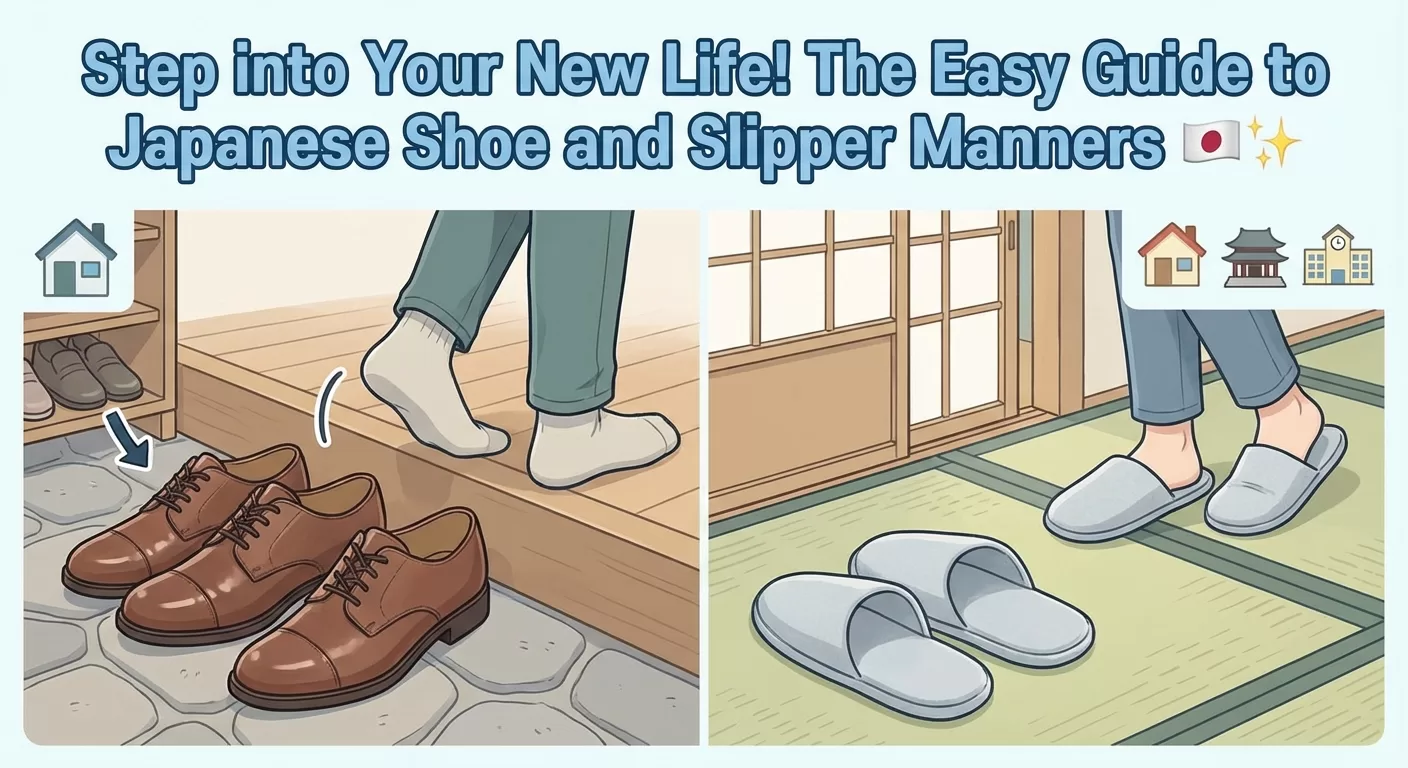
When entering, stand on the lower Genkan floor in your outdoor shoes. After removing them, step directly onto the elevated wooden floor without letting your socks touch the lower area. This prevents carrying dirt inside. / 入室時は、外履きのまま土間の低い位置に立ちます。靴を脱いだら、靴下を土間につけずに、直接一段高い板張りの床に上がります。これにより、汚れを室内に持ち込むのを防ぎます。
- Bend Forward and Kneel? Not Always / 前かがみでひざまずく? 必ずしもそうとは限らない
In very formal situations or traditional homes, it is polite to kneel on the Genkan floor to arrange your shoes. However, in most modern settings, simply stepping out of your shoes and using your hands to turn them around is sufficient. / 非常にフォーマルな場面や伝統的な家屋では、玄関にひざまずいて靴を揃えるのが礼儀です。しかし、現代的な環境では、靴を脱いで手で向きを変えるだけで十分です。
Slippers: Your Indoor Companions / スリッパ:室内の相棒
Once inside, you will often find house slippers (Surippa) provided. These are worn on hardwood, tile, or cushioned flooring to keep your feet clean and warm. However, slippers are not universal — they must be removed in specific areas. Failing to do so is a common beginner’s mistake. / 室内に上がると、多くの場合、家の中用のスリッパが用意されています。これらは、板張りやタイル、フローリングの上で足を清潔に保ち、暖かくするために履きます。ただし、スリッパは万能ではありません。特定の場所では脱がなければならず、それを怠るのは初心者によくあるミスです。
Tatami Rooms: Barefoot or Socks Only / 畳の部屋:素足か靴下のみ
The Tatami (woven straw mat) room is sacred ground. Before stepping onto tatami, you must remove your slippers. The reason is twofold: slippers can damage the delicate straw fibers, and tatami is meant to be experienced directly with clean feet or socks. This tradition dates back centuries and is deeply respected in Japanese culture. / 畳(織り込まれたイ草の敷物)の部屋は神聖な場所です。畳に上がる前には、スリッパを脱がなければなりません。理由は二つあります。スリッパが繊細なイ草の繊維を傷めること、そして畳は清潔な足や靴下で直接その感触を味わうためのものだからです。この伝統は数世紀前に遡り、日本文化で深く尊重されています。
The Toilet Slipper Rule: Never Forget to Switch! / トイレスリッパのルール:決して履き替えを忘れずに!
Perhaps the most infamous rule for newcomers is the Toilet Slipper. Many Japanese homes and even some public restrooms have a separate pair of slippers kept just inside the toilet area. You must change from your house slippers into these toilet slippers when entering, and critically, change back when leaving. Walking out into the main living area still wearing the toilet slippers is a huge faux pas that will cause embarrassment. / 新人にとって最も有名な(そして失敗しがちな)ルールがトイレスリッパです。多くの日本の家庭や、一部の公共トイレでも、トイレ内専用のスリッパが用意されています。トイレに入るときは室内用スリッパからこのトイレスリッパに履き替え、そして出るときには必ず元のスリッパに履き替えなければなりません。トイレスリッパのまま居間などに戻ってしまうことは、大きな失敗であり、恥ずかしい思いをします。
💡 Pro Tip / プロのヒント:
If you ever find yourself in a traditional restaurant or a friend’s home, pause before entering the toilet area to visually confirm the slippers. A moment of mindfulness saves a world of awkwardness. / もし伝統的なレストランや友人の家を訪れた際には、トイレエリアに入る前に必ずスリッパを目視で確認するよう、立ち止まってください。ほんの一瞬の注意が、大きな気まずさを防ぎます。
The SAMURAI Japan Methodology: Turning Etiquette into Habit / SAMURAI Japanメソッド:エチケットを習慣に変える
At SAMURAI Japan Business Center, our approach to teaching shoe and slipper manners goes beyond simple instruction. We utilize a three-step immersion method that includes classroom demonstration, simulated Genkan practice with authentic props, and cultural context discussions. Students learn not only the physical movements (like how to align shoes beautifully) but also the vocabulary and phrases to politely navigate these situations, such as “Shitsurei shimasu” (Excuse me) when entering a room. This rigorous yet supportive training ensures that every student can perform these actions naturally and confidently, reflecting the high standards that Japanese corporate partners expect. / SAMURAI Japan Business Centerでは、靴とスリッパのマナーを教える際、単なる指示を超えたアプローチを取っています。私たちは、教室での実演、本物の小道具を使った模擬玄関練習、そして文化的背景のディスカッションからなる3段階の没入型メソッドを採用しています。学生は、(靴を美しく揃える方法といった)身体的な動作だけでなく、例えば部屋に入るときの「失礼します」といった、こうした場面を丁寧に乗り切るための語彙やフレーズも学びます。この厳しくも手厚いトレーニングにより、すべての学生がこうした行動を自然かつ自信を持って行えるようになり、日本の企業パートナーが期待する高い基準を体現します。
For those preparing to work in a Japanese office, we also integrate this training into our full business manners curriculum, covering everything from bowing to aisatsu (greetings). This comprehensive approach is why our graduates stand out. / 日本のオフィスで働く準備をしている方々には、このトレーニングを、ビジネスマナー総合カリキュラムの一部として、お辞儀から挨拶まですべてを網羅して指導します。この包括的なアプローチこそが、当校の卒業生が際立つ理由です。
Frequently Asked Questions / よくある質問
Q: Is it really that important to follow all these slipper rules? / これらのスリッパのルールは本当にそれほど重要ですか?
A: Absolutely. In Japan, attention to detail in cleanliness and spatial boundaries is a sign of respect and social awareness. A simple mistake like keeping toilet slippers on can be seen as highly careless. At SAMURAI Japan Business Center, we’ve seen that students who master these small points build trust with colleagues much faster. / はい、非常に重要です。日本では、清潔さと空間の境界に対する細やかな配慮が、敬意と社会的意識の表れと見なされます。トイレスリッパを履き続けるといった単純なミスが、非常に不注意な印象を与えることもあります。SAMURAI Japan Business Centerでは、こうした小さなポイントを習得した学生が、同僚との信頼をはるかに早く築くことを目の当たりにしています。
Q: What if I forget and walk onto tatami with slippers? / もしうっかりスリッパを履いたまま畳に上がってしまったら?
A: Apologize briefly with “Sumimasen” and immediately remove your slippers. Japanese people are very forgiving of honest mistakes, especially from someone clearly learning the culture. The key is to show awareness and correct yourself promptly. / 短く「すみません」と謝り、すぐにスリッパを脱ぎましょう。日本人は、特に明らかに文化を学んでいる最中の人の正直なミスには、とても寛容です。大切なのは、気づきを示し、すぐに行動を正すことです。
Q: Do I need to bring my own indoor slippers when visiting someone? / 誰かの家を訪れるとき、自分の室内用スリッパを持参する必要はありますか?
A: Usually not. The host provides slippers for guests. However, it is polite to ensure your socks are clean and presentable, as you may be walking around in just socks in tatami rooms. Some foreigners carry a fresh pair of socks in their bag just in case. / 通常は必要ありません。ホストが来客用のスリッパを用意してくれます。ただし、畳の部屋では靴下だけで歩くこともあるため、靴下が清潔で見苦しくないか確認しておくのがマナーです。念のため、予備の靴下をバッグに入れておく外国人の方もいます。
Your New Life Starts at the Door / 新しい生活は玄関から始まる
Learning these simple yet profound manners is like receiving a key to the heart of Japanese society. Every time you step out of your shoes and into the home, you are participating in a centuries-old tradition of cleanliness and consideration. At SAMURAI Japan Business Center, we are proud to walk alongside you on this journey, from your first “Shitsurei shimasu” to your confident stride into a Japanese workplace. Your dream life awaits — let’s step forward together. / これらのシンプルでありながら奥深いマナーを学ぶことは、日本社会の心への鍵を受け取るようなものです。靴を脱ぎ、家の中へ踏み出すたびに、あなたは何世紀も続く清潔と思いやりの伝統に参加しているのです。SAMURAI Japan Business Centerは、初めての「失礼します」から、自信に満ちた足取りで日本の職場へ踏み出すその日まで、皆さんと共に歩んでいけることを誇りに思います。夢の生活が待っています。一緒に前進しましょう。
🇯🇵 日本語で新しい可能性を広げよう! ✨
SAMURAI Japan Business Centerは、あなたの日本語学習を全力でサポートします。
🚀 Start Your Learning Journey Today!
Ready to learn Japanese? Apply for our programs now!
🏫 お問い合わせ (Contact Us)
📞 Phone: +63 997 093 4550
📧 Email: samuraijapan.bc@gmail.com
🏢 Address: Room D3, Freb Bldg, Villa Donata Subd, Muntinlupa
📱 SNSで楽しく学ぼう!
Related posts:
 Your Japan Dream is Calling! 5 Simple Secrets to Start Learning Japanese Today 🇯🇵✨
 Be a Workplace Superstar! Easy Japanese Greetings and Manners to Help You Shine 🇯🇵
 Start Your Dream Life in Japan! 5 Must-Have 100-Yen Shop Finds for Your New Home 🇯🇵
 Shine at Your Dream Workplace! 5 Simple Japanese Greetings to Make a Great Impression 🇯🇵
 Master the Konbini! Easy Tips and Phrases for Your Dream Life in Japan 🏪
 Master Japan’s Trains Like a Pro! Easy Tips and Phrases for Your Big Dream 🇯🇵
