
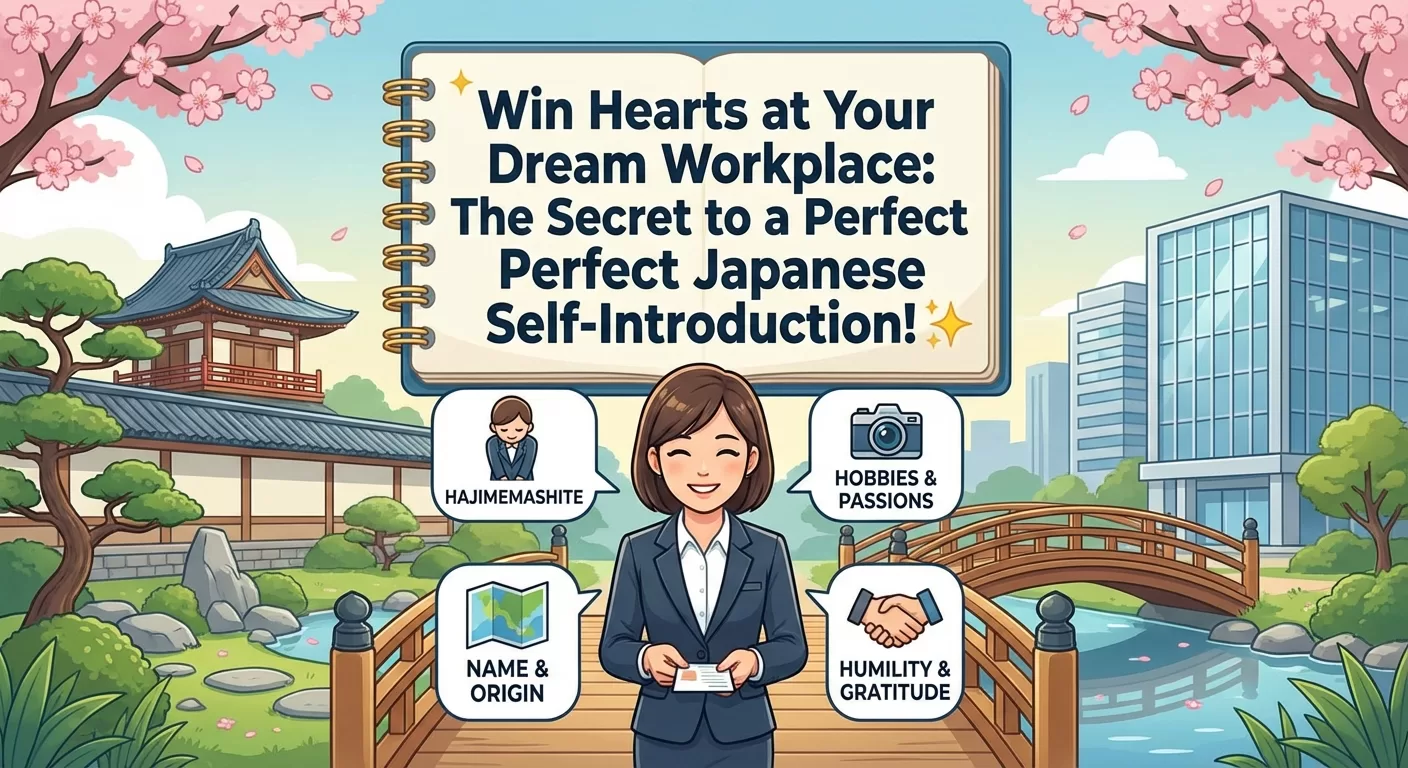
Win Hearts at Your Dream Workplace: The Secret to a Perfect Japanese Self-Introduction! ✨
Executive Summary / エグゼクティブサマリー
Your Jiko Shokai (self-introduction) is the foundation of your professional image in Japan. At SAMURAI Japan Business Center, we teach you not just the words, but the cultural heartbeat behind them. This article breaks down the essential structure and key phrases, reveals advanced tips to stand out, and shows how our training methodology builds confidence for real-world success.
「自己紹介」は日本でのプロフェッショナルイメージの土台です。SAMURAI Japan Business Centerでは、単語だけでなく、その背景にある文化の鼓動まで教えています。この記事では、必須の構成と重要フレーズを分解し、差をつける上級テクニックを公開。さらに、私たちのトレーニング方法がどのように実践力を育むかを示します。
Hello everyone! At SAMURAI Japan Business Center, we believe that your self-introduction is the first step toward building a trusted image in your dream Japanese workplace. For Filipino students and professionals, mastering a proper Jiko Shokai (自己紹介) can open doors to lasting relationships and respect from Japanese colleagues.
皆さん、こんにちは!SAMURAI Japan Business Centerでは、自己紹介はあなたが日本の理想の職場で信頼されるイメージを築く第一歩だと考えています。フィリピン人の学生や社会人にとって、正しい「自己紹介」をマスターすることは、日本の同僚との永続的な関係と敬意への扉を開きます。
The Golden Formula of a Japanese Self-Introduction / 自己紹介の黄金構成
A successful Jiko Shokai follows a four-part rhythm: (1) Polite opening, (2) Your name with humility, (3) A bridge to connection—your origin or passion, and (4) A respectful closing. Let’s explore each element, always keeping in mind that in Japan, the manner of speaking often leaves a stronger impression than the content itself.
成功する自己紹介は、(1)丁寧な始まり、(2)謙虚さを込めた名前の提示、(3)出身や情熱など、つながりのきっかけ、(4)敬意ある締めくくりの4つのパートで構成されます。それぞれの要素を探求しながら、日本では話し方のマナーが内容以上に印象を残すことを忘れないでください。
🌟 Pro-Tip / プロのヒント
Before you speak, your presence speaks. Stand tall, smile gently, and initiate with a 15-degree bow (会釈, eshaku). This non-verbal start already conveys 誠意 (seii)—sincerity.
話し始める前に、あなたの存在そのものが語ります。背筋を伸ばし、柔らかく微笑み、15度のお辞儀(会釈)から始めましょう。この非言語のスタートだけで、すでに誠意(せいい)が伝わります。
1. The Opening: “Hajimemashite” / 最初の言葉「はじめまして」
はじめまして (Hajimemashite) is the universal opener. It literally means “for the first time,” and it sets a polite, fresh-start tone. In the Philippines we might say “Hello po!” but here, this word shows you acknowledge the significance of a first meeting.
「はじめまして」は、誰に対しても使える万能の書き出しです。直訳すると「初めて」という意味で、丁寧で新しいスタートの雰囲気を作ります。フィリピンでは「Hello po!」と言うところですが、この言葉は初対面の重みを認識していることを示します。
2. Stating Your Name: The Humble Way / 名前の伝え方――「と申します」
Instead of “Watashi wa Maria desu,” elevate your introduction with 「と申します」(to moshimasu). This humble form, a cornerstone of 敬語 (keigo), signals that you put yourself lower while respecting the listener. Pair it with your family name first—this aligns with Japanese naming customs. For instance: 「◯◯と申します」.
「私はマリアです」ではなく、「と申します」を使ってワンランク上の自己紹介にしましょう。この謙遜語は敬語の柱であり、自分を低くして聞き手を立てる姿勢を示します。姓から先に言うことで日本の慣習にも合致します。例:「◯◯と申します」。
💡 先生のポイント (Teacher’s Tip):
In our Yoroshiku Onegaishimasu training module, we emphasize that after your name, the phrase よろしくお願いします (Yoroshiku onegaishimasu) acts like a polite handshake that seals the connection.
私たちの「よろしくお願いします」トレーニングモジュールでは、名前の後に続けるよろしくお願いしますが、丁寧な握手のように絆を結ぶことを強調しています。
3. Building Connection: Talking About Yourself / つながりを作る「自分のこと」
After your name, add a personal touch that invites conversation. Mention your origin or a simple passion. 「フィリピンから参りました」(Firipin kara mairimashita) is a polite upgrade from “kimashita.” You can then share a hobby using 「趣味は〇〇です」(Shumi wa 〇〇 desu)—cooking, sports, or even anime. This turns a formal introduction into a warm, human moment.
名前の後は、会話を誘う個人的なエッセンスを加えましょう。出身地や簡単な情熱を伝えます。「フィリピンから参りました」は「来ました」より丁寧です。さらに「趣味は〇〇です」で料理やスポーツ、アニメなどに触れれば、堅苦しい紹介があたたかな人間味に変わります。
📝 Study Snap / 学習スナップ
Script: 「はじめまして。マリアと申します。フィリピンのセブから参りました。趣味は日本料理を作ることです。本日はよろしくお願いいたします。」 This uses humble language, a personal hobby, and a polite close—perfect for a job interview or first day.
台本例:「はじめまして。マリアと申します。フィリピンのセブから参りました。趣味は日本料理を作ることです。本日はよろしくお願いいたします。」 謙譲語と個人的な趣味、丁寧な締めが融合した、就職面接や初日にぴったりの一言です。
The SAMURAI Japan Methodology / サムライジャパンのメソッド
At SAMURAI Japan Business Center, our training goes beyond phrase memorization. We simulate real workplace scenarios where students practice delivering their Jiko Shokai under time pressure, just like in a real Japanese office. Our instructors—Japanese professionals who understand Filipino learning styles—give personalized feedback on bowing, eye contact, and tone. This method bridges the gap between textbook knowledge and genuine, trust-building communication.
SAMURAI Japan Business Centerのトレーニングは、フレーズの暗記に留まりません。生徒は本物の日本の職場のように時間制限の中で自己紹介を行う実践練習をします。フィリピン人学習者の特長を理解する日本人プロ講師が、お辞儀、アイコンタクト、声のトーンまで個別にフィードバックを提供します。このメソッドが、教科書の知識と信頼を築く本物のコミュニケーションとの橋渡しとなります。
Key Phrases at a Glance / ひと目でわかる重要フレーズ
| English | Japanese (Romaji) | Kanji/Kana |
|---|---|---|
| Nice to meet you. | Hajimemashite. | はじめまして。 |
| My name is [Name]. | [Name] to moshimasu. | [名前]と申します。 |
| I am from the Philippines. (humble) | Firipin kara mairimashita. | フィリピンから参りました。 |
| My hobby is [hobby]. | Shumi wa [〇〇] desu. | 趣味は[〇〇]です。 |
| Please be kind to me / I look forward to working with you. | Yoroshiku onegaishimasu. | よろしくお願いします。 |
よくある質問 (FAQ)
Q: Is it okay to use “Watashi wa” when introducing my name? / 自己紹介で「わたしは」を使ってもいいですか?
A: While acceptable for casual settings, in a business environment “Watashi wa” can feel redundant and slightly too direct. We recommend the more humble 「[Name] to moshimasu」 to demonstrate professional awareness. / カジュアルな場では問題ありませんが、ビジネスではやや直接的で冗長に感じられます。より謙虚な「[名前]と申します」を使うことで、プロとしての意識を示せます。
Q: How can I remember to bow and speak at the right time? / お辞儀とタイミングを合わせるコツは?
A: Follow the SAMURAI Japan Business Center’s “Gosen-go-pu” technique: Speak your greeting first (“Hajimemashite”), then bow. This separates the verbal and physical actions, making your introduction clearer and more graceful. / SAMURAI Japan Business Centerの「語先後礼」テクニックに従いましょう。先に「はじめまして」と言ってから、お辞儀をします。言葉と動作を分けることで、より明瞭で品位のある紹介になります。
Q: What if I make a mistake during my introduction? / 自己紹介で間違えたらどうすれば?
A: Don’t panic! A genuine smile and a quick 「失礼しました」(Shitsurei shimashita) followed by a re-statement will be met with warmth. Japanese business people deeply appreciate the effort to speak their language correctly. / 焦らなくて大丈夫! 本物の笑顔と、軽く「失礼しました」と言ってから言い直せば、あたたかく受け止められます。日本のビジネスパーソンは、正しく話そうとする努力そのものを大いに評価します。
Your Journey Starts with One Confident “Hajimemashite” / 自信の「はじめまして」から旅が始まる
Learning Japanese self-introduction is more than mastering words; it’s about embodying respect and sincerity. At SAMURAI Japan Business Center, we’re committed to guiding Filipino learners through every nuance—so that when you stand before your future colleagues, your Jiko Shokai becomes your strongest calling card. Keep practicing, stay curious, and remember: every small phrase you polish today is a bridge to your tomorrow in the Land of the Rising Sun.
日本語の自己紹介を学ぶことは、単語を覚える以上のものです。それは敬意と誠実さを体現することです。SAMURAI Japan Business Centerは、フィリピン人学習者がすべてのニュアンスを理解できるようサポートし、あなたが将来の同僚の前に立つとき、自己紹介が最強の名刺となることを目指します。練習を続け、好奇心を持ち、そして今日磨いた一言ひとことが、明日の日出ずる国への架け橋になることを忘れないでください。
🇯🇵 日本語で新しい可能性を広げよう! ✨
SAMURAI Japan Business Centerは、あなたの日本語学習を全力でサポートします。
🚀 Start Your Learning Journey Today!
Ready to learn Japanese? Apply for our programs now!
🏫 お問い合わせ (Contact Us)
📞 Phone: +63 997 093 4550
📧 Email: samuraijapan.bc@gmail.com
🏢 Address: Room D3, Freb Bldg, Villa Donata Subd, Muntinlupa
📱 SNSで楽しく学ぼう!
Related posts:
 Your Japan Dream is Calling! 5 Simple Secrets to Start Learning Japanese Today 🇯🇵✨
 Be a Workplace Superstar! Easy Japanese Greetings and Manners to Help You Shine 🇯🇵
 Start Your Dream Life in Japan! 5 Must-Have 100-Yen Shop Finds for Your New Home 🇯🇵
 Shine at Your Dream Workplace! 5 Simple Japanese Greetings to Make a Great Impression 🇯🇵
 Master the Konbini! Easy Tips and Phrases for Your Dream Life in Japan 🏪
 Master Japan’s Trains Like a Pro! Easy Tips and Phrases for Your Big Dream 🇯🇵
