
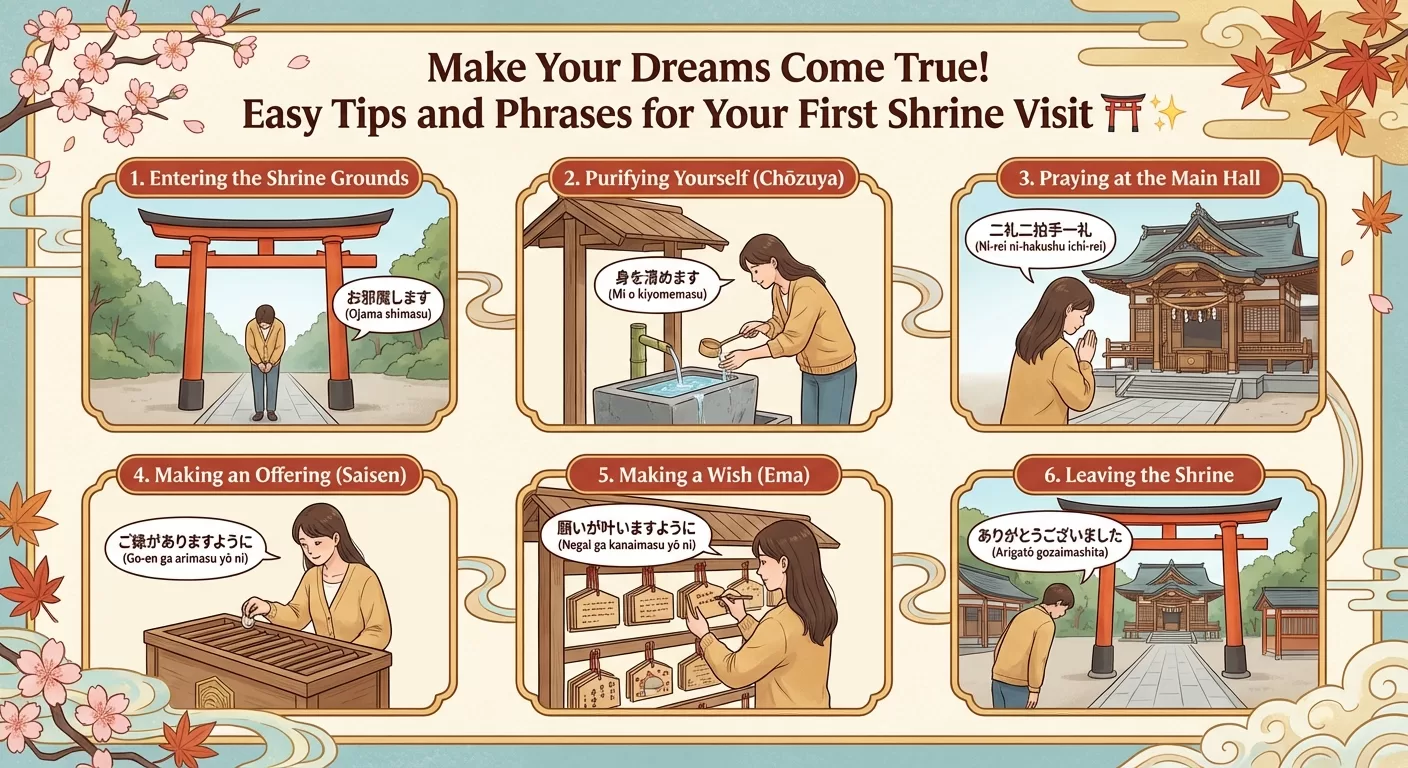
Make Your Dreams Come True! Easy Tips and Phrases for Your First Shrine Visit ⛩️✨
Executive Summary / エグゼクティブサマリー
English: Visiting a Japanese shrine (Jinja) is a profound cultural milestone for anyone starting life in Japan. This guide provides Filipino students at SAMURAI Japan Business Center with a clear, step-by-step walkthrough of shrine etiquette, essential Japanese phrases, and the deeper meaning behind each action—from purifying your hands to making a wish. By mastering these customs, you show respect, deepen your connection to Japanese society, and pave the way for a harmonious life in Japan.
日本語: 日本の神社(じんじゃ)への参拝は、これから日本で生活を始める方にとって、とても深い意味を持つ文化的な節目です。このガイドでは、SAMURAI Japan Business Centerのフィリピン人学生の皆さんに、神社での作法から必要な日本語フレーズ、そしてそれぞれの行動に込められた意味まで、段階を追ってわかりやすくお伝えします。これらの習慣を身につけることで、敬意を示し、日本社会とのつながりをより深め、日本での調和のとれた生活への道を開くことができます。
Why Your First Shrine Visit Matters / 初めての神社参拝が大切な理由
For many Filipinos arriving in Japan, the first shrine visit—often called Hatsumode if done during the New Year—is not just a tourist activity. It is an introduction to the daily spiritual rhythm of Japan. Understanding the steps and phrases correctly shows your willingness to integrate, a trait highly valued in Japanese workplaces and communities. At SAMURAI Japan Business Center, we integrate cultural fluency training into every language lesson so that our students feel confident, not confused, when they step through the torii gate.
日本に到着した多くのフィリピン人の皆さんにとって、初めての神社参拝——お正月に行う「初詣(はつもうで)」だけでなく——は、単なる観光ではありません。それは日本の日常に流れる精神性への入り口です。正しい手順と言葉を理解することは、周囲に溶け込みたいというあなたの意志を示し、日本の職場や地域社会で高く評価される姿勢です。SAMURAI Japan Business Centerでは、言語スキルと同時に文化理解を深める訓練を取り入れ、鳥居をくぐるときに迷いなく一歩を踏み出せるようサポートしています。
💡 Pro-Tip / 学習のヒント
Before you go, practice saying “Sumimasen, omairi no shikata o oshiete kudasai” (Excuse me, please teach me how to pray). This humble request often invites a kind local to guide you—turning a nervous moment into a beautiful human connection.
訪れる前に、「すみません、お参りの仕方を教えてください」と練習してみましょう。この謙虚なお願いが、親切な地域の人とのつながりを生み、緊張する瞬間を美しい交流に変えてくれます。
1. Passing Through the Torii Gate / 鳥居をくぐる
The Torii marks the boundary between the everyday world and the sacred space of the kami (deities). Before entering, stand to the side and give a small bow. Never walk directly in the center of the path—that is reserved for the gods. This simple act of humility immediately demonstrates your respect for Japanese spiritual traditions.
鳥居(とりい)は、日常の世界と神様の聖なる領域との境界を示します。くぐる前に、道の端に立ち、軽く一礼しましょう。参道の真ん中は神様の通り道とされていますので、絶対に歩かないでください。この謙虚な所作が、日本の精神文化への敬意を即座に表します。
💡 Study Box / 学習ポイント
Vocabulary: 鳥居 (Torii) – shrine gate, 参道 (Sandō) – approach path. Remember, the left and right sides are for people; the center is for the divine.
語彙:鳥居(とりい)、参道(さんどう)。左右の端を歩き、中央は避けることを覚えましょう。
2. Purification at the Temizuya / 手水舎で清める
Before approaching the main hall, you must purify your body symbolically at the Temizuya (water pavilion). This ritual washes away impurities and prepares you to stand before the kami. Follow these steps carefully:
拝殿に向かう前に、手水舎(てみずや)で心身を清めます。この儀式はけがれを洗い流し、神前に立つ準備を整えるものです。手順は次のとおりです。
-
Take the ladle with your right hand and pour water over your left hand.
右手で柄杓を持ち、左手に水をかけます。
-
Switch hands and wash your right hand.
持ち替えて、右手を洗います。
-
Pour water into your left palm and rinse your mouth gently (do not touch the ladle directly to your lips).
左手に水を受け、口をすすぎます(柄杓に直接口をつけないこと)。
-
Wash your left hand once more, then tilt the ladle vertically to rinse the handle before returning it.
もう一度左手を洗い、最後に柄杓を立てて柄の部分を洗い清め、元の場所に戻します。
3. The 2-2-1 Prayer Method / 二礼二拍手一礼のお参り
When you reach the main altar, toss a coin into the offering box—a 5-yen coin (goen) is especially auspicious because its pronunciation sounds like “good connection” or “fate.” Then follow the classic 2-2-1 sequence:
拝殿の前で、お賽銭箱にお金を入れます。特に5円玉(ごえん)は「ご縁」に通じることから縁起が良いとされています。その後、伝統的な二礼二拍手一礼を行います。
-
Bow deeply two times (Ni-rai / 二礼)
深く二回お辞儀をします。
-
Clap your hands twice at chest level (Ni-hakushu / 二拍手)
胸の高さで二回手を打ちます。
-
With your hands still together, silently make your wish or express gratitude (Onegai / お願い)
手を合わせたまま、静かに願い事をするか感謝を伝えます。
-
Bow deeply one final time (Ichi-rai / 一礼)
最後にもう一度深くお辞儀をします。
4. Powerful Phrases for Your Wish / 願い事に効く!おすすめフレーズ
While the gods already know your heart, voicing your wishes in Japanese can make the experience more meaningful. Here are three simple, sincere phrases to use when you stand before the altar:
神様はすでにあなたの心を知っていますが、日本語で願いを言葉にすることで、体験がより深いものになります。拝殿の前で使える、シンプルで誠実な3つのフレーズをご紹介します。
-
“JLPT ni goukaku dekimasu you ni.” / 「JLPTに合格できますように。」
I hope I can pass the JLPT. (For those working toward language certification.)
(言語資格取得を目指す方に。)
-
“Kazoku ga kenkou de arimasu you ni.” / 「家族が健康でありますように。」
I pray for my family’s health. (A universal wish of love.)
(普遍的な愛を込めて。)
-
“Nihon de no seikatsu ga shiawase ni narimasu you ni.” / 「日本での生活が幸せになりますように。」
I hope my life in Japan will be filled with happiness. (A beautiful prayer for your new journey.)
(新しい人生への美しい祈り。)
💡 Pro-Tip / 上達のヒント
At SAMURAI Japan Business Center, we practice these phrases through role-play sessions that mirror real shrine environments. This bridges classroom learning and real-life confidence.
SAMURAI Japan Business Centerでは、実際の神社を想定したロールプレイを通じてこれらのフレーズを練習します。教室での学びが、現実の自信へとつながります。
The SAMURAI Japan Methodology: Turning Cultural Knowledge into Confidence / サムライジャパンのメソッド:文化知識を自信に変える
At SAMURAI Japan Business Center, we treat cultural training as an inseparable part of language education. Our proprietary “Live the Language” approach combines vocabulary drills with immersive simulations of daily Japanese scenarios—including shrine visits. Students not only memorize phrases but also understand the why behind every gesture. This methodology ensures that when our trainees stand before a torii gate, they feel a genuine sense of belonging, not just a tourist’s curiosity. Japanese companies trust candidates who demonstrate this level of cultural competence.
SAMURAI Japan Business Centerでは、文化トレーニングを語学教育と不可分なものとして位置づけています。独自の「Live the Language」アプローチでは、語彙練習と日本での日常場面を想現した没入型シミュレーションを組み合わせ、神社参拝もその一つです。フレーズを暗記するだけでなく、すべての所作に込められた理由を理解することで、鳥居の前に立ったときに単なる観光客の好奇心ではなく、心からの所属感を覚えられるように導きます。このレベルの文化適応力を示す人材は、日本企業から高く信頼されます。
Related Resources / 関連リソース
To deepen your understanding of Japanese New Year traditions, explore our article Hatsuyume: 3 Lucky Symbols in Your First Dream for a Great Year in Japan!. Combining shrine visits with knowledge of hatsuyume enriches your cultural journey.
日本の正月文化をさらに深く知りたい方は、こちらの記事「Hatsuyume: 3 Lucky Symbols in Your First Dream for a Great Year in Japan!」もご覧ください。神社参拝と初夢の知識を合わせることで、あなたの文化体験がより豊かになります。
Frequently Asked Questions / よくある質問
Q: Is it okay to visit a shrine if I am not Shinto or Buddhist? / 神道や仏教の信者でなくても神社に行ってもいいですか?
A: Absolutely. Shrines welcome people of all backgrounds. The emphasis is on sincere respect, not religious affiliation. As long as you follow the etiquette—like bowing and purifying—you are showing the right spirit. Japanese people themselves often visit shrines for various life events regardless of personal belief.
A: もちろんです。神社はあらゆる背景の人々を歓迎しています。大切なのは宗教的な所属ではなく、誠実な敬意です。お辞儀や手水といった作法を守れば、正しい精神を示していることになります。日本人自身も、個人的な信仰にかかわらず、人生の節目に神社を訪れます。
Q: Why is the 5-yen coin considered lucky? / なぜ5円玉は縁起がいいのですか?
A: In Japanese, “5 yen” is pronounced go-en, which is a homophone for go-en (ご縁), meaning “connection” or “fate.” Offering a 5-yen coin symbolizes your wish for good relationships and opportunities—making it the perfect choice for students starting a new chapter in Japan.
A: 日本語で「5円」は「ごえん」と読みますが、これは人と人との「ご縁」と同じ発音です。5円玉を奉納することは、良い人間関係や機会に恵まれたいという願いの象徴であり、日本で新たな章を始める学生にとってまさにうってつけの硬貨です。
Q: What if I make a mistake during the prayer? / お参りの手順を間違えたらどうなりますか?
A: Don’t worry. Sincerity matters more than perfection. Even many Japanese people sometimes forget the exact number of bows or claps, especially at shrines that follow slightly different rules. If you act with a respectful heart, your visit will be meaningful. You can always watch others and follow along.
A: 心配いりません。完璧さよりも誠実さの方が大切です。日本人でも、特に作法が少し異なる神社では、お辞儀や拍手の回数を間違えることがあります。敬意を込めた心で行動すれば、参拝は必ず意味のあるものになります。周りの人を観察して真似することもできますよ。
Conclusion: Your Journey Begins with a Single Step / まとめ:旅は一歩から
Your first shrine visit is far more than a checklist of actions; it is a moment where language, culture, and personal aspiration meet. By mastering the steps and phrases shared here, you are not only showing respect for Japan’s spiritual heritage—you are also building the cultural fluency that Japanese employers and communities deeply admire. At SAMURAI Japan Business Center, we are honored to guide you every step of the way, from your very first “Sumimasen” to the day you offer your 5-yen coin with the quiet confidence of a true insider.
初めての神社参拝は、単なる手順のチェックリストではなく、言葉と文化、そしてあなたの夢が交差する瞬間です。ここで学んだ手順とフレーズを身につけることで、日本の精神的な遺産に敬意を払うだけでなく、日本社会や企業が深く評価する文化的な実践力を培うことになります。SAMURAI Japan Business Centerは、皆さんが初めての「すみません」から、5円玉を静かに捧げる自信あふれる一日まで、すべての歩みを導けることを誇りに思います。
🇯🇵 日本語で新しい可能性を広げよう! ✨
SAMURAI Japan Business Centerは、あなたの日本語学習を全力でサポートします。
🚀 Start Your Learning Journey Today!
Ready to learn Japanese? Apply for our programs now!
🏫 お問い合わせ (Contact Us)
📞 Phone: +63 997 093 4550
📧 Email: samuraijapan.bc@gmail.com
🏢 Address: Room D3, Freb Bldg, Villa Donata Subd, Muntinlupa
📱 SNSで楽しく学ぼう!
Related posts:
 Your Japan Dream is Calling! 5 Simple Secrets to Start Learning Japanese Today 🇯🇵✨
 Be a Workplace Superstar! Easy Japanese Greetings and Manners to Help You Shine 🇯🇵
 Start Your Dream Life in Japan! 5 Must-Have 100-Yen Shop Finds for Your New Home 🇯🇵
 Shine at Your Dream Workplace! 5 Simple Japanese Greetings to Make a Great Impression 🇯🇵
 Master the Konbini! Easy Tips and Phrases for Your Dream Life in Japan 🏪
 Master Japan’s Trains Like a Pro! Easy Tips and Phrases for Your Big Dream 🇯🇵
