
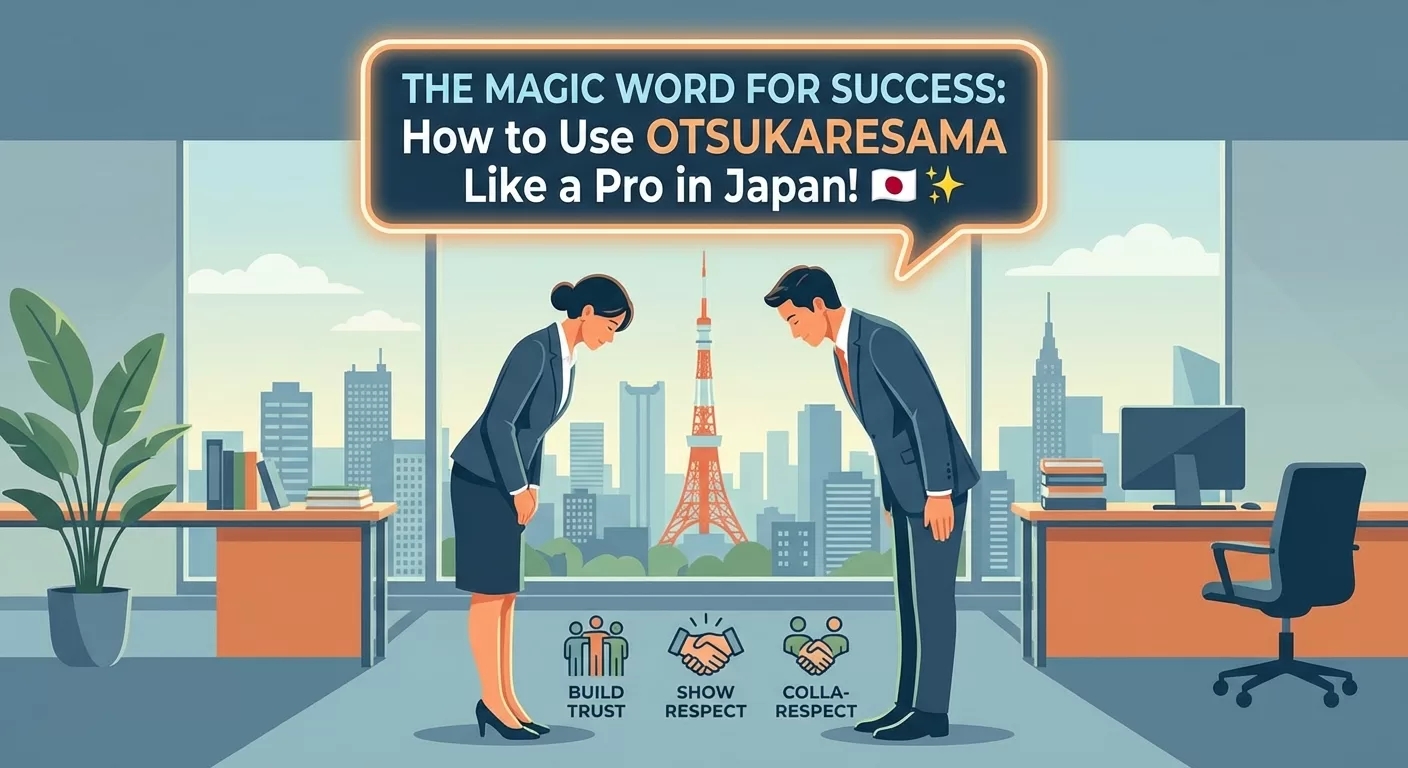
The Magic Word for Success: How to Use Otsukaresama Like a Pro in Japan! 🇯🇵✨
📋 Executive Summary / 概要
In the Japanese workplace, one phrase acts as a universal key to trust and harmony: Otsukaresama (お疲れ様). Far beyond a simple “good job,” it weaves together greetings, acknowledgment of effort, and respect for your team. Mastering its use can instantly elevate your professional presence, whether you are entering the office, greeting a colleague, or ending the day. This article dives deep into the cultural heart of Otsukaresama, provides clear usage tables, and shows how SAMURAI Japan Business Center equips you with the language and business manners to shine in your Japanese career.
日本の職場において、信頼と調和を築くための万能な鍵となるのが「お疲れ様(おつかれさま)」です。単なる「お疲れさま」を超え、挨拶、努力への気づかい、チームへの敬意を一つにまとめた言葉です。この言葉を使いこなすことで、出社時から同僚とのすれ違い、退社の瞬間まで、あなたのプロフェッショナルな印象が大きく変わります。この記事では、お疲れ様の文化的背景と実践的な使い方を表で示しながら、SAMURAI Japan Business Centerがどのように語学とビジネスマナーであなたを支えるかをご紹介します。
1. More Than Words: The Cultural Heart of Otsukaresama / 言葉以上のもの:お疲れ様の文化的な心
When you first hear Otsukaresama, textbooks might translate it as “Thank you for your hard work.” But in the daily rhythm of a Japanese office, it serves as a multi-layered social tool. It acknowledges the visible and invisible effort that colleagues put in, it acts as a friendly yet respectful greeting in place of “hello” or “goodbye,” and it reinforces the spirit of wa (和) – group harmony. By using this single phrase, you are showing that you see the person, not just their role, and that you appreciate their contribution to the team.
初めて「お疲れ様」を聞いたとき、教科書では「お疲れさまです」と訳されるかもしれません。しかし、日本のオフィスの日常では、この言葉は多層的な社会ツールとして機能します。同僚が注いだ目に見える努力だけでなく、見えない苦労をも認め、「こんにちは」や「さようなら」の代わりになるフレンドリーかつ礼儀正しい挨拶として機能し、そして「和」の精神を強めます。この一言を使うことで、あなたは相手の役割だけでなく、その人自身を見ており、チームへの貢献に感謝していることを示すのです。
The beauty of Otsukaresama lies in its flexibility. Unlike English greetings that are time-specific, this phrase can be used from the moment you step into the office until you leave. For Filipino professionals aiming to work in Japan, adopting Otsukaresama is like learning a superpower—it immediately signals that you understand Japanese working culture and that you are a thoughtful, team-oriented person.
お疲れ様の美しさは、その柔軟性にあります。英語のように時間帯に縛られた挨拶とは違い、この言葉は出社した瞬間から退社するまで使うことができます。日本での就職を目指すフィリピン人の方にとって、お疲れ様を使いこなすことは、まるでスーパーパワーを手に入れるようなものです。あなたが日本の職場文化を理解し、思いやりがありチーム志向の人間であることを瞬時に伝えてくれます。
💡 Pro-Tip / 上達のコツ
Pair Otsukaresama with a slight bow and a smile. The physical gesture deepens the message of respect. Even a subtle nod while making eye contact can transform a routine greeting into a moment of genuine connection.
お疲れ様に軽いお辞儀と笑顔を添えてください。身体の動きが敬意のメッセージを深めます。相手と目を合わせながら小さくうなずくだけでも、日常の挨拶が本物のつながりの瞬間に変わります。
2. When to Use Otsukaresama: A Quick-Reference Table / お疲れ様を使うタイミング:早見表
Knowing exactly when to use Otsukaresama can feel tricky at first. The table below breaks down the most common scenarios, the appropriate form of the phrase, and the nuance behind it.
最初はどのタイミングでお疲れ様を使えばいいか迷うかもしれません。下の表は、最もよくある場面、適切な表現、そしてそのニュアンスをまとめたものです。
| Scenario / 場面 | What to Say / 使う言葉 | Meaning / 意味 |
|---|---|---|
| Arriving at the office / 出社時 | Otsukaresama desu! | A warm “hello” that replaces “Good morning”; acknowledges that colleagues have already started working. |
| Passing a colleague in the hall / 廊下ですれ違う時 | Otsukaresama desu! | A polite way of saying “Hi, I see you’re working hard.” |
| After a meeting or joint task / 会議や共同作業の後 | Otsukaresama deshita! | Thanks everyone for the effort specifically for that completed activity. |
| Leaving the office before others / 退社時 | Osaki ni shitsurei shimasu. Otsukaresama deshita! | “Excuse me for leaving before you. You all worked hard today.” |
Notice the shift between desu (present tense) and deshita (past tense). Use desu when the work is ongoing or as a general greeting; use deshita when a specific task has finished or at the end of the day.
です(現在形)とでした(過去形)の使い分けに注目しましょう。仕事が進行中の場合や一般的な挨拶としてはですを使い、特定の作業が終わったときや一日の終わりにはでしたを使います。
3. Formal vs. Casual: Keeping the Hierarchy / フォーマルとカジュアル:上下関係を意識する
Japanese workplaces heavily respect hierarchy. When speaking to a superior (boss, senior colleague, or client), always use the full polite form: Otsukaresama desu (deshita). Among very close colleagues of the same rank or friends, you can shorten it to Otsukare! —but be careful never to use this casual form with someone above you.
日本の職場では上下関係が非常に重視されます。上司や先輩、顧客に対しては、常に丁寧な形「お疲れ様です(でした)」を使います。ごく親しい同僚や友人間では「お疲れ!」と略すこともありますが、目上の人にこのカジュアル形を使わないよう十分注意してください。
⚠️ Critical Warning / 重要ワーニング
Never use Gokurousama (ご苦労様) to a superior. That phrase is only used by those in higher positions to address subordinates. Sticking with Otsukaresama keeps you safe and respectful in any direction.
上司に対して「ご苦労様」は絶対に使わないでください。この言葉は目上の人が部下に使うものです。常に「お疲れ様」を使っておけば、上下どちらにも安全で敬意を示せます。
4. The SAMURAI Japan Methodology: From Classroom to Workplace / サムライジャパンのメソッド:教室から職場へ
At SAMURAI Japan Business Center, we don’t just teach vocabulary; we embed these phrases into realistic role-plays that mirror real Japanese office life. Students practice greeting their “manager,” exchanging Otsukaresama desu with peers during simulated breaks, and wrapping up tasks with Otsukaresama deshita. By the time they step into a real workplace, using this phrase becomes as natural as saying “po” in Filipino. Our curriculum merges Language Training with Business Manners and Professional Upskilling to ensure not only linguistic accuracy but also cultural fluency. Learn more about our approach in our article on 5 Simple Japanese Greetings to Make a Great Impression.
SAMURAI Japan Business Centerでは、単に語彙を教えるだけでなく、実際の日本のオフィスを再現したロールプレイにこれらのフレーズを組み込んでいます。学生は「上司」への挨拶、模擬休憩中の同僚とのお疲れ様ですの交わし、そしてタスク終了時のお疲れ様でしたを練習します。実際の職場に立つ頃には、このフレーズを使うことがフィリピン語の「ポ」のように自然になっています。私たちのカリキュラムは、言語トレーニングにビジネスマナーとプロフェッショナルスキル向上を組み合わせ、言語の正確さだけでなく文化的な流暢さも保証します。詳細は「5 Simple Japanese Greetings to Make a Great Impression」の記事もご覧ください。
5. Practical Examples for Your Dream Life / 夢の生活のための実践例
Imagine you are working in a Japanese IT company. You pass a senior developer in the morning; saying Otsukaresama desu! acknowledges their ongoing efforts and opens a door for smooth collaboration. Later, after you jointly debug a tough issue, you turn to them and say Otsukaresama deshita! This small moment cements your identity as a respectful, team-minded colleague. For a Filipino worker, using these phrases consistently can be the difference between being seen as an outsider and being accepted as a trusted member of the team. For more insights on winning trust, see our guide on Mastering the Magic Phrase.
あなたが日本のIT企業で働いていると想像してください。朝、先輩開発者とすれ違うときにお疲れ様です!と言うと、相手の日々の努力を認め、スムーズな協力関係への扉を開きます。その後、難しい不具合を一緒に解決した後、その先輩にお疲れ様でした!と声をかければ、あなたが敬意を払い、チームを大切にする同僚であるという印象を強く植え付けます。フィリピン人ワーカーにとって、これらのフレーズを一貫して使うことは、外部者と見られるか、信頼されるチームの一員として受け入れられるかの分かれ道になります。さらに信頼を得るヒントは「Mastering the Magic Phrase」のガイドもご覧ください。
6. Frequently Asked Questions / よくある質問
Q: Can I use Otsukaresama with customers or external partners? / お客様や社外の相手にも使えますか?
A: Generally, no. With customers, you should use more formal expressions like Osewa ni natte orimasu (Thank you for your continued support) instead. Otsukaresama is primarily for inside the company. However, if you have a very close business relationship, a respectful Otsukaresama desu can occasionally be heard, but it’s safer to stick to standard business courtesy phrases.
基本的には使用しません。顧客に対しては「お世話になっております」のようなよりフォーマルな表現を使います。お疲れ様は主に社内で使われる言葉です。ただし、極めて親しい取引関係であれば丁寧なお疲れ様ですが使われることもありますが、標準的なビジネス敬語を使う方が安全です。
Q: What if I forget to use it? Will it be considered rude? / うっかり使うのを忘れたら失礼にあたりますか?
A: Forgetting occasionally is human, and Japanese colleagues are generally understanding with non-native speakers. However, consistently skipping the phrase could make you seem distant or unaware of team spirit. The effort to use it, even with a slight mistake, is always appreciated because it shows you are trying to blend into the culture.
たまに忘れてしまうのは人間ですし、日本人の同僚は非ネイティブに対して概して寛容です。ただし、使い続けないままだと、距離を置いている、あるいはチームスピリットに気づいていない印象を与えかねません。たとえ少し間違っても、使おうとする努力そのものが、あなたが文化に溶け込もうとしていることを示し、常に感謝されます。
Q: Does Otsukaresama have an equivalent in Filipino work culture? / フィリピンの職場文化に似た表現はありますか?
A: Not an exact equivalent, but the spirit is similar to greeting everyone with “Good morning” and saying “Ingat” or “Thank you for today’s effort” when leaving. Filipino workplaces often use po to show respect; Otsukaresama carries that same built-in respect while thanking people for their work.
完全に一致する表現はありませんが、全員に「グッドモーニング」と挨拶し、帰り際に「今日もお疲れさま」という精神に似ています。フィリピンの職場では敬意を表すのにポをよく使います。お疲れ様も同じように敬意が組み込まれており、さらに人々の仕事に感謝する点が加わります。
7. Conclusion: Your Key to a Respectful Career in Japan / 結論:日本での敬意あるキャリアへの鍵
Mastering Otsukaresama is more than learning a phrase—it’s adopting a mindset of gratitude and team cohesion that lies at the core of Japanese professional life. Each time you say it, you reinforce bonds with colleagues, demonstrate cultural intelligence, and pave the way for smoother collaboration. At SAMURAI Japan Business Center, we are dedicated to helping you transform your language skills into real-world power. Start weaving this magic word into your daily practice, and watch how it opens doors in your dream career in Japan. Your journey to becoming a trusted professional begins with one simple, powerful word. Ganbatte kudasai! ✨
お疲れ様をマスターすることは、単なるフレーズを覚える以上の、日本の職業人生の核である感謝とチーム結束のマインドセットを身につけることです。この言葉を口にするたびに、同僚との絆を強め、文化的知性を示し、よりスムーズな協力関係を築く道を拓きます。SAMURAI Japan Business Centerは、あなたの語学力を現実社会で活かす力に変えるお手伝いを全力で行います。この魔法の言葉を日々の練習に取り入れ、日本での夢のキャリアに扉を開く様子を見届けてください。信頼されるプロフェッショナルへの道は、シンプルで力強いこの一言から始まります。がんばってください!✨
🇯🇵 日本語で新しい可能性を広げよう! ✨
SAMURAI Japan Business Centerは、あなたの日本語学習を全力でサポートします。
🚀 Start Your Learning Journey Today!
Ready to learn Japanese? Apply for our programs now!
🏫 お問い合わせ (Contact Us)
📞 Phone: +63 997 093 4550
📧 Email: samuraijapan.bc@gmail.com
🏢 Address: Room D3, Freb Bldg, Villa Donata Subd, Muntinlupa
📱 SNSで楽しく学ぼう!
Related posts:
 Your Japan Dream is Calling! 5 Simple Secrets to Start Learning Japanese Today 🇯🇵✨
 Be a Workplace Superstar! Easy Japanese Greetings and Manners to Help You Shine 🇯🇵
 Start Your Dream Life in Japan! 5 Must-Have 100-Yen Shop Finds for Your New Home 🇯🇵
 Shine at Your Dream Workplace! 5 Simple Japanese Greetings to Make a Great Impression 🇯🇵
 Master the Konbini! Easy Tips and Phrases for Your Dream Life in Japan 🏪
 Master Japan’s Trains Like a Pro! Easy Tips and Phrases for Your Big Dream 🇯🇵
