
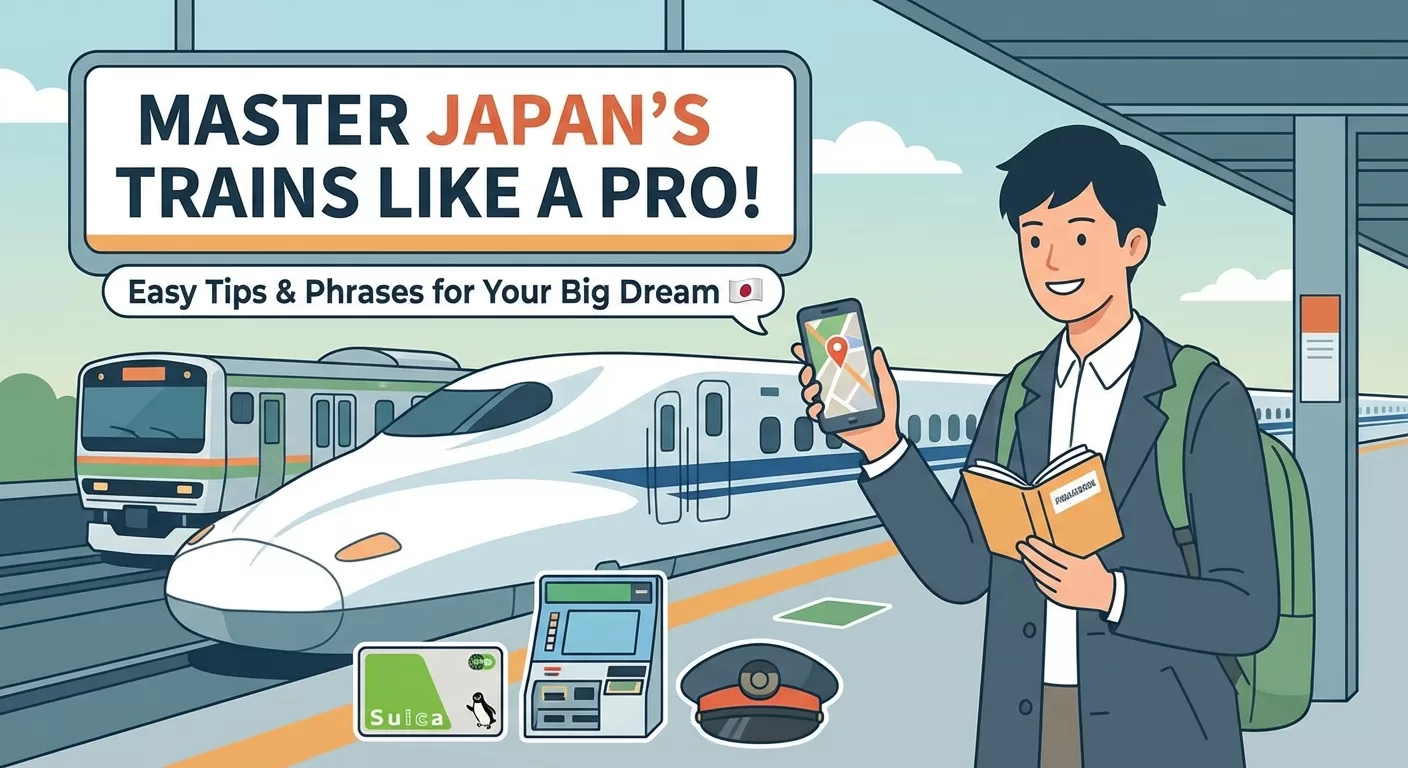
Master Japan’s Trains Like a Pro! Easy Tips and Phrases for Your Big Dream 🇯🇵
Executive Summary / エグゼクティブサマリー
Japan’s train network is the backbone of daily life—fast, punctual, and complex. For Filipino professionals and students, mastering station navigation and essential phrases is a non-negotiable skill that reflects professionalism and cultural respect. This guide equips you with the vocabulary, manners, and confidence to ride Japan’s trains smoothly, turning a potential stressor into a daily achievement.
日本の鉄道網は日常生活の大動脈であり、速く、正確で、複雑です。フィリピン人のプロフェッショナルや学生にとって、駅での移動と必須フレーズをマスターすることは、プロ意識と文化的敬意を示す絶対条件です。このガイドは、語彙やマナー、自信を身につけ、ストレスを毎日の達成感に変えるお手伝いをします。
1. Train Travel as a Gateway to Your Japan Dream / 電車移動は日本での夢への第一歩
For many Filipino professionals and students, stepping onto a Japanese train is the moment their “Japan dream” becomes tangible. Beyond being a means of transport, mastering the train system demonstrates your adaptability, punctuality, and respect for order—qualities highly valued in Japanese business culture. At SAMURAI Japan Business Center, our training emphasizes not just language, but the practical survival skills that Japanese companies expect from globally competent talent.
多くのフィリピン人にとって、日本の電車に乗る瞬間こそが「日本での夢」が具体的に感じられる瞬間です。単なる移動手段を超えて、電車システムを使いこなすことは、適応力、時間厳守、秩序を重んじる姿勢を示し、これらは日本企業が求める重要な資質です。SAMURAI Japan Business Centerでは、語学だけでなく、日本企業がグローバル人材に求める実践的なサバイバルスキルを重視したトレーニングを提供しています。
Pro Tip / 学習のコツ: Before arriving in Japan, practice with station maps and virtual tours. Our business center integrates real-life scenarios so you can mentally rehearse navigating busy hubs like Shinjuku or Osaka Station.
学習のコツ: 来日前に駅構内図やバーチャルツアーで練習しましょう。当ビジネスセンターでは、新宿や大阪駅などの混雑したハブを疑似体験できる実践的なトレーニングを取り入れています。
2. Essential Station Kanji & Vocabulary / 必須の駅構内漢字と語彙
Every station is filled with Kanji and signs that may seem overwhelming at first. Start by learning the core characters and words that appear everywhere. This foundational knowledge immediately reduces anxiety and builds self-reliance.
どの駅にも、一見圧倒されるような漢字や標識があふれています。まずは至る所で目にする基本的な文字と言葉を覚えましょう。この基礎知識が不安を即座に減らし、自立を促します。
| English | Japanese (Kanji/Kana) | Romaji |
|---|---|---|
| Station | 駅 | Eki |
| Ticket Gate | 改札 | Kaisatsu |
| Platform | ホーム / 番線 | Hōmu / Bansen |
| Exit | 出口 | Deguchi |
| Entrance | 入口 | Iriguchi |
| Transfer | 乗り換え | Norikae |
3. IC Cards and Ticket Gates Made Simple / ICカードと改札を簡単に
Upon arrival, obtaining a rechargeable IC card (Suica, Pasmo, ICOCA) is step one. Tap-and-go entry at ticket gates is effortless once you’re accustomed to it. Even better, these cards work at convenience stores and many vending machines, making them an essential companion for daily life—a topic we explore in related practical training, such as our guide to mastering convenience store visits in Japan.
到着後、まずはチャージ式のICカード(Suica、Pasmo、ICOCAなど)を入手しましょう。改札でのタッチアンドゴーは慣れればとても簡単です。さらにこれらのカードはコンビニや多くの自販機でも使えるため、日常生活の必需品となります。この実践的な知識は、日本のコンビニを使いこなすといった関連トレーニングでも詳しく扱っています。
Pro Tip / 学習のコツ: If your IC card balance is low, recharge machines at stations have an English option. But we train our students to use the Japanese interface to build confidence.
学習のコツ: ICカードの残高が不足した場合、駅のチャージ機には英語表示もありますが、当センターでは日本語画面を使って操作する練習を通じて自信をつけさせています。
4. Train Manners: What Your Colleagues Will Notice / 電車内のマナー:同僚が見ているポイント
Japanese train etiquette is an unspoken test. Waiting in orderly lines, staying silent on the phone, and avoiding eating/drinking on short-distance trains are non-negotiable. At SAMURAI Japan Business Center, we consider these behaviors part of Business Manner training—because a foreign worker who respects public order immediately earns trust.
日本の電車内のエチケットは暗黙の試験です。整列して待つ、車内で電話をしない、短距離電車では飲食を控えるといった行動は絶対条件です。SAMURAI Japan Business Centerでは、こうした行動をビジネスマナー研修の一環と捉えています。公共の秩序を尊重する外国人労働者は、即座に信頼を得るからです。
Key Manners:
・Manner Mode / マナーモード: Set your phone to silent; avoid talking on the phone.
・Priority Seats / 優先席: Give up these seats to the elderly, pregnant, or disabled.
・Lining Up / 整列: Wait in marked rows and let passengers exit before boarding.
・マナーモード: 携帯をマナーモードにし、通話は控えましょう。
・優先席: お年寄りや妊婦、障がいのある方に席を譲りましょう。
・整列: 表示に従って列に並び、降りる人が先に外に出るのを待ちます。
5. Ask Like a Local: Simple Direction Phrases / 地元の人のように尋ねる:簡単な案内フレーズ
Even with navigation apps, you may need to ask station staff for help. Using a polite “Sumimasen” followed by a short question shows humility and willingness to learn. These phrases are drilled in our oral practice sessions.
ナビアプリがあっても、駅員さんに助けを求める必要はあります。「すみません」と丁寧に声をかけてから短い質問をすることで、謙虚さと学ぶ姿勢が伝わります。これらのフレーズは、当センターの口頭練習で徹底的に鍛えています。
- Sumimasen, [place] wa doko desu ka? / すみません、[場所]はどこですか? (Excuse me, where is [place]?)
- Kono densha wa [station] ni tomarimasu ka? / この電車は[駅]に止まりますか? (Does this train stop at [station]?)
- Norikae wa dō sureba ii desu ka? / 乗り換えはどうすればいいですか? (How do I transfer?)
6. The SAMURAI Japan Methodology in Action / サムライジャパンの実践的メソッド
Our Business Center curriculum goes beyond textbooks. We simulate real station scenarios, teach Kanji recognition through practical exercises, and incorporate roleplays that mirror actual commuting challenges. This approach ensures that our graduates not only pass language tests but also navigate Japan’s infrastructure with confidence—an attribute that impresses Japanese corporate partners who seek dependable, ready-to-work talent.
当ビジネスセンターのカリキュラムは教科書を超えています。実際の駅を想定したシナリオ演習や、実用的な漢字認識トレーニング、実際の通勤場面を再現したロールプレイを取り入れています。このアプローチにより、卒業生は語学試験に合格するだけでなく、日本のインフラを自信を持って利用できる人材に成長します。これは、即戦力を求める日本企業にとって大きな魅力です。
Q&A (FAQ) Section / よくある質問
Question: Is it acceptable to eat on the bullet train (Shinkansen)? / 新幹線で飲食しても大丈夫ですか?
Answer: Yes, eating on a long-distance train like the Shinkansen is perfectly fine, and many people enjoy ekiben (station bento). However, on local and commuter trains, eating is generally frowned upon. / はい、新幹線のような長距離列車では飲食はまったく問題なく、駅弁を楽しむ人も多いです。ただし、普通列車や通勤電車では飲食は控えるのがマナーです。
Question: What if I accidentally exit the wrong gate? / 間違った改札を出てしまったらどうすれば?
Answer: Don’t worry. You can ask a staff member at the manned gate: “Machigaemashita. Modoritai desu” (I made a mistake; I’d like to go back). They will usually let you through. / 大丈夫です。有人改札で「間違えました。戻りたいです」と伝えれば、通常は通してもらえます。
Question: How can SAMURAI Japan Business Center help me master train-related Japanese before I go? / サムライジャパンビジネスセンターは渡航前の電車関連日本語習得にどう役立ちますか?
Answer: We offer targeted modules that focus on transportation vocabulary, simulated ticketing processes, and real-life conversation patterns. By the time you arrive, you’ll already be equipped to handle daily commuting like a pro. / 交通系語彙に特化したモジュールや、切符購入シミュレーション、実生活会話パターンの練習を提供しています。渡航時には、すでにプロのように通勤できるスキルが身についています。
Conclusion: Your Journey Begins with Confidence / まとめ:自信を持って旅を始めよう
Mastering Japan’s trains is not just about reaching your destination—it’s a symbol of your readiness for life in Japan. Every polite “Sumimasen,” every smooth IC card tap, and every quiet train ride reflects the professional and respectful character that Japanese society admires. At SAMURAI Japan Business Center, we are dedicated to transforming your big dream into a reality through meticulous language training, business manners, and professional upskilling. Don’t just learn Japanese; learn to thrive in Japan. We invite you to explore our programs and take the first step toward a successful, confident future in the Land of the Rising Sun.
日本の電車を乗りこなすことは、単に目的地に着くことだけではありません。それは日本での生活への準備が整った証です。丁寧な「すみません」、スムーズなICカードのタッチ、静かな車内での過ごし方は、日本社会が称賛するプロフェッショナルで礼儀正しい人格を映し出します。SAMURAI Japan Business Centerは、入念な語学研修、ビジネスマナー、プロフェッショナル・アップスキリングを通じて、皆さんの大きな夢を現実に変えることに全力を注いでいます。ただ日本語を学ぶのではなく、日本で活躍する力を身につけましょう。ぜひ当センターのプログラムをチェックし、自信に満ちた成功への一歩を日出ずる国で踏み出してください。
🇯🇵 日本語で新しい可能性を広げよう! ✨
SAMURAI Japan Business Centerは、あなたの日本語学習を全力でサポートします。
🚀 Start Your Learning Journey Today!
Ready to learn Japanese? Apply for our programs now!
🏫 お問い合わせ (Contact Us)
📞 Phone: +63 997 093 4550
📧 Email: samuraijapan.bc@gmail.com
🏢 Address: Room D3, Freb Bldg, Villa Donata Subd, Muntinlupa
📱 SNSで楽しく学ぼう!
Related posts:
 Your Japan Dream is Calling! 5 Simple Secrets to Start Learning Japanese Today 🇯🇵✨
 Be a Workplace Superstar! Easy Japanese Greetings and Manners to Help You Shine 🇯🇵
 Start Your Dream Life in Japan! 5 Must-Have 100-Yen Shop Finds for Your New Home 🇯🇵
 Shine at Your Dream Workplace! 5 Simple Japanese Greetings to Make a Great Impression 🇯🇵
 Master the Konbini! Easy Tips and Phrases for Your Dream Life in Japan 🏪
 Shop Like a Local! 5 Easy Secrets to Master Japanese Supermarkets and Save Big 🛒✨
