
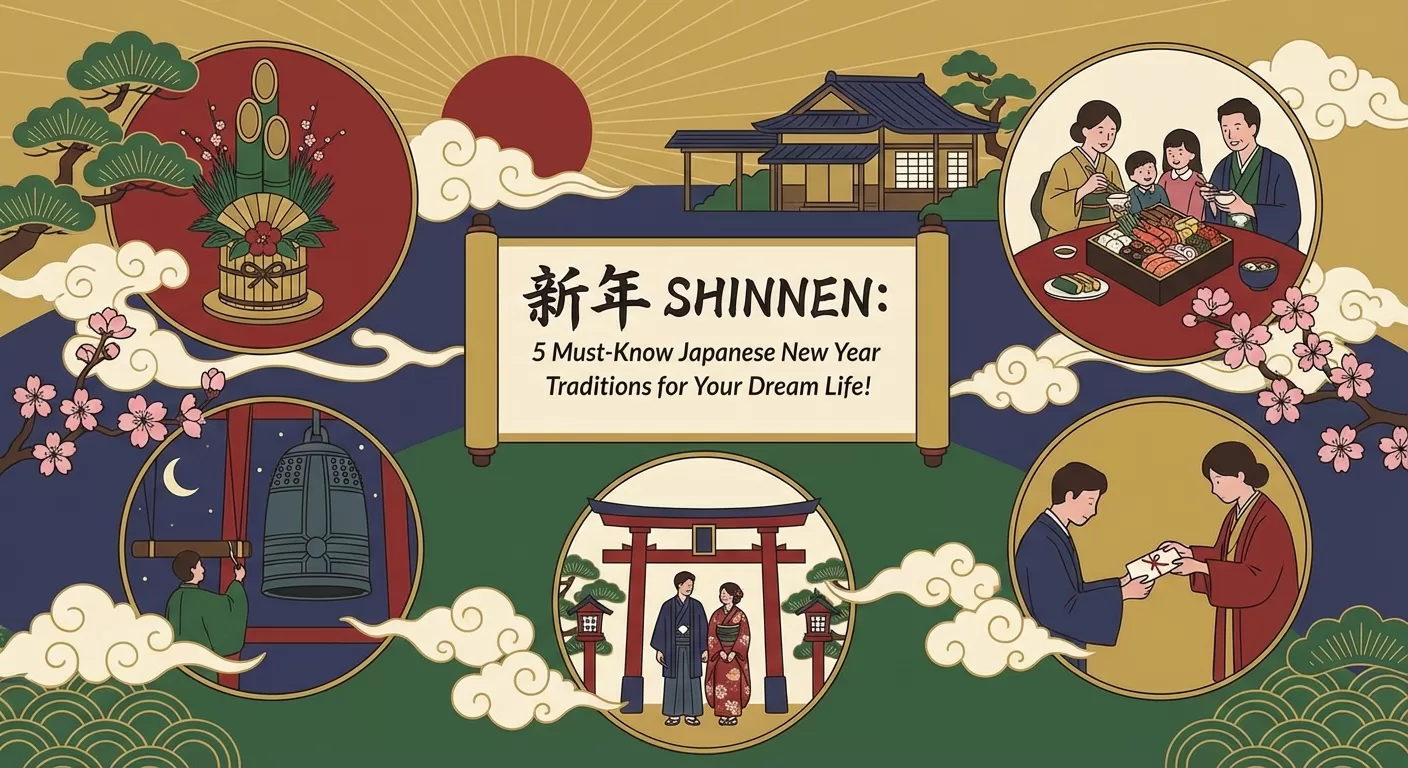
[Shinnen] 5 Must-Know Japanese New Year Traditions for Your Dream Life!
📋 Executive Summary / 要約
New Year, or Oshougatsu (お正月), is Japan’s most important holiday. For Filipino students preparing to build a career in Japan, understanding these traditions is not just cultural enrichment — it is essential professional preparation. This guide from SAMURAI Japan Business Center covers five fundamental New Year traditions, explaining their cultural significance and the Japanese language patterns embedded within them. Master these, and you will gain both cultural fluency and practical vocabulary that impresses future employers.
新年(お正月)は日本で最も重要な行事です。日本でのキャリアを目指すフィリピン人学生の皆さんにとって、これらの伝統を理解することは単なる文化の学びではなく、プロフェッショナルとしての必須準備です。SAMURAI Japan Business Centerによるこのガイドでは、5つの基本的な新年の伝統を取り上げ、その文化的意義と言語学習のポイントを解説します。これらをマスターすれば、文化的な流暢さと実践的な語彙力を身につけ、将来の雇用主に好印象を与えることができます。
At SAMURAI Japan Business Center, we train Filipino students not just to pass language tests, but to thrive in Japanese workplaces. A deep understanding of seasonal customs like Oshougatsu is exactly what separates a textbook learner from a true global professional. Japanese corporate culture values people who appreciate tradition and can navigate social situations gracefully. Let us guide you through five essential traditions that will set you apart.
SAMURAI Japan Business Centerでは、語学試験に合格するだけでなく、日本の職場で活躍できる人材を育成しています。お正月のような季節の習慣を深く理解することこそ、教科書だけの学習者と真のグローバルプロフェッショナルを分けるポイントです。日本の企業文化は、伝統を大切にし、社交の場で品格ある立ち振る舞いができる人材を高く評価します。皆さんを差別化する5つの重要な伝統をご案内します。
1. Hatsumode: Your First Professional Connection of the Year ⛩️
Hatsumode (初詣) means the first shrine or temple visit of the new year. For Japanese professionals, this is often done with colleagues or business partners as a way to strengthen bonds outside the office. The proper prayer etiquette — two bows, two claps, one bow — is a physical demonstration of respect that mirrors the precision expected in Japanese business settings. Practicing this ritual shows you have invested time in understanding the cultural fabric of your future workplace.
初詣(はつもうで)とは、新年に初めて神社やお寺に参拝することを指します。日本のビジネスパーソンは、同僚や取引先と一緒に初詣に行き、職場外での絆を深めることがよくあります。正しい参拝作法である「二礼二拍手一礼」は、日本のビジネス現場で求められる正確さを体現する、敬意の表現です。この儀式を実践することで、将来の職場の文化的な基盤を理解するために時間を費やしてきたことが伝わります。
When you visit a shrine, you will notice Omamori (お守り) — protective amulets sold for various purposes such as traffic safety, academic success, or business prosperity. Purchasing one for your upcoming JLPT exam or job search is a meaningful way to blend spiritual tradition with your personal goals. The word Omamori comes from the verb mamoru (to protect), a concept highly valued in Japanese corporate ethics where protecting one’s team and reputation is paramount.
神社を訪れると、お守りが目に入るでしょう。交通安全、学業成就、商売繁盛など、様々な目的に合わせた守り札です。これからのJLPT試験や就職活動のために購入することは、精神的な伝統と個人的な目標を結びつける有意義な行為です。お守りという言葉は動詞「守る」から来ており、チームや評判を守ることが最優先される日本の企業倫理において、非常に重要な概念です。
📖 Pro-Tip / 学習のコツ:
Practice the phrase 「初詣に行きませんか?」(Hatsumode ni ikimasen ka?) — “Would you like to go to Hatsumode together?” This is an excellent invitation phrase that builds camaraderie. It uses the polite negative form, which is softer and more respectful than direct invitations. Mastering this grammatical pattern will serve you well in business communications.
「初詣に行きませんか?」というフレーズを練習してみましょう。これは仲間意識を育む優れた誘い文句です。直接的な誘い方よりも柔らかく、敬意を表す「丁寧否定形」を使っています。この文法パターンをマスターすれば、ビジネスコミュニケーションでも大いに役立ちます。
2. Osechi Ryori: Reading Symbols in Every Bite 🍱
Osechi Ryori (おせち料理) is the traditional New Year feast served in elegant stacked boxes called jubako. Every ingredient carries a specific wish for the coming year. For our students at SAMURAI Japan Business Center, understanding Osechi is a lesson in Japanese symbolism and wordplay — a skill that enhances both language retention and cultural insight. For instance, Kuromame (黒豆) — sweet black beans — represent the wish to work diligently and stay healthy, as mame also means “diligent” in Japanese. Kazunoko (数の子) — herring roe — symbolizes fertility and family prosperity.
おせち料理は、重箱と呼ばれる美しい箱に詰められた伝統的な新年のご馳走です。一つ一つの食材に新年への願いが込められています。SAMURAI Japan Business Centerの学生にとって、おせちを理解することは日本の象徴性と言葉遊びを学ぶレッスンであり、語学力と文化的洞察力の両方を高めることができます。例えば、黒豆(くろまめ)は、「まめ(勤勉)」に働き健康に過ごす願いが込められています。数の子(かずのこ)は、子孫繁栄と家族の繁栄を象徴しています。
Another essential Osechi item is Tai (鯛) — sea bream. This fish is served because its name sounds like medetai, meaning “auspicious” or “celebratory.” This is a classic example of Goroawase (語呂合わせ), or Japanese phonetic wordplay. Learning these connections builds a deeper vocabulary network in your brain, moving beyond simple memorization to genuine linguistic intuition.
もう一つの重要な食材は鯛(たい)です。この魚が食べられる理由は、その名前が「めでたい(おめでたい)」という言葉に通じるからです。これは語呂合わせの典型的な例です。こうしたつながりを学ぶことで、単純な暗記を超えた、より深い語彙ネットワークが脳内に構築され、本物の言語的直感が育まれます。
3. Otoshidama: Understanding Hierarchy Through Giving 💴
Otoshidama (お年玉) is the custom of giving money to children in small decorated envelopes called pochi-bukuro. While adult professionals may not receive otoshidama, understanding the social dynamics around this tradition is crucial. It teaches the Japanese concept of senior-junior relationships (上下関係), a cornerstone of workplace culture. The giver, always a senior or adult, demonstrates care and responsibility toward the younger generation — a pattern that directly mirrors the senpai-kohai dynamic in companies.
お年玉は、ポチ袋と呼ばれる小さな飾り封筒にお金を入れて子供に渡す習慣です。社会人の皆さんがお年玉をもらう立場ではないかもしれませんが、この伝統をめぐる社会的な力学を理解することは非常に重要です。これは日本の上下関係の概念を教えてくれます。職場文化の基盤となるものです。常に目上の人や年長者が与える側となり、若い世代への配慮と責任を示します。このパターンは、企業における先輩・後輩の関係性をそのまま反映しています。
📖 Study Point / 学習ポイント:
The kanji for otoshidama — お年玉 — literally translates to “year jewel.” Pay attention to the character 玉 (gyoku/tama), which appears in many business terms like 玉稿 (gyokkou) — a respectful way to refer to someone’s manuscript or written work. Building kanji awareness through cultural contexts creates stronger memory retention.
お年玉の漢字「お年玉」は、文字通り「年の宝石」と訳せます。玉(ぎょく/たま)という漢字に注目してください。これは玉稿(ぎょっこう)—相手の原稿や文章を敬って言う表現など、多くのビジネス用語に登場します。文化的な文脈を通じて漢字への意識を高めることで、記憶の定着がより強固になります。
4. Nengajo: Business Manners Through Written Tradition ✍️
Nengajo (年賀状) are New Year postcards sent to express gratitude for the past year and best wishes for the new one. In Japanese business culture, sending nengajo to clients, supervisors, and colleagues is not optional — it is a professional obligation that demonstrates your commitment to maintaining relationships (kizuna / 絆). At SAMURAI Japan Business Center, we teach our students the proper format, including the mandatory phrase 「昨年は大変お世話になりました」(Sakunen wa taihen osewa ni narimashita) — “Thank you very much for your support last year.”
年賀状(ねんがじょう)とは、旧年中の感謝と新年の挨拶を伝えるために送るハガキです。日本のビジネス文化では、取引先や上司、同僚に年賀状を送ることは任意ではなく、人間関係(絆)を維持するというあなたの責任感を示す職業上の義務です。SAMURAI Japan Business Centerでは、「昨年は大変お世話になりました」という必須フレーズを含めた正しい形式を指導しています。
There is a strict postal deadline to ensure delivery on January 1st. This adherence to timing reflects Japanese punctuality (時間厳守), a professional trait that cannot be overstated in its importance. Showing that you understand and respect deadlines — even for social customs — builds immediate credibility with Japanese colleagues and supervisors.
1月1日に確実に配達されるよう、郵便局には厳格な締め切りがあります。この時間厳守の姿勢は、日本の時間厳守の精神を反映しており、その重要性はいくら強調しても足りません。社交的な習慣であっても、締め切りを理解し尊重する姿勢を示すことで、日本の同僚や上司からの信頼をすぐに得ることができます。
5. Toshikoshi Soba: Resilience Symbolized in a Bowl 🍜
On New Year’s Eve (Omisoka / 大晦日), Japanese families eat Toshikoshi Soba (年越しそば), or “year-crossing noodles.” The long, thin buckwheat noodles symbolize longevity, while their easy breakability represents cutting away the hardships of the past year. In a professional context, this tradition teaches an essential Japanese mindset: acknowledging past difficulties while maintaining optimism for the future — a balance between hansei (反省 / self-reflection) and maemuki (前向き / forward-looking attitude).
大晦日には、日本の家族が年越しそばを食べます。細く長いそばは長寿を象徴し、切れやすい性質は一年の苦労を断ち切ることを表しています。プロフェッショナルな文脈では、この伝統は日本人の重要な考え方を教えてくれます。過去の困難を認めつつ、未来への楽観を保つこと — 反省と前向きな姿勢のバランスです。これは日本の職場で高く評価される態度です。
Interestingly, in Japan it is perfectly acceptable — even encouraged — to slurp noodles loudly. For Filipino students accustomed to quieter dining etiquette, this may feel unusual. However, adapting to these small cultural differences builds the flexibility and openness that Japanese employers value in foreign workers.
興味深いことに、日本では麺を音を立ててすすることがまったく問題なく、むしろ推奨されることさえあります。静かな食事マナーに慣れているフィリピン人学生には違和感があるかもしれませんが、こうした小さな文化的違いに適応することで、日本の雇用主が外国人労働者に求める柔軟性とオープンな姿勢が養われます。
📖 Study Point / 学習ポイント:
The word Toshikoshi combines 年 (toshi / year) and 越し (koshi / crossing). The verb 越す (kosu) means “to cross over” or “to surpass.” In business Japanese, you will encounter this verb in phrases like 「困難を乗り越える」(konnan wo norikoeru) — “to overcome difficulties.” Recognizing these root words accelerates your business Japanese acquisition.
年越しという言葉は、年(とし)と越し(こし)を組み合わせています。動詞越す(こす)は「超える」「乗り越える」という意味です。ビジネス日本語では、「困難を乗り越える」のようなフレーズでこの動詞に出会うでしょう。語根を認識することで、ビジネス日本語の習得が加速します。
The SAMURAI Japan Methodology: Cultural Fluency Meets Language Mastery 📚
At SAMURAI Japan Business Center, our training philosophy integrates cultural education directly into language instruction. We do not simply teach vocabulary and grammar in isolation. Every lesson connects linguistic structures to the real-world situations our students will face in Japanese society. When we cover New Year traditions, we simultaneously practice the honorific forms used in formal greetings, the kanji radicals that appear across seasonal vocabulary, and the interpersonal communication patterns that define Japanese workplace interaction. This integrated approach produces graduates who are not just linguistically prepared, but culturally confident professionals ready to contribute from day one.
SAMURAI Japan Business Centerの研修哲学は、文化教育を言語指導に直接統合しています。単に語彙や文法を個別に教えるのではなく、すべてのレッスンで言語構造を、学生が日本社会で直面する現実の状況に結びつけます。新年の伝統を扱う際には、フォーマルな挨拶で使われる敬語表現、季節の語彙に共通する漢字の部首、そして日本の職場のやり取りを定義する対人コミュニケーションのパターンを同時に練習します。この統合的アプローチにより、言語的準備だけでなく、初日から貢献できる文化的自信を備えたプロフェッショナルを輩出しています。
Our training is designed for serious learners who understand that true career success in Japan requires more than JLPT certification. It demands cultural intelligence — the ability to read situations, respect traditions, and communicate with nuance. This is the SAMURAI Japan difference. We are an educational training center focused exclusively on Language Training, Business Manners, and Professional Upskilling. We equip you with the skills that Japanese companies genuinely value.
当センターの研修は、日本での真のキャリア成功にはJLPT認定以上のものが必要だと理解している本気の学習者のために設計されています。それは文化的知性 — 状況を読み取り、伝統を尊重し、ニュアンスを持ってコミュニケーションする能力です。これがSAMURAI Japanの違いです。当センターは言語研修、ビジネスマナー、プロフェッショナル・アップスキリングに特化した教育研修機関です。日本企業が真に評価するスキルを皆さんに提供します。
Frequently Asked Questions / よくある質問
Q: Do I really need to learn Japanese New Year traditions if my goal is just to pass the JLPT? / JLPT合格が目標なら、日本の新年の伝統を学ぶ必要はありますか?
A: Yes, absolutely. The JLPT increasingly incorporates cultural context into its reading and listening comprehension sections. Furthermore, passing the JLPT is only the first step. Japanese employers consistently report that cultural adaptability is equally important as language proficiency. Understanding Oshougatsu demonstrates this adaptability and gives you compelling discussion points for job interviews. / はい、絶対に必要です。JLPTは読解・聴解セクションに文化的文脈をますます取り入れています。さらに、JLPT合格は最初のステップに過ぎません。日本の雇用主は一貫して、語学力と同様に文化的適応力が重要だと報告しています。お正月を理解することはこの適応力を示し、就職面接での強力な話題を提供します。
Q: What is the most important cultural mistake to avoid during Japanese New Year? / 日本の新年に避けるべき最も重要な文化的ミスは何ですか?
A: The most critical error is using pre-New Year greetings after January 1st. Before December 31st, you say 「良いお年を」(Yoi otoshi wo) — “Have a good New Year.” From January 1st onward, you must switch to 「明けましておめでとうございます」(Akemashite omedetou gozaimasu) — “Happy New Year.” Mixing these up shows a lack of cultural awareness. Similarly, avoid celebrating too loudly or boisterously — Japanese New Year is characterized by quiet reflection rather than noisy festivities. / 最も重要なミスは、1月1日以降に年末の挨拶を使ってしまうことです。12月31日までは「良いお年を」、1月1日からは「明けましておめでとうございます」に切り替えなければなりません。これらを混同すると、文化的な認識不足を示します。同様に、あまりに騒がしく祝うことも避けましょう。日本の新年は、騒がしいお祭りではなく、静かな内省が特徴です。
Q: How can I practice these traditions while still in the Philippines? / フィリピンにいながらこれらの伝統を練習する方法はありますか?
A: You can begin by writing practice nengajo to your classmates and teachers. Visit Japanese cultural events often held in Manila or Cebu around January. Try preparing simple Osechi-inspired dishes and learning the symbolic meanings as you cook. Most importantly, practice the seasonal greeting phrases aloud until they become natural. At SAMURAI Japan Business Center, we incorporate all of these methods into our pre-departure training programs. / クラスメートや先生に練習用の年賀状を書くことから始められます。1月頃にマニラやセブで開催される日本文化イベントに参加するのも良いでしょう。おせち風の簡単な料理を作り、調理しながら象徴的な意味を学んでみてください。最も重要なのは、季節の挨拶フレーズを自然に出てくるようになるまで声に出して練習することです。SAMURAI Japan Business Centerでは、これらの方法すべてを出国前研修プログラムに取り入れています。
Your Dream Begins with Understanding 🌟
Every tradition you learn, every phrase you practice, and every cultural insight you gain brings you one step closer to your dream life in Japan. At SAMURAI Japan Business Center, we are proud to guide Filipino students on this transformative journey. The path is demanding, but the rewards — meaningful work, deep relationships, and a life rich with purpose — are immeasurable. Embrace the learning, respect the culture, and trust in your ability to grow. We are here to support you at every stage, from your first akemashite omedetou to your first day at a Japanese company. Let this new year be the beginning of something extraordinary. Ganbatte kudasai!
学ぶ伝統の一つひとつ、練習するフレーズの一つひとつ、得る文化的洞察の一つひとつが、皆さんを日本での夢の生活へと近づけます。SAMURAI Japan Business Centerは、この変革の旅においてフィリピン人の学生を導けることを誇りに思います。その道のりは厳しいものですが、報酬 — 意味のある仕事、深い人間関係、目的に満ちた人生 — は計り知れません。学びを受け入れ、文化を尊重し、自分の成長する力を信じてください。最初の「明けましておめでとう」から日本の企業での初日まで、私たちはあらゆる段階で皆さんを支えます。この新年を、何か特別なことの始まりにしましょう。頑張ってください!
🇯🇵 日本語で新しい可能性を広げよう! ✨
SAMURAI Japan Business Centerは、あなたの日本語学習を全力でサポートします。
🚀 Start Your Learning Journey Today!
Ready to learn Japanese? Apply for our programs now!
🏫 お問い合わせ (Contact Us)
📞 Phone: +63 997 093 4550
📧 Email: samuraijapan.bc@gmail.com
🏢 Address: Room D3, Freb Bldg, Villa Donata Subd, Muntinlupa
📱 SNSで楽しく学ぼう!
Related posts:
 Your First Japanese Sentences: 3 Easy Grammar Patterns for Beginners
 How to Learn Hiragana and Katakana Fast: A Guide for Filipino Learners
 Feeling Stuck? 5 Tips to Boost Your Japanese Study Motivation
 Mastering the JFT-Basic: Your Guide to Living in Japan
 Your Pathway to Japan: A Filipino Learner’s Guide to JFT-Basic Success and Life in the Land of the Rising Sun
 Natto: Essential Phrases & Tips for Japanese Food!
