
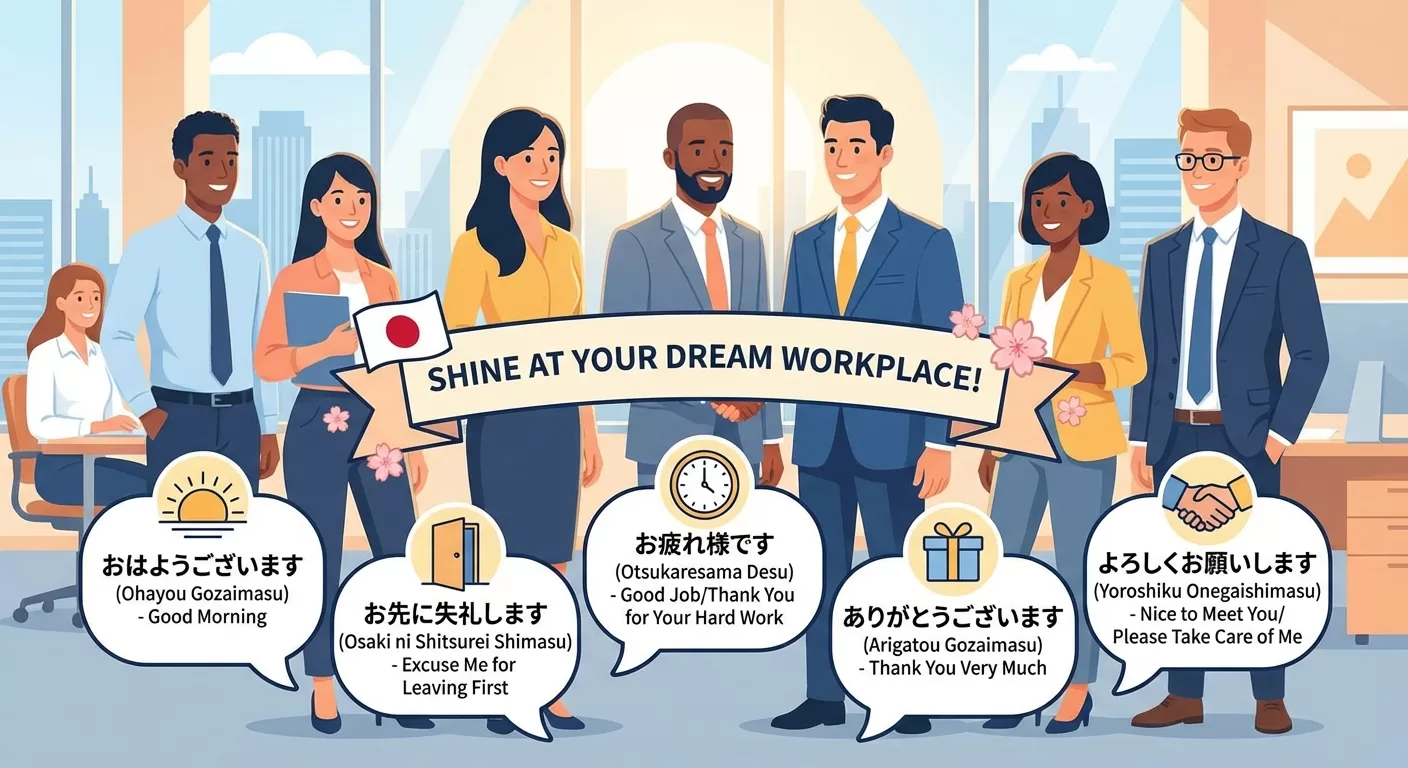
Shine at Your Dream Workplace! 5 Simple Japanese Greetings to Make a Great Impression 🇯🇵
Greetings are the foundation of trust in Japan. Whether you aim to work in Tokyo, Osaka, or any corner of this beautiful country, mastering these five essential Aisatsu (挨拶) will open countless doors. At SAMURAI Japan Business Center, we believe that polite communication is the first professional skill you must acquire. Let’s explore each phrase together and understand the deep cultural meaning behind them.
挨拶は、日本における信頼の土台です。東京や大阪、あるいは日本のどこで働くことを目指していても、この五つの基本的な「挨拶(あいさつ)」をマスターすれば、多くの扉が開かれます。サムライジャパン・ビジネスセンターは、丁寧なコミュニケーションこそが最初に身につけるべきプロフェッショナルスキルだと考えています。それぞれのフレーズと、その奥にある深い文化的意味を一緒に学びましょう。
📌 Executive Summary / 概要
This article introduces five indispensable Japanese greetings for the workplace: Ohayou Gozaimasu, Otsukaresama Desu, Yoroshiku Onegaishimasu, Shitsurei Shimasu, and Arigatou Gozaimasu. You’ll learn when to use each phrase, the cultural significance behind them, and how SAMURAI Japan Business Center trains students to use them naturally. Mastering these will help you shine in interviews, daily work, and team meetings.
この記事では、職場で欠かせない五つの日本語の挨拶を紹介します。それぞれの使い分けや文化的な背景、そしてサムライジャパン・ビジネスセンターでどのようにトレーニングされるかを学べます。これらをマスターすれば、面接、日々の業務、チームミーティングであなたは輝けるでしょう。
1. おはようございます (Ohayou Gozaimasu) – The Morning Energy Booster
In Japan, the first greeting of the day is crucial. Saying Ohayou Gozaimasu with a clear voice and a light bow signals readiness and respect. Even if you feel tired, this phrase tells your team, “I am here, and I am ready to contribute.” At SAMURAI Japan Business Center, we drill this phrase from day one to build professional habits.
日本では、その日最初の挨拶が非常に重要です。はっきりした声で「おはようございます」と言い、軽くお辞儀をすることで、準備万端で敬意を持っていることを示せます。疲れていても、この一言が「私はここにいて、貢献する準備ができています」とチームに伝えます。サムライジャパン・ビジネスセンターでは、プロフェッショナルな習慣を身につけるため、初日からこのフレーズを徹底的に練習します。
2. お疲れ様です (Otsukaresama Desu) – The Magic Word of the Office
This phrase is used throughout the day to acknowledge the efforts of colleagues. It acts like a warm “Good job today” and is a greeting that recognizes shared hard work. Instead of a simple “Hello,” using Otsukaresama Desu in hallways or at the start of a meeting instantly creates a cooperative atmosphere. Understanding this concept is part of our cultural training approach that highlights the Japanese value of harmony.
このフレーズは一日中、同僚の努力を認めるために使われます。「今日もお疲れさま」という温かい意味合いがあり、共通の努力を認め合う挨拶です。廊下でのすれ違いや会議の始まりに、単なる「こんにちは」の代わりに「お疲れ様です」を使うと、たちまち協力的な雰囲気が生まれます。この概念の理解は、和を重んじる日本の価値観を強調する当センターの文化トレーニングの一部です。
3. よろしくお願いします (Yoroshiku Onegaishimasu) – The Bridge Builder
There is no direct translation for this phrase, but it essentially means “I look forward to working with you” or “Please be kind to me.” It is used when starting a new task, joining a project, or meeting someone for the first time. By saying Yoroshiku Onegaishimasu, you show humility and a willingness to cooperate, which Japanese managers highly value.
このフレーズを直訳するのは難しいですが、基本的には「一緒に働くことを楽しみにしています」「どうぞよろしく」という意味です。新しい仕事を始める時、プロジェクトに参加する時、初対面の相手に使います。「よろしくお願いします」と言うことで、謙虚さと協力の意志を示せます。日本の上司はこの姿勢をとても高く評価します。
4. 失礼します (Shitsurei Shimasu) – The Key to Professional Boundaries
Use this phrase when entering or leaving a room, or when interrupting someone who is occupied. It literally means “Excuse me” or “I am being rude,” and shows that you respect others’ time and space. In a Japanese office, this small gesture makes a big difference in how your professionalism is perceived.
部屋に入る時、退出する時、または忙しそうな相手に話しかける時に使います。文字通り「失礼します」「お邪魔します」という意味で、相手の時間やスペースを尊重していることを示します。日本のオフィスでは、この小さな仕草があなたのプロ意識の印象を大きく左右します。
5. ありがとうございます (Arigatou Gozaimasu) – The Gratitude Engine
Never underestimate the power of a sincere thank you. Whether a senior explains a task or a colleague holds the door, Arigatou Gozaimasu reinforces positive relationships. It’s the simplest way to create a pleasant work environment, and it’s a phrase we emphasize in our Business Manners Upskilling programs.
心からの「ありがとう」の力を過小評価してはいけません。先輩が仕事を説明してくれた時、同僚がドアを開けてくれた時、「ありがとうございます」は良好な人間関係を強化します。それは快適な職場環境を作る最もシンプルな方法であり、当センターのビジネスマナー研修でも特に重視しているフレーズです。
The Five-Minute Rule
Besides speaking, your actions also speak loudly. One major rule in Japan is the “5‑Minute Rule” (Gofun‑mae koudou). This means you should aim to arrive at your desk or a meeting 5 minutes before it actually starts.
言葉だけでなく、皆さんの行動も重要なメッセージになります。日本での大きなルールの一つは「5分前行動」です。これは、仕事の開始時間や会議が始まる5分前には、自分の席や会場に到着しているようにするという意味です。
The SAMURAI Japan Methodology – Training for Real Confidence
At SAMURAI Japan Business Center, we don’t just teach phrases; we embed them into real-life role-plays and workplace simulations. Our instructors are experts in Japanese business culture, and they guide students to use the right intonation, timing, and body language. This rigorous approach ensures that when you enter a Japanese company, you can greet naturally and earn immediate trust. We focus on Language Training, Business Manners, and Professional Upskilling—never recruitment—so you can build your career with integrity.
サムライジャパン・ビジネスセンターでは、単にフレーズを教えるだけでなく、実際のロールプレイや職場シミュレーションに落とし込みます。講師は日本のビジネス文化のエキスパートで、適切なイントネーション、タイミング、ボディランゲージを指導します。この厳格なアプローチにより、あなたが日本企業に入った時、自然に挨拶し、即座に信頼を得られるようになります。当センターは、言語トレーニング、ビジネスマナー、プロフェッショナルスキルアップに特化し、採用活動は一切行いません。ですから、誠実にキャリアを築くことができます。
よくある質問 (FAQ)
Q: Is it necessary to bow when saying these greetings? / 挨拶の時にお辞儀は必要ですか?
A: Yes. A slight bow (15-30 degrees) combined with the appropriate phrase shows that you are serious about showing respect. It is a standard part of Japanese aisatsu.
Q: Can I use “Otsukaresama Desu” outside of work? / 「お疲れ様です」を仕事以外で使ってもいいですか?
A: It’s primarily a workplace greeting. With close friends, you might use a casual “Otsukare,” but in formal settings or with strangers, stick to the full polite form.
Q: What if I make a mistake? / もし間違えたらどうすればいいですか?
A: Japanese people appreciate effort. If you accidentally use the wrong phrase, a quick apology with “Sumimasen” and a smile will smooth things over. Our training helps you avoid major mistakes, but we also teach resilience.
Q: What if I cannot catch what someone said?
A: Say もう一度お願いします (Mou ichido onegaishimasu) — one more time, please. Asking is better than guessing.
Q: Question: How can I remember the 5‑Minute Rule every day? / 毎日「5分前行動」を覚えておくにはどうすればいいですか?
A: Set a personal alarm on your phone 15 minutes before your official start time. Use those 10 extra minutes to settle in, and be at your desk ready 5 minutes early. Practice makes it a habit. / 公式の始業時間の15分前にスマホでアラームをセットしましょう。その10分間で身支度を整え、5分前には席で準備万端にしておきます。練習が習慣を作ります。
Q: Question: Is it okay if my bow is not perfect? / お辞儀が完璧でなくても大丈夫ですか?
A: Absolutely. Japanese colleagues deeply appreciate any effort to follow their customs. A sincere, small bend of your head with a greeting already shows great respect. Over time, with observation and guidance from our Business Center, your bow will become naturally elegant. / もちろんです。日本の同僚は、習慣に従おうとする努力を非常に高く評価します。挨拶の際の心からの小さな会釈だけでも、十分な敬意を示せます。時間をかけて、当ビジネスセンターでの観察や指導を通して、自然で優雅なお辞儀ができるようになりますよ。
Your dream of working in Japan is within reach. By mastering these five simple greetings, you are already speaking the language of professional success. Keep studying, keep practicing, and remember that every Konnichiwa and Arigatou brings you closer to your goal. We at SAMURAI Japan Business Center are excited to be part of your journey.
日本で働くあなたの夢は、もうすぐ手の届くところにあります。この五つのシンプルな挨拶をマスターすることで、あなたはすでにプロフェッショナルとして成功する言葉を話し始めています。勉強を続け、練習を続け、すべての「こんにちは」と「ありがとう」が目標に近づく一歩であることを忘れないでください。サムライジャパン・ビジネスセンターは、あなたの旅の一部になれることを楽しみにしています。
Related reading: basic Japanese greetings | Japanese communication etiquette | san, kun and chan | five essential Japanese business manners
🇯🇵 日本語で新しい可能性を広げよう! ✨
SAMURAI Japan Business Centerは、あなたの日本語学習を全力でサポートします。
🚀 Start Your Learning Journey Today!
Ready to learn Japanese? Apply for our programs now!
🏫 お問い合わせ (Contact Us)
📞 Phone: +63 997 093 4550
📧 Email: samuraijapan.bc@gmail.com
🏢 Address: Room D3, Freb Bldg, Villa Donata Subd, Muntinlupa
📱 SNSで楽しく学ぼう!
Related posts:
 Your Japan Dream is Calling! 5 Simple Secrets to Start Learning Japanese Today 🇯🇵✨
 Start Your Dream Life in Japan! 5 Must-Have 100-Yen Shop Finds for Your New Home 🇯🇵
 Master the Konbini! Easy Tips and Phrases for Your Dream Life in Japan 🏪
 Master Japan’s Trains Like a Pro! Easy Tips and Phrases for Your Big Dream 🇯🇵
 Shop Like a Local! 5 Easy Secrets to Master Japanese Supermarkets and Save Big 🛒✨
 Eat Like a Local! Simple Japanese Phrases to Order and Pay with Confidence 🍱
