

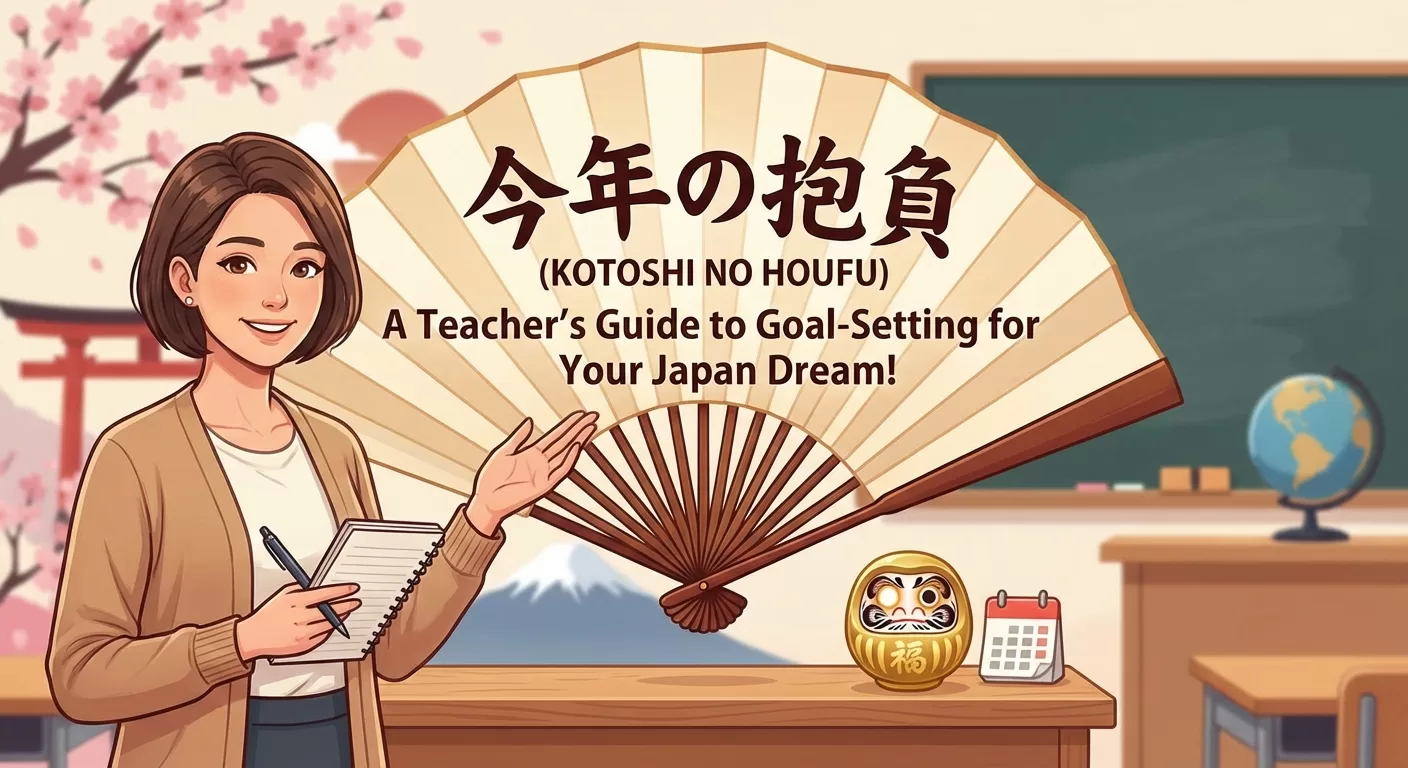
[Kotoshi no Houfu] A Teacher’s Guide to Goal-Setting for Your Japan Dream!
Happy New Year! As we step into 2026, many of us are filled with a sense of “new beginnings.” For many Filipinos, that dream is clearer than ever: starting a new life in the Land of the Rising Sun. In Japan, the start of the year is a very special time to set intentions. We call this 「今年の抱負」(Kotoshi no Houfu), which means “this year’s resolutions” or “aspirations.” As your Japanese language teacher, I want to help you turn those dreams into a concrete roadmap!
あけましておめでとうございます!2026年が始まり、多くの人が「新しいスタート」を感じていることでしょう。多くのフィリピン人にとって、その夢は「日本での新しい生活」という明確なものかもしれません。日本では、一年の始まりに目標を立てることを非常に大切にしています。これを「今年の抱負(ことしのほうふ)」と呼びます。日本語教師として、皆さんの夢を具体的なロードマップに変えるお手伝いをしたいと思います!
💡 Teacher’s Tip: Why “Houfu” Matters
In Japanese culture, saying your goal out loud or writing it down is believed to give it power. It’s not just a wish; it’s a commitment to yourself. When you define your “Houfu,” you are taking the first step toward your Japan dream.
💡 先生からのアドバイス:「抱負」が大切な理由
日本の文化では、目標を声に出したり書いたりすることで、その言葉に力が宿ると信じられています。それは単なる「願い」ではなく、自分自身への「約束」です。「抱負」を決めることは、日本での夢に向けた最初の一歩を踏み出すことなのです。
1. Turning Vague Dreams into SMART Goals
Many students tell me, “I want to speak Japanese.” While that is a great sentiment, it is too vague. To actually reach Japan, you need to be specific. We use the **SMART** criteria: Specific, Measurable, Achievable, Relevant, and Time-bound. Instead of saying “I will study,” try saying “I will pass the JFT-Basic by July.” This gives your brain a deadline and a clear target to hit.
多くの学生が「日本語を話せるようになりたい」と言います。素晴らしい目標ですが、少し漠然としています。実際に日本へ行くためには、具体性が必要です。そこで「SMART」な目標設定を使いましょう。具体的(Specific)、測定可能(Measurable)、達成可能(Achievable)、関連性(Relevant)、期限がある(Time-bound)の頭文字をとったものです。「勉強する」ではなく「7月までにJFT-Basicに合格する」と言ってみてください。そうすることで、脳に期限と明確な目標を与えることができます。
Goal Setting: Vague vs. SMART
| Vague Goal (❌) | SMART Goal (✅) | Why it works |
|---|---|---|
| I want to learn Kanji. | I will learn 5 new Kanji every day. | Trackable and daily habit. |
| I want to pass the exam. | I will take the JFT-Basic in April. | Sets a clear deadline. |
| I want to speak better. | I will practice speaking for 15 mins daily. | Focuses on consistent output. |
2. Mastering the Fundamentals: The JFT-Basic Focus
For Filipinos aiming for Japan, the JFT-Basic (Japan Foundation Test for Basic Japanese) is often the first major hurdle. It measures whether you have the Japanese language proficiency to communicate in everyday life situations. Your “Kotoshi no Houfu” should prioritize mastering the A2 level. This includes being able to understand sentences about shopping, basic work interactions, and family. Don’t just memorize words; understand the context!
日本を目指すフィリピン人にとって、JFT-Basic(国際交流基金日本語基礎テスト)は最初の大きなハードルとなることが多いです。これは、日常生活で必要な日本語のコミュニケーション能力があるかどうかを測るテストです。「今年の抱負」として、A2レベル(初級)のマスターを優先しましょう。これには、買い物、職場での基本的なやり取り、家族に関する文章を理解できることが含まれます。単語を暗記するだけでなく、その文脈(シチュエーション)を理解することが大切です!
⚠️ Common Mistake Alert:
Many students focus only on reading and writing. But Japan is a high-context society! In the JFT-Basic, listening is crucial. Make sure your daily routine includes listening to native audio for at least 20 minutes to get used to the natural speed.
⚠️ よくある間違いに注意:
多くの学生が「読み・書き」だけに集中しがちです。しかし、日本はハイコンテクストな社会です!JFT-Basicでは、リスニングが非常に重要です。毎日のルーティンに、少なくとも20分間はネイティブの音声を聞くことを取り入れ、自然なスピードに慣れるようにしましょう。
3. Overcoming Language Barriers for Filipinos
As a teacher working with Filipino learners, I have noticed specific patterns. Filipino students are generally very enthusiastic and communicative, which is a huge strength! However, the Japanese language has sounds that don’t exist in Tagalog or English. For example, the difference between long and short vowels (e.g., ojisan / uncle vs. ojiisan / grandfather) can change the meaning entirely. This year, make it your goal to polish your pronunciation.
フィリピン人の学習者を指導していると、いくつかの特徴に気づきます。フィリピンの皆さんはとても熱心でコミュニケーション能力が高く、それは大きな強みです!しかし、日本語にはタガログ語や英語にはない音があります。例えば、短母音と長母音の違い(「おじさん」と「おじいさん」など)で意味が全く変わってしまいます。今年は、発音を磨くことも目標に加えてみてください。
- Mastering the “R” Sound:
Japanese “R” is like a mix of D, L, and R. Practice flipping your tongue against the roof of your mouth. Don’t roll it like in Spanish or make it soft like in English.
- Particle Precision:
Filipino learners often omit particles like は (wa), が (ga), を (wo). Even if you know the vocabulary, missing particles makes your Japanese sound “broken.” Make it a goal to use one full sentence with correct particles every day.
- 「ら行」の音をマスターする:
日本語の「ら・り・る・れ・ろ」は、D、L、Rが混ざったような音です。舌の先を口の天井(歯茎のあたり)に弾く練習をしましょう。英語のように舌を丸めないのがコツです。
- 助詞を正確に使う:
フィリピン人の学習者は、「は・が・を」などの助詞を抜かしてしまうことがよくあります。単語を知っていても、助詞がないと「不自然な日本語」に聞こえてしまいます。毎日、正しい助詞を使った完璧な一文を作ることを目標にしましょう。
4. Creating a Japan-Ready Lifestyle at Home
You don’t have to be in Tokyo to start living like you’re in Japan. “Kotoshi no Houfu” can include lifestyle changes that prepare you for the Japanese work ethic and culture. Japan values punctuality (Jikan genshu) and cleanliness (Seisou). If you can master these habits in the Philippines, you will find it much easier to adapt once you land at Narita or Haneda airport.
日本に住んでいるかのような生活を始めるのに、東京にいる必要はありません。「今年の抱負」には、日本の仕事への姿勢や文化に備えるためのライフスタイルの変化を含めることができます。日本は「時間厳守」と「清掃(整理整頓)」をとても大切にします。フィリピンにいる間にこれらの習慣を身につけておけば、成田空港や羽田空港に降り立った後の適応がずっと楽になります。
✅ Actionable Cultural Goals for 2026:
- Wake up 15 minutes earlier to review vocabulary.
- Practice the Ojigi (bowing) when greeting your teachers or elders.
- Learn the “Gomi Hiroi” (trash picking) habit—keeping your study area spotless.
✅ 2026年のための具体的な文化目標:
- 15分早く起きて、単語の復習をする。
- 先生や目上の人に挨拶する時、お辞儀の練習をする。
- 「ゴミ拾い」の習慣を身につける。まずは自分の勉強スペースをピカピカにしましょう。
5. Phrases for Expressing Your Resolutions
To really embrace the “Kotoshi no Houfu” spirit, you should learn how to say your goals in Japanese. Using the grammar pattern 「〜たいと思います」(…tai to omoimasu) which means “I think I want to…” is a polite way to express your intent. Or, for a stronger commitment, use 「〜ようにします」(…you ni shimasu) meaning “I will make an effort to…”
「今年の抱負」の精神を真に取り入れるために、日本語で目標を言う方法を学びましょう。「〜たいと思います」という文法を使えば、自分の意向を丁寧に伝えることができます。また、より強い決意を示すには、「〜ようにします」(〜するように努力する)という表現を使いましょう。
| Japanese Phrase | Meaning |
|---|---|
| 日本語を毎日勉強するようにします。 | I will make an effort to study Japanese every day. |
| JFT-Basicに合格したいです! | I want to pass the JFT-Basic! |
| 日本の文化をもっと学びたいと思います。 | I would like to learn more about Japanese culture. |
Remember, the journey of a thousand miles begins with a single step—or in your case, a single Hiragana! Your teachers are here to cheer you on every step of the way. Let’s make 2026 the year your Japan dream becomes a reality. Ganbatte kudasai!
「千里の道も一歩から」と言います。皆さんの場合は、まずは一文字の「ひらがな」からかもしれません。私たち教師は、皆さんの歩みをいつも応援しています。2026年を、皆さんの日本での夢が現実になる年にしましょう。頑張ってください!
🚀 Start Your Journey to Japan!
Ready to learn Japanese? Apply for our programs now!
Contact & Follow Us
お問い合わせ
📞 電話: +63 997 093 4550
📧 メール: samuraijapan.bc@gmail.com
🏠 住所: Room D3, Freb Bldg, Villa Donata Subd, Muntinlupa
🏢 会社名: SAMURAI Japan Business Center Inc.
SNSでフォロー
🎵 Tiktok: @samuraijapan0221
📸 Instagram: @samuraijapan.bc
▶️ Youtube: @SamuraiJapan-bc
📘 Facebook: Visit our Page
