
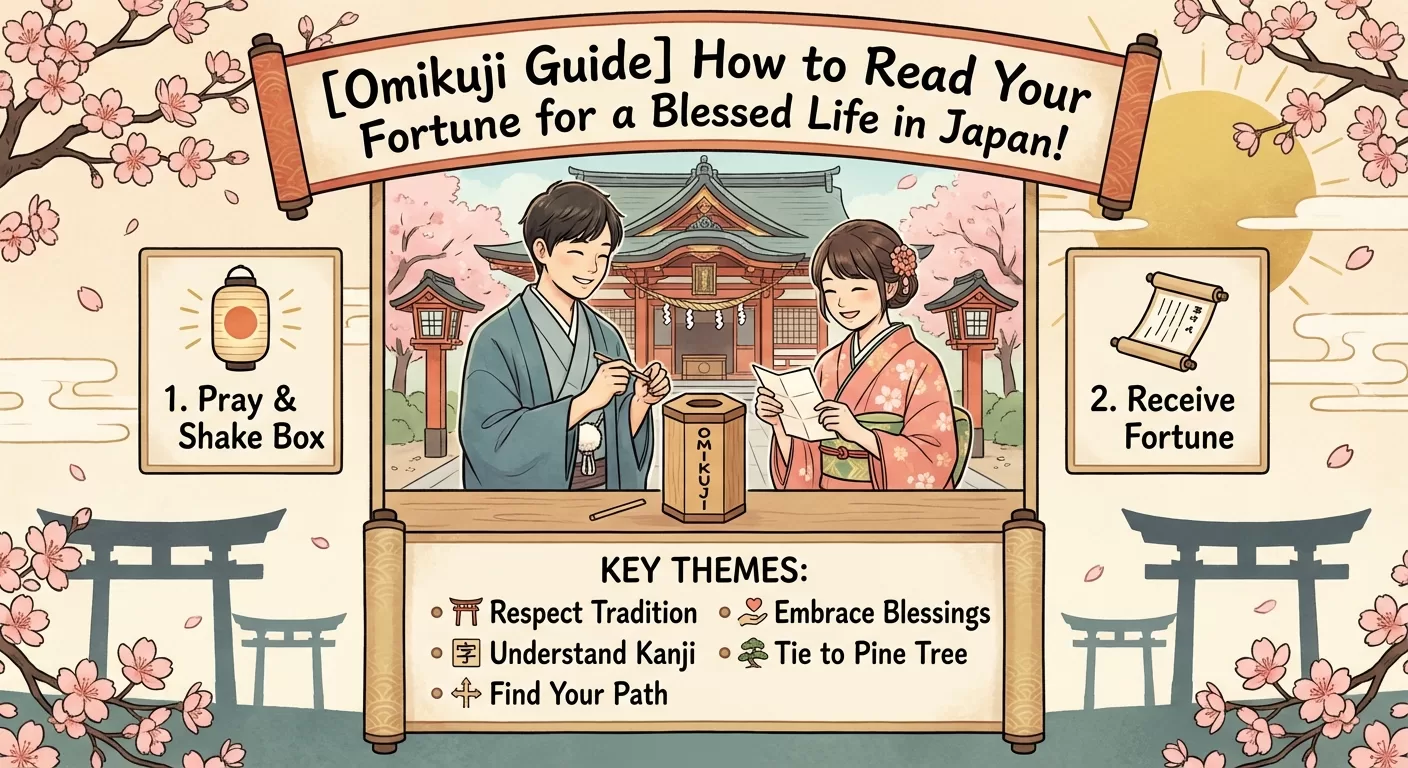
[Omikuji Guide] How to Read Your Fortune for a Blessed Life in Japan!
Welcome to a new year full of dreams! If you are planning to live in Japan or are currently learning the language, visiting a shrine and drawing an Omikuji (おみくじ) is a must-do cultural experience. These small paper slips reveal your fortune and give advice for the year ahead. But with kanji and classical expressions, reading them can feel overwhelming. As your teacher at SAMURAI Japan Business Center, I’ll walk you through every part of the Omikuji, from luck ranks to hidden meanings, so you can enjoy this tradition like a local and bring a blessed life into reality!
夢多い新しい年へようこそ!日本での生活を計画している方、または現在日本語を勉強している方にとって、神社でおみくじ(おみくじ)を引くことは欠かせない文化体験です。小さな紙に記された運勢は、一年の指針を示してくれます。しかし、漢字や古風な表現に戸惑うこともあるでしょう。SAMURAI Japan Business Centerの講師が、おみくじの吉凶のランクから隠れた意味まで、一歩一歩丁寧に解説します。現地の人のようにこの伝統を楽しみ、恵まれた人生を実現させましょう!
1. Understanding the Ranking of Luck / 運勢のランキングを理解する
The first thing you notice on any Omikuji is the overall luck rating, usually written in large kanji at the top. There is a whole spectrum from “Great Blessing” to “Great Curse.” While specifics vary across shrines, the general hierarchy is consistent countrywide. Recognizing these grades will instantly tell you whether to celebrate or be extra careful in the coming months! 🎉
おみくじを手に取って最初に目に入るのは、上部に大きく書かれた総合運勢です。「大吉」から「大凶」まで、運勢の幅は様々。神社によって細かい種類は異なりますが、全国的にほぼ共通のランクがあります。これらのグレードを知れば、これから喜ぶべきか、慎重に過ごすべきかがすぐにわかりますよ!
Luck Ranking Table / 運勢ランキング表
| Kanji | Romaji | Meaning |
|---|---|---|
| 大吉 | Daikichi | Great Blessing (Best Luck!) |
| 吉 | Kichi | Good Luck / Blessing |
| 中吉 | Chukichi | Middle Blessing |
| 小吉 | Shokichi | Small Blessing |
| 末吉 | Suekichi | Future Blessing (Luck will improve) |
| 凶 | Kyo | Bad Luck / Curse |
2. Deciphering the Categories of Your Life / あなたの人生の各分野を読み解く
Below the overall luck rating, specific categories like health, study, and travel offer practical advice for your daily life in Japan. For Filipino students, categories related to 「学問」(Gakumon — Studies) and 「待人」(Machibito — The person you are waiting for) are particularly thrilling. Let’s break down the most common vocabulary you will encounter on the slip.
総合運勢の下には、健康、学問、旅行など、日々の生活に即したアドバイスが並びます。フィリピンの学生さんにとって、「学問(がくもん)」や「待人(まちびと)」といったカテゴリーは特に気になるところでしょう。ここでは、おみくじによく出てくる必須語彙を確認しておきましょう。
- 願事 (Negaigoto) / 願い事
Your wishes or desires. If it says “Kanau” (叶う), your wish will come true! If it says “Todokazu” (届かず), it may take more time or effort.
あなたの願い事です。「叶う」と書いてあれば叶います!「届かず」なら、もう少し時間や努力が必要かもしれません。
- 待人 (Machibito) / 待ち人
The person you are waiting for. This isn’t limited to a romantic partner; it can be a mentor, a friend, or someone who brings good news into your life.
あなたが待っている人です。恋愛の相手だけでなく、人生の師や友人、良い知らせを運んでくれる人のことを指すこともあります。
- 学問 (Gakumon) / 学問
Studies and education. Crucial for students! Look for phrases like “Ayamaru na” (Do not make careless mistakes) or “Benkyo seyo” (Study hard).
勉強や学業のことです。学生にとっては最重要項目! 「誤るな」「勉強せよ」といった指示に注目しましょう。
- 商売 (Shoubai) / 商売
Business or trade. While you may not be running a business yet, this relates to your general financial success and resourcefulness.
商売や仕事のことです。まだ事業をしていなくても、金運や才能の開花についてのヒントが得られます。
- 病気 (Byouki) / 病気
Health and illness. It often tells you if you will recover quickly (Naoru) or if you need to be careful (Ki wo tsukeyo).
健康状態についてです。「治る」と書いてあれば快方に向かいます。「気をつけよ」なら注意が必要です。
- 失物 (Umsemono) / 失せ物
Lost items. If you tend to misplace your keys or wallet, this section tells you if you will find them.
なくし物について。鍵や財布をよく失くす人は、この項目をチェック!見つかるかどうかの見通しが示されます。
📖 Pro-Tip:
If you see the word 「控えよ」(Hikaeyo), it means “refrain from” or “be cautious.” This gentle warning encourages you to stay humble and avoid risky actions.
もし「控えよ(ひかえよ)」という言葉を見つけたら、それは「控えなさい」「注意しなさい」という意味です。この優しい警告は、謙虚に過ごし、危険な行動を避けるようにという教えです。
3. Cultural Etiquette: What to do after drawing? / 引いた後のおみくじマナー
Once you have finished reading your fortune, what should you do with the paper? In Japan, you have two main choices: tie it (結ぶ — Musubu) to a designated tree or rack at the shrine, or keep it (持ち帰る — Mochikaeru) in your wallet or notebook. Neither is wrong, but the meaning shifts slightly depending on your choice. ⛩️
おみくじを読み終えたら、その紙をどうすれば良いでしょうか? 日本では主に二つの選択肢があります。神社の指定された木や紐に「結ぶ(むすぶ)」か、お守りとして「持ち帰る(もちかえる)」かです。どちらが正解というわけではなく、選び方によって意味が少し変わります。⛩️
- Tying the slip (結ぶ) / おみくじを結ぶ
People often tie “Bad Luck” (Kyo) slips to the shrine to leave the bad fortune behind and ask the gods for help. Some also tie “Good Luck” slips to “connect” (musubu) their luck with the divine.
凶などの悪いおみくじは、その場に置いて悪運を断ち切るために結びます。また、良いおみくじも「神様と縁を結ぶ」という意味で結ぶ人もいます。
- Keeping the slip (持ち帰る) / おみくじを持ち帰る
Many people keep their Omikuji as a reminder of the advice received. It serves as a guide throughout the year. If you drew “Daikichi,” tucking it into your planner feels like carrying a lucky charm!
多くの人は、神様からのアドバイスを忘れないために持ち帰ります。一年間の指針として、また「大吉」を引いたなら、ラッキーチャームとして手帳に入れておくのも良いですね。
4. Why “Kyo” (Bad Luck) is actually an Opportunity / 「凶」が実はチャンスである理由
Drawing a 「凶」(Kyo) can be shocking, especially if you are starting a new journey in Japan. However, in Japanese culture, “Kyo” is often interpreted as “the bottom of the curve.” Things can only get better from here! It is a message to stay grounded and focus on self-improvement. Use it as motivation to study harder and be more mindful of your surroundings.
もし「凶」を引いてしまっても、落ち込む必要はありません! 日本文化では、「凶」は「運気の底」だと捉えられることが多いです。つまり、これ以上悪くなることはなく、あとは上がっていくだけ! それは「謙虚に自分を磨きなさい」という神様からの励ましです。勉強をより一層頑張ったり、周囲への感謝を忘れないきっかけにしましょう。
Practical Phrases for the Shrine / 神社で使える実践フレーズ
- ✅ おみくじはどこですか? (Omikuji wa doko desu ka?) — Where is the Omikuji? / おみくじはどこにありますか?
- ✅ おみくじを引いてもいいですか? (Omikuji wo hiite mo ii desu ka?) — May I draw an Omikuji? / おみくじを引いても良いですか?
- ✅ いくらですか? (Ikura desu ka?) — How much is it? (Usually 100 to 200 yen) / おいくらですか?(通常100~200円です)
5. Frequently Asked Questions / よくある質問 (FAQ)
Q: Is it bad luck to keep a “Kyo” Omikuji? / 「凶」のおみくじを持ち帰ると悪いですか?
A: Not at all! While many choose to tie it at the shrine, keeping it is perfectly fine. It serves as a strong reminder of the guidance you received. The important thing is to reflect on the advice and use it to improve your life.
全く悪くありません!確かに神社に結んで帰る人が多いですが、持ち帰っても大丈夫です。むしろ、受けたアドバイスを深く心に刻むための強いリマインダーになります。大切なのは内容をよく考え、生活に活かすことです。
Q: Can I draw Omikuji multiple times? / おみくじを何度も引いてもいいですか?
A: Yes, but traditionally, people draw once per shrine visit to receive one clear message. If you are unsure about your first result, it’s better to accept it and reflect rather than drawing again immediately. The gods give you what you need, not necessarily what you want.
はい、可能ですが、伝統的には一つの神社で一度だけ引くことで、一つの明確なメッセージを受け取るとされています。最初の結果に納得がいかなくても、すぐに引き直すよりも、その内容を受け入れて考えることが大切です。神様は、あなたの望むものではなく、あなたに必要なものを与えてくれるのです。
Conclusion: Your Journey is in Your Hands / あなたの旅はあなたの手の中に
Omikuji is a beautiful window into the Japanese heart. Whether you draw “Daikichi” or “Kyo,” remember that your life in Japan is ultimately shaped by your hard work, kindness, and determination to learn. Use the Omikuji as a fun way to practice kanji and connect with the local culture. You are doing an amazing job pursuing your dreams! Keep moving forward with confidence, and your “Blessed Life” in Japan will surely become a reality. If you enjoyed this guide, you might also love reading about Hatsuyume: 3 Lucky Symbols in Your First Dream for more Japanese New Year magic.
おみくじは、日本人の心を映す美しい窓です。大吉を引いても凶を引いても、最終的に日本でのあなたの人生を形づくるのは、あなた自身の努力、優しさ、そして学び続ける意志です。おみくじを漢字の練習や地域文化に触れる楽しい手段として活用してください。夢に向かって頑張るあなたは本当に素晴らしい!自信を持って前に進めば、日本での「恵まれた人生」は必ず現実のものになります。このガイドが気に入ったら、さらなる日本のお正月の魔法を知るために初夢:新年最初の夢に出てくる3つのラッキーシンボルもぜひご覧ください。
🇯🇵 日本語で新しい可能性を広げよう! ✨
SAMURAI Japan Business Centerは、あなたの日本語学習を全力でサポートします。
🚀 Start Your Learning Journey Today!
Ready to learn Japanese? Apply for our programs now!
🏫 お問い合わせ (Contact Us)
📞 Phone: +63 997 093 4550
📧 Email: samuraijapan.bc@gmail.com
🏢 Address: Room D3, Freb Bldg, Villa Donata Subd, Muntinlupa
📱 SNSで楽しく学ぼう!
Related posts:
 The Magical Seat Reservation
 【Otoshidama Guide】Master This Essential Japanese New Year Tradition Like a Local
 [Omikuji Guide] How to Read Your Fortune for a Blessed Life in Japan!
 Win Hearts in Japan! The Magic Phrase for a Perfect End to Your Work Day ✨
 “Iru” or “Aru”? Master the Secret of Existence in Japanese!
 Cute or Scary?
