

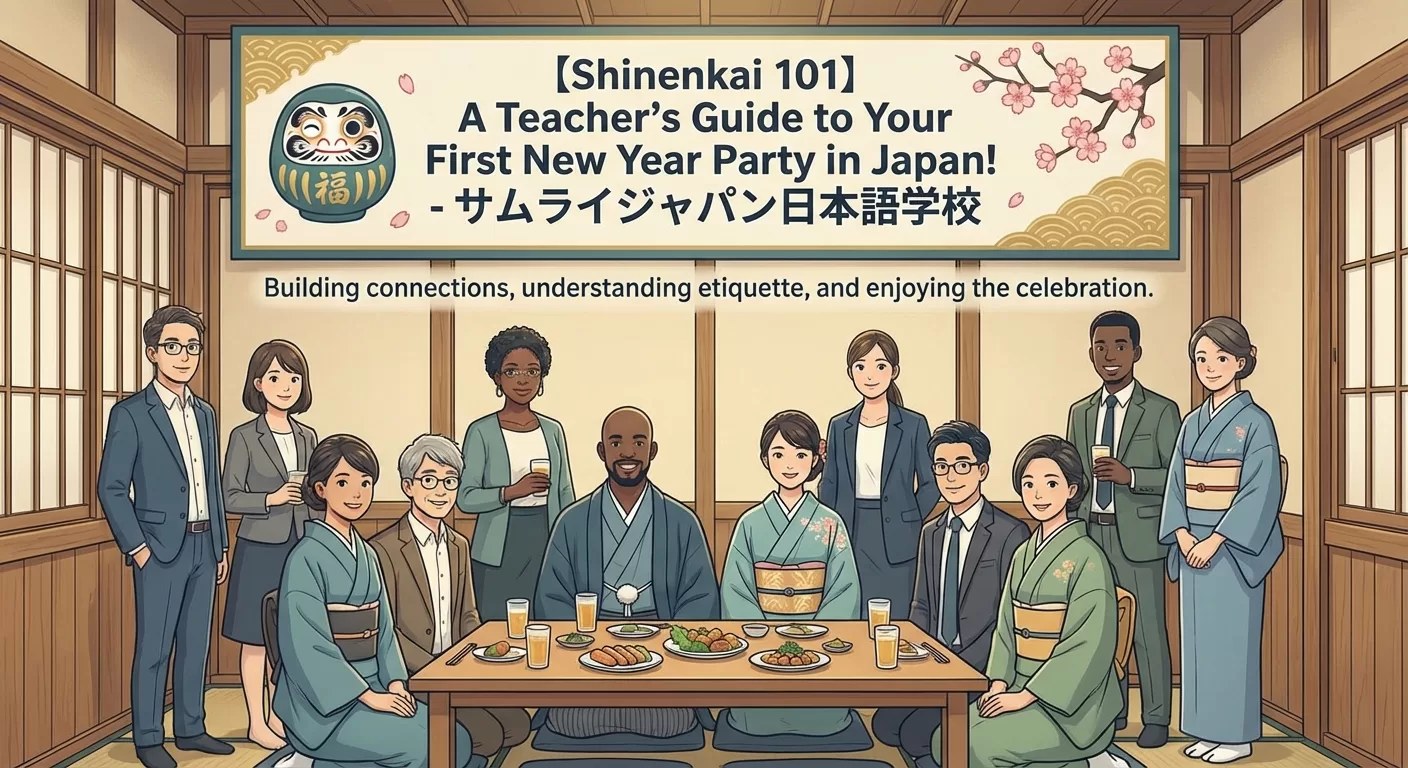
[Shinenkai 101] A Teacher’s Guide to Your First New Year Party in Japan! – サムライジャパン日本語学校
Happy New Year, everyone! As the calendar turns to January, you will notice a vibrant and festive atmosphere throughout Japan. For many students and workers, this season brings a very special tradition: the Shinenkai (新年会), or New Year Party. If you have recently arrived in Japan or are preparing for your future life there, participating in a Shinenkai is a wonderful opportunity to build stronger relationships with your colleagues, teachers, and friends. However, Japanese social gatherings often come with specific customs and manners that might feel a bit intimidating at first. Don’t worry! As your teacher, I am here to guide you through everything you need to know to enjoy your first Shinenkai with confidence and a big smile! 🇯🇵✨
皆さん、あけましておめでとうございます!1月になると、日本中が活気にあふれ、お祝いムードに包まれます。日本で生活する学生や社会人にとって、この時期には「新年会(しんねんかい)」というとても大切な伝統行事があります。日本に来たばかりの方や、これから日本での生活を目指している方にとって、新年会は同僚や先生、友人との絆を深める絶好のチャンスです。でも、日本の宴会には独特のマナーや習慣があり、最初は少し緊張してしまうかもしれませんね。でも大丈夫ですよ!先生と一緒に、初めての新年会を自信を持って笑顔で楽しむためのポイントを学んでいきましょう!🇯🇵✨
What exactly is a Shinenkai? 🍶
The word Shinenkai literally means “New Year Meeting.” While the Bonenkai (Year-End Party) held in December is about “forgetting the troubles of the past year,” the Shinenkai is all about looking forward. It is a social gathering held in January to celebrate the start of a new year, share resolutions, and wish each other health and success. For companies and schools, it’s a way to boost morale and create a sense of unity (solidarity) for the months ahead. It is usually held at an Izakaya (Japanese-style pub), a restaurant, or sometimes even in an office common room. For Filipinos who love celebrations and family gatherings, you will find that the spirit of togetherness in a Shinenkai feels very warm and welcoming! 🤝
「新年会」という言葉は、文字通り「新しい年の集まり」を意味します。12月に行われる「忘年会(ぼうねんかい)」が「去年の苦労を忘れる」ためのものであるのに対し、新年会は「前を向く」ための行事です。1月に開催され、新しい年の始まりを祝い、抱負を語り合い、お互いの健康と成功を祈ります。会社や学校にとっては、士気を高め、これからの数ヶ月に向けて団結力(チームワーク)を高めるための大切な場です。通常は居酒屋やレストラン、時にはオフィスの共用スペースで行われます。お祝い事や家族の集まりが大好きなフィリピンの皆さんなら、新年会の「和」の精神をとても温かく感じるはずですよ!🤝
Quick Comparison: Bonenkai vs. Shinenkai
| Feature | Bonenkai (忘年会) | Shinenkai (新年会) |
|---|---|---|
| Timing | December (End of year) | January (Start of year) |
| Meaning | Forget the old year’s hardships. | Celebrate the new year and future goals. |
| Atmosphere | Often rowdy and energetic. | Positive, hopeful, and slightly more formal. |
Essential Etiquette: The Seating Order (Kamiza & Shimoza) 🪑
One of the most important things to learn about Japanese social gatherings is the concept of Kamiza (上座) and Shimoza (下座). This refers to the “honored seat” and the “lower seat.” In a Japanese room, the Kamiza is the seat furthest from the entrance—this is reserved for the highest-ranking person, such as a boss or a teacher. The Shimoza is the seat closest to the door, which is where the youngest or newest members (like you!) should sit. Sitting near the door allows the juniors to easily order drinks and assist with food when it arrives. When you enter the room, don’t rush to sit down right away! Wait for your senior or teacher to tell you where to sit. This shows respect and awareness of Japanese social structures. ✅
日本の宴会で最も重要なことの一つが、「上座(かみざ)」と「下座(しもざ)」の概念です。これは「目上の人の席」と「控えめな席」を指します。一般的に、入り口から最も遠い席が「上座」で、部長や先生など、最も立場が高い人のための席です。逆に、入り口に最も近い席が「下座」で、若手や新人(皆さんですね!)が座る場所です。入り口の近くに座ることで、飲み物を注文したり、運ばれてきた料理を配ったりといった役割をスムーズに行うことができます。部屋に入ったときは、すぐに座らず、上司や先生に「ここに座ってね」と言われるのを待つようにしましょう。これは日本の社会構造に対する敬意を示す大切なマナーです。✅
⚠️ Teacher’s Tip: Don’t Panic about Seating!
In modern Izakayas with casual settings, people are often more relaxed. However, always aim for the seat closest to the door first. If they want you to sit elsewhere, they will surely invite you. “Shitsurei shimasu” (Excuse me) is a great phrase to use when taking your seat.
The Magic of “Kanpai” and Drink Manners 🍻
In the Philippines, we often say “Tagay!” In Japan, the word is 「乾杯」(Kanpai!). Before the party officially starts, everyone waits for their drinks to be served. Important rule: Do not start drinking until everyone has a glass and the group leader says “Kanpai!” When clinking glasses with a senior or a teacher, it is polite to hold your glass slightly lower than theirs. Also, in Japan, people often pour drinks for each other. If you see your senior’s glass is getting empty, you can offer to pour for them. If they offer to pour for you, hold your glass with both hands as a sign of gratitude. You don’t have to drink alcohol if you don’t want to! Ordering “Oolong-cha” (Oolong tea) or “Ginger Ale” is perfectly fine and very common. 🥤
フィリピンでは「Tagay!」と言いますよね。日本では「乾杯(かんぱい)!」と言います。宴会が始まる前、全員の飲み物が揃うまで待つのがルールです。**重要なルール:**全員に飲み物が行き渡り、リーダーが「乾杯!」と言うまで飲み始めてはいけません。上司や先生とグラスを合わせるときは、相手のグラスよりも少し「低い位置」で合わせるのが丁寧です。また、日本ではお互いにお酒を注ぎ合う習慣があります。目上の人のグラスが空きそうになったら、「お注ぎします」と言って注いであげましょう。逆に注いでもらうときは、両手でグラスを持つのが感謝の印です。お酒が飲めなくても大丈夫!「ウーロン茶」や「ジンジャーエール」を頼むのは全く問題ありませんし、よくある光景ですよ。🥤
💡 Useful Phrases for Drinking:
- ✅ “O-nomimono wa nan ni shimasu ka?” (What would you like to drink?) – Use this to help order for others.
- ✅ “Itadakimasu!” (I gratefully receive) – Say this if someone pours for you.
- ✅ “O-sake ga yowaize node…” (I am weak with alcohol…) – A polite way to decline alcohol.
Key Vocabulary & New Year Greetings 🗣️
The Shinenkai is the perfect time to practice your Japanese! Since it is the first time you are seeing many people in the new year, you must use specific greetings. The most common one is “Akemashite omedetou gozaimasu” (Happy New Year). Following this, it is standard to say “Kotoshi mo yoroshiku onegaishimasu,” which means “Please look after me again this year.” This phrase is the “glue” of Japanese relationships—it expresses your desire to continue a good working or learning relationship. Below is a list of words you might hear or want to use during the party.
新年会は日本語を練習する絶好のチャンスです!新年になって初めて会う人が多いので、特別な挨拶を使いましょう。最も一般的なのは「あけましておめでとうございます」です。その後に「今年もよろしくお願いします」と続けるのが定番です。このフレーズは日本の人間関係における「接着剤」のようなもので、「今年も良い関係を築きましょう」という気持ちを表します。以下に、パーティー中に聞いたり使ったりするかもしれない単語をまとめました。
Essential Shinenkai Vocabulary
| Japanese | Reading (Romaji) | Meaning |
|---|---|---|
| 抱負 | Houfu | New Year’s Resolution/Goal |
| 無礼講 | Bureiko | Putting aside rank (relaxed atmosphere) |
| おつまみ | O-tsumami | Appetizers/Snacks for drinks |
| 締め | Shime | The final dish/End of the party |
How to Handle the “Bureiko” Atmosphere 🎶
During the party, the leader might say, 「今日は無礼講(ぶれいこう)でいきましょう!」 (Kyou wa Bureiko de ikimashou!). This means “Let’s put aside our social ranks and enjoy ourselves freely today!” While this is an invitation to be more relaxed and talkative, a smart student knows that “Bureiko” has its limits. Even if your boss or teacher is acting very casual, you should still maintain a level of politeness (Keigo). It is a great time to share stories about your home in the Philippines, your favorite Japanese food, or your goals for the year. Japanese people are often very curious and happy to learn about Filipino culture, like our festivals or our love for singing! If there is karaoke, don’t be shy—singing is a fantastic way to bond! 🎤🕺
宴会の最中に、リーダーが「今日は無礼講(ぶれいこう)でいきましょう!」と言うことがあります。これは「今日は上下関係を忘れて、自由に楽しみましょう!」という意味です。リラックスしてたくさん話せるチャンスですが、賢い学生さんは「無礼講」にも限度があることを知っておきましょう。上司や先生がカジュアルに振る舞っていても、最低限の礼儀(敬語)は保つのが無難です。フィリピンの実家の話や、好きな日本食、今年の目標などを話すには絶好のタイミングです。日本人はフィリピンのお祭りや歌が大好きな文化などについて知るのをとても楽しみにしています。もしカラオケがあったら、恥ずかしがらずに歌ってみてください。歌は絆を深める最高のツールですよ!🎤🕺
Closing the Party: “Nijikai” and Beyond 🚶♂️
In Japan, many parties end with a “Shime” (closing). This might be a final toast or a rhythmic hand-clapping called Tejime (手締め). When the party officially ends, don’t just disappear! Make sure to thank the organizer and your seniors. You might hear people asking, “Nijikai iku?” (Are you going to the second party?). The Nijikai (二次会) is a smaller, even more casual gathering after the main event. It is not mandatory to go, especially if you are tired or live far away. A polite “Sumimasen, kyou wa kore de shitsurei shimasu” (Sorry, I will head home now) is perfectly acceptable. Always remember to check your train schedule—missing the last train is a common “Shinenkai fail” you want to avoid! 🚃💨
日本の宴会は「締め(しめ)」で終わります。これは最後の乾杯や、「手締め(てじめ)」と呼ばれる独特の手拍子で行われることが多いです。宴会が正式に終わった後、黙って帰ってはいけません!幹事さんや目上の人にしっかりお礼を伝えましょう。「二次会(にじかい)行く?」と聞かれることもあるかもしれません。「二次会」はメインの会の後の、より少人数でカジュアルな集まりです。疲れている時や家が遠い時は、無理に参加しなくても大丈夫です。「すみません、今日はこれで失礼します」と丁寧に伝えればOKです。また、電車の時間は必ずチェックしておきましょう。終電を逃すのは、新年会でよくある失敗の一つですから気をつけてくださいね!🚃💨
⚠️ Common Mistake Alert:
Don’t forget the morning after! The next day at work or school, it is polite to say to your colleagues: 「昨日はありがとうございました」(Kinou wa arigatou gozaimashita). This small gesture leaves a very positive impression.
Embrace the Experience! 🌈
Attending your first Shinenkai is a big milestone in your Japanese journey. It’s more than just eating and drinking; it’s about feeling like a part of a community. You might feel nervous about your Japanese skills or the manners, but remember: the most important thing is your attitude. Being helpful, listening well, and showing your enthusiasm for the new year will speak louder than perfect grammar. You are building your future in Japan one step at a time, and these social moments are where true friendships are born. We at SAMURAI Japan Business Center are always rooting for you! You’ve got this! 🥂✨
初めての新年会に参加することは、日本での生活における大きな一歩です。それは単に飲み食いするだけでなく、コミュニティの一員であることを実感するための大切な場です。日本語やマナーに不安を感じるかもしれませんが、一番大切なのは「姿勢」です。周りを手伝おうとする気持ち、話をしっかり聞くこと、そして新年への意気込みを示すことは、完璧な文法よりもずっと心に響きます。一歩ずつ、日本での未来を築いていきましょう。こうした交流の場こそが、本当の友情が生まれる場所です。サムライジャパン日本語学校は、いつでも皆さんを応援しています!頑張りましょう!🥂✨
Contact & Follow Us
お問い合わせ
📞 電話: +63 997 093 4550
📧 メール: samuraijapan.bc@gmail.com
🏠 住所: Room D3, Freb Bldg, Villa Donata Subd, Muntinlupa
🏢 会社名: SAMURAI Japan Business Center Inc.
SNSでフォロー
🎵 Tiktok: @samuraijapan0221
📸 Instagram: @samuraijapan.bc
▶️ Youtube: @SamuraiJapan-bc
📘 Facebook: Visit our Page
