
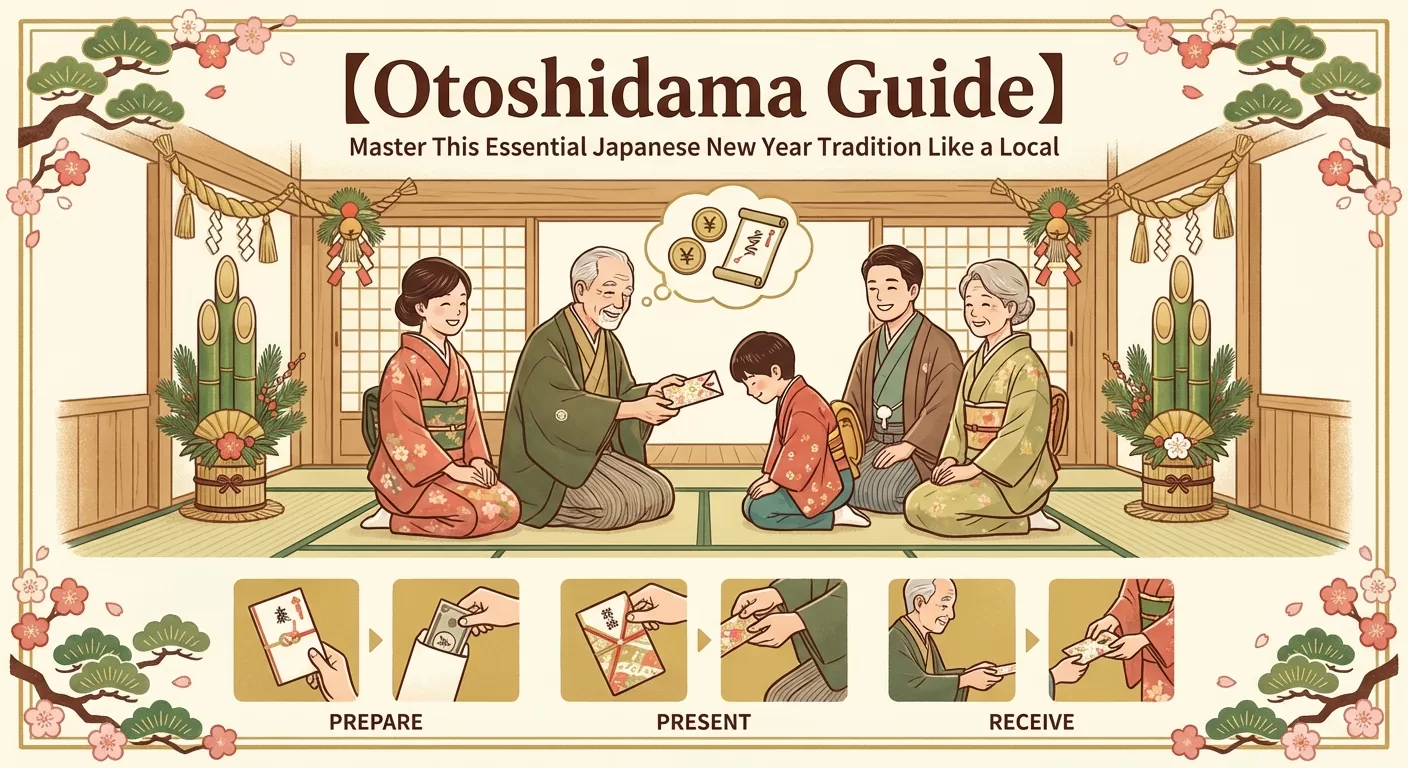
【Otoshidama Guide】Master This Essential Japanese New Year Tradition Like a Local
Otoshidama is the cherished Japanese custom of giving monetary gifts to children during the New Year. Much like Filipino aguinaldo, it is a gesture of love and blessing. This guide, crafted by your Senior Training Consultant at SAMURAI Japan Business Center, will teach you the history, etiquette, amounts, and proper wrapping so that you can join in this celebration confidently, whether as a resident, worker, or future professional in Japan.
「お年玉」は正月に子どもたちへ現金を贈る日本の大切な習慣です。フィリピンの「アギナルド」にも通じる愛と祝福のしるし。本ガイドでは、SAMURAI Japan Business Centerのシニア・トレーニング・コンサルタントが、歴史やマナー、金額や包み方までを細やかに解説し、日本での生活や仕事に役立つ知識をお届けします。
1. What is Otoshidama? History and Meaning / お年玉とは?歴史と意味
The word “Otoshidama” originally referred to an offering to the New Year deity, Toshigami-sama. Rice cakes (kagami-mochi) were shared to receive a share of the god’s spirit. Over centuries, this evolved into giving small gifts and eventually cash to children. Today, it is a key part of Oshogatsu, symbolizing wishes for a healthy, prosperous year ahead. Children typically receive Otoshidama from parents, grandparents, and close family friends until they finish university.
「お年玉」という言葉は、もともと年神様へのお供え物を意味していました。鏡餅を供えてから家族で分け合い、神様の力を授かるという信仰がありました。それが時代とともに品物から現金に変わり、今ではお正月の大切な行事として、子どもたちが社会人になるまで続く習慣です。
2. The Art of the Pochi-bukuro (Envelope) / ポチ袋の作法
Never give bare cash; it is considered rude. Always use a small decorative envelope called a Pochi-bukuro (ポチ袋). Available at 100-yen stores, stationery shops, and convenience stores from late December, these envelopes come in designs ranging from anime characters for young children to elegant traditional patterns for older students. The act of preparing a crisp, new bill and placing it inside a special envelope shows your sincere preparation and respect for the receiver.
現金をそのまま渡すのは失礼にあたります。必ず「ポチ袋」と呼ばれる小さなのし袋に包みましょう。12月後半になると100円ショップや文房具店、コンビニで多数販売され、小さな子向けのキャラクター柄から中学生以上向けの落ち着いた和柄まで揃います。ピン札を用意して丁寧に包むこと自体が、相手を思いやる心を示す日本文化です。
3. How Much to Give: Age-Appropriate Amounts / 金額の目安
There are social expectations regarding the amount, based on the child’s age. Giving too much can make parents feel indebted, while too little might seem thoughtless. Use the standard ranges below, remembered easily from one’s own experience and the general consensus observed at SAMURAI Japan Business Center through cultural coaching.
年齢に応じた相場があり、多すぎると相手に気を遣わせ、少なすぎると心づかいが足りないと受け取られかねません。以下に一般的な目安を示します。当センターでの研修でもこの範囲を推奨し、受講者が実践しやすいよう指導しています。
- Preschool (3–6 years) / 未就学児 (3〜6歳)
1,000 – 2,000 yen. Often a single ¥1,000 bill. / 1,000〜2,000円。千円札一枚が一般的。
- Lower Elementary (Grades 1–3) / 小学校低学年 (1〜3年)
2,000 – 3,000 yen. One or two thousand-yen notes. / 2,000〜3,000円。千円札を複数枚。
- Upper Elementary (Grades 4–6) / 小学校高学年 (4〜6年)
3,000 – 5,000 yen. ¥5,000 bill is common. / 3,000〜5,000円。五千円札がよく使われる。
- Junior High School / 中学生
5,000 yen. / 5,000円。
- High School & University / 高校生・大学生
5,000 – 10,000 yen, depending on closeness. / 5,000〜10,000円。親しさによって変動。
- Numbers to avoid / 避けるべき数字
Never use 4 or 9, which are homophones for “death” and “suffering.” Stick to 1, 3, 5, or 10 thousand yen. / 4(死)や9(苦)のつく金額は避け、1,000・3,000・5,000・10,000円単位にまとめましょう。
4. Folding Money and Writing Names / お札の折り方と名前の書き方
Because Pochi-bukuro are small, you must fold the bill neatly. Use a crisp, new note if possible. The “three-fold” method: place the bill face up, fold the left third over the center, then the right third. Insert it so the portrait faces the receiver when opened. On the front, write the child’s name with an honorific such as “-chan” or “-kun.” On the back, write your own name (the giver) so parents can identify it.
ポチ袋は小さいため、お札を三つ折りにします。なるべくピン札を用意し、表(肖像)を上にして左三分の一、右三分の一と折り、開いたときに肖像が相手に見える向きに差し込みましょう。表には「たろうくんへ」など子どもの名前を、裏には贈る側の氏名を書きます。
5. The Etiquette of Giving and Receiving / 渡し方・受け取り方の礼儀
Always hand over the envelope with both hands, maintaining eye contact and a gentle smile. Accompany the gift with a phrase like “Akemashite omedetou. Kotoshi mo yoroshiku ne.” (Happy New Year. Let’s have a good year together.) If you are teaching a child to receive Otoshidama, remind them to accept it with both hands, say “Arigatou gozaimasu,” and refrain from opening the envelope in front of the giver.
ポチ袋は両手で差し出し、笑顔で「あけましておめでとう。今年もよろしくね」のひと言を添えます。子どもが受け取る際も両手でいただき、「ありがとうございます」とお礼を言い、その場では中身を見ないのが日本のマナーです。
6. SAMURAI Japan Business Center Methodology: Training for Real-Life Culture / 当センターの研修手法:実践的文化マナーの習得
At SAMURAI Japan Business Center, we go beyond language instruction. Through scenario-based workshops, we teach proper Otoshidama preparation—selecting the right envelope, folding bills correctly, and practicing the giving-and-receiving dialogue—so that our students can participate in Japanese traditions with genuine confidence. This cultural competence is vital for building trust and strong interpersonal relationships in professional and daily life in Japan.
サムライジャパン・ビジネスセンターでは、語学教育にとどまらず、シナリオ形式のワークショップを取り入れています。お年玉の準備(ポチ袋の選び方、お札の折り方、会話のロールプレイ)を実践し、受講生が日本の伝統行事に自然に溶け込めるよう指導しています。こうした文化理解は、職場や地域社会での信頼構築に直結します。
Frequently Asked Questions / よくある質問
Q: Can I give Otoshidama to adults? / 大人にもお年玉を渡せますか?
A: No. Otoshidama is strictly for children. Giving money to adults during New Year would be unusual and may cause confusion. If you wish to give a gift to an adult, consider Oseibo (year-end gift) or Ochugen (summer gift). / いいえ、お年玉は子どもに限られます。大人に現金を渡すのは新年初めの習慣としては適切ではありません。大人に贈り物をするなら、お歳暮やお中元の習慣があります。
Q: What if I don’t know the child’s age well? / 子どもの年齢がはっきりわからない場合は?
A: A safe amount is ¥3,000 to ¥5,000 for school-age children. If they are very young, ¥1,000 is appropriate. / 学齢期の子どもなら3,000~5,000円、幼児には1,000円が無難です。相手の年齢が不明な場合もこの範囲なら失礼になりません。
Q: Is it okay to use electronic money or a gift card? / 電子マネーやギフトカードでも大丈夫ですか?
A: While cash is the traditional and preferred form, some modern families are accepting gift cards. However, cash in a beautifully prepared Pochi-bukuro remains the most sincere and culturally expected method. / 現金が伝統的で最も喜ばれます。最近はギフトカードも一部で受け入れられていますが、やはりポチ袋に入れた現金が最も心がこもった方法とされています。
Pro Tip from Your Instructor: Prepare Pochi-bukuro ahead of the New Year rush. Banks offer “new bill” service in late December, and keeping a few envelopes ready at home ensures you never miss an opportunity to show your respect.
講師からのワンポイント:年末に銀行で新券を用意し、ポチ袋は混雑する前に買っておくと安心です。事前準備こそが、日本の「おもてなし」の心を伝える第一歩です。
Conclusion: Embrace the Tradition, Build Trust / おわりに:伝統を楽しみ、信頼を築く
Otoshidama is more than a financial gift—it’s a bridge to deeper connection in Japanese families and communities. By following the traditions with sincerity, you show that you are a considerate member of society, be it as a worker, a student, or a future professional. We at SAMURAI Japan Business Center are here to help you master not only language but the nuanced cultural skills that make your life in Japan truly successful. If you’re eager to learn more about Japanese New Year customs, take a look at our article on Hatsuyume: 3 Lucky Symbols in Your First Dream. May this guide bring you a joyful and harmonious Oshogatsu!
お年玉は単なる金銭のやりとりではなく、日本の家族や地域社会に深く溶け込むための架け橋です。真心を込めて習慣を実践することで、社会人として、学生として、未来のプロフェッショナルとして、思いやりのある姿を示せます。サムライジャパン・ビジネスセンターは、言語はもちろん、こうした細やかな文化的スキルを磨くお手伝いをしています。お正月のさらなる知識には、「初夢:一年の幸運を占う3つのシンボル」の記事もぜひご覧ください。このガイドが、皆さまの素晴らしいお正月の一助となりますように。
🇯🇵 日本語で新しい可能性を広げよう! ✨
SAMURAI Japan Business Centerは、あなたの日本語学習を全力でサポートします。
🚀 Start Your Learning Journey Today!
Ready to learn Japanese? Apply for our programs now!
🏫 お問い合わせ (Contact Us)
📞 Phone: +63 997 093 4550
📧 Email: samuraijapan.bc@gmail.com
🏢 Address: Room D3, Freb Bldg, Villa Donata Subd, Muntinlupa
📱 SNSで楽しく学ぼう!
Related posts:
 [Omikuji Guide] How to Read Your Fortune for a Blessed Life in Japan!
 The Magical Seat Reservation
 Karaoke in Japan: Your Guide to Fun & Friends!
 Gomidashi in Japan: Your Teacher’s Top Tips for Smooth Living
 【Teacher’s Tip】Japan’s 119: Your Emergency Guide
 Yakatabune: A Must-Know for Your Japan Life!
