

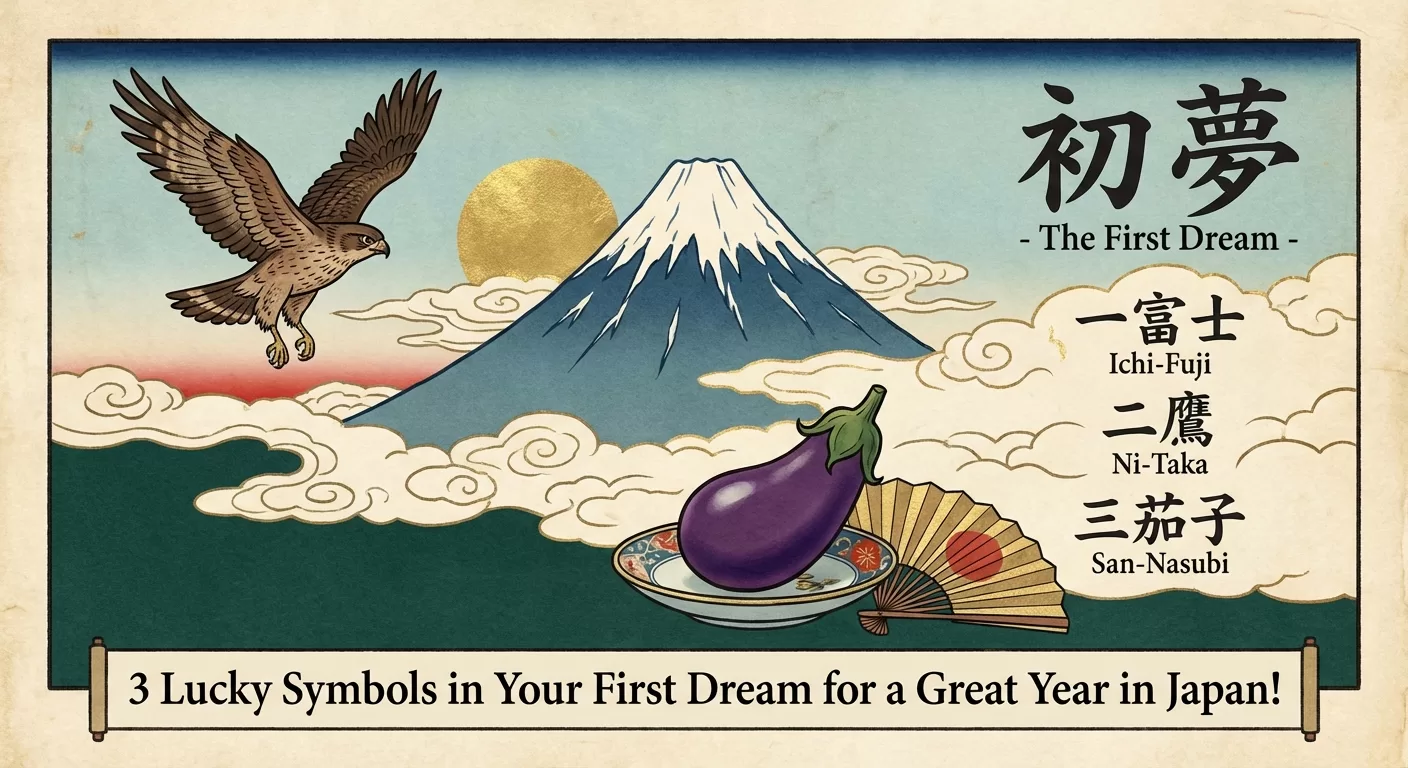
Hatsuyume: 3 Lucky Symbols in Your First Dream for a Great Year in Japan!
Happy New Year to all our hardworking students! As we step into 2026, many of you are likely dreaming of your future life in Japan. But did you know that in Japanese culture, the very first dream you have in the New Year is believed to predict your fortune for the entire year? This tradition is called Hatsuyume (初夢). Understanding these cultural nuances is just as important as learning grammar, as it helps you connect more deeply with the Japanese people you will soon meet.
皆さん、明けましておめでとうございます!2026年がいよいよ始まりましたね。皆さんの多くは、日本での新しい生活を夢見ていることでしょう。ところで、日本には「初夢(はつゆめ)」という文化があるのを知っていますか?新年になって最初に見る夢の内容で、その一年がどんな年になるかを占う習慣です。こうした文化を知ることは、文法を学ぶのと同じくらい大切です。将来日本で出会う人たちと、より深く心を通わせるきっかけになりますよ。
💡 Teacher’s Tip:
In Japan, “Hatsuyume” usually refers to the dream you have on the night of January 1st (leading into the morning of January 2nd). Don’t worry if you didn’t dream of anything last night—there are many ways to make your own luck!
日本では一般的に、1月1日の夜から2日の朝にかけて見る夢を「初夢」と呼びます。もし昨日の夜に夢を見なかったとしても、がっかりしないでくださいね。幸運は自分の手で掴み取るものですから!
1. The Golden Trio: Ichi-Fuji, Ni-Taka, San-Nasubi 🦅
There is a famous Japanese saying that lists the three luckiest things to see in your Hatsuyume: “Ichi-Fuji, Ni-Taka, San-Nasubi.” This literally translates to “First, Mt. Fuji; second, the hawk; third, the eggplant.” If any of these appear in your dream, it is said that you will have an incredibly successful and happy year. For Filipinos aiming to live in Japan, seeing these symbols could be a wonderful sign of your upcoming journey!
日本の初夢には、縁起が良いとされる「トップ3」があります。それが「一富士(いちふじ)、二鷹(にたか)、三茄子(さんなすび)」です。文字通り、1番目は富士山、2番目は鷹、3番目は茄子(なす)を指します。もし夢にこれらが出てきたら、その一年は最高にハッピーで成功に満ちた年になると言われています。日本行きを目指している皆さんにとって、これらのシンボルが夢に出てきたら、それは素晴らしい門出のサインかもしれませんね!
The Meaning Behind the Luck
| Symbol (Symbol) | Why is it lucky? | Japanese Vocabulary |
|---|---|---|
| 1. Mt. Fuji | The highest mountain in Japan; symbolizes high goals and longevity. | 富士山 (Fujisan) |
| 2. Hawk | A clever and strong bird; symbolizes promotion and grabbing success. | 鷹 (Taka) |
| 3. Eggplant | The word “nasu” means “to achieve” or “to fulfill” goals. | 茄子 (Nasubi/Nasu) |
2. Why an Eggplant? The Power of Japanese Wordplay 🍆
You might be wondering, “Why is an eggplant lucky? Isn’t it just a vegetable?” This is where Japanese Kakekotoba (wordplay) comes in! The word for eggplant is “Nasu” (茄子), which sounds exactly like the verb “Nasu” (成す), meaning “to accomplish,” “to achieve,” or “to become.” In the context of your studies, dreaming of an eggplant could mean that your hard work in learning Japanese will finally “bloom” and result in success. This kind of positive thinking is a big part of Japanese culture.
「なぜ茄子が縁起がいいの?ただの野菜じゃない?」と思うかもしれませんね。ここには日本特有の「掛け言葉(言葉遊び)」が隠されています。野菜の「なす」は、物事を成し遂げるという意味の「成す(なす)」と同じ音なんです。皆さんの勉強に当てはめると、日本語学習の努力が実を結び、目標を達成できるという意味になります。こうした前向きな考え方は、日本文化のとても素敵な一部分です。
⚠️ Note for Learners:
While “Nasubi” is an older way of saying it, most people today use “Nasu.” However, in the lucky saying, we always use “San-Nasubi” to keep the rhythm! Rhythm and “sound” are very important in Japanese idioms.
現代では「なす」と呼ぶのが一般的ですが、この縁起担ぎの言葉ではリズムを整えるために「三茄子(さんなすび)」と言います。日本語の慣用句では、リズムや響きがとても重視されるんですよ。
3. Beyond the Top 3: The Secret Continuation 🚭
Did you know that the list actually goes up to six? While almost every Japanese person knows the top three, the “sequel” is less common: “Yon-Sen, Go-Tabako, Roku-Zato.” (4. Fan, 5. Tobacco, 6. Blind Acupuncturist). While some of these sound a bit strange today, they all represented health, safety, and prosperity in the Edo period. For example, a “Fan” (Sensu) spreads out at the end, symbolizing a future that opens up and becomes wider and better—just like your future in Japan!
実は、この続きがあることを知っていましたか?日本人のほとんどがトップ3を知っていますが、その先はあまり知られていません。それは「四扇(しせん)、五多羽姑(ごたばこ)、六座頭(ろくざとう)」です。現代では少し不思議に聞こえるかもしれませんが、江戸時代には健康や安全、繁栄を象徴するものでした。例えば「扇(おうぎ・せんす)」は末広がりと言って、将来がパッと開いていく様子を表します。皆さんの日本での未来も、この扇のように大きく広がっていくはずです!
- Sensu (扇子)
A folding fan. It represents “Suehirogari,” meaning things will get better and better as time goes on. It’s a perfect symbol for someone starting a new chapter.
扇子のことです。「末広がり」を意味し、時間が経つにつれて事態が良くなっていくことを表します。新しい生活を始める人にぴったりのシンボルですね。
- Tabako (タバコ)
In the past, tobacco smoke rising upwards symbolized rising fortune. Nowadays, we focus more on the “rising” aspect than the smoking itself!
昔は、煙が上に向かって昇っていく様子が、運気が上がることを象徴していました。現代ではタバコそのものより、「上昇する」というイメージが大切です。
- Zato (座頭)
This referred to blind musicians or acupuncturists. Since they had no hair (shaved heads), it was a pun on “Ke-ganai,” which can mean both “no hair” and “no injury/accident.” It’s a prayer for safety.
琵琶法師や鍼灸師を指します。髪がない(毛がない)ことから、「怪我(けが)がない」という言葉にかけて、家内安全を願う意味があります。
4. Essential New Year Phrases for Your Life in Japan 🎍
When you eventually move to Japan, you will experience the New Year season firsthand. Knowing the right greetings will make you stand out as a polite and prepared person. Remember that Japanese society values formal greetings during the first few days of January. Even if you are still in the Philippines, practicing these with your teachers and classmates is a great way to build confidence!
日本に住むようになると、お正月の雰囲気を肌で感じることになります。正しい挨拶を知っていれば、礼儀正しく準備の整った人だという印象を持ってもらえます。日本の社会では、1月の最初の数日間のフォーマルな挨拶がとても重要視されます。今はフィリピンにいても、先生やクラスメートと練習して、自信をつけておきましょう!
🇯🇵 Useful New Year Vocabulary
-
Greeting
Akemashite Omedetou Gozaimasu (明けましておめでとうございます)
“Happy New Year!” (Use this starting Jan 1st). -
Resolution
Kotoshi no Dakai (今年の抱負)
“New Year’s Resolution.” What is your goal for your Japanese studies this year? -
First Visit
Hatsumode (初詣)
The first shrine or temple visit of the year to pray for good luck.
5. How to Invite a Good Dream (A Fun Tradition) 🚢
If you really want to see a lucky Hatsuyume, there is an old trick! In the past, people would place a picture of a Takarabune (Treasure Ship) under their pillows. The ship often carries the Seven Lucky Gods (Shichifukujin). If you have a bad dream instead, don’t worry—people used to “give” the bad dream to a mythical creature called a “Baku” that eats nightmares. This shows how much the Japanese people value starting the year with a positive mindset.
どうしても良い初夢を見たい!という人のために、昔からの面白いおまじないがあります。枕の下に「宝船(たからぶね)」の絵を敷いて寝るという方法です。宝船には七福神が乗っていて、幸運を運んできてくれます。もし悪い夢を見てしまったら?心配いりません。昔の人は悪い夢を「獏(ばく)」という悪夢を食べる伝説の生き物にあげてしまいました。大切なのは、ポジティブな気持ちで一年を始めることなのです。
For my dear students, why not try a modern version? Instead of a treasure ship, place your Japanese textbook or a picture of the Japanese city you want to live in near your bed. Visualize yourself speaking fluent Japanese and enjoying life in Tokyo, Osaka, or wherever your heart desires. Your dreams are the blueprint for your reality!
皆さんも、現代版のおまじないを試してみませんか?宝船の代わりに、日本語の教科書や、いつか住んでみたい日本の街の写真を枕元に置いてみてください。流暢な日本語で話し、東京や大阪で楽しく暮らしている自分をイメージするのです。夢は、現実を作るための設計図になりますよ!
Conclusion: Make 2026 Your Best Year Yet! 🌟
Whether you dream of Mt. Fuji, a hawk, or even a simple eggplant, remember that the most powerful “symbol” for your success is your own determination. Learning a new language and moving to a new country takes courage, and we are so proud of you for taking this path. Let the tradition of Hatsuyume inspire you to aim high, stay sharp like a hawk, and achieve (nasu) all your goals this year!
富士山や鷹、あるいは茄子の夢を見ようと見まいと、成功のために最も力強い「シンボル」は、皆さん自身の「やる気」です。新しい言語を学び、異国の地へ行くには勇気がいります。その道を選んだ皆さんを、私たちは心から誇りに思っています。初夢の伝統をきっかけに、高い目標を持ち、鷹のように鋭くチャンスを掴み、今年一年の目標をすべて「成し遂げて」くださいね!
We are here to support you every step of the way. Let’s work hard together to make your dream of living in Japan come true. Happy New Year, and let’s make 2026 an unforgettable year of growth and success! Ganbatte kudasai!
私たちは、皆さんの歩みを一歩一歩サポートします。日本で暮らすという夢を叶えるために、一緒に頑張りましょう。明けましておめでとうございます。2026年を、成長と成功に満ちた忘れられない一年にしましょう!頑張ってください!
Contact & Follow Us
お問い合わせ
📞 電話: +63 997 093 4550
📧 メール: samuraijapan.bc@gmail.com
🏠 住所: Room D3, Freb Bldg, Villa Donata Subd, Muntinlupa
🏢 会社名: SAMURAI Japan Business Center Inc.
SNSでフォロー
🎵 Tiktok: @samuraijapan0221
📸 Instagram: @samuraijapan.bc
▶️ Youtube: @SamuraiJapan-bc
📘 Facebook: Visit our Page
