

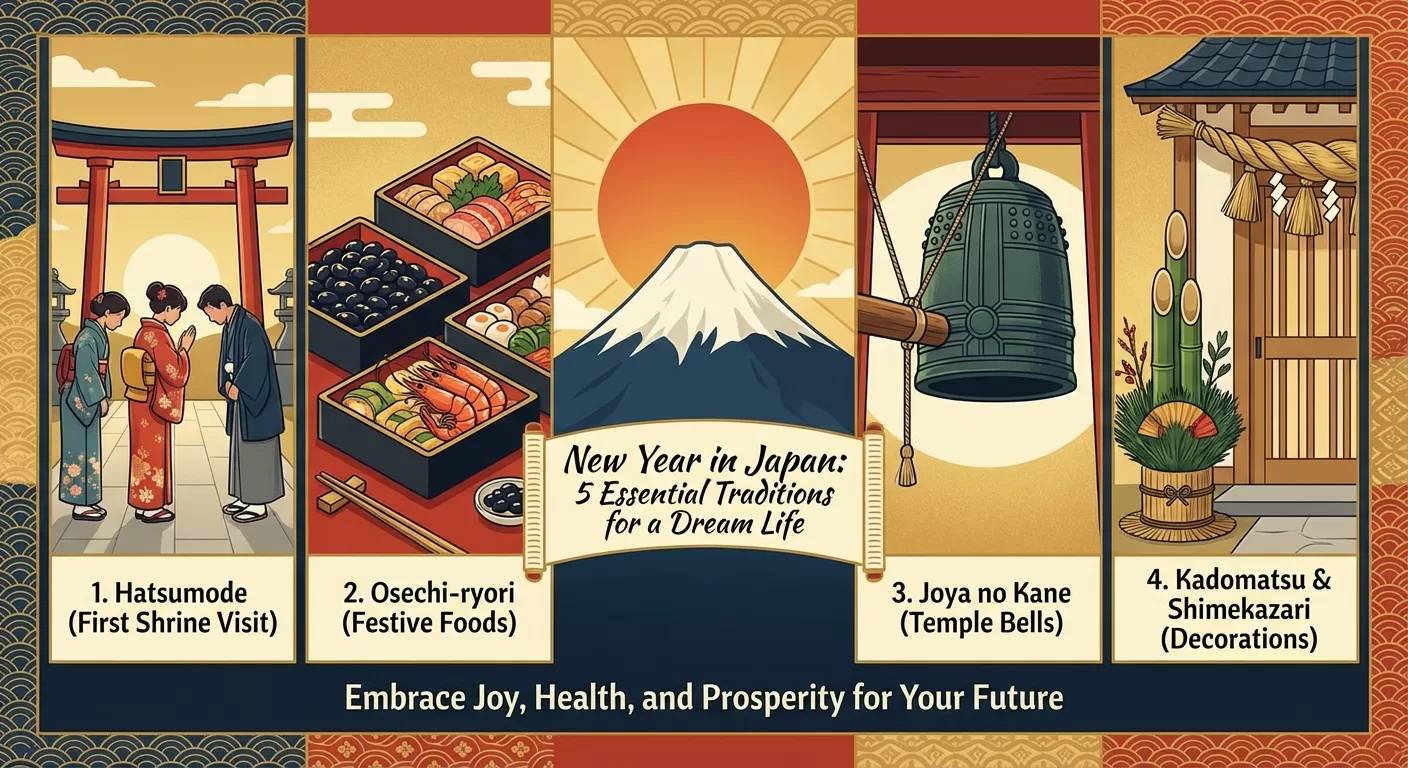
【New Year in Japan】 5 Essential Traditions to Start Your Dream Life with Joy 🇯🇵✨
Maligayang Bagong Taon! Happy New Year! As we stand at the threshold of a new year, it’s the perfect time to look forward to the future—especially if your dream is to live and work in the Land of the Rising Sun. In the Philippines, we are known for having the longest Christmas season in the world, filled with parties and noche buena. However, in Japan, the “Grand Finale” and the most important celebration of the year is Oshogatsu (New Year).
For Japanese people, New Year isn’t just a one-day party; it is a sacred time for family, reflection, and welcoming the “Toshigami” (New Year gods) who bring health and prosperity. If you are preparing for your life in Japan, understanding these traditions isn’t just about “culture”—it’s about connecting with your future neighbors and coworkers. Let’s explore the five essential traditions that will help you start your Japanese journey with joy and success! 🌸
💡 Teacher’s Tip: The “San-ga-nichi”
In Japan, the first three days of January are called 「三が日」(San-ga-nichi). Most businesses and schools are closed during this time. It is a period of rest, similar to how we treat Christmas Day or Good Friday in the Philippines. Plan your grocery shopping early because many shops will be closed!
1. Hatsumode (初詣): The Very First Visit of the Year ⛩️
One of the most iconic Japanese New Year traditions is Hatsumode, which refers to the first visit to a Shinto shrine or Buddhist temple in the new year. People go to pray for health, safety, and success in their endeavors—like passing a language exam or doing well in a new environment!
When you go for Hatsumode, you will see long lines of people waiting to offer a small coin and a prayer. It is also the time when people buy new Omamori (amulets/charms) and return their old ones from the previous year to be ritually burned. For many Filipinos, the atmosphere feels a bit like a fiesta or Simbang Gabi because of the food stalls (yatai) selling delicious snacks like Yakisoba and Takoyaki near the shrine entrance!
How to Pray at a Shinto Shrine (The “2-2-1” Rule)
| Step | Action | What to do |
|---|---|---|
| 1. Offering | Saisen (Coin) | Gently toss a coin (usually 5 yen) into the box. |
| 2. Bow Twice | Nirei (2 Bows) | Bow deeply twice toward the shrine. |
| 3. Clap Twice | Nihakushu (2 Claps) | Clap your hands twice to get the god’s attention. |
| 4. Pray & Bow | Ichirei (1 Bow) | Keep your hands together, pray silently, then bow once more. |
⚠️ Common Mistake Alert:
When entering through the Torii (the big red gate), don’t walk right in the middle! The middle path is reserved for the gods. Stay to the left or right side to show respect.
2. Osechi Ryori (おせち料理): Food with a Meaning 🍱
While we love our Lechon and Pancit for long life, Japan has Osechi Ryori. These are traditional foods packed in beautiful lacquered boxes called jubako. Each ingredient in the box is not just food—it’s a wish for the upcoming year. Because Japanese people believe in not using the stove during the first three days of the year (to give the fire god a rest), Osechi is usually prepared in advance and designed to be eaten at room temperature.
- Kuromame (Black Beans):
Eating these means you wish to work “mame-ni” (diligently and healthily) in the coming year. It’s the perfect food for students aiming for their dreams! 📚
- Kazunoko (Herring Roe):
Because there are many tiny eggs, this symbolizes a wish for many children and a prosperous, growing family.
- Kuri Kinton (Mashed Sweet Potato with Chestnuts):
The bright yellow/gold color symbolizes wealth and financial success. Everyone wants a bit of this in their box!
- Ebi (Shrimp):
The curved back and long whiskers of a shrimp look like an old man. This represents a wish for longevity (living until your back is bent with age).
3. Osoji (大掃除): The Great Cleaning Ritual 🧹
In the Philippines, we often do “General Cleaning” before Christmas or New Year, but in Japan, Osoji (Great Cleaning) is almost a spiritual event. It is done in late December to purify the home and welcome the New Year gods into a clean space. It’s not just about dust; it’s about clearing out the “bad luck” of the previous year.
When you move to Japan, you will notice that schools and offices also participate in Osoji. Even the boss cleans! This tradition teaches us the value of Gaman (patience) and Kansha (gratitude) for the spaces we use. Starting the year with a clean room and a clear mind is a great way to stay motivated for your Japanese language studies.
💡 Teacher’s Tip: Toshikoshi Soba
On the night of December 31st (Omisoka), Japanese people eat 「年越しそば」(Toshikoshi Soba). These long buckwheat noodles represent a long life. Because soba noodles are easy to bite through, they also symbolize “cutting off” the hardships of the past year so you don’t carry them into the new one!
4. Otoshidama (お年玉) & Fukubukuro (福袋) 🧧🛍️
If you have kids or younger siblings, they will love this! Otoshidama is the tradition where adults give money to children in small, decorated envelopes called pochibukuro. It is very similar to the “Aguinaldo” or “Ampao” we give during Christmas or Chinese New Year in the Philippines.
But for adults, the real excitement is the Fukubukuro or “Lucky Bag.” On January 1st or 2nd, almost every store in Japan—from Starbucks to high-end clothing brands—sells sealed bags filled with random items. The catch? The value of the items inside is much higher than the price you pay! It’s a fun way to test your luck for the new year. 🍀
5. Nengajo (年賀状): The Art of Greeting 📮
In the age of Facebook and TikTok, Japan still holds onto the beautiful tradition of Nengajo (New Year Greeting Cards). People send postcards to friends, teachers, and colleagues to thank them for their support in the past year and ask for their continued favor in the new one.
The Japanese Post Office guarantees that if you mail your cards by a certain date in December, they will all be delivered exactly on January 1st! Receiving a stack of cards on New Year’s morning is a heart-warming feeling. For a Filipino learner, writing a simple Nengajo to your Japanese teacher or friend is a fantastic way to practice your Kanji and show your appreciation for Japanese culture.
Essential New Year Vocabulary
| Japanese (Romaji) | Meaning | When to use |
|---|---|---|
| Akemashite omedetou! | Happy New Year! | Use ONLY after Jan 1st arrives. |
| Yoi otoshi wo! | Have a good year! | Use BEFORE the year ends (Dec 31st). |
| Kotoshi mo yoroshiku! | I look forward to your help again this year. | Standard polite greeting to everyone. |
Starting Your Journey with the Right Mindset 🌟
Living in Japan is a dream shared by many talented Filipinos. By learning these traditions, you are showing the Japanese people that you respect their values of cleanliness, gratitude, and community. Whether you are currently studying for the JFT-Basic, practicing your Hiragana, or just starting to dream, remember that every big goal starts with a single step—or in this case, a single “Akemashite Omedetou!”
Don’t be overwhelmed by the differences. Instead, look for the similarities! Just like our Media Noche, the Japanese New Year is about family and hope. Keep pushing forward with your studies, stay curious about the culture, and soon, you will be experiencing these beautiful traditions in person, under the winter sky of Japan. 🇯🇵✈️🇵🇭
You can do this! We are here to support you every step of the way. Let’s make this year the one where your Japanese dream becomes a reality!
Contact & Follow Us
お問い合わせ
📞 電話: +63 997 093 4550
📧 メール: samuraijapan.bc@gmail.com
🏠 住所: Room D3, Freb Bldg, Villa Donata Subd, Muntinlupa
🏢 会社名: SAMURAI Japan Business Center Inc.
SNSでフォロー
🎵 Tiktok: @samuraijapan0221
📸 Instagram: @samuraijapan.bc
▶️ Youtube: @SamuraiJapan-bc
📘 Facebook: Visit our Page
