
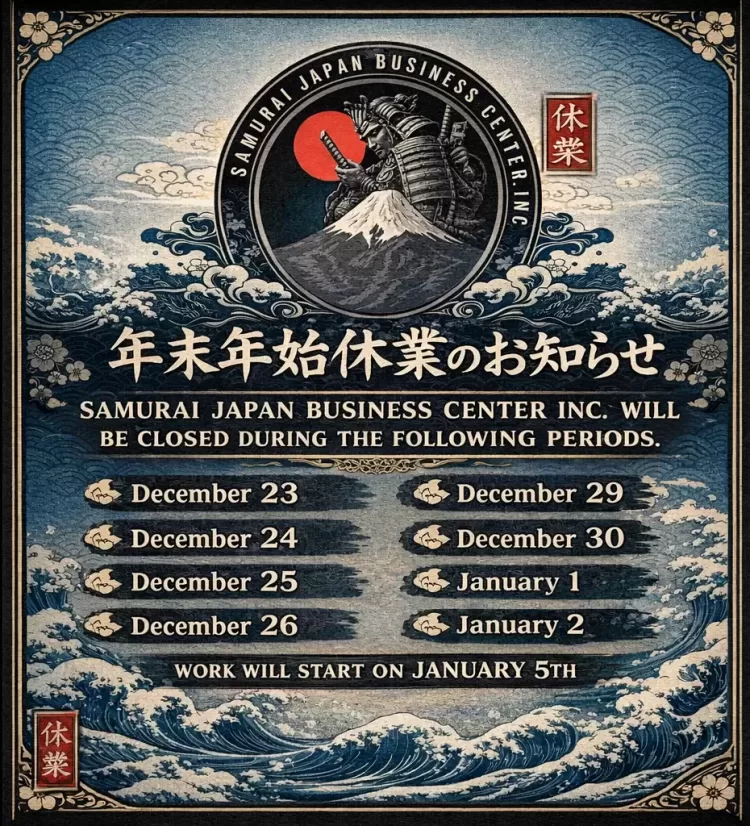
Holiday Notice: Year-End and New Year Schedule / 年末年始休暇のお知らせ
As part of our commitment to providing a comprehensive education, this notice not only communicates our holiday schedule but also serves as a real-world Japanese business culture lesson. At SAMURAI Japan Business Center, we teach you how to read official company notices, understand seasonal business etiquette, and master the language of corporate Japan.
私たちSAMURAI Japan Business Centerの使命は、皆様への休暇スケジュールをお知らせするだけでなく、それをビジネス文化の実践的な教材とすることです。会社からの公式通知の読み方、年末年始のビジネスマナー、そして企業で使われる日本語をマスターしていただくための絶好の機会です。
Understanding Year-End Business Customs in Japan / 日本の年末年始のビジネス慣習を理解する
In Japan, the year-end and New Year period, known as 年末年始 (nenmatsu nenshi), is a unique time when businesses temporarily close and employees take mandatory leave. This custom is rooted in the cultural importance of family reunions and the deep respect for the changing of the year. For Filipino students aiming to work in Japan, understanding this rhythm is crucial because you will encounter terms like 休業 (kyuugyou) (business closure) and 営業再開 (eigyou saikai) (resumption of operations) on countless office documents.
日本では、年末年始(ねんまつねんし)は企業が一時的に休業し、従業員が一斉に休暇を取得する特別な期間です。この習慣は家族との団らんを重んじ、年の変わり目に深い敬意を払う文化に根ざしています。日本での就職を目指すフィリピン人の皆さんにとって、このリズムを理解することは非常に重要です。なぜなら、休業(きゅうぎょう)や営業再開(えいぎょうさいかい)といった用語が、無数のオフィス文書に登場するからです。
Notice that in our schedule, specific dates are marked as “Closed.” In a Japanese company, this would typically be announced with the phrase 休業日 (kyuugyoubi). Learning this vocabulary is the first step toward reading and writing professional emails during the holiday season. Moreover, the polite phrase ご不便をおかけしますが (gofuben wo okake shimasu ga)—”we apologize for any inconvenience”—is a standard expression of consideration that you will use frequently in professional correspondence.
私たちのスケジュールでは特定の日が「CLOSED」とされています。日本の企業では、これを通常休業日(きゅうぎょうび)という言葉で告知します。この語彙を学ぶことは、年末年始のプロフェッショナルなメールを読み書きするための第一歩です。さらに、丁寧な表現である「ご不便をおかけしますが」は、今後のビジネス文書で頻繁に使うことになる、思いやりの定型文です。
Pro-Tip: The Art of the “Nengajo”
In Japan, year-end is also the time for sending 年賀状 (nengajo), New Year’s postcards. It is a deeply rooted business custom to send these cards to clients and colleagues, wishing them a prosperous new year. Mastering this practice, and the formal language used on these cards, is a powerful soft skill that sets you apart in a Japanese workplace. At our Business Center, we incorporate such cultural nuances into our curriculum, going far beyond basic vocabulary.
プロの秘訣:「年賀状」の心得
日本では年末になると、年賀状(ねんがじょう)と呼ばれる新年の挨拶状を送る習慣があります。これは、クライアントや同僚に送り、新年の繁栄を願う、非常に深く根付いたビジネス慣習です。この習慣と、年賀状で使われるフォーマルな言葉遣いをマスターすることは、日本の職場であなたを際立たせる強力なスキルです。当ビジネスセンターでは、このような文化的なニュアンスをカリキュラムに組み込み、基礎的な語彙を超えた生きた日本語を指導しています。
Key Japanese Terminology for the Holiday Schedule / 年末年始に必須のビジネス用語
To help you navigate a Japanese office during this period, let’s break down the essential terms you will see on a typical closure notice. At SAMURAI Japan Business Center, we believe in learning through practical application. Use this table as your quick reference guide.
この期間に日本のオフィスで適切に行動するために、典型的な休業通知で目にする必須用語を詳しく見ていきましょう。SAMURAI Japan Business Centerでは、実践を通して学ぶことを重視しています。以下の表をクイックリファレンスとしてお使いください。
| English Term | Japanese (Kanji/Kana) | Romaji | Explanation |
|---|---|---|---|
| Year-End and New Year | 年末年始 | Nenmatsu nenshi | The period covering the end of one year and the beginning of the next. |
| Business Closure | 休業 | Kyuugyou | The temporary suspension of business operations. |
| Resumption of Operations | 営業再開 / 業務開始 | Eigyou saikai / Gyomu kaishi | The date when work begins again after a holiday. |
| Regular Operations | 通常営業 | Tsuujou eigyou | Standard business hours with no special schedule. |
| Inquiries | お問い合わせ | O-toiawase | Formal term for questions or inquiries from clients. |
The SAMURAI Japan Methodology: Turning Notices into Lessons / サムライジャパンのメソッド:通知を学びに変える
At SAMURAI Japan Business Center, our training philosophy is based on the “Immersive Business Simulation” method. Unlike traditional language training, we do not simply explain grammar rules. Instead, we use authentic materials exactly like this company holiday notice. Our professional upskilling program guides students through the process of reading such documents, extracting key information, and composing a polite response in formal Japanese.
SAMURAI Japan Business Centerのトレーニング哲学は、「没入型ビジネスシミュレーション」メソッドに基づいています。従来の語学研修とは異なり、文法ルールを単に説明するだけではありません。私たちは、まさにこの会社の休暇通知のような本物の教材を使用します。プロフェッショナル・アップスキリング・プログラムでは、学生がそのような文書を読み取り、重要な情報を抽出し、フォーマルな日本語で丁寧な返信を作成するプロセスを指導します。
For example, a Filipino student aiming for a Specified Skilled Worker (SSW) position will learn to recognize that 12月29日~30日 is not just a date, but a signal to plan work tasks accordingly and communicate proactively with their team. This competency—combining linguistic knowledge with business culture—is what truly assures Japanese executives of our students’ exceptional preparedness.
例えば、特定技能(SSW)のポジションを目指すフィリピン人の学生は、12月29日~30日が単なる日付ではなく、それに応じて業務計画を立て、チームに積極的に連絡するための合図であることを認識できるようになります。この言語知識とビジネス文化を組み合わせる能力こそが、日本人経営陣に対して、当センターの学生が非常に高い即戦力を持つことを証明するものです。
Frequently Asked Questions / よくある質問 (FAQ)
Q: Why do Japanese companies have such long holiday breaks at year-end? / なぜ日本の会社は年末にこんなに長い休暇を取るのですか?
A: The year-end and New Year holidays are the most important family time in Japan, comparable to Christmas in the Philippines. It is customary for businesses to close so that employees can travel to their hometowns, clean their houses for the new year, and participate in traditional rituals. This practice strengthens company loyalty and respects work-life balance.
A: 年末年始の休暇は、日本において最も重要な家族の時間であり、フィリピンにおけるクリスマスに匹敵します。従業員が故郷に帰省し、新年を迎えるために家を掃除し、伝統的な行事に参加できるように、企業が休業するのが慣習です。この慣行は、会社への帰属意識を強め、ワークライフバランスを尊重するものです。
Q: How should I handle client inquiries if I am working during the closure notice period? / 休業期間中に顧客からの問い合わせがあった場合、どのように対応すれば良いですか?
A: Professional etiquette requires setting an automatic reply message. Our curriculum trains students to compose phrases like 「休業中にいただいたお問い合わせは、1月5日より順次対応いたします」 (Inquiries received during the closure will be handled sequentially from January 5th). This proactive communication reflects the highly valued Japanese business concept of ほうれんそう (hourensou)—reporting, informing, and consulting.
A: プロフェッショナルなマナーとして、自動返信メッセージの設定が求められます。当センターのカリキュラムでは、「休業中にいただいたお問い合わせは、1月5日より順次対応いたします」といったフレーズを作成するトレーニングを行います。このような積極的なコミュニケーションは、日本で非常に重視される報連相(ほうれんそう)の概念を反映しています。
Q: Will I be tested on this type of business document in language exams? / この種のビジネス文書は語学試験に出題されますか?
A: Absolutely. The JLPT, especially from N3 level onwards, includes reading comprehension sections featuring company memos and public notices. Moreover, in our professional upskilling program, we assess your ability to extract the 5W1H (When, Where, Who, What, Why, How) from such documents, a skill directly transferable to any Japanese workplace.
A: もちろんです。特にN3レベル以上から、JLPTには社内メモやお知らせを題材にした読解問題が出題されます。さらに、当センターのプロフェッショナル・アップスキリング・プログラムでは、このような文書から5W1H(いつ、どこで、だれが、なにを、なぜ、どのように)を抽出する能力を評価します。これはあらゆる日本の職場に直接応用できるスキルです。
Conclusion: A New Year of Growth / 結論:成長の新しい年へ
As we approach the holiday season, we see this closure not just as a break, but as a powerful learning moment. Understanding a company’s official schedule is a fundamental business skill that bridges the classroom and the real world. We encourage all our students to reflect on the vocabulary and cultural knowledge shared in this notice. Your passion for learning Japanese and mastering professional manners is the most reliable path to your dream career in Japan.
年末年始が近づく中、私たちはこの休業を単なる休みとしてではなく、強力な学びの瞬間として捉えています。会社の公式スケジュールを理解することは、教室と実社会をつなぐ基本的なビジネススキルです。このお知らせで共有した語彙と文化的知識について、すべての学生が振り返ってくれることを願っています。日本語学習とプロフェッショナルなマナーを習得しようという皆さんの熱意こそが、日本でのキャリアを夢から現実にする最も確実な道です。
We are confident that our rigorous training methodology will continue to set the standard for excellence. Let us step into 2026 with the spirit of 「今年もよろしくお願いします」 (Kotoshi mo yoroshiku onegaishimasu), ready for new challenges and discoveries.
私たちは、当センターの厳格なトレーニングメソッドが、卓越性の基準を設定し続けると確信しています。「今年もよろしくお願いします」という気持ちで、新たな挑戦と発見に備えて、2026年のスタートを切りましょう。
🇯🇵 日本語で新しい可能性を広げよう! ✨
SAMURAI Japan Business Centerは、あなたの日本語学習を全力でサポートします。
🚀 Start Your Learning Journey Today!
Ready to learn Japanese? Apply for our programs now!
🏫 お問い合わせ (Contact Us)
📞 Phone: +63 997 093 4550
📧 Email: samuraijapan.bc@gmail.com
🏢 Address: Room D3, Freb Bldg, Villa Donata Subd, Muntinlupa
