

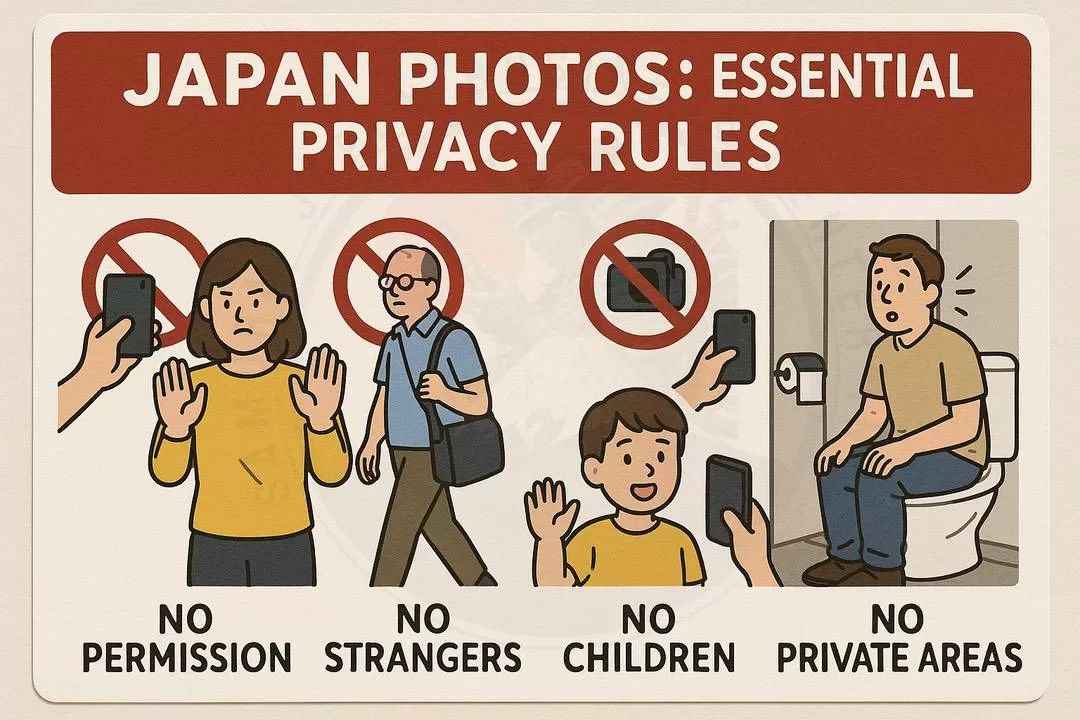
📸 Japan Photos: Essential Privacy Rules from Your Teacher 💡
Hello, aspiring Japan residents! Konnichiwa! 👋 Your Japanese language teacher here, ready to share some crucial insights that will make your life in Japan smoother and more respectful. We all love taking photos, right? Especially in a country as beautiful and unique as Japan! From cherry blossoms to bustling Shibuya crossings, there’s a photo opportunity at every turn. But before you whip out your smartphone or camera, there’s something incredibly important we need to discuss: **privacy rules and cultural etiquette when taking photos in Japan.**
Understanding these rules isn’t just about avoiding trouble; it’s about showing respect, building good relationships, and truly integrating into Japanese society. Let’s dive in! 🇯🇵
Understanding Japanese Privacy & Manners: The Concept of「和」(Wa) and 「肖像権」(Shōzōken)
First, let’s talk about the underlying principles. Japan places a high value on `和` (Wa), which means harmony and peace. This extends to personal space and privacy. While Japan doesn’t have a single, overarching privacy law specifically for photography like some Western countries, it operates on a combination of legal concepts and deeply ingrained social etiquette.
One key concept is `肖像権` (Shōzōken) or **Portrait Rights**. This is the right of an individual to control how their image is used. Essentially, people have the right not to have their likeness photographed, published, or used for commercial purposes without their consent. Even for non-commercial, personal use, if an individual is clearly identifiable and the main subject of your photo, seeking permission is almost always the respectful and safe approach.
💡 Teacher’s Insight:
Many Filipino learners are used to a more direct culture. In Japan, indirectness and consideration for others are key. This applies to photography too – it’s better to be overly cautious and ask, rather than assume it’s okay. Think of it as a way to show you care about the feelings of others.
📸 Rules for Taking Photos in Public Spaces
“Public space” in Japan doesn’t automatically mean “anything goes” for photography. While you can generally take pictures of scenery, buildings, and general streetscapes, things change when people enter the frame.
* **People’s Faces:**
* It is generally **not acceptable** to take close-up photos of individuals, especially their faces, without their explicit permission. This is crucial. Imagine how you would feel if a stranger took a close-up photo of you without asking!
* If people are clearly identifiable and are the main subjects, always ask.
* Crowd shots where individuals are not the focus and are unidentifiable are generally fine.
* **Children:**
* This is a **major warning!** Never photograph children in Japan without asking for their parents’ explicit permission. Japanese parents are very protective of their children’s privacy, and understandably so. This rule is non-negotiable and extremely important for your safety and reputation.
* **Private Property:**
* Even if it looks like a public street, some areas might be private property (e.g., inside shopping malls, specific commercial areas). Always be on the lookout for signs like `撮影禁止` (Satsuei Kinshi – No Photography) or `写真撮影お断り` (Shashin Satsuei Okotowari – Photography Refused).
⚠️ Common Mistake Alert:
Thinking that since you’re in a public area, you can photograph anyone or anything. This is a common misunderstanding. In Japan, the emphasis is heavily on the individual’s right to privacy and peace, even in public settings.
📍 Specific Situations and Places: Where to Be Extra Mindful
Certain locations in Japan have specific rules, either posted or unwritten, regarding photography. Being aware of these will save you potential embarrassment.
* **Temples and Shrines:**
* Many areas, especially inside the main halls (`本堂 – hondō`) or where sacred objects are kept, will have “No Photography” signs. Respect these rules strictly.
* Some outdoor areas might be fine, but always be mindful of worshippers and avoid disrupting their prayers or rituals.
* **Museums, Art Galleries, and Historical Sites:**
* Photography is often strictly prohibited, especially with flash, to protect delicate artifacts and ensure a quiet, respectful atmosphere for all visitors. Always check signs at the entrance.
* **Shops and Restaurants:**
* If you want to take a photo of the delicious food you ordered, that’s usually fine! However, taking photos of the entire restaurant interior, staff, or other customers is generally considered rude without permission.
* Especially avoid taking photos of products for sale inside shops without asking, as it can be seen as suspicious (e.g., you might be copying their designs or pricing).
* **Public Transportation (Trains, Buses):**
* While taking a photo of the train itself or a scenic view from the window is fine, avoid taking photos of other passengers. Personal space is highly valued in these confined areas.
* **Events and Festivals:**
* Often, photography is encouraged at festivals! However, be aware that if you’re taking close-up shots of performers or participants, especially children, it’s still best to ensure they’re comfortable or get permission. Avoid using flash directly on performers.
Quick Guide: Do’s and Don’ts of Photography in Japan
| ✅ DO | ❌ DON’T |
|---|---|
| Ask for permission for close-ups of people. | Take photos of children without parental consent. |
| Be aware of `撮影禁止` signs. | Assume you can photograph freely in private establishments. |
| Take scenic shots and general landscapes. | Use flash where prohibited (e.g., museums, temples). |
| Respect designated photography areas. | Disrupt rituals or other people’s experiences. |
| Be quick and discreet if taking street photography (non-identifiable). | Take photos of other customers or staff in restaurants/shops without permission. |
🗣️ Asking for Permission in Japanese: Your Essential Phrases!
The best way to ensure you’re being respectful and avoiding issues is to simply ask! Here are some phrases you should learn and practice:
Key Phrases to Remember:
- 写真撮ってもいいですか? (Shashin totte mo ii desu ka?)
Meaning: “May I take a photo?” (This is the most general and useful phrase when asking for permission to photograph something or someone.)
- 一緒に写真を撮りませんか? (Issho ni shashin o torimasen ka?)
Meaning: “Shall we take a photo together?” (Use this if you want to pose with someone.)
- すみません、写真いいですか? (Sumimasen, shashin ii desu ka?)
Meaning: “Excuse me, is a photo okay?” (A slightly more casual, but still polite way to ask.)
- ありがとうございます。 (Arigatou gozaimasu.)
Meaning: “Thank you very much.” (Always say this if they agree!)
- すみません。 (Sumimasen.)
Meaning: “Excuse me / I’m sorry.” (Use this if you accidentally bother someone or if they decline. A slight bow helps too!)
Remember to combine these phrases with respectful body language: a slight bow, a polite smile, and waiting for their clear consent. If they seem hesitant or say `ちょっと…` (chotto… – “a little…” implying no), just apologize and move on.
⚖️ Consequences of Disregarding the Rules: More Than Just Legal
While serious legal action for personal photography is rare unless it involves commercial use or severe privacy infringement, the social consequences of ignoring these rules can be significant.
* **Loss of Face & Trust:** Japanese society values harmony and respect. If you are seen as disrespectful of privacy, it can lead to negative perceptions, and people might avoid interacting with you.
* **Confrontation:** Though less common in Japan (as direct confrontation is often avoided), you might be asked by security, staff, or even individuals to delete photos or stop. This can be embarrassing and unpleasant.
* **Damage to Image:** As a foreigner, you represent your country. Upholding good manners reflects positively on everyone.
* **Bad Experience:** Ultimately, you want your time in Japan to be positive. Disregarding cultural norms can lead to uncomfortable situations and detract from your overall experience.
⚠️ Remember:
It’s not just about what’s legally prohibited, but what’s culturally acceptable. When in doubt, err on the side of caution and respect. A simple “Sumimasen” and a bow can go a long way if you make a mistake.
🎉 Conclusion: Photographing Japan with Respect and Joy!
Mastering the art of respectful photography in Japan is another wonderful step towards becoming a truly global citizen and enjoying your life there to the fullest. It’s not about restricting your creativity but about enhancing your experience by connecting with the culture on a deeper level.
By understanding `肖像権` (Shōzōken) and practicing asking for permission, you’ll navigate Japan’s beautiful streets and vibrant culture with confidence and grace. Japan is incredibly welcoming to those who show genuine respect for its customs. So, go forth, capture your memories, and enjoy your amazing journey! Ganbatte kudasai! 🎉
—
Contact & Follow Us
お問い合わせ
📞 電話: +63 997 093 4550
📧 メール: samuraijapan.bc@gmail.com
🏠 住所: Room D3, Freb Bldg, Villa Donata Subd, Muntinlupa
🏢 会社名: SAMURAI Japan Business Center Inc.
SNSでフォロー
🎵 Tiktok: @samuraijapan0221
📸 Instagram: @samuraijapan.bc
▶️ Youtube: @SamuraiJapan-bc
📘 Facebook: Visit our Page

Leave a Reply