

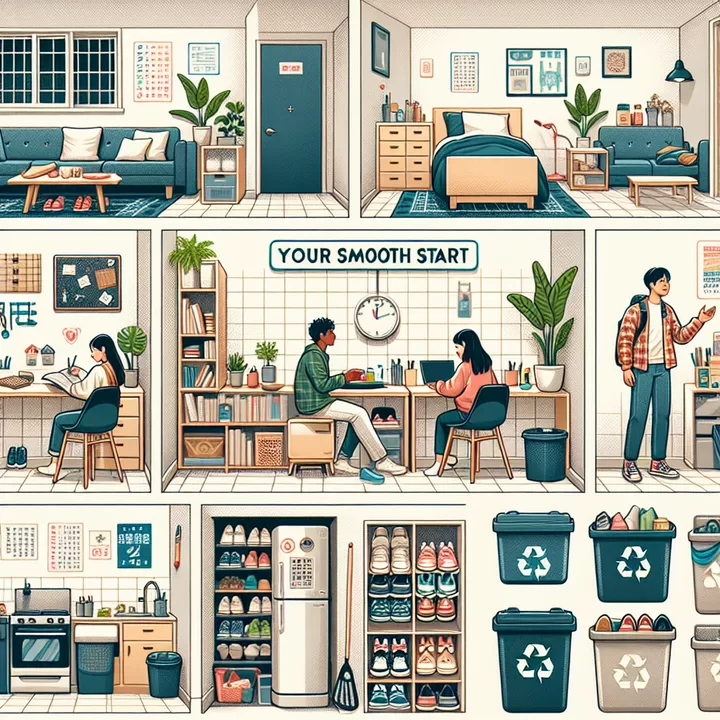
Your Smooth Start: Japanese Dorm & Shared Living Rules 🇯🇵🏠
Konnichiwa, future residents of Japan! Are you dreaming of experiencing life in the Land of the Rising Sun? Whether you’re heading there for study, work, or cultural immersion, one of the first exciting steps is settling into your new home. For many, this means living in a dormitory (寮 – ryō) or a shared house. This can be a fantastic way to meet new people and save on living costs, but it also comes with a unique set of rules and expectations that are deeply rooted in Japanese culture.
As your language school teacher, I’ve seen many Filipino students thrive in Japan, and a smooth start often begins with understanding and respecting the local living customs. Don’t worry, it’s not about being perfect, but about being aware and willing to adapt. Let’s dive into the essential rules of Japanese dorm and shared living, so you can make your transition as smooth and enjoyable as possible! 🎉
💡 Teacher’s Tip:
Living in a Japanese dorm or shared house is an amazing opportunity to practice your Japanese every day! Don’t be shy to use the phrases you learn. Even simple greetings like 「おはようございます」(Ohayou gozaimasu – Good morning) and 「おやすみなさい」(Oyasuminasai – Good night) can go a long way in building good relationships with your housemates.
### Understanding the Japanese Living Philosophy 🧘♀️
At the heart of Japanese shared living rules is the concept of 「和 (Wa)」, which means harmony. This isn’t just a philosophical idea; it’s a practical guide for daily life, especially when sharing space with others. It’s about ensuring everyone can live comfortably without causing inconvenience to their neighbors or housemates.
* **Consideration for Others (気遣い – Kidzukai):** This is paramount. Every action you take, from how loudly you close a door to how you dispose of your trash, is viewed through the lens of how it affects others.
* **Cleanliness and Order (清潔 – Seiketsu):** Japan prides itself on cleanliness, and this extends to personal and shared living spaces. Keeping things tidy isn’t just for your benefit; it’s a shared responsibility.
* **Noise Control (音の配慮 – Oto no Hairyo):** Japanese homes are often not as soundproof as those in other countries. Being mindful of noise levels, especially at night or early morning, is crucial.
This philosophy might seem strict at first, but it creates a peaceful and respectful living environment for everyone.
### Essential Rules for Shared Spaces 🤝
Shared spaces like kitchens, bathrooms, and laundry rooms are where most misunderstandings can occur if rules aren’t followed. Here’s what you need to know:
#### 1. Kitchen & Dining Area 🍜
The kitchen is often the heart of a shared home. Keeping it clean and organized is vital.
* **Clean Up Immediately:** After cooking and eating, wash your dishes, utensils, and pots right away. Don’t leave them in the sink. Wipe down counters, the stovetop, and the dining table.
* **Food Storage:** Label your food in the refrigerator/pantry if personal space is designated. Respect others’ items. Be mindful of expiration dates.
* **Waste Disposal:** Separate food scraps properly before discarding them. Many places have specific bins for different types of kitchen waste.
* **Odors:** Be mindful of strong food odors, especially late at night. Ensure proper ventilation.
Common Kitchen Phrases to Know:
| Phrase (Romaji) | Japanese (Kanji/Kana) | Meaning |
|---|---|---|
| Sumimasen! | すみません! | Excuse me! / Sorry! |
| Arigatou gozaimasu. | ありがとうございます。 | Thank you very much. |
| Gochisousama deshita. | ごちそうさまでした。 | Thank you for the meal (after eating). |
| Kirei ni shimashou. | きれいにしましょう。 | Let’s clean it up. |
#### 2. Bathroom & Toilet Etiquette 🚿🚽
Japanese bathrooms are often split into separate areas for the toilet and the bathing area.
* **Keep it Dry & Clean:** The bathing area (where the tub and shower are) is designed to get wet, but the area outside it should stay dry. Always use the provided bath slippers (バススリッパ – basu surippa) when entering and exiting this wet area.
* **Toilet Slippers:** In many Japanese homes and dorms, you’ll find separate slippers just for the toilet room. Always switch to these when entering the toilet, and remember to switch back and leave them inside the toilet room when you exit! This is a common mistake for foreigners.
* **Flush & Check:** Always flush the toilet completely. Japanese toilets are highly advanced; familiarize yourself with the buttons, especially the flush strength.
* **Scheduling:** If there’s only one bathroom, be mindful of how long you spend, especially during peak hours. Some dorms might have a sign-up sheet.
#### 3. Laundry Area 🧺
* **Time Slots:** Many dorms have specific hours for laundry machine use to minimize noise. Respect these hours.
* **Clean the Lint Filter:** Always clean the lint filter after you use the dryer. This is a common courtesy and helps prevent fires.
* **Drying:** Most Japanese homes dry clothes on hangers or racks, often outside on a balcony or inside on a clothesline, rather than relying solely on dryers. Be mindful of space if using shared drying areas.
### Navigating Noise & Privacy 🤫
Respecting peace and quiet is a cornerstone of Japanese shared living.
* **Quiet Hours:** Most dorms and shared houses have strict quiet hours, typically from around 10 PM or 11 PM to 7 AM or 8 AM. During these times, keep all noise to an absolute minimum. This means:
* No loud conversations or phone calls.
* Use headphones for music, videos, or games.
* Close doors and drawers gently.
* Avoid using noisy appliances like washing machines.
* **Knocking:** Always knock before entering someone’s private room. Even if the door is ajar, it’s polite to knock.
* **Common Areas vs. Private Rooms:** Understand the distinction. Common areas are for socializing, but even there, keep noise levels considerate. Private rooms are personal sanctuaries.
⚠️ Common Mistake Alert:
Don’t forget the separate toilet slippers! It’s very easy to walk out of the toilet wearing them, but it’s considered unhygienic and impolite. Always remember to take them off and leave them inside the toilet room before stepping back into the main house area.
### Guest Policy & Socializing 👯♀️
This is one of the strictest areas for shared living in Japan.
* **Strict Guest Rules:** Many dorms and shared houses have a “no guest” policy, especially for overnight stays. If guests are allowed, it’s usually only for short visits during the day and requires prior permission from the dorm manager or all housemates. Always check your specific dorm’s rules! Bringing unauthorized guests can lead to serious issues, including eviction.
* **Socializing in Common Areas:** Use common lounges or dining areas for group activities and conversations. If you’re having a lively discussion, be mindful of others who might be studying or sleeping.
* **Respecting Privacy:** While friendly, Japanese culture also values personal space and privacy. Don’t enter others’ rooms without permission, and respect their need for quiet time.
### Waste Management: A Daily Japanese Ritual ♻️
Waste separation (ゴミの分別 – gomi no bunbetsu) is arguably the most challenging and crucial aspect for many foreigners in Japan. It’s not just a suggestion; it’s a meticulously enforced system. Each municipality (and often each dorm/building) has its own specific rules, collection days, and designated bags.
* **Know Your Categories:** The most common categories include:
* 燃えるゴミ (Moeru gomi) – Burnable trash: Kitchen waste, paper scraps, wood, clothing.
* 燃えないゴミ (Moenai gomi) – Non-burnable trash: Ceramics, metal, glass (not bottles), small appliances.
* プラスチック (Purasuchikku) – Plastics: Plastic bottles (not PET bottles), plastic packaging, wrappers. Often requires rinsing.
* ペットボトル (Petto botoru) – PET bottles: Drink bottles. Usually requires removing cap and label, rinsing.
* ビン・カン (Bin/Kan) – Glass bottles/Cans: Beer bottles, sake bottles, soda cans. Often requires rinsing.
* 紙 (Kami) – Paper: Newspapers, magazines, cardboard. Often bundled.
* **Specific Bags:** Many areas require specific designated trash bags (指定ゴミ袋 – shitei gomi-bukuro) which you buy at convenience stores or supermarkets. Using the wrong bag means your trash won’t be collected.
* **Collection Days:** Each category has a specific collection day (e.g., burnable on Monday/Thursday, plastics on Tuesday). You must only put out the correct trash on the correct day, at the designated time and spot.
* **Larger Items (粗大ゴミ – Sodai gomi):** For furniture, appliances, etc., you usually have to pay a fee and arrange for special collection. Do not just abandon large items.
Example of Trash Separation Rules (Varies by Location!):
| Category | What Goes In | Preparation | Example Collection Day |
|---|---|---|---|
| 燃えるゴミ (Burnable) | Kitchen waste, paper, plastic food containers, small wood pieces | Drain liquid, wrap in newspaper if wet | Mon, Thu |
| プラスチック (Plastic) | Plastic bottles (non-PET), plastic packaging, trays | Rinse, remove labels/caps (if applicable), crush if possible | Tue |
| ペットボトル (PET Bottles) | Beverage PET bottles | Rinse, remove cap & label, crush | Wed (separate from other plastics) |
| 缶・瓶 (Cans/Bottles) | Metal cans (drink/food), glass bottles | Rinse, flatten cans, remove caps | Fri |
⚠️ Crucial Waste Tip:
Incorrect waste separation is a major source of friction and can lead to fines or warnings from your dorm management or local authorities. When you arrive, ask for the ゴミ出しカレンダー (Gomi-dashi karendā – trash collection calendar) and study it carefully!
### Communication is Key: Bridging the Language Gap 🗣️
Even with all the rules, misunderstandings can happen. The key is how you handle them.
* **Polite Communication:** If an issue arises, approach it calmly and politely. Avoid confrontation. Start with 「すみません」(Sumimasen – Excuse me/Sorry).
* **Simple Japanese:** You don’t need perfect Japanese to communicate effectively. Simple phrases, gestures, and even drawing pictures can help.
* 「ごめんなさい」(Gomen nasai) – I’m sorry.
* 「もう一度お願いします」(Mou ichido onegaishimasu) – One more time, please.
* 「これは何ですか?」(Kore wa nan desu ka?) – What is this? (pointing to a rule or item)
* 「わかりません」(Wakarimasen) – I don’t understand.
* **Ask for Help:** Never hesitate to ask your dorm manager, school staff, or even understanding housemates if you’re unsure about a rule or procedure. They are there to help you settle in. It’s better to ask than to make a mistake.
💡 Teacher’s Tip:
Don’t be afraid to make mistakes when communicating. Filipinos often apologize excessively, but in Japan, a sincere “Sumimasen” followed by an attempt to understand and correct is highly valued. The effort to adapt is what truly counts! Your dorm manager or school will likely provide a guide in English; read it carefully and keep it handy. 👍
### Conclusion: Your Journey to a Harmonious Life in Japan! 🎉
Living in a Japanese dorm or shared house is an incredible opportunity to truly immerse yourself in Japanese culture. While the rules might seem comprehensive at first, remember that they are all designed to create a comfortable, respectful, and harmonious environment for everyone.
By understanding and adhering to these essential guidelines – from keeping shared spaces spotless and managing your waste meticulously to being mindful of noise and respecting privacy – you’ll not only avoid common pitfalls but also build positive relationships with your housemates and dorm management.
Embrace this learning experience! Every rule you understand and practice is a step closer to a smooth, enjoyable, and fulfilling life in Japan. You’ve got this, and we’re here to support you every step of the way! Ganbatte kudasai! (Good luck!) 🎌
Contact & Follow Us
お問い合わせ
📞 電話: +63 997 093 4550
📧 メール: samuraijapan.bc@gmail.com
🏠 住所: Room D3, Freb Bldg, Villa Donata Subd, Muntinlupa
🏢 会社名: SAMURAI Japan Business Center Inc.
SNSでフォロー
🎵 Tiktok: @samuraijapan0221
📸 Instagram: @samuraijapan.bc
▶️ Youtube: @SamuraiJapan-bc
📘 Facebook: Visit our Page

Leave a Reply