

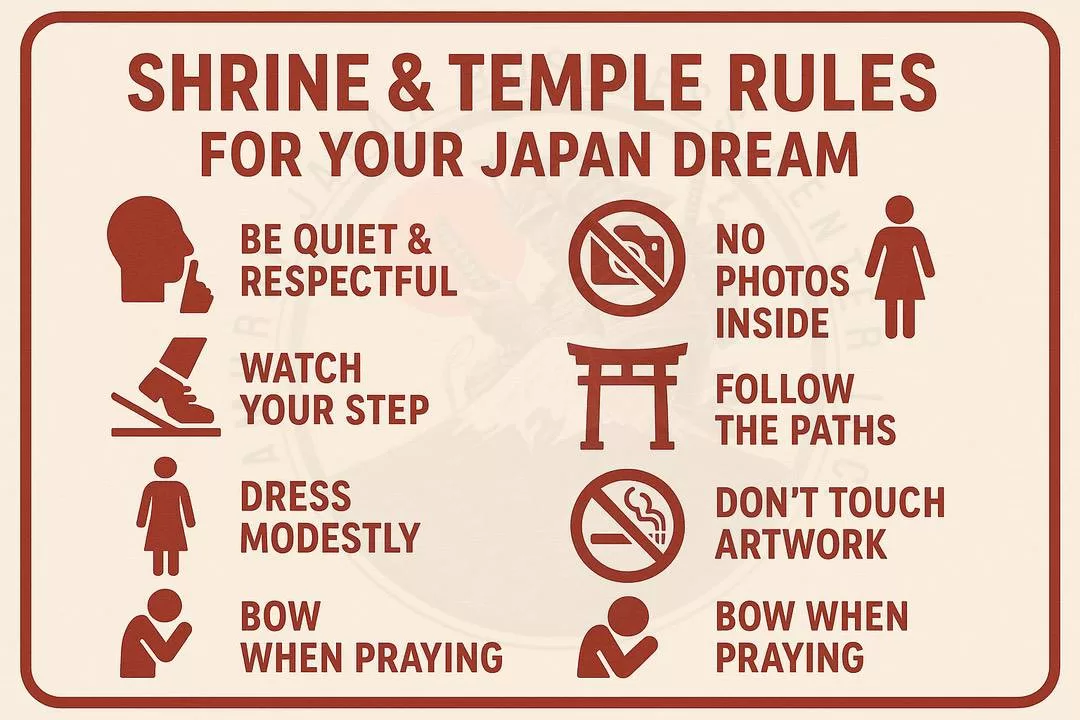
【Sensei’s Guide】Shrine & Temple Rules for Your Japan Dream 🇯🇵✨
Konnichiwa, future residents of Japan! Sensei here, your guide from Samurai Japan Business Center. Are you dreaming of strolling through the vibrant streets of Tokyo, hiking the majestic mountains of Kyoto, or perhaps even settling down in a cozy Japanese town? As you prepare for your exciting journey, there’s one incredibly important aspect of Japanese culture that you absolutely must understand: the etiquette of visiting shrines and temples.
These sacred sites are not just beautiful tourist spots; they are the heart and soul of Japan’s spiritual heritage. Understanding and respecting their customs is a wonderful way to show your appreciation for the culture and connect more deeply with the local people. Think of it as speaking the “language of respect.” It will make your experience so much richer and help you feel right at home! Let’s dive in and learn how to visit these serene places like a seasoned local.
Why is Learning Shrine & Temple Etiquette Important for Filipinos? 🤔💡
For many Filipinos, spiritual life is deeply ingrained, often with clear traditions and practices. This makes understanding Japanese religious etiquette a natural extension of your own cultural sensitivity. However, Japanese practices, particularly those of Shinto and Buddhism, have their unique nuances. Learning these isn’t just about avoiding an awkward moment; it’s about building bridges!
*
✅ Deepen Your Cultural Understanding:
By knowing the “hows” and “whys,” you’ll gain a profound appreciation for Japan’s spiritual landscape. It’s more than just sightseeing; it’s an immersive cultural experience.
*
✅ Show Respect and Politeness:
Japanese culture highly values respect (尊敬 – sonkei) and consideration for others (思いやり – omoiyari). Following the rules shows that you value their traditions, which is incredibly endearing to locals.
*
✅ Feel Confident and Comfortable:
No more feeling lost or unsure! You’ll navigate these sacred spaces with confidence, knowing you’re doing things correctly, and truly absorb the peaceful atmosphere.
💡 Teacher’s Tip:
Don’t worry about being perfect! Japanese people appreciate the effort to understand and participate. Even a small gesture of respect goes a long way. Just observe, try your best, and enjoy the experience!
Shrine vs. Temple: What’s the Difference? ⛩️ Buddhist Temples vs. Shinto Shrines 🛕
Before we dive into the specific rules, let’s clarify a common point of confusion: the difference between a Shinto shrine (神社 Jinja) and a Buddhist temple (お寺 Otera). While both are spiritual sites, their origins and practices are distinct.
Shrine vs. Temple Quick Guide
| Feature | Shinto Shrine (神社) | Buddhist Temple (お寺) |
|---|---|---|
| Religion | Shintoism (Japan’s indigenous religion) | Buddhism (Originated in India, arrived via China/Korea) |
| What they honor | Kami (deities/gods, spirits of nature, ancestors) | Buddha (various forms), Bodhisattvas, deceased persons |
| Signature Gate | Torii (鳥居) – a distinct red or unpainted wooden gate | Sanmon (山門) – often grand, roofed gates |
| Common Symbol | Shimenawa (rope with paper zig-zags), Komainu (guardian lions/dogs) | Swastika (manji, facing left for temples), often has graveyards |
This basic distinction will help you understand the specific customs for each type of site.
General Etiquette for Sacred Sites (Applies to Both) ✅🙏
No matter if you’re visiting a shrine or a temple, these universal rules of respect apply:
* **Dress Modestly:** While there’s no strict dress code (like covering your head), it’s respectful to dress modestly. Avoid overly revealing clothing. Comfortable but presentable attire is always a good choice.
* **Keep Your Voice Down:** These are places of worship and reflection. Speak softly, or ideally, maintain silence. Avoid loud conversations or boisterous laughter.
* **No Smoking or Drinking:** Strictly prohibited within the grounds.
* **Photography:** Generally allowed in the outdoor areas, but usually prohibited inside the main halls or where worship is actively taking place. Look for signs (often a camera with a cross through it) and always be respectful. Never use flash inside.
* **Walking Paths:** When walking towards the main hall, avoid walking directly in the center of the path. The center is traditionally reserved for the deities or the main priest. Walk respectfully along the sides.
* **Remove Your Hat/Sunglasses:** Take off your hat and sunglasses as you approach the main worship area, especially before entering any buildings.
⚠️ Common Mistake Alert:
Don’t forget to silence your phone! A ringing phone can be very disruptive in a sacred and quiet environment. Also, avoid eating or drinking on the temple/shrine grounds unless in designated areas.
Shrine-Specific Etiquette: Showing Respect to the Kami ⛩️✨
At a Shinto shrine, you are entering the realm of the Kami. The purification and worship rituals are designed to cleanse yourself before approaching the deities.
1. Passing Through the Torii Gate (鳥居)
-
The Bow:
Before passing through the first torii gate, it’s customary to stop, face the shrine, and give a slight bow (light bow, not deep). This is a sign of respect as you enter a sacred space.
-
Walking Through:
As mentioned, walk slightly to the left or right of the center, not directly through the middle. When exiting, turn back towards the shrine and bow again after passing through the torii.
2. The Purification Font (手水舎 Temizuya)
Most shrines have a Temizuya, a stone basin with ladles, used for ritual purification. This is a crucial step before approaching the main hall.
-
Wash Left Hand:
Hold the ladle with your right hand, scoop water, and pour it over your left hand.
-
Wash Right Hand:
Switch the ladle to your left hand and pour water over your right hand.
-
Rinse Mouth:
Switch the ladle back to your right hand. Pour a small amount of water into your cupped left hand, then use that water to rinse your mouth. Never drink directly from the ladle or spit water back into the basin. Spit it discreetly near the stone base.
-
Wash Left Hand (Again):
Rinse your left hand one more time to cleanse it after touching your mouth.
-
Rinse Ladle Handle:
Finally, hold the ladle vertically so the remaining water runs down the handle, cleaning it for the next person. Place the ladle back neatly.
3. Worship at the Main Hall (拝殿 Haiden)
Once you’re purified, you can approach the main hall for prayer. The common ritual is “Nirei, Nihakushu, Ichirei” (Two Bows, Two Claps, One Bow).
-
The Offering:
Stand before the offering box (賽銭箱 – saisenbako). Gently toss a coin into it. A 5-yen coin (五円 – go-en) is popular because its pronunciation is similar to 「ご縁」 (go-en), meaning “good ties” or “good fortune/relationship.”
-
Ring the Bell (if available):
If there’s a rope and bell, gently ring it a few times. This is believed to attract the attention of the Kami.
-
Two Deep Bows:
Bow deeply twice (about 90 degrees), holding the bow for a few seconds.
-
Two Claps:
Bring your hands together at chest height, slightly apart, and clap twice sharply. This signifies joy and appreciation to the Kami. Then, hold your hands together in prayer.
-
Make Your Wish/Prayer:
With your hands still together, offer your silent prayer or wish.
-
One Deep Bow:
Finally, lower your hands and give one more deep bow.
💡 Cultural Insight:
The acts of purification and bowing/clapping are not just formalities; they are ways to show your sincerity and purify your mind and body before connecting with the divine. It’s about respecting the sacredness of the space.
Temple-Specific Etiquette: Reverence for the Buddha 🛕🧘♀️
Buddhist temples offer a different, often more contemplative, experience. While some steps are similar, the key difference is the absence of clapping during prayer.
1. Passing Through the Main Gate (山門 Sanmon)
-
The Bow:
Similar to shrines, it’s customary to stop before passing through the Sanmon gate and give a slight bow. Again, avoid walking directly through the center.
-
Shoes Off:
If you’re entering an inner temple building, remember to always take off your shoes. Look for shoe racks or designated areas. You might be provided with slippers.
2. Incense Offering (お線香 Osenkou)
Many temples have an incense burner (香炉 – koro) where visitors can light incense sticks. The smoke is believed to cleanse and purify the body and mind, and also to carry prayers to the heavens.
-
Purchase Incense:
If available, purchase a bundle of incense sticks (usually a small fee).
-
Light and Fan:
Light the incense from a communal flame. Do not blow out the flame; gently fan it out with your hand.
-
Place in Burner:
Insert the lit incense sticks into the sand of the incense burner.
-
Fan Smoke Towards Yourself:
Cup your hands and gently fan the smoke towards yourself, especially towards any areas of your body that you wish to purify or heal.
3. Worship at the Main Hall (本堂 Hondou)
The main hall (or Hondou) is where the principal image of Buddha is enshrined.
-
The Offering:
Approach the offering box and gently toss a coin. Again, a 5-yen coin is a popular choice.
-
Ring the Bell (if available):
If there’s a bell, you may ring it gently, but it’s not always present or required.
-
One Deep Bow:
Give one deep bow.
-
Gassho (Prayer Hands):
Bring your hands together in the “Gassho” position (palms together, fingers pointing upwards, at chest height). This is the universal Buddhist gesture of respect and prayer.
-
Make Your Wish/Prayer:
Offer your silent prayer or wish.
-
One Deep Bow:
Finally, give one more deep bow.
⚠️ Crucial Distinction:
NEVER clap your hands at a Buddhist temple. Clapping is unique to Shinto shrines. At temples, the focus is on quiet reflection and the “gassho” prayer gesture.
Useful Japanese Phrases for Your Visit 🗣️🇯🇵
While you won’t need to speak much, knowing a few key phrases can enhance your experience and show your sincerity.
Phrases for Sacred Sites
| Phrase (Romaji) | Japanese | Meaning | When to Use |
|---|---|---|---|
| Sumimasen (すみません) | すみません | Excuse me / Sorry | To politely get attention or apologize for a minor mistake. |
| Arigatou Gozaimasu (ありがとうございます) | ありがとうございます | Thank you very much | When someone helps you or after receiving an omamori/goshuin. |
| Kore wa nan desu ka? (これは何ですか?) | これは何ですか? | What is this? | If you’re curious about an item (e.g., a charm) and there’s staff nearby. |
| Shashin o tottemo ii desu ka? (写真を撮ってもいいですか?) | 写真を撮ってもいいですか? | May I take a picture? | To ask for permission if unsure about photography rules. |
Beyond Etiquette: Embracing the Serenity 🌿🌸
While knowing the rules is important, remember to also soak in the atmosphere. Japanese shrines and temples are often surrounded by breathtaking gardens, ancient trees, and peaceful ponds.
* **Take Your Time:** Don’t rush through. Spend time appreciating the architecture, the tranquility, and the connection to nature.
* **Enjoy the Seasons:** Each season offers a unique beauty. Cherry blossoms in spring, vibrant green in summer, fiery foliage in autumn, and serene snowscapes in winter transform these sites.
* **Collect Goshuin (御朱印):** Many temples and shrines offer unique calligraphic stamps (Goshuin) for a small fee, recorded in a special book (御朱印帳 – goshuincho). It’s a wonderful way to commemorate your visit and appreciate the artistry.
* **Try Omikuji (おみくじ):** These are fortune slips, often found at shrines. You draw one from a box, and it tells your fortune (good or bad). If it’s a bad fortune, you can tie it to a designated rope or tree branch to leave the bad luck behind.
🔑 Key Takeaway:
Visiting Japanese shrines and temples is an experience for all your senses. It’s about finding peace, connecting with history, and appreciating the beauty of Japanese spirituality. The etiquette helps ensure that everyone can enjoy this shared cultural treasure.
Your Dream Awaits! 🎉
Learning these customs is a fantastic step in your journey towards living in Japan. It shows that you’re not just a visitor, but someone truly committed to understanding and integrating into the rich tapestry of Japanese society. Every small effort you make to learn the language and culture will open doors and create unforgettable experiences.
At Samurai Japan Business Center, we believe in empowering you with the knowledge and confidence to make your dream life in Japan a reality. Keep practicing, keep learning, and keep that wonderful Filipino spirit of curiosity and respect shining brightly! We’re here to support you every step of the way. Ganbatte kudasai! (Good luck! / Do your best!)
Contact & Follow Us
お問い合わせ
📞 電話: +63 997 093 4550
📧 メール: samuraijapan.bc@gmail.com
🏠 住所: Room D3, Freb Bldg, Villa Donata Subd, Muntinlupa
🏢 会社名: SAMURAI Japan Business Center Inc.
SNSでフォロー
🎵 Tiktok: @samuraijapan0221
📸 Instagram: @samuraijapan.bc
▶️ Youtube: @SamuraiJapan-bc
📘 Facebook: Visit our Page

Leave a Reply