

Japan Life Ready: Your Teacher’s Guide to Cycling & Walking Rules 🚶♀️🚲🇯🇵
Konnichiwa, Future Japan residents! Are you excited about your life in Japan? I know you are! As your teacher at a Japanese language school, my goal is not just to teach you grammar and vocabulary, but also to help you confidently navigate daily life in Japan. One of the biggest parts of daily life for many people in Japan is getting around – whether it’s by walking or cycling.
Japan is known for its incredible public transportation, but for short distances, running errands, or simply enjoying the scenery, walking and cycling are fantastic options. However, just like learning a new language, there are rules and unspoken customs to master. Understanding these rules is not just about safety; it’s also about showing respect for Japanese culture and blending in seamlessly with your new community. This guide will walk you through everything you need to know, from pedestrian etiquette to essential cycling laws. Let’s make sure you’re not just speaking Japanese, but living Japanese, too! Ganbatte! 💪
Mastering Japanese Pedestrian Etiquette 🚶♀️🇯🇵
Walking in Japan is often a pleasant experience, thanks to well-maintained sidewalks and respectful pedestrians. But there are a few key things that might be different from what you’re used to in the Philippines.
* **Walk on the Left:** This is perhaps the most crucial rule for both pedestrians and cyclists in Japan. Unlike the Philippines where you drive and walk on the right, Japan operates on a left-hand traffic system. This means you should always walk on the left side of the sidewalk or path. This simple rule helps keep the flow of foot traffic smooth and prevents collisions.
* **Keep to Your Lane:** In busier areas, you might notice lines on the sidewalk or subtle queues forming. Follow them! Japanese people are very good at maintaining order, and sticking to your designated “lane” helps everyone move efficiently.
* **Mind Your Space:** While Japan is densely populated, people generally maintain a respectful distance from one another. Avoid bumping into people, and if you accidentally do, a quick 「すみません」(Sumimasen – Excuse me/Sorry) goes a long way.
* **Queuing Culture:** Whether it’s for a train, bus, or even a popular restaurant, expect to form an orderly line. Cutting lines is considered very rude. Be patient and wait your turn.
💡 Teacher’s Tip: “Wa” (和) and Public Harmony
Japanese society highly values “Wa” (和), which translates to harmony. This concept extends to public behavior. Being considerate of others, maintaining order, and avoiding actions that disrupt peace are fundamental. By following these simple pedestrian rules, you’re not just obeying laws; you’re actively participating in creating a harmonious environment!
Navigating Crosswalks and Traffic Lights 🚦🛑
Understanding traffic signals is universal, but paying attention to specific Japanese nuances can save you trouble.
* **Pedestrian Signals:**
* Green Man (青信号 – Ao Shingō): This means you can walk. Sometimes it blinks before turning red, indicating you should hurry or not start crossing.
* Red Man (赤信号 – Aka Shingō): Do not walk. Even if there are no cars, most Japanese pedestrians will wait patiently for the green light. Jaywalking (飛び出し – tobikoshi) is not only illegal but also frowned upon.
* **Zebra Crossings (横断歩道 – Ōdan Hodō):** These are pedestrian crossings without traffic lights. Pedestrians generally have priority, but always make eye contact with drivers and ensure they are stopping before you cross.
* **Look Both Ways:** Even on what seems like a one-way street, it’s a good habit to look both ways. Especially be mindful of bicycles, which might be coming from unexpected directions, particularly on sidewalks.
Common Pedestrian Signs to Know
| Sign Type | Meaning | Action to Take |
|---|---|---|
| 🚶♂️➡️ (Blue Man Walking) | Pedestrian Crossing Ahead | Be alert for crossings, may or may not have lights. |
| 🚫🚶♀️ (Red Man, Diagonal Line) | No Pedestrian Entry / No Jaywalking | Do not enter or cross here. |
| 自転車歩行者道 (Jitensha Hokousha Dou) | Bicycle and Pedestrian Shared Path | Be aware of bicycles sharing the path. Pedestrians have priority. |
Bicycling Basics: Your Wheels in Japan 🚲✨
Cycling is incredibly popular in Japan. It’s affordable, convenient, and a great way to explore your neighborhood. Getting a bicycle will give you so much freedom!
* **Choosing Your Ride:** “Mama-chari” (ママチャリ), or “mother’s bicycle,” is the most common type – practical, often with a basket, and perfect for daily errands. You can find new ones at bicycle shops (自転車屋さん – jitensha-ya-san) or even used ones online or at second-hand stores.
* **Mandatory Registration (防犯登録 – Bōhan Tōroku):** This is a must-do! When you buy a new bicycle, the shop will usually handle the registration for you. For used bicycles, you’ll need to go to a police station or a designated bicycle shop with proof of purchase (if available) and your ID. This registration helps prevent theft and identifies the owner if a bicycle is lost or impounded. This is an important piece of vocabulary often covered in the JFT-Basic exam!
💡 Teacher’s Tip: Bicycle Maintenance
Regular maintenance, like checking tire pressure and brakes, is important for safety. Bicycle shops offer affordable tune-ups and repairs. Don’t let a flat tire ruin your day!
Essential Cycling Rules: Stay Safe, Stay Legal! 🚴♂️✅
While cycling offers freedom, Japan has strict rules to ensure everyone’s safety. Breaking these rules can result in fines and even legal trouble.
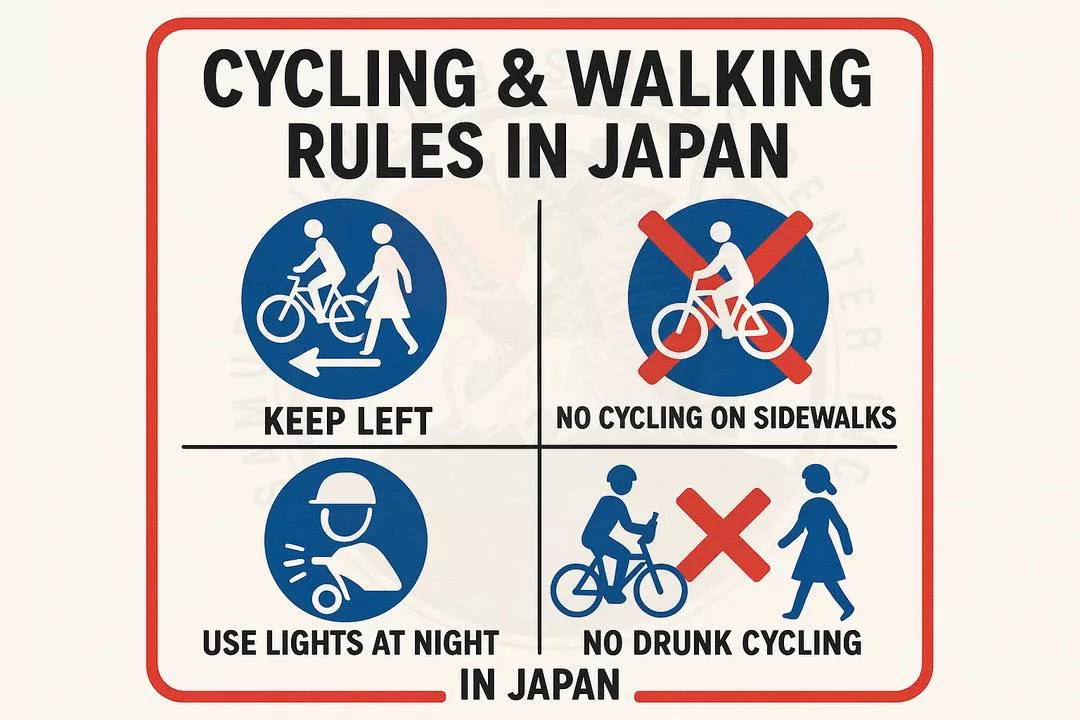
* **Ride on the Road, On the Left:** This is the golden rule. Bicycles are considered light vehicles. Therefore, you must ride on the left side of the road, just like cars.
* **Sidewalk Exceptions:** You are allowed to ride on sidewalks specifically marked as “bicycle and pedestrian shared paths” (自転車歩行者道 – jitensha hokousha dou) or in specific situations like when the road is dangerous, or if you are a child or elderly. Even then, you *must* ride slowly and prioritize pedestrians, giving them plenty of space. If it gets crowded, dismount and walk your bike.
* **Lights On at Night:** Your bicycle must have a white front light and a red rear light or reflector when riding after dark. This is non-negotiable for your safety and visibility.
* **Bell Usage:** Your bicycle should have a bell, but only use it when necessary to warn pedestrians or other vehicles of immediate danger. Do not use it indiscriminately to clear your path. A simple 「すみません」(Sumimasen) is usually more polite if you need to pass a pedestrian.
* **No Tandem Riding:** Generally, you cannot ride with two people on one bicycle unless it is equipped with a specific child seat.
* **No Umbrella While Cycling (傘差し運転 – Kasasashi Unten):** This is strictly prohibited because it takes one hand off the handlebars, reducing your control. Use a raincoat instead!
* **No Drunk Cycling (飲酒運転 – Inshu Unten):** Just like driving a car, cycling under the influence of alcohol is illegal and carries severe penalties.
* **No Headphones/Earbuds:** Using devices that impair your hearing of traffic sounds is prohibited. Stay alert!
* **No Mobile Phone Use:** Using your phone while cycling (talking or texting) is also prohibited.
* **Designated Parking (駐輪場 – Chūrinjō):** Always park your bicycle in designated bicycle parking areas. These are often found near train stations, shopping centers, and public facilities. Parking illegally can lead to your bicycle being impounded and a fine to retrieve it. Look for signs that say 駐輪場.
⚠️ Common Mistake Alert: Illegal Parking!
One of the most frequent issues for foreigners is illegal bicycle parking. It might seem harmless, but local authorities are very strict. Always find a designated parking area, even if it’s a bit further away. It saves you time, money, and hassle!
Cycling in Japan: Do’s and Don’ts
| ✅ DO | ❌ DON’T |
|---|---|
| Ride on the left side of the road. | Ride on the right side of the road. (This is very dangerous!) |
| Use lights at night (white front, red rear). | Ride without lights at night. |
| Park in designated bicycle parking areas (駐輪場). | Park your bicycle on sidewalks or in front of shops. |
| Dismount and walk your bike on crowded sidewalks. | Ride with an umbrella or while using a mobile phone. |
| Register your bicycle (防犯登録). | Ride under the influence of alcohol. |
Common Mistakes Filipino Learners Make & How to Avoid Them 🚧🇵🇭
Having taught many Filipino students, I’ve noticed a few common tendencies when it comes to navigating Japanese streets. Let’s address them directly!
* **The “Right Side” Instinct:** Coming from a right-hand traffic country, many Filipinos naturally tend to walk or drive on the right. This is the **number one thing** to reprogram your brain for in Japan! Consciously remind yourself: “Left, left, left!”
* **Loud Conversations in Public:** While Filipinos are generally warm and expressive, public spaces in Japan are usually quiet. Be mindful of your volume, especially on public transport, in quiet residential areas, or inside shops.
* **Ignoring Bicycle Lights:** In the Philippines, not everyone uses bicycle lights at night. In Japan, it’s a serious safety and legal requirement. Don’t skip this!
* **Casual Parking:** “Just for a minute!” might work in some places, but in Japan, illegal bicycle parking is taken seriously. Always find a proper spot.
* **Over-reliance on Jaywalking:** In busy Philippine cities, jaywalking is common. In Japan, it’s a definite no-no. Patience at crosswalks is a sign of respect.
💡 Teacher’s Tip: Observe and Adapt!
The best way to learn these unwritten rules is by observing locals. Watch how Japanese people walk, cross the street, and cycle. You’ll quickly pick up on the flow and rhythm of daily life. Don’t be afraid to ask your teachers or Japanese friends if you’re unsure about something!
Living in Japan is an incredible journey, and mastering these seemingly small details of daily life will make your experience so much smoother and more enjoyable. By understanding and respecting Japan’s rules for walking and cycling, you’re not just being a good resident; you’re truly embracing Japanese culture and showing your commitment to a harmonious community.
Remember, every step you take and every pedal you push is part of your big adventure. Be safe, be observant, and most importantly, enjoy every moment of your amazing life in Japan! We are always here to support you. Ganbarimasu! 🎉
Contact & Follow Us
お問い合わせ
📞 電話: +63 997 093 4550
📧 メール: samuraijapan.bc@gmail.com
🏠 住所: Room D3, Freb Bldg, Villa Donata Subd, Muntinlupa
🏢 会社名: SAMURAI Japan Business Center Inc.
SNSでフォロー
🎵 Tiktok: @samuraijapan0221
📸 Instagram: @samuraijapan.bc
▶️ Youtube: @SamuraiJapan-bc
📘 Facebook: Visit our Page

Leave a Reply