

Maiko & Geiko Explained: Your Cultural Compass for Life in Japan 🇯🇵
Konnichiwa, aspiring Japan residents! 👋 As you prepare for your exciting journey to Japan, learning the language is just one piece of the puzzle. Truly embracing life there means understanding its rich, intricate culture. Among the many fascinating aspects of Japanese tradition, the figures of Maiko and Geiko often spark curiosity. You might have seen their elegant images or heard their names, but do you really know their story?
As your Japanese language teacher, I want to equip you not just with vocabulary and grammar, but with a deeper cultural sensitivity. Understanding Maiko and Geiko isn’t just about knowing historical facts; it’s about appreciating the dedication, artistry, and unique spirit that embodies a significant part of Japanese heritage, particularly in Kyoto. Let’s explore together!
Unveiling the Enigma: Who are Maiko and Geiko? 🌸
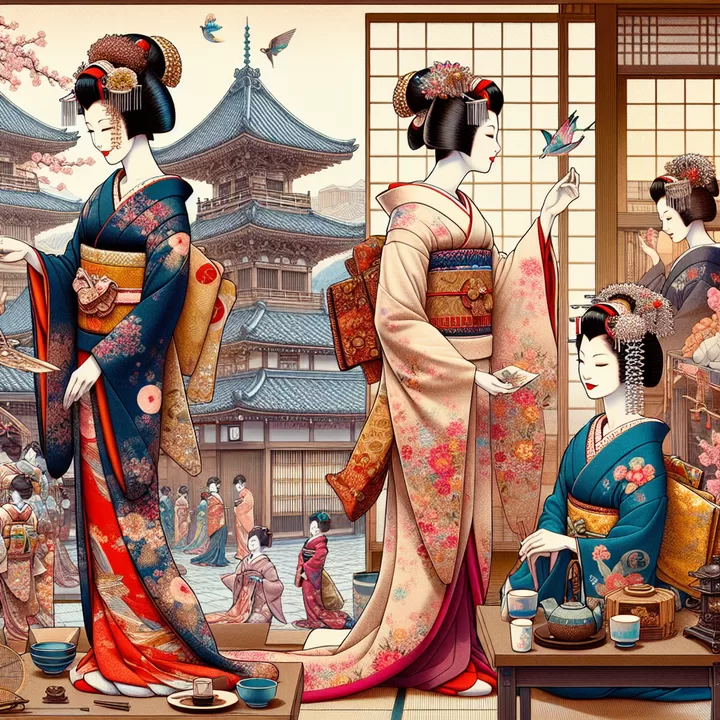
When you hear “Geisha,” you might picture women in beautiful kimonos, performing traditional arts. While that’s true, in Kyoto, these revered artists are known as 「芸妓」(Geiko). The younger women, still in training to become Geiko, are called 「舞妓」(Maiko). Think of Maiko as apprentices and Geiko as accomplished masters of traditional Japanese arts.
They are artists who dedicate their lives to mastering various traditional Japanese performing arts, such as dance, singing, and playing instruments like the shamisen (a three-stringed instrument). They also excel in conversation, etiquette, and hospitality, making them unique cultural ambassadors.
To help you distinguish between them, here’s a quick comparison:
Maiko vs. Geiko: A Visual Guide
| Feature | Maiko (Apprentice) | Geiko (Master) |
|---|---|---|
| Hair Style | Wears her own hair styled into intricate arrangements, adorned with seasonal 「花簪」(kanzashi – flower hairpins). | Wears a wig, often simpler hairstyles, with fewer, more understated ornaments. |
| Makeup | Thick white base, red lipstick covering only a small part of the lower lip (initially), prominent red and black eyeliner. | White base (less thick than Maiko), full red lips, more subtle eyeliner, often more natural makeup for daily appearances. |
| Kimono | Features bright, colorful 「振袖」(furisode – long-sleeved kimono). The 「帯」(obi – sash) is very long and hangs down (called 「だらり帯」(darari obi)). | More subdued and elegant kimonos, typically 「留袖」(tomesode) or other formal styles. The obi is tied in a standard knot. |
| Collar | Red embroidered collar. | White, plain collar. |
| Footwear | Wears tall wooden clogs called 「おこぼ」(okobo), which have bells inside. | Wears lower 「草履」(zori) sandals. |
The Path of Discipline: A Glimpse into Their Training 👘
Becoming a Maiko and then a Geiko is an incredibly demanding journey, requiring years of rigorous training. Young girls, sometimes as young as 15 or 16, leave their homes to live in an 「置屋」(okiya – geisha house), where they are trained by an “older sister” Geiko.
Their training includes:
-
Strong>Traditional Arts (芸事 – Geigoto):
This is the core of their profession. They spend countless hours mastering Japanese dance (日本舞踊 – Nihon Buyō), singing (長唄 – Nagauta), and playing instruments like the shamisen and drums (太鼓 – Taiko).
-
Strong>Etiquette and Hospitality:
They learn the intricate rules of social interaction, tea ceremony (茶道 – Sadō), and flower arrangement (華道 – Kadō). Every movement, from greeting guests to pouring sake, is refined to perfection.
-
Strong>Conversation and Current Affairs:
A Geiko is not just an entertainer; she is a conversationalist. They must be witty, knowledgeable about a wide range of topics, and able to engage guests in stimulating dialogue.
💡 Teacher’s Tip:
The dedication shown by Maiko and Geiko to their art and discipline is a reflection of a core Japanese value: perseverance (頑張り – ganbari). As you learn Japanese, remember their example. There will be challenging days, but consistent effort will lead to mastery, just like them!
Beyond Entertainment: The Spirit of Omotenashi and Cultural Preservation 🍵
The role of Maiko and Geiko extends far beyond merely performing. At the heart of their profession is the concept of 「おもてなし」(Omotenashi) – the unique Japanese approach to hospitality. It’s about anticipating needs, providing selfless service, and creating an experience where guests feel truly cared for without expectation of anything in return. Maiko and Geiko embody this spirit through their meticulous attention to detail, their graceful movements, and their genuine desire to make every interaction special.
They are also living embodiments of Japan’s rich cultural heritage. In an ever-modernizing world, they preserve ancient arts, traditions, and an aesthetic sense that might otherwise fade. They are a bridge to the past, reminding us of the beauty and depth of Japanese traditional culture.
✨ Cultural Insight:
The beauty of a Maiko or Geiko is not just in their appearance, but in their subtle movements, their soft voices, and their profound knowledge. It’s about appreciating the “interval” (間 – ma) and the unspoken nuances. This deep appreciation for subtlety is a key part of Japanese aesthetics.
Respectful Encounters: Where and How to Appreciate Their Art 💡
If you visit Kyoto, especially areas like 「祇園」(Gion) or 「先斗町」(Pontocho), you might catch a glimpse of Maiko or Geiko hurrying to their appointments, especially in the late afternoon or early evening. These are not tourist attractions to be casually photographed. They are professional artists on their way to work.
⚠️ Common Etiquette Alert:
If you see a Maiko or Geiko:
-
Do NOT block their path or chase them. They are working professionals.
-
Do NOT take photos without permission. It is highly disrespectful. In certain areas of Gion, taking photos on private streets is explicitly prohibited and can incur a fine.
-
Appreciate from a distance. A polite nod or a quiet “Konnichiwa” is fine, but respect their space and privacy.
Remember, respect for personal space and professionalism is extremely important in Japan.
For a more formal and appropriate experience, consider attending a public performance (like those at Miyako Odori or Gion Corner in Kyoto) where Maiko and Geiko often perform. These events are designed for visitors to appreciate their art in a respectful setting.
Why Cultural Understanding Powers Your Japan Dream! 💪
You might be thinking, “Why do I need to know about Maiko and Geiko if I’m going to work in Tokyo?” The answer is simple: cultural literacy. Japan is a country where tradition and modernity coexist beautifully. The more you understand the nuances of its culture, the better you will navigate daily life, build relationships, and feel truly at home.
Knowing about Maiko and Geiko shows a genuine interest and respect for Japanese heritage. This kind of understanding will:
* **Enhance your communication:** You’ll grasp underlying cultural values that influence conversation and behavior.
* **Deepen your appreciation:** From traditional festivals to modern art, you’ll see Japan with more insightful eyes.
* **Improve your integration:** People will appreciate your effort to understand their culture, opening doors to friendship and connection.
So, as you continue your Japanese language studies, remember to also nurture your cultural curiosity. Every piece of cultural knowledge is a step closer to making your dream life in Japan a reality. Keep learning, keep exploring, and keep embracing the wonderful world of Japan! Gambatte kudasai! 🎉
Contact & Follow Us
お問い合わせ
📞 電話: +63 997 093 4550
📧 メール: samuraijapan.bc@gmail.com
🏠 住所: Room D3, Freb Bldg, Villa Donata Subd, Muntinlupa
🏢 会社名: SAMURAI Japan Business Center Inc.
SNSでフォロー
🎵 Tiktok: @samuraijapan0221
📸 Instagram: @samuraijapan.bc
▶️ Youtube: @SamuraiJapan-bc
📘 Facebook: Visit our Page

Leave a Reply