

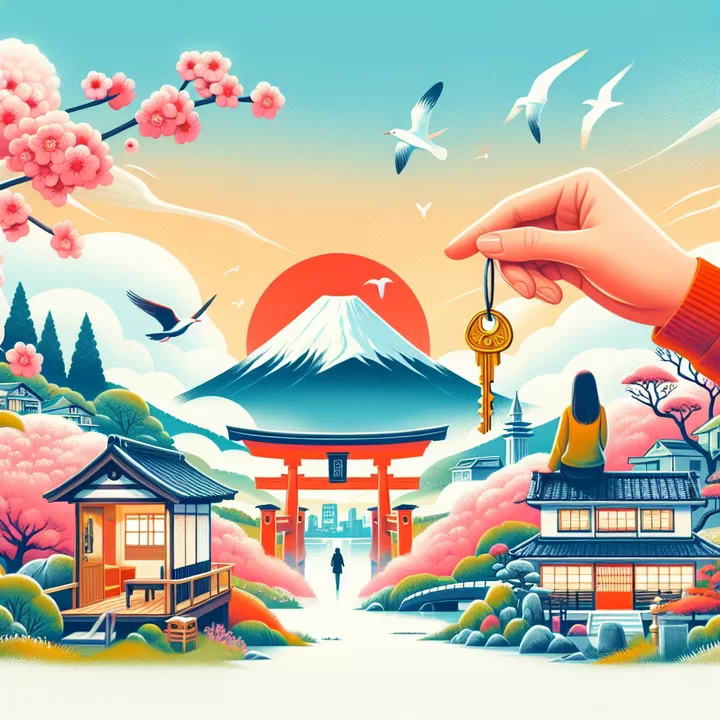
Your First Japan Visit: Keys to Starting Your Dream Life 🇯🇵
Konnichiwa, future Japan adventurers! Are you dreaming of walking through the bustling streets of Tokyo, finding peace in Kyoto’s serene temples, or enjoying delicious ramen in a cozy shop? For many Filipinos, Japan represents not just a travel destination, but a land of incredible opportunities and a potential new home. If you’re planning your first visit, whether it’s for a short trip or to lay the groundwork for a longer stay, you’re embarking on an exciting journey! 🎉
As your language school teacher, I know that preparing for such a big step can feel a bit overwhelming. But don’t worry! This article is designed to be your friendly guide, breaking down everything you need to know to make your first trip smooth, enjoyable, and truly set the stage for your dream life in the Land of the Rising Sun. We’ll cover practical tips, essential language, and cultural insights, transforming complex information into easy-to-understand advice. Let’s get ready!
Getting Ready for Departure: Essential Pre-Trip Checks! ✈️
Before your plane even leaves the runway, a little preparation goes a long way. Think of these as your foundational steps to ensure a stress-free arrival in Japan.
-
Passport & Documents:
Make sure your passport is valid for at least six months beyond your intended stay. Keep digital and physical copies of your flight tickets, accommodation bookings, and any other essential documents. It’s always good to have a backup!
-
Currency & Payment:
Japan primarily uses cash, especially in smaller shops and restaurants, though cashless payments are becoming more common. Have some 日本円 (Nihon-en – Japanese Yen) on hand when you arrive. Inform your bank about your travel plans to avoid any issues with your credit or debit cards abroad. Look for ATMs at convenience stores like Seven-Eleven or Japan Post Bank, which usually accept international cards.
-
Connectivity:
Staying connected is crucial for navigation and emergencies. Consider renting a pocket Wi-Fi device at the airport, buying a local SIM card, or activating international roaming on your Philippine mobile plan. Having internet access will make navigating immensely easier!
-
Basic Japanese Phrases:
Even if you’re a beginner, learning a few key phrases will make a huge difference. Japanese people truly appreciate the effort!
💡 Teacher’s Tip: Essential Airport & Travel Phrases
Practice these before you go! They’ll be lifesavers.
- すみません (Sumimasen): Excuse me / Sorry (very versatile!)
- ありがとう (Arigatou): Thank you
- 日本語が分かりません (Nihongo ga wakarimasen): I don’t understand Japanese.
- 英語を話せますか? (Eigo o hanasemasu ka?): Do you speak English?
- 〜はどこですか? (~ wa doko desu ka?): Where is ~? (e.g., トイレはどこですか? – Toire wa doko desu ka? – Where is the restroom?)
Navigating Japan: Transportation Made Easy! 🚃
Japan’s public transportation system is world-renowned for its efficiency and punctuality. While it might seem complex at first glance, especially with its extensive network, it’s incredibly user-friendly once you get the hang of it.
-
Trains & Subways:
These will be your primary mode of transport in cities. Google Maps is your best friend for real-time routes, times, and platform numbers. Pay attention to line colors and numbers. Don’t be afraid to ask station staff if you’re lost!
-
IC Cards (Suica, Pasmo, Icoca, etc.):
These rechargeable smart cards are a must-have for seamless travel. You can tap and go on trains, subways, and even some buses. They can also be used for purchases at convenience stores and vending machines. Purchase one at any major station. They save you the hassle of buying individual tickets for each ride!
-
Reading Signs:
Major stations often have signs in English, Japanese (Kanji, Hiragana, Katakana), and sometimes Korean or Chinese. Learning to recognize basic Kanji for directions like 出口 (deguchi – exit), 入口 (iriguchi – entrance), and 〜方面 (~hōmen – direction of~) will be very helpful.
Key Transportation Vocabulary & Phrases
| Phrase (Romaji) | Japanese | Meaning |
|---|---|---|
| Eki | 駅 | Train station |
| Densha | 電車 | Train |
| Basu | バス | Bus |
| Kaisatsu | 改札 | Ticket gate |
| Norikae | 乗り換え | Transfer (trains) |
| ~ Made kudasai | 〜までください | To ~ please (when buying a ticket) |
💡 Cultural Insight: Train Etiquette
In Japan, silence is golden on public transport. Avoid loud conversations or phone calls. Be mindful of priority seats (優先席 – yūsenshō), which are for the elderly, pregnant women, and those with disabilities. Always wait for passengers to exit before boarding.
Daily Life Essentials: Your First Steps in Japan! 🏠🛒
Once you’ve mastered transportation, your next step is to get comfortable with daily life. This involves everything from finding food to understanding local services.
-
Accommodation for Your First Visit:
For your initial trip, consider staying in hotels, guesthouses, or Airbnb. These offer flexibility and a soft landing. If you’re exploring longer-term living, this visit can be a good time to get a feel for different neighborhoods and what suits your lifestyle.
-
Shopping for Necessities:
Japan has fantastic コンビニエンスストア (konbiniensu sutōa – convenience stores) like Seven-Eleven, FamilyMart, and Lawson, open 24/7. They’re great for quick meals, drinks, and snacks. For groceries, head to スーパー (sūpā – supermarkets) for fresher and often cheaper options.
-
Dining Out:
From ramen shops to sushi trains, Japanese cuisine is a highlight! Many restaurants have picture menus or English menus. Don’t be shy to point! Remember to say 「いただきます」(itadakimasu) before eating and 「ごちそうさまでした」(gochisōsama deshita) after your meal. These phrases express gratitude for the food and the people who prepared it.
-
Waste Disposal:
Japan has strict rules for garbage separation. Look for clearly marked bins, or if you’re staying in an Airbnb, ask your host for specific instructions. It’s common to carry your trash with you until you find the correct bins, as public trash cans are scarce.
⚠️ Important Note for Daily Life!
While your first visit might focus on tourism, if you envision a “dream life” there, observe daily routines closely. Notice how locals manage their time, shop, and interact. This observation is invaluable for future integration. Remember, always be respectful and polite, and when in doubt, a simple すみません (sumimasen) followed by a gesture can often help bridge the language gap.
Cultural Immersion: Embracing Japanese Customs! 🌸
Understanding and respecting Japanese customs is key to a rewarding experience. It shows your willingness to connect and learn, which is highly appreciated.
-
Bowing (お辞儀 – Ojigi):
Bowing is a fundamental part of Japanese communication, used for greetings, apologies, and showing respect. A slight nod is fine for casual greetings, while deeper bows are for formal situations or expressing deep gratitude/apology. You don’t always need to bow, but try to return one if someone bows to you.
-
Greetings:
Always greet people when entering a shop, restaurant, or someone’s home. 「こんにちは」(Konnichiwa) for “hello,” 「ありがとうございます」(Arigatou gozaimasu) for “thank you,” and 「すみません」(Sumimasen) for “excuse me/sorry” are essential.
-
Shoe Etiquette:
It’s customary to remove your shoes when entering homes, traditional restaurants, temples, and some schools or certain public facilities. Look for a shoe rack (下駄箱 – getabako) at the entrance.
-
Patience and Politeness:
Japanese society values patience and harmony. Avoid loud conversations, especially in public spaces. Be patient when waiting in lines. When talking to strangers, a polite and slightly formal approach is always appreciated.
💡 Teacher’s Tip: “Sumimasen” is Your Best Friend!
Beyond “excuse me” and “sorry,” すみません (Sumimasen) can also mean “thank you” (especially for a small favor), or “can I get your attention?” It’s incredibly versatile and shows respect.
Language Learning on the Go: Practical Japanese for Your First Days! 🗣️
Your first visit is a fantastic opportunity to put your Japanese language skills to the test and accelerate your learning. Don’t be afraid to make mistakes; they are part of the learning process! The key is to be proactive and brave.
-
Focus on Listening and Repetition:
Immerse yourself! Listen to announcements, conversations, and even background music. Try to repeat phrases you hear. The more you hear, the more natural the sounds and rhythm of Japanese will become.
-
Master Basic Counting:
Learning numbers (いち, に, さん – ichi, ni, san) will be incredibly useful for shopping, asking prices, and understanding train platforms.
-
Practice Simple Questions and Answers:
Even simple exchanges like 「これは何ですか?」(Kore wa nan desu ka? – What is this?) or 「いくらですか?」(Ikura desu ka? – How much is it?) can open up communication.
-
Don’t Be Shy to Use English (When Necessary):
While practicing Japanese is encouraged, don’t hesitate to switch to English if you truly get stuck. Many Japanese people, especially in tourist areas, have some English proficiency, and they will appreciate your effort in Japanese before switching.
💡 Teacher’s Tip: Your “Language Challenge” for the Trip!
Set a small language goal each day. Maybe today, you’ll try to order coffee entirely in Japanese. Tomorrow, you’ll ask for directions. Even if you stumble, the act of trying will build your confidence and make your learning stick. Remember, consistency is key, and every small victory counts towards your dream!
Remember, your first visit to Japan isn’t just a trip; it’s an investment in your future and a crucial step towards your dream life. It’s an opportunity to experience the culture firsthand, practice your language skills in real-world situations, and confirm that Japan is indeed where you want to build your future. Embrace every moment, learn from every interaction, and most importantly, enjoy the incredible journey!
The path to your dream life in Japan begins with that first step, and with good preparation, a positive attitude, and a willingness to learn, you are already well on your way. Gambatte kudasai! (Good luck!)
Contact & Follow Us
お問い合わせ
📞 電話: +63 997 093 4550
📧 メール: samuraijapan.bc@gmail.com
🏠 住所: Room D3, Freb Bldg, Villa Donata Subd, Muntinlupa
🏢 会社名: SAMURAI Japan Business Center Inc.
SNSでフォロー
🎵 Tiktok: @samuraijapan0221
📸 Instagram: @samuraijapan.bc
▶️ Youtube: @SamuraiJapan-bc
📘 Facebook: Visit our Page

Leave a Reply