

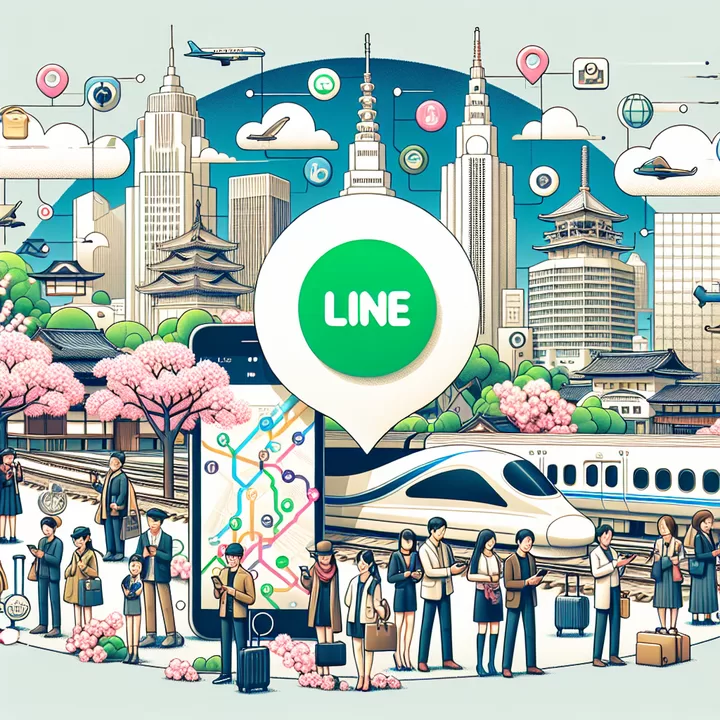
LINE App: Your Essential Tool for a Smooth Life in Japan
Konnichiwa, future residents of Japan! 🇯🇵 As your guide from a Japanese language school, I often see students from the Philippines eager to immerse themselves in Japanese life. You’re learning the language, understanding the culture, and preparing for an exciting new chapter. But there’s one incredibly important tool that often flies under the radar for newcomers, yet it’s absolutely essential for daily life in Japan: the LINE app.
In the Philippines, you might be used to other messaging apps dominating your daily communication. However, when you step foot in Japan, LINE isn’t just another app; it’s the very fabric of social, personal, and even professional interaction. From chatting with friends to paying your bills and getting vital information, LINE is ubiquitous. Think of it as your digital Swiss Army knife for navigating Japan. This article will walk you through why LINE is so crucial, how to use its key features, and even how it can boost your Japanese language learning! Let’s dive in! 🎉
Why LINE is King in Japan: More Than Just a Chat App 👑
If you’re wondering why a messaging app deserves so much attention, the answer is simple: LINE’s penetration in Japan is unparalleled. Almost every smartphone user in Japan has LINE installed. It’s not just for messaging friends; it’s integrated into nearly every aspect of daily life.
💡 Teacher’s Tip:
Many Filipino learners are familiar with apps like Facebook Messenger or Viber. While these are common internationally, in Japan, LINE is the primary communication method for nearly everyone – from friends and family to schools, businesses, and even government services. Don’t underestimate its importance; it’s a foundational tool for integration!
The reason for its dominance goes beyond simple communication features. LINE has successfully built an ecosystem of services that cater to almost every need, making it incredibly convenient for users to stay within the app for multiple tasks. This includes:
-
Communication Hub:
Your go-to for instant messages, calls, and group chats with friends, classmates, and colleagues.
-
Information Gateway:
Receive updates from official accounts of businesses, shops, public transportation, and even local government bodies.
-
Lifestyle Services:
From mobile payments (LINE Pay) to news, weather, booking taxis, and even entertainment like manga and music, LINE offers a vast array of integrated services.
Understanding its central role is your first step to a smoother transition into Japanese daily life.
Core Communication Features: Your Daily Lifeline 💬
At its heart, LINE is a robust communication platform. Mastering these features will ensure you stay connected.
-
Instant Messaging:
The most basic and frequently used feature. Send text messages, photos, videos, voice notes, and even location information instantly. Japanese communication often relies on concise messages, so get used to sending short, frequent updates.
-
Free Voice & Video Calls:
Make free calls to other LINE users anywhere in the world, as long as you have an internet connection. This is incredibly useful for staying in touch with family in the Philippines without incurring international call charges, and for local calls within Japan. Quality is generally excellent.
-
LINE Stamps & Emojis:
This is where LINE truly shines and adds a unique cultural flavor to communication. LINE Stamps are large, expressive images that convey emotions, reactions, or even entire short phrases. LINE Emojis are smaller, animated versions. They are used extensively in Japan to soften messages, add personality, or express feelings that might be difficult to articulate directly. There are countless free and paid stamps available, often featuring popular characters or unique designs. Don’t be afraid to use them – they’re a key part of Japanese digital communication!
-
Group Chats:
You’ll quickly find yourself added to various LINE groups: school project groups, part-time job groups, friend groups, community circles, and more. Group chats are essential for coordination and information sharing in Japan.
⚠️ Common Mistake Alert (Netiquette):
In Japanese group chats, especially formal ones (like school or work), it’s important to acknowledge messages, even if just with a quick “OK” or a 👍 stamp. Being unresponsive might be seen as ignoring or not having seen the message. Also, be mindful of sending too many individual messages in a short span in formal groups; try to consolidate if possible. Always use polite language (polite form/keigo) when chatting with superiors or new acquaintances.
Beyond Communication: LINE’s Lifestyle Services 💡
What makes LINE indispensable in Japan is its ecosystem of integrated services. These features streamline daily tasks and keep you connected to essential information.
-
LINE Pay:
This is LINE’s mobile payment service, akin to GCash or PayMaya in the Philippines. You can link your bank account or credit card, charge money to your LINE Pay balance, and then use it to pay at convenience stores, supermarkets, restaurants, and online shops that accept LINE Pay. It’s incredibly convenient, especially for small purchases, and helps you manage your daily expenses digitally. It also allows for easy peer-to-peer money transfers.
-
LINE Official Accounts (LINE 公式アカウント – Kōshiki Akkaunto):
This is a game-changer for daily life. Businesses, shops, government agencies, public transport companies, news outlets, and even celebrities have official LINE accounts. By “friending” these accounts, you can receive:
- Coupons and Discounts: Many shops offer exclusive LINE coupons.
- Store Information: Opening hours, special events, new product alerts.
- Customer Service: Some businesses offer direct chat support.
- Public Information: Local city halls use LINE to send out disaster alerts, trash collection schedules, and community news. Train companies send delay notifications.
It’s crucial to follow relevant official accounts for your area and interests to stay informed.
-
LINE News:
A personalized news feed within the LINE app, providing real-time updates on various topics from local news to international events, entertainment, and sports. A great way to keep up with current events in Japan and practice reading Japanese!
-
Other Integrated Services:
LINE continues to expand its offerings. You might encounter LINE Taxi (for booking cabs), LINE Gift (sending digital gifts), LINE Music, LINE Manga, and more. While you might not use all of them, knowing they exist can be helpful.
Key LINE Services for Your Daily Life in Japan
| Service Name | Purpose in Daily Life | Benefit for You |
|---|---|---|
| LINE Chat | Primary communication with friends, family, and colleagues. | Stay connected, organize social life, get quick answers. |
| LINE Call (Voice/Video) | Free calls to LINE users worldwide. | Cost-effective communication with family in PH, and locally. |
| LINE Pay | Mobile payment system. | Convenient cashless payments, easy money transfers. |
| LINE Official Accounts | Information from businesses, public services, etc. | Access to coupons, alerts, news, customer service. Essential for local info! |
| LINE News | Curated news feed. | Stay updated on Japanese and global news. |
Leveraging LINE for Your Japanese Language Journey 📚
As a language teacher, I always tell my students: integrate your learning into your daily life! LINE provides fantastic opportunities to do just that.
-
Join Language Exchange Groups:
Many communities on LINE are dedicated to language exchange. Seek out groups where Japanese learners and native speakers connect. This is a safe space to practice your written Japanese, ask questions, and even find language partners for calls.
-
Follow Official Accounts for Japanese Content:
Beyond practical information, follow accounts like NHK News (NHKニュース), various Japanese educational institutions, or even accounts for your favorite Japanese celebrities or brands. This provides you with authentic Japanese text and updates, helping you expand your vocabulary and reading comprehension naturally. Many news outlets offer simpler Japanese versions of their news, too, which is great for beginners!
-
Utilize LINE Dictionaries/Translation Features:
While not built-in for every message, there are official LINE accounts for dictionaries (e.g., Google Translate’s LINE bot) that you can add as a friend. Send them a word or phrase, and they’ll send back the translation. This is incredibly handy for quick look-ups during conversations.
-
Practice Polite Forms (Keigo):
When communicating with new acquaintances, teachers, or colleagues on LINE, it’s a great opportunity to practice your Keigo (敬語) or polite forms. Japanese people often use more polite language in written communication, especially initially, than in casual spoken conversation.
💡 Teacher’s Tip (Language Practice on LINE):
Don’t be afraid to make mistakes! The goal is communication. When chatting with Japanese friends, you can even ask them for corrections or clarifications. For instance, after sending a message, you could add: 「私の日本語、間違っていたら教えてください!」(Watashi no Nihongo, machigatte itara oshiete kudasai!) – “Please tell me if my Japanese is wrong!” This shows your willingness to learn and improve.
Here are some Japanese phrases you’ll often see and use on LINE:
-
ありがとうございます (Arigatou gozaimasu):
Thank you (polite). Often shortened to 「ありがとうございます!」 or even just 「あざす!」 (azasuu, very casual, only for close friends).
-
承知いたしました (Shōchi itashimashita):
Understood / I understand (very polite, for formal contexts like work or school group chats).
-
かしこまりました (Kashikomarimashita):
Certainly / Understood (another polite form, similar to above).
-
〜します (〜shimasu):
Will do/I’ll do (polite verb ending, e.g., 「確認します」 (Kakunin shimasu) – “I will confirm”).
-
了解です (Ryōkai desu):
Understood / OK (casual but acceptable in many friendly work/school contexts).
-
今から〜します (Ima kara ~ shimasu):
I’ll do ~ from now / I’m about to do ~ (useful for letting people know your immediate plans).
-
お疲れ様です (Otsukaresama desu):
Roughly “Good work” or “You’ve worked hard.” Used widely in Japan to acknowledge someone’s effort, even as a greeting in the afternoon in professional/school settings. You’ll see this a lot!
Practical Tips for Filipinos Using LINE in Japan ✅
Getting started with LINE is straightforward, but here are some specific tips to ensure a smooth experience as a newcomer in Japan.
-
Setting Up Your Account:
You’ll need a phone number to register. If you don’t have a Japanese phone number yet, you might be able to register with your Philippine number initially, but it’s highly recommended to update it to your Japanese number once you get one, as many Japanese services will link to your local number.
-
Adding Friends:
In Japan, the most common ways to add someone on LINE are:
- QR Code: Simply scan their unique LINE QR code.
- ID Search: If they have a LINE ID (a unique username), you can search for it.
- Shake It! (ふるふる – furufuru): When you’re physically close to someone, both open the “Shake It!” feature and shake your phones. LINE will find each other. This is fun and very common!
Exchanging numbers and letting LINE automatically find users with those numbers is less common for initial adds in Japan.
-
Privacy Settings:
Familiarize yourself with LINE’s privacy settings. You can control who can add you, who can see your profile picture, and who can send you messages. Be cautious about accepting friend requests from unknown users.
-
Backing Up Chats:
Always back up your LINE chat history to Google Drive (for Android) or iCloud (for iOS). This is crucial when you get a new phone or if something happens to your current device, so you don’t lose important conversations and contacts.
-
Notifications and Data Usage:
LINE can be quite chatty with notifications, especially if you join many groups or follow numerous official accounts. Manage your notification settings to avoid being overwhelmed. Also, be mindful of data usage if you’re frequently sending large video files or making long video calls on a limited data plan.
⚠️ Important Note for Account Migration:
When changing devices or phone numbers, LINE has a specific migration process. NEVER simply delete and reinstall LINE without properly backing up and following the migration steps, or you risk losing your chat history and sometimes even your friend list and purchased stamps/coins!
Cultural Nuances: Understanding LINE Etiquette in Japan 🇯🇵
Using LINE effectively in Japan isn’t just about knowing the features; it’s also about understanding the unspoken rules of etiquette.
-
Prompt Replies (or Acknowledgement):
In Japan, it’s generally expected to reply to messages relatively promptly, especially if they are time-sensitive or from someone like a teacher or colleague. If you can’t reply fully right away, a quick 「確認しました」(Kakunin shimashita – “I’ve confirmed”) or a simple stamp can suffice as an acknowledgment.
-
Strategic Use of Stamps/Emojis:
As mentioned, stamps are not just decorative; they’re an integral part of communication. They can soften requests, express gratitude, or convey a casual apology without needing many words. Choose stamps that match the formality and tone of your message and relationship with the recipient.
-
Separation of Work/Personal:
While LINE is used for both, some people maintain a stricter boundary than others. For professional contacts, you might lean towards more formal language and stamps. Avoid overly casual language or excessive use of cute stamps if you’re communicating with someone in a formal capacity.
-
Reading Between the Lines:
Japanese communication can sometimes be indirect. Short messages or specific stamps might convey more than their literal meaning. Pay attention to context and common phrases. For example, a simple 「すみません」(Sumimasen) might mean “excuse me,” “I’m sorry,” or even “thank you for your trouble,” depending on the situation.
LINE Etiquette in Japan: Dos and Don’ts
| ✅ Do’s | ❌ Don’ts |
|---|---|
| Reply promptly to important messages, even if just to acknowledge. | Leave group messages unread or unanswered for extended periods. |
| Use stamps and emojis appropriately to convey emotion and soften messages. | Overuse overly casual language or excessive cute stamps in formal contexts. |
| Utilize group chats for shared information and coordination. | Send multiple fragmented messages instead of consolidating thoughts (in formal groups). |
| Use polite forms (keigo) when communicating with new acquaintances or superiors. | Send unsolicited messages or calls to strangers unless it’s for a specific purpose (e.g., language exchange). |
| Follow official accounts for useful information and discounts. | Ignore official account notifications if they are from essential services (e.g., local government alerts). |
**Conclusion**
The LINE app is far more than just a messaging tool in Japan; it’s a fundamental part of daily life, connecting people to each other and to a vast array of services. For Filipinos embarking on their journey to Japan, embracing LINE early on will significantly smoothen your transition, help you integrate into society, and even accelerate your Japanese language learning.
Don’t wait until you arrive; start exploring the app now! Familiarize yourself with its interface, features, and the cultural nuances of its usage. Practice using basic Japanese phrases and even try some stamps. By doing so, you’ll feel more confident and prepared to navigate your exciting new life in the Land of the Rising Sun. You’ve got this, and LINE will be right there with you every step of the way! Ganbatte kudasai! 🎉
Contact & Follow Us
お問い合わせ
📞 電話: +63 997 093 4550
📧 メール: samuraijapan.bc@gmail.com
🏠 住所: Room D3, Freb Bldg, Villa Donata Subd, Muntinlupa
🏢 会社名: SAMURAI Japan Business Center Inc.
SNSでフォロー
🎵 Tiktok: @samuraijapan0221
📸 Instagram: @samuraijapan.bc
▶️ Youtube: @SamuraiJapan-bc
📘 Facebook: Visit our Page

Leave a Reply