

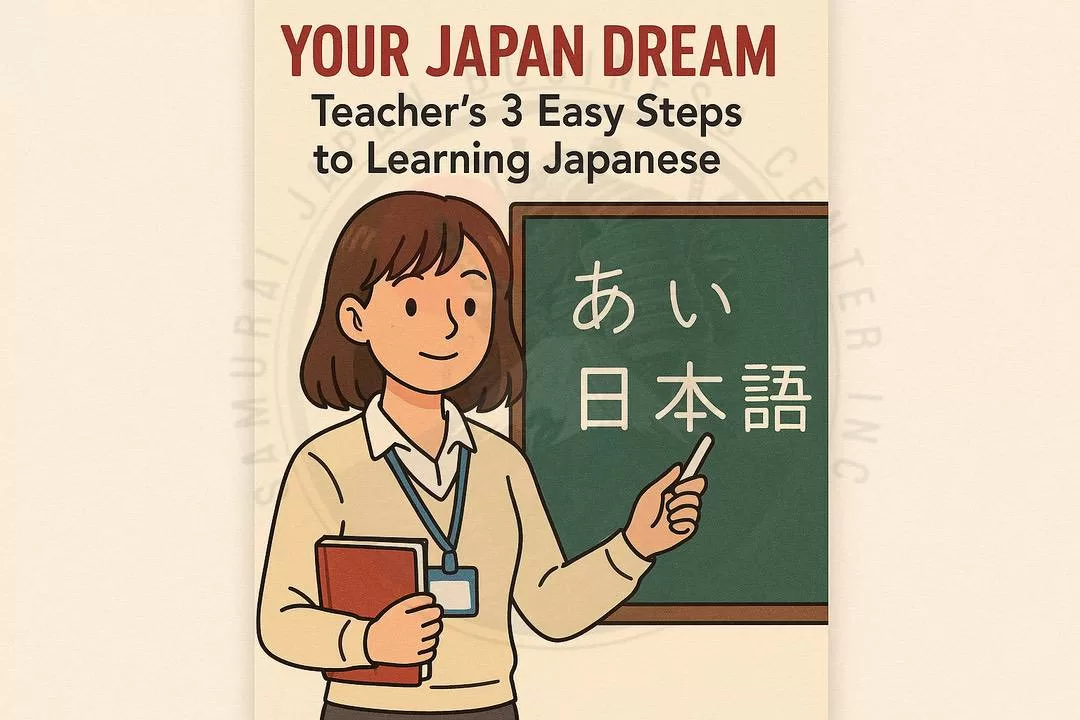
Your Japan Dream: Teacher’s 3 Easy Steps to Learning Japanese
Konnichiwa, future residents of Japan! 🇯🇵 Are you dreaming of walking through the bustling streets of Shibuya, enjoying a delicious bowl of ramen in a cozy izakaya, or perhaps working in a vibrant Japanese office? Your dream of living in Japan is closer than you think, and the most crucial key to unlocking that door is mastering the Japanese language. As your dedicated teacher at a Japanese language school, I know that learning a new language can seem daunting, but I promise you, it’s an incredibly rewarding journey.
Many Filipinos share this wonderful dream, and I’ve seen countless students successfully achieve their goals. The secret? It’s not about being a genius; it’s about having a clear path, consistent effort, and a supportive mindset. That’s exactly what we’re going to build today! I’ve broken down the language learning process into three easy, actionable steps that will guide you from a beginner to confidently navigating life in Japan. Are you ready? Let’s begin your exciting adventure!
Step 1: Laying the Groundwork: Mastering the Fundamentals 🎯
Every magnificent building starts with a strong foundation, and your Japanese language journey is no different. This first step is all about getting comfortable with the basics, which will make everything else much easier down the line. Don’t rush through this part – mastery here pays off exponentially!
1.1 Conquering Hiragana and Katakana: Your Alphabet Superpowers! ✨
These two syllabaries are the absolute first things you need to learn. Think of them as the ABCs of Japanese. Without them, reading street signs, simple menus, or even basic grammar explanations will be incredibly challenging. While Kanji (Chinese characters) will come later, Hiragana and Katakana are your immediate best friends.
💡 Teacher’s Tip:
Many Filipino learners get excited to learn complex phrases right away. However, I strongly advise spending dedicated time on Hiragana and Katakana. Aim to be able to read and write them all without hesitation. Flashcards, writing practice apps, and even Japanese children’s books (like picture books!) are fantastic tools. Consistency is key here – 15-20 minutes every day is far better than a 3-hour session once a week.
Here’s a quick overview of their roles:
| Syllabary | Purpose | Example |
|---|---|---|
| ひらがな (Hiragana) | Used for native Japanese words, grammatical particles, and verb endings. It’s the primary script. | こんにちは (Konnichiwa – Hello) |
| カタカナ (Katakana) | Used for foreign words (loanwords), onomatopoeia, and for emphasis. | フィリピン (Firipin – Philippines) |
1.2 Mastering Basic Greetings & Phrases: Connecting with Locals 👋
Once you have a grasp of the scripts, immediately start learning practical phrases. These are your conversation starters, your polite gestures, and your everyday survival kit. Filipinos are naturally friendly, and Japanese people appreciate politeness, so these phrases will help you connect instantly.
-
こんにちは (Konnichiwa):
The most common greeting, used during the daytime.
-
おはようございます (Ohayō gozaimasu):
Good morning (very polite).
-
こんばんは (Konbanwa):
Good evening.
-
ありがとうございます (Arigatō gozaimasu):
Thank you (very polite and versatile).
-
すみません (Sumimasen):
Excuse me / I’m sorry / Thank you (for a small service). This is incredibly useful!
-
お願いします (Onegai shimasu):
Please (when asking for something, very versatile).
-
はじめまして (Hajimemashite):
Nice to meet you (first time meeting someone).
-
どうぞよろしく (Dōzo yoroshiku):
A polite phrase meaning “please treat me well,” often used with Hajimemashite during introductions. Filipinos often love using this one!
1.3 Understanding Core Grammar & Vocabulary: The Building Blocks 🧩
Japanese grammar can feel different from English or Filipino, especially with particles and verb conjugations. Start with simple sentence structures and the most common verb forms (like the polite 「〜ます」 (masu) form). Understanding particles (は, が, を, に, で, etc.) is crucial, as they define the role of words in a sentence.
⚠️ Common Mistake Alert:
Many learners, especially those from English-speaking backgrounds, struggle with particles. Don’t skip over them! They are small but mighty. Forgetting or misusing particles can drastically change the meaning of your sentence. For example, 「水を飲みます」(Mizu o nomimasu – I drink water) is correct, not just 「水飲みます」.
Simultaneously, build your vocabulary. Focus on high-frequency words related to daily life: food, family, numbers, colors, common actions (eat, sleep, go), and places. Apps like Anki or Memrise can be excellent for spaced repetition, helping words stick in your long-term memory.
Step 2: Practice Makes Perfect: Active Immersion & Application 🗣️
Knowing the basics is fantastic, but language lives through use! This step is about actively engaging with Japanese every day, making it a part of your routine, and most importantly, not being afraid to make mistakes.
2.1 Active Listening: Train Your Ear 👂
Listening is not just hearing; it’s understanding. Regular exposure to spoken Japanese will help you get accustomed to the rhythm, pitch, and natural speed of the language. This is where your love for anime, J-pop, or Japanese dramas can become a powerful study tool!
- Start with subtitles: Watch your favorite Japanese shows with Japanese subtitles (Hiragana/Katakana first, then slowly introduce Kanji). This helps you connect the sounds to the written words.
- Listen to podcasts for learners: Many podcasts specifically designed for Japanese learners explain concepts in simple Japanese or English.
- Repeat and shadow: Try to mimic what you hear. Pause and repeat sentences. This is called “shadowing” and is incredibly effective for improving pronunciation and fluency.
2.2 Speak Up! Don’t Be Shy 🎤
This is often the hardest part for many learners, especially Filipinos who might be shy about making mistakes. But trust me, every mistake is a learning opportunity! Japanese people are very understanding and encouraging when you try to speak their language.
- Practice with a study buddy: Find a fellow Filipino learner or a native Japanese speaker for regular conversation practice. Many online platforms connect language exchange partners.
- Talk to yourself: Narrate your day in Japanese. Describe objects around you. This builds confidence and helps you recall vocabulary.
- Use polite forms: Start by consistently using the -masu and -desu forms. These are safe, polite, and widely understood.
2.3 Read Everything You Can Get Your Hands On 📚
From simple children’s books to news articles, reading reinforces vocabulary and grammar in context. It helps you recognize patterns and naturally absorb sentence structures.
- Start simple: Begin with textbooks, graded readers, or materials specifically for beginners.
- Read Japanese online: Look for simple blogs, news sites like NHK News Web Easy (which provides simplified news with furigana over Kanji), or even Japanese social media posts.
- Use a dictionary app: Have a reliable Japanese-English dictionary app (like Takoboto or Jisho.org) handy for quick lookups.
✅ Consistency is Your Superpower:
Instead of cramming, aim for short, consistent study sessions. Even just 30 minutes of focused study every day can yield incredible results over time. It keeps the language fresh in your mind and builds momentum.
Step 3: Stay Inspired: Nurturing Your Japanese Journey 🌱
Learning a language is a marathon, not a sprint. There will be days when you feel overwhelmed or discouraged. This step focuses on how to keep your motivation high and make the journey enjoyable.
3.1 Define Your “Why”: Your Ultimate Motivation 💪
Why do you want to learn Japanese? Is it to pass the JFT-Basic exam for a specific pathway? Is it to fully immerse yourself in Japanese culture? Is it to make Japanese friends? Pinpointing your motivation will give you strength during challenging times.
🎯 Set Achievable Milestones:
Don’t just have a big goal like “become fluent.” Break it down! For example:
- By next month: Master all Hiragana and Katakana.
- By three months: Learn 500 essential vocabulary words and 10 basic grammar patterns.
- By six months: Be able to hold a simple 5-minute conversation.
- By one year: Target passing the JFT-Basic or JLPT N5/N4.
Celebrating these small wins will keep you energized!
3.2 Embrace Mistakes as Learning Opportunities 🚀
As a teacher, I see many students hesitating to speak because they fear making mistakes. But that’s how we learn! Think of a child learning to walk – they fall countless times before they can run. Each “fall” (mistake) teaches you something. Japanese people are often delighted when foreigners try to speak their language, and they will usually be patient and try to understand you.
3.3 Connect with the Culture: Beyond the Textbook 🌸
Your dream life in Japan isn’t just about language; it’s about experiencing the culture. The more you learn about Japan’s customs, traditions, and etiquette, the more context you’ll have for the language, and the more motivated you’ll be. Watch documentaries, read about Japanese history, try cooking Japanese food, or even participate in local Japanese cultural events in the Philippines.
Understanding cultural nuances, like the importance of 「お辞儀」(ojigi – bowing), or the concept of 「本音と建前」(honne to tatemae – true feelings vs. public display), will deepen your appreciation for the language and help you navigate social situations more smoothly in Japan. Language and culture are two sides of the same coin!
Beyond Language: Embracing Japanese Culture & Mindset 🌸
Your journey to Japan is holistic. While language is paramount, understanding and respecting Japanese culture is equally vital for a fulfilling life there. As a teacher, I always tell my students that the language is the key, but cultural understanding is the map that helps you navigate the country effectively.
4.1 Politeness and Respect (礼儀 – Reigi) 🙏
Japanese society places a high value on politeness, respect, and harmony. This is deeply embedded in the language through honorifics (e.g., さん, さま, くん, ちゃん), humble language, and respectful language. Even if you start with basic polite forms, showing effort to be respectful goes a long way. Common everyday actions like bowing, not speaking loudly on public transport, and showing gratitude are highly appreciated.
4.2 Punctuality (時間厳守 – Jikan Genshu) ⏰
Japanese punctuality is legendary. Being on time, or even a few minutes early, for appointments, classes, or meetings is a sign of respect. This applies to trains and buses too – they are incredibly precise!
4.3 Cleanliness and Order (清潔 – Seiketsu) ✨
Japan is known for its cleanliness. Being mindful of your surroundings, properly disposing of trash (which can be a bit complex with separation rules!), and keeping public spaces tidy are expected norms. This reflects a collective mindset of caring for the community.
By immersing yourself in these cultural aspects as you learn the language, you’re not just studying words; you’re preparing for a seamless transition into Japanese society. It makes the language learning process more meaningful and helps you visualize your future in Japan even more clearly. This holistic approach will truly prepare you for the wonderful life that awaits you!
Learning Japanese is an incredible adventure, and it’s one of the most empowering steps you can take toward your dream life in Japan. Remember these three easy steps: build a strong foundation, practice consistently, and stay motivated by connecting with the culture and celebrating your progress. Every word you learn, every sentence you form, brings you closer to your goal.
You have the dream, you have the potential, and now you have a clear path. Believe in yourself, embrace the journey, and never stop learning. Your Japan dream is within reach, and we are here to support you every step of the way. Ganbatte kudasai! (Do your best!)
Contact & Follow Us
お問い合わせ
📞 電話: +63 997 093 4550
📧 メール: samuraijapan.bc@gmail.com
🏠 住所: Room D3, Freb Bldg, Villa Donata Subd, Muntinlupa
🏢 会社名: SAMURAI Japan Business Center Inc.
SNSでフォロー
🎵 Tiktok: @samuraijapan0221
📸 Instagram: @samuraijapan.bc
▶️ Youtube: @SamuraiJapan-bc
📘 Facebook: Visit our Page

Leave a Reply