

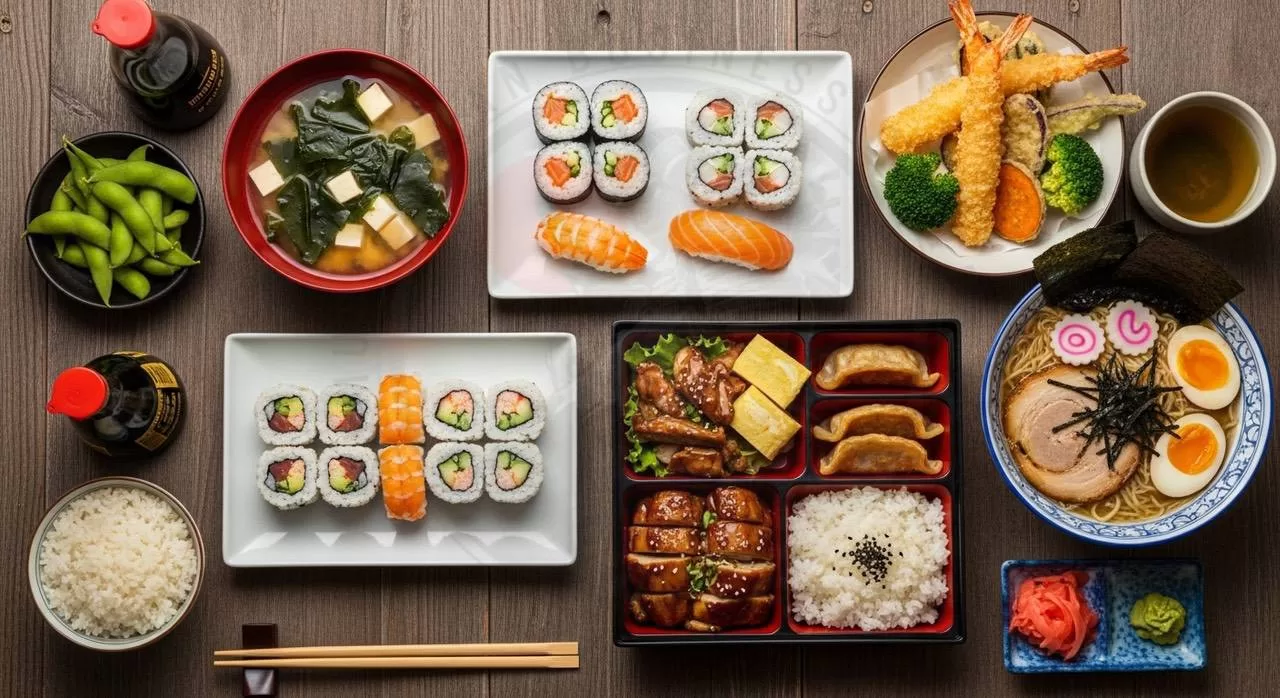
Unlock Japan’s Flavors: Essential Japanese Food for Newcomers 🇯🇵🍜
Hello, aspiring Japan adventurers! Konnichiwa! 👋 As your guide from a Japanese language school, I know that preparing for life in Japan involves much more than just mastering grammar and kanji. It’s also about embracing the rich culture, and what better way to do that than through its incredible food? Food is a universal language, and in Japan, it’s a cornerstone of daily life, hospitality, and tradition.
This article isn’t just a menu; it’s your first step towards confidently navigating Japanese dining, understanding the stories behind the dishes, and even picking up some useful phrases along the way! Get ready to embark on a delicious journey that will make your transition to Japan smoother and much more enjoyable. Let’s dive in! 🎉
Why Japanese Food is Your First Cultural Lesson 🍽️✨
Food in Japan is an art form, a science, and a social ritual. It’s not just about satisfying hunger; it’s about balance, seasonality, presentation, and respect. For newcomers, especially from the Philippines where food is also a huge part of the culture, exploring Japanese cuisine is an exciting way to:
* **Connect with the Culture:** Every dish has a history, a regional specialty, and a preferred way of eating. Understanding these aspects helps you appreciate Japan deeper.
* **Practice Your Japanese:** Ordering food, asking for recommendations, or complimenting the chef are fantastic opportunities to use your language skills in real-world scenarios.
* **Navigate Daily Life:** From convenience store snacks to elaborate restaurant meals, food is everywhere. Knowing what’s what will make your daily routines much easier.
* **Expand Your Palate:** Be open to new tastes! While some flavors might be different from what you’re used to, you’ll discover countless new favorites.
💡 Teacher’s Tip:
Don’t be shy to ask “Kore wa nan desu ka?” (これは何ですか? – “What is this?”) if you’re curious about an ingredient or a dish. Most Japanese people appreciate your interest in their culture!
Dining Etiquette & Essential Phrases: Eat Like a Local! 🥢🗣️
Before we explore the dishes, let’s learn how to eat them properly. Japanese dining etiquette emphasizes respect for the food, the chef, and your fellow diners.
Key Dining Phrases & Customs
| Phrase/Custom | Meaning & Usage | Filipino Learner Insight |
|---|---|---|
| 「いただきます」(Itadakimasu) | Said before eating, expressing gratitude for the food and all involved in its preparation. | Similar to saying “Let’s eat!” or a prayer before meals. Always use it! |
| 「ごちそうさまでした」(Gochisousama deshita) | Said after eating, thanking everyone for the meal. | Essential when leaving a restaurant or finishing a meal at someone’s home. It shows deep appreciation. |
| Chopstick Etiquette |
|
Mastering chopsticks takes practice! Don’t worry if you’re not perfect, but be mindful of these key no-nos. |
| Slurping Noodles | It’s perfectly acceptable, and even encouraged, to slurp noodles in Japan. It signifies enjoyment and helps cool the hot noodles. | This might feel awkward for Filipinos initially, as slurping is generally frowned upon. But in Japan, it’s a compliment! |
⚠️ Common Mistake Alert:
While 「まずい」(mazui) means “tastes bad,” it’s very impolite to say in front of others. If you don’t like something, it’s better to just say 「ちょっと…」(chotto…) which means “a little…” and implies politely declining, or simply finish it quietly. Remember, Japanese culture values harmony and avoiding direct confrontation.
Your Essential Japanese Food Dictionary: Must-Try Dishes! 🍣🍚
Let’s explore some of the most popular and important Japanese dishes you’ll encounter. Get ready to awaken your taste buds!
Signature Japanese Dishes You Must Try!
| Dish Name | Description | Key Vocabulary |
|---|---|---|
| Ramen (ラーメン) | Japanese noodle soup with a rich broth (soy sauce, miso, pork bone, etc.), topped with sliced pork (chashu), nori (seaweed), soft-boiled egg, and scallions. |
|
| Udon (うどん) & Soba (そば) | Thick wheat flour noodles (Udon) or thin buckwheat noodles (Soba), served hot in a light broth or chilled with a dipping sauce. |
|
| Sushi (寿司) & Sashimi (刺身) | Sushi is vinegared rice combined with various ingredients (seafood, vegetables, egg). Sashimi is thinly sliced raw fish or seafood, served without rice. |
|
| Donburi (丼) | A large bowl of steamed rice topped with various ingredients. It’s a satisfying one-bowl meal! |
|
| Tempura (天ぷら) | Lightly battered and deep-fried seafood and vegetables. Known for its delicate, crispy texture. |
|
| Curry Rice (カレーライス) | A Japanese adaptation of curry, typically milder and sweeter than Indian or Thai curries, served with rice. A very popular comfort food! |
|
💡 Cultural Insight:
Many Japanese dishes, like Donburi, offer a full, balanced meal in one bowl, making them perfect for quick and satisfying lunches. Convenience stores also offer a huge variety of pre-made meals, including Donburi and Onigiri, that are surprisingly good and affordable!
Navigating the Japanese Dining Scene 🗺️🚶♀️
Eating out in Japan can be a unique experience. Here’s what to expect and how to navigate it:
* **Ordering:** Many smaller restaurants use a 券売機 (kenbaiki – ticket vending machine) at the entrance. You select your dish, pay (cash usually, sometimes card), and hand the ticket to the staff. For others, you’ll call staff with “Sumimasen!” (すみません! – “Excuse me!”) to order.
* **Water/Tea:** Many restaurants provide free water or tea (often green tea) automatically. You don’t usually need to ask.
* **Payment:** Typically, you pay at the front register (お会計お願いします – Okaikei onegaishimasu – “Check, please”), not at your table.
* **Tipping:** Tipping is not customary in Japan. Excellent service is expected, and adding a tip can even be seen as rude or confusing.
* **Sharing:** While families or groups might share some dishes, individual portions are common. Don’t expect large sharing platters like some Filipino boodle fights, unless it’s an izakaya (Japanese pub) with small plates.
💡 Teacher’s Tip: Ordering Phrases
When ordering, you can say:
「[Dish Name] を一つお願いします。(o hitotsu onegaishimasu.)」- “[Dish Name], one please.”
Or if you’re not sure:
「おすすめは何ですか?(Osusume wa nan desu ka?)」- “What do you recommend?”
Dealing with Dietary Needs and Allergies 🚫🤧
For Filipinos who might have specific dietary restrictions or allergies, communicating this in Japanese is crucial for your safety and comfort. Japan is becoming more accommodating, but it’s always best to be prepared.
Communicating Your Dietary Needs
| Need | Japanese Phrase | Notes |
|---|---|---|
| Allergy to [X] |
[X] アレルギーがあります。(arerugī ga arimasu.) Example: ピーナッツアレルギーがあります。(Pīnattsu arerugī ga arimasu.) (Peanut allergy) |
Be specific. If you have multiple, list them. Writing it down can also help. |
| Vegetarian |
私はベジタリアンです。(Watashi wa bejitarian desu.) 肉は食べられません。(Niku wa taberaremasen.) (I cannot eat meat.) |
Vegetarianism is becoming more understood, but sometimes dashi (fish stock) is used. You might need to specify: 魚介類もだめです。(Gyokairui mo dame desu.) (Seafood is also no good.) |
| No [X] |
[X] なしでお願いします。(nashi de onegaishimasu.) (Please without [X]) Example: パクチーなしでお願いします。(Pakuchii nashi de onegaishimasu.) (Please without cilantro/coriander.) |
Useful for specific ingredients you dislike or cannot eat. |
⚠️ Important Note for Allergies:
For severe allergies, consider carrying an allergy card in Japanese. Many restaurants, especially smaller local ones, might not be equipped to handle complex allergy requests or cross-contamination risks. Major cities and larger chain restaurants are usually more prepared.
Bridging the Palate: Filipino Tastes & Japanese Flavors 🇵🇭🤝🇯🇵
As Filipinos, we have a wonderfully diverse food culture, often incorporating sweet, sour, salty, and umami flavors. You might find more similarities with Japanese food than you think!
* **Umami:** Just like the rich flavors in *sinigang* or *adobo*, Japanese cuisine heavily relies on umami from ingredients like dashi (broth made from kelp and bonito flakes), miso, and soy sauce. You’ll feel right at home with this depth of flavor!
* **Freshness:** Both cuisines prioritize fresh ingredients. You’ll appreciate the quality of seafood and produce in Japan.
* **Balance:** While Filipino dishes can sometimes be intensely flavored, Japanese cuisine often focuses on a delicate balance, allowing each ingredient’s natural taste to shine. This is a subtle difference you’ll learn to appreciate.
Don’t be afraid to try everything! You might discover that the simplicity of an *onigiri* (rice ball, often with a filling) or the comforting warmth of *miso soup* reminds you of home in a surprising way. These are everyday staples that are delicious, affordable, and widely available.
💡 Teacher’s Tip:
Try visiting a “depachika” (デパ地下 – basement food hall in department stores). They offer an incredible array of prepared foods, from sushi to bentos and sweets, perfect for trying many different things in one go!
Conclusion: Your Culinary Adventure Awaits! 🎉
Learning about Japanese food is an integral part of your journey to living in Japan. It’s not just about what you eat, but how you eat, what you say, and the cultural appreciation you gain. From slurping ramen to bowing before an “Itadakimasu,” every meal is an opportunity to immerse yourself further into the Japanese way of life.
Embrace the flavors, the etiquette, and the language that comes with each dish. Don’t be afraid to try new things, make mistakes, and ask questions. Every bite is a step closer to truly understanding and enjoying your life in Japan. We at SAMURAI Japan Business Center Inc. are here to support you every step of the way, making sure you’re well-prepared for all aspects of your dream life in Japan. Enjoy your delicious adventure! ごちそうさまでした! 🎊
Contact & Follow Us
お問い合わせ
📞 電話: +63 997 093 4550
📧 メール: samuraijapan.bc@gmail.com
🏠 住所: Room D3, Freb Bldg, Villa Donata Subd, Muntinlupa
🏢 会社名: SAMURAI Japan Business Center Inc.
SNSでフォロー
🎵 Tiktok: @samuraijapan0221
📸 Instagram: @samuraijapan.bc
▶️ Youtube: @SamuraiJapan-bc
📘 Facebook: Visit our Page

Leave a Reply