

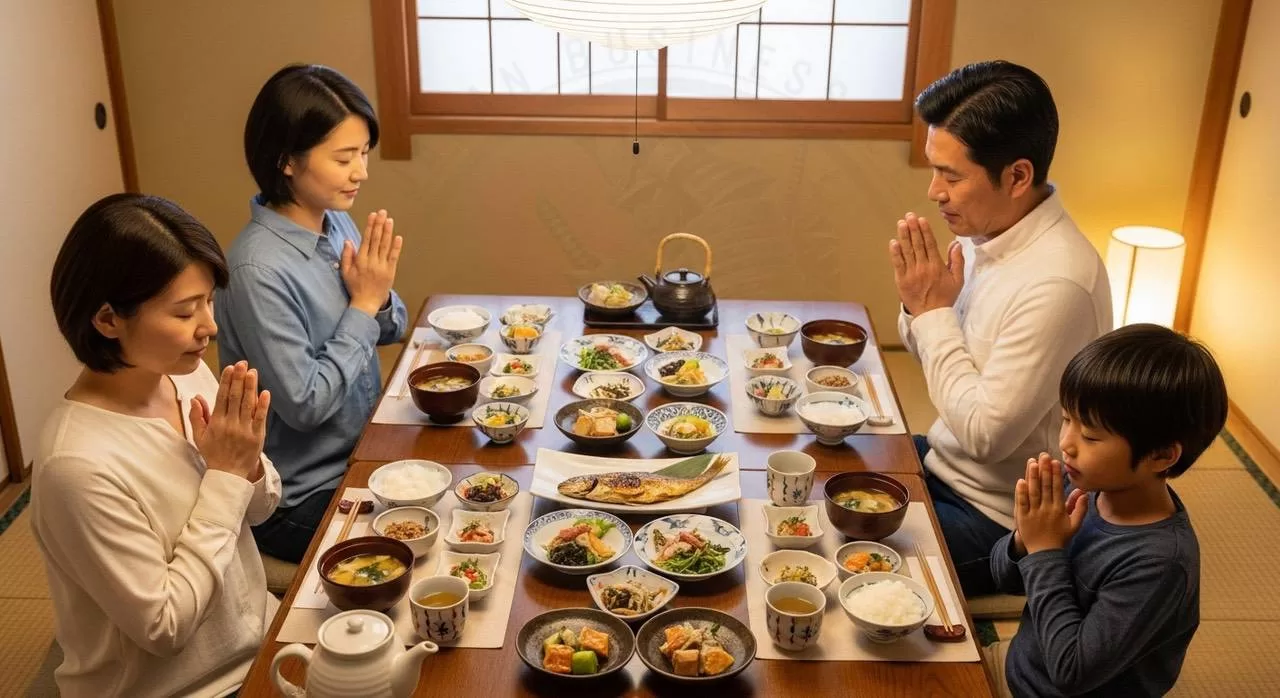
Itadakimasu: Essential Etiquette for Your Japanese Dream Life
Konnichiwa, aspiring Japan adventurers! 👋 Are you dreaming of the day you can finally stroll through Tokyo’s bustling streets, explore Kyoto’s serene temples, or enjoy a delicious meal in a cozy Japanese restaurant? Many Filipinos share this dream, and learning Japanese is your first big step. But did you know that understanding Japanese culture, especially dining etiquette, is just as important as mastering vocabulary and grammar?
As your language teacher, I often see students diligently studying phrases, but sometimes they overlook the deeper cultural nuances that make everyday interactions truly meaningful. Today, we’re going to dive into the heart of Japanese dining etiquette, focusing on two incredibly important phrases: 「いただきます」(Itadakimasu) and 「ごちそうさまでした」(Gochisousama deshita). These aren’t just polite words; they are windows into the Japanese spirit of gratitude and respect. Let’s prepare you not just to speak Japanese, but to live it! 🎉
The Heart of Japanese Dining: Itadakimasu (いただきます) 🇯🇵
When you sit down for a meal in Japan, whether it’s at a fancy restaurant, a friend’s home, or even a casual ramen shop, you’ll almost always hear people say 「いただきます」(Itadakimasu) before they start eating. While often translated simply as “Let’s eat” or “Thank you for the meal,” its true meaning is much deeper and more profound.
The word 「いただきます」 comes from the verb 「いただく」(itadaku), which is a humble way of saying “to receive.” In the context of a meal, it expresses deep gratitude for every single element that contributed to the food before you:
* **Gratitude for Life:** It acknowledges the lives of the plants and animals that gave themselves for your nourishment.
* **Gratitude for Effort:** It thanks the farmers, fishermen, cooks, and everyone involved in preparing the meal.
* **Gratitude for Blessings:** It expresses thanks for the opportunity to eat and for the sustenance provided.
It’s a moment of reflection and humility, recognizing that you are receiving a gift. This is why saying 「いただきます」 with a slight bow before eating is a common practice. It’s a silent moment of appreciation, connecting you to the food and all the efforts behind it.
💡 Teacher’s Tip: Common Filipino-Japanese Differences
In the Philippines, we might say “Kain na!” or “Let’s eat!” which is more of an invitation to start. In Japan, 「いただきます」 is less an invitation and more a personal expression of gratitude. Don’t wait for others to say it before you do, and don’t expect it to be a call to start eating in a group setting. It’s an individual expression, though often said in unison in families or schools.
Gochisousama Deshita (ごちそうさまでした): Completing the Circle of Gratitude 🙏
Just as important as saying 「いただきます」 before a meal is saying 「ごちそうさまでした」(Gochisousama deshita) after you finish. This phrase brings the circle of gratitude to a close and is equally, if not more, crucial in showing your appreciation.
The word 「ごちそう」(gochisou) literally means “a feast.” The full phrase 「ごちそうさまでした」 conveys deep thanks for the meal provided and the efforts made in preparing it. It acknowledges:
* **The Cook’s Effort:** You are thanking the person who prepared the meal for their time, skill, and care.
* **The Host’s Hospitality:** If you are a guest, it’s a direct expression of gratitude for their generosity.
* **The Restaurant’s Service:** In a restaurant, it’s a polite way to thank the staff for the food and service.
You should say 「ごちそうさまでした」 when you have finished eating, often with a slight bow, especially if you are leaving the table or exiting a restaurant. If you’re at someone’s home, you might say it directly to the host. In a restaurant, you can say it to the staff as you leave or pay.
⚠️ Common Mistake Alert: Forgetting Gochisousama!
While Filipinos are very polite, forgetting to say 「ごちそうさまでした」 might seem like you didn’t enjoy the meal or don’t appreciate the effort. It’s truly a crucial part of Japanese dining etiquette. Always make sure to say it, especially when you are a guest or leaving a restaurant. It leaves a very positive impression!
Essential Dining Etiquette Beyond the Greetings ✨
Mastering 「いただきます」 and 「ごちそうさまでした」 is a fantastic start, but there’s a world of other dining etiquette to explore that will make your experience in Japan even smoother and more respectful. Here’s a quick guide to some key points:
Basic Japanese Dining Manners You Need to Know
| Etiquette Point | What to Do/Not Do | Cultural Significance / Why |
|---|---|---|
| Chopsticks (箸 – Hashi) |
|
Shows respect for the food and avoids gestures associated with somber ceremonies. Proper use demonstrates familiarity with Japanese customs. |
| Slurping Noodles/Soup |
|
Unlike Western cultures, slurping is often a sign of appreciation for the chef and shows you’re enjoying the meal. |
| Lifting Bowls |
|
Makes it easier and neater to eat, especially with chopsticks. |
| Pouring Drinks |
|
Demonstrates consideration and respect for others, a core value in Japanese social interactions. |
| Communal Dishes |
|
Hygiene and consideration for others. |
🌸 Cultural Insight: The Art of Chopsticks
For many Filipinos, using chopsticks might be a new experience. Don’t be shy to practice! You can find many online tutorials. Mastering chopsticks shows your willingness to embrace Japanese culture, and it’s a fun skill to learn. Remember, it’s okay to ask for a fork if you’re struggling, especially in more casual settings, but trying is always appreciated!
Practical Phrases for Your Japanese Mealtime 🗣️
Beyond the core greetings, having a few handy phrases in your linguistic toolkit will greatly enhance your dining experience and interactions. Here are some essentials:
Useful Japanese Phrases for Dining Out
| Japanese Phrase | Romaji (Pronunciation Guide) | English Meaning |
|---|---|---|
| おいしいです! | Oishii desu! | It’s delicious! (Use enthusiastically!) |
| おかわりください。 | Okawari kudasai. | May I have another serving? / Refill, please. |
| すみません、お会計お願いします。 | Sumimasen, o-kaikei onegaishimasu. | Excuse me, the bill please. |
| 水ください。 | Mizu kudasai. | Water please. |
| ありがとうございます。 | Arigato gozaimasu. | Thank you very much. |
| おすすめは何ですか? | Osusume wa nan desu ka? | What do you recommend? |
| もっと食べたいです。 | Motto tabetai desu. | I want to eat more. |
| ごちそうさまでした。 | Gochisousama deshita. | Thank you for the meal. (After eating) |
Navigating Different Dining Scenarios 🏡🥢
Understanding the general rules is great, but knowing how to apply them in specific situations will make you feel more confident and less overwhelmed.
💡 Teacher’s Tip: Observe and Adapt!
The best way to learn is by observing. When you’re in Japan, pay attention to how Japanese people interact during meals. Don’t be afraid to make small mistakes; most Japanese people are very understanding and appreciate your effort to adapt!
* **At a Japanese Home (友人宅 – Yuujintaku):**
* **Gift-Giving (お土産 – Omiyage):** It’s customary to bring a small gift when visiting someone’s home, often a local specialty from your region or a sweet treat.
* **Offering Help:** Politely offer to help set the table or clear dishes, even if they decline. The offer itself is appreciated.
* **Waiting to Eat:** Wait until the host or the most senior person says 「どうぞ」(Douzo – Please) or until everyone has said 「いただきます」 before you start.
* **Compliments:** Compliment the food with 「おいしいです!」. You can even ask for a recipe if you genuinely loved it!
* **Leaving:** Before leaving, make sure to say 「ごちそうさまでした」 directly to the host. You might also add 「きょうはありがとうございました」(Kyou wa arigato gozaimashita), meaning “Thank you for today.”
* **At a Restaurant (レストラン – Resutoran):**
* **Waiting to be Seated:** In many restaurants, especially larger ones, you’ll need to wait to be seated. Look for a sign that says 「お待ちください」(Omachi kudasai – Please wait) or wait for a staff member to guide you.
* **Ordering:** Use the phrases listed above. If you’re unsure, point to the menu item.
* **Paying:** Unlike in the Philippines where you pay at your table, in most casual Japanese restaurants, you pay at the register near the exit (often marked with 「お会計」(O-kaikei) or 「レジ」(Reji – Cashier)).
* **Leaving:** As you leave, a polite 「ごちそうさまでした」 to the staff will be well received.
* **At an Izakaya (居酒屋 – Japanese Pub):**
* **Ordering Drinks First:** It’s common practice to order drinks first at an izakaya. They often come with a small appetizer called 「お通し」(otooshi), which is typically charged.
* **Sharing Dishes:** Izakayas are designed for sharing various small dishes (tapas-style). Order a few at a time and share with your group.
* **Kanpai! (乾杯!):** This is the Japanese equivalent of “Cheers!” Make eye contact and say it with enthusiasm when raising your glass.
* **Otsukaresama Deshita! (お疲れ様でした!):** This phrase means “You’ve worked hard!” or “Good job!” and is frequently used to acknowledge the day’s efforts, often said when colleagues gather after work. It can also be used as a general toast.
By familiarizing yourself with these scenarios and phrases, you’ll not only enjoy your meals more but also show immense respect for Japanese customs. This effort goes a long way in building connections and truly experiencing the culture.
Conclusion: Embrace the Journey, One Meal at a Time! 🎉
Learning Japanese etiquette, from the profound meaning of 「いただきます」 to the proper use of chopsticks, is a fascinating and rewarding part of your journey towards life in Japan. It’s not about perfection, but about showing respect, gratitude, and an open heart to a new culture. Every time you say 「いただきます」 or 「ごちそうさまでした」, you’re not just speaking words; you’re connecting with centuries of Japanese tradition and values.
So, keep practicing your Japanese, immerse yourself in the culture, and don’t be afraid to make a few polite mistakes along the way. Your dream life in Japan is within reach, and with each meal, you’re one step closer to truly belonging. Gambatte kudasai! (Good luck!) We’re here to support you every step of the way! ✨
Contact & Follow Us
お問い合わせ
📞 電話: +63 997 093 4550
📧 メール: samuraijapan.bc@gmail.com
🏠 住所: Room D3, Freb Bldg, Villa Donata Subd, Muntinlupa
🏢 会社名: SAMURAI Japan Business Center Inc.
SNSでフォロー
🎵 Tiktok: @samuraijapan0221
📸 Instagram: @samuraijapan.bc
▶️ Youtube: @SamuraiJapan-bc
📘 Facebook: Visit our Page

Leave a Reply