

Hanami Guide: Make Your Japan Cherry Blossom Dream Come True! 🌸🎌
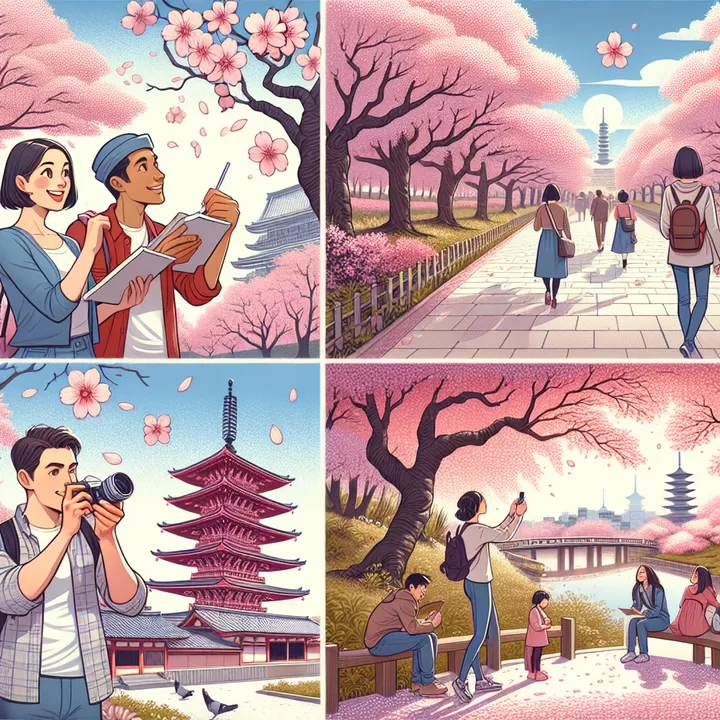
Konnichiwa, aspiring Nihongo learners and future Japan adventurers! 🤩 Are you dreaming of the day you’ll finally walk beneath a canopy of soft pink and white petals in Japan? For many Filipinos, witnessing the sakura (cherry blossoms) is a top-of-the-list dream, and rightfully so! Hanami, or cherry blossom viewing, is more than just a picnic; it’s a profound cultural experience that embodies the beauty, transience, and communal spirit of Japan. As your language teacher, I’m thrilled to guide you through making this dream a reality. Let’s learn how to fully embrace this magical season, understand its etiquette, and even pick up some useful Japanese phrases along the way!
💡 Teacher’s Tip:
Many of my students ask, “Sensei, when is the best time to see the sakura?” Remember that peak bloom varies slightly each year and by region! Being flexible with your travel dates is key. Start checking forecasts around January or February!
What is Hanami? More Than Just a Picnic! 🌸
Hanami (花見), literally meaning “flower viewing,” is one of Japan’s most cherished annual traditions. It’s a time when friends, families, and colleagues gather under blooming cherry trees to enjoy food, drinks, and good company. But beyond the festive atmosphere, Hanami holds a deeper cultural significance. The fleeting beauty of the sakura, blooming for only about one to two weeks, symbolizes the concept of 「もののあわれ」(mono no aware) – the gentle sadness or pathos of the impermanence of things. It reminds us to cherish the present moment.
It’s truly a sight to behold, especially when the petals start to fall, creating a “snowfall” of pink known as 「桜吹雪」(sakura fubuki). Experiencing this first-hand is an unforgettable moment that connects you deeply with Japanese culture.
When & Where to Catch the Bloom? 🗺️🗓️
The cherry blossom season typically sweeps across Japan from south to north, starting in late March in warmer regions like Kyushu and Shikoku, reaching Tokyo and Kyoto in early April, and then moving up to Tohoku and Hokkaido later in April or even early May.
🌸 Key Hanami Period Reminders 🌸
-
Timing is Everything:
Peak bloom for a specific tree lasts only about one week. Plan your visit to maximize your chances!
-
Follow Forecasts:
Check reliable sources like the Japan Meteorological Agency (JMA) or private weather sites for their annual sakura forecasts, usually released from January to March. Search for “Japan Cherry Blossom Forecast [Year]” online!
-
Popular Spots Get Crowded:
Famous spots like Ueno Park in Tokyo or Maruyama Park in Kyoto can be incredibly packed. If you prefer a calmer experience, look for local parks or riverside paths.
💡 Popular Hanami Spots (Examples) 💡
| City | Recommended Spot | Highlight |
|---|---|---|
| Tokyo | Ueno Park, Shinjuku Gyoen National Garden | Vibrant atmosphere (Ueno), serene landscapes (Shinjuku Gyoen). |
| Kyoto | Philosopher’s Path, Maruyama Park | Romantic canal walk (Philosopher’s Path), iconic weeping cherry tree (Maruyama Park). |
| Osaka | Osaka Castle Park, Kema Sakuranomiya Park | Castle backdrop, riverside views with thousands of trees. |
Hanami Essentials: What to Pack! 🧺📸
To have the perfect Hanami experience, you’ll need to come prepared. Think of it like a picnic, but with a touch more Japanese sensibility!
-
Blue Picnic Sheet (Aoi Sheet):
This is a must-have! You’ll see everyone sitting on these. You can buy them at 100-yen shops, convenience stores, or hardware stores. Get one big enough for your group. Remember, space can be competitive, especially on weekends!
-
Delicious Food & Drinks:
Japanese people love to bring elaborate homemade お弁当 (obento – lunch boxes), but you can also buy ready-made bentos, sushi, fried chicken, and more from department stores (depachika), supermarkets, or convenience stores. Don’t forget some snacks (お菓子 – okashi) and beverages! Alcohol (like sake or beer) is often enjoyed responsibly.
-
Trash Bags:
This is incredibly important! Many parks don’t have public trash bins to prevent overflowing. You are expected to take all your trash with you when you leave. Being prepared shows respect for the environment and local customs. 「ゴミは持ち帰りましょう」(Gomi wa mochikaerimashou) – Let’s take our trash home.
-
Warm Clothing/Blanket:
Even if it’s sunny during the day, spring evenings can get surprisingly chilly, especially when sitting on the ground for a long time. A light jacket, scarf, or even a small blanket will keep you comfortable.
-
Camera/Phone:
You’ll want to capture the breathtaking beauty! Ensure your devices are fully charged.
Hanami Etiquette: Being a Respectful Guest 🤝
Japanese culture places a high value on respect for others and public spaces. Following Hanami etiquette ensures a pleasant experience for everyone.
| Dos ✅ | Don’ts ⚠️ |
|---|---|
| ✅ Arrive early to secure a good spot, especially on weekends. | ⚠️ Don’t damage the trees. Never climb them, shake branches, or pick flowers. |
| ✅ Bring your own trash bags and take all your garbage with you. | ⚠️ Don’t leave any trash behind. This is a major rule of thumb in Japan. |
| ✅ Be mindful of noise levels, especially if listening to music or chatting loudly. | ⚠️ Don’t play loud music or use microphones/speakers that disturb others. |
| ✅ Enjoy responsibly if consuming alcohol. | ⚠️ Don’t bring your own BBQ grills or fireworks to most public parks. Check park rules. |
| ✅ Use designated toilets and keep them clean. | ⚠️ Don’t block pathways or other people’s views. |
⚠️ Common Mistake Alert for Filipinos:
In the Philippines, it’s common for big groups to be very lively and loud, especially during celebrations. In Japan, while Hanami is a celebration, it’s generally more subdued. Keep your volume in check to avoid disturbing others. Also, always remember the trash rule; it’s one of the most important unspoken rules in Japanese public spaces!
Essential Japanese Phrases for Hanami! 🗣️🇯🇵
Knowing a few key Japanese phrases will not only make your Hanami experience smoother but also show your respect and appreciation for the local culture. Here are some phrases to practice:
-
1. 「桜がとてもきれいですね!」(Sakura ga totemo kirei desu ne!)
Meaning: “The cherry blossoms are so beautiful, aren’t they!” (A great ice-breaker or observation.)
-
2. 「花見に行きましょう!」(Hanami ni ikimashou!)
Meaning: “Let’s go for Hanami!” (Use this to invite friends.)
-
3. 「ここ、いいですか?」(Koko, ii desu ka?)
Meaning: “Is this spot okay?” (To politely ask if a spot is free or if you can join.)
-
4. 「乾杯!」(Kanpai!)
Meaning: “Cheers!” (When you raise your drink.)
-
5. 「ありがとうございます!」(Arigatou gozaimasu!)
Meaning: “Thank you very much!” (Always useful!)
-
6. 「楽しいですね!」(Tanoshii desu ne!)
Meaning: “It’s fun, isn’t it!” (Expressing enjoyment.)
Practice these phrases! Even a little Japanese goes a long way in connecting with the local culture and people. Don’t be afraid to try!
Embrace the Moment: Your Hanami Dream Awaits! ✨
Hanami is truly a unique and unforgettable experience. It’s a chance to witness Japan at its most picturesque, to partake in a centuries-old tradition, and to connect with nature and community. As you prepare for your future in Japan, remember that learning the language opens doors, but understanding and respecting the culture makes your experience truly rich.
My advice as your language teacher? Immerse yourself fully! Don’t just look at the flowers; feel the atmosphere, observe the people, and try to understand the deeper meaning behind this beloved tradition. Take lots of photos, but also take moments to simply breathe in the crisp spring air and enjoy the fleeting beauty around you.
Your dream of experiencing Hanami in Japan is absolutely within reach! Keep studying, keep dreaming, and soon you’ll be among the sakura, creating beautiful memories. Ganbatte! (Good luck!) 🎉
Contact & Follow Us
お問い合わせ
📞 電話: +63 997 093 4550
📧 メール: samuraijapan.bc@gmail.com
🏠 住所: Room D3, Freb Bldg, Villa Donata Subd, Muntinlupa
🏢 会社名: SAMURAI Japan Business Center Inc.
SNSでフォロー
🎵 Tiktok: @samuraijapan0221
📸 Instagram: @samuraijapan.bc
▶️ Youtube: @SamuraiJapan-bc
📘 Facebook: Visit our Page
