

Must-Visit Scenic Spots in Japan! A Guide to Traditional, Modern, and Natural Wonders
いつか訪れたい日本の絶景!
Hello everyone! This is SAMURAI Japan Business Center Inc.
As you learn Japanese words and conversations, have you ever imagined, “What kind of places use these words?” Knowing the landscapes and culture of the country where a language originated can make learning more realistic and enjoyable.
Japan is a country with diverse faces from north to south. Ancient capitals rich in history, cutting-edge mega-cities, and breathtakingly beautiful nature. This time, we will take you on a journey through some of Japan’s most representative and appealing tourist destinations that you’ll want to visit someday.
1. Kyoto (京都) – The Heart of Tradition Where a Thousand-Year Capital Breathes
If you want to experience Japan’s “tradition” (伝統) firsthand, Kyoto is the first place to visit. As the capital of Japan for over a thousand years starting from 794, simply walking through this city makes you feel as if you’ve stepped back in time.
Kinkaku-ji (金閣寺): Formally known as Rokuon-ji (鹿苑寺). As its name suggests, the Golden Pavilion (舎利殿 – shariden) shines brilliantly, its reflection in the pond meticulously calculated. With the changing seasons, from snowy landscapes to fresh greenery and autumn foliage, it reveals a different beauty with each visit.
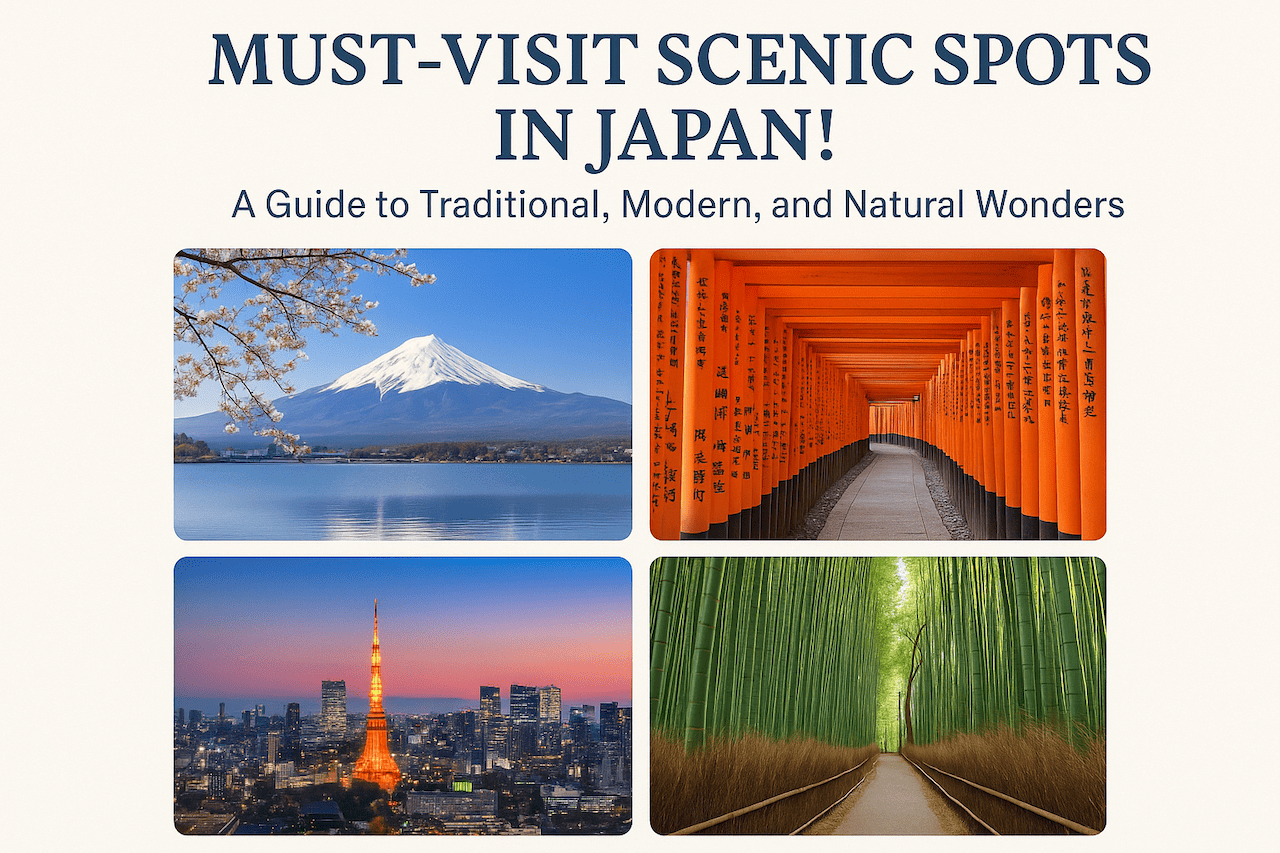
Fushimi Inari Taisha (伏見稲荷大社): This is the head shrine of the approximately 30,000 Inari shrines across Japan. Particularly famous is the “Senbon Torii” (千本鳥居), a tunnel formed by thousands of vermilion torii gates donated to wish for prayers to “pass through.” This fantastical sight, symbolizing Japan, captivates people worldwide.
In Kyoto, you can also wear beautiful kimono and stroll through the old streets, fully immersing yourself in Japan’s traditional beauty.
2. Tokyo (東京) – A Megacity Where Tradition and Future Intersect
The city symbolizing Japan’s “modernity” (近代) and “future” (未来) is the capital, Tokyo. This megalopolis, home to one of the world’s largest populations, is an energetic place that constantly generates new cultures and trends, while also carefully preserving its history dating back to the Edo period.
Shibuya (渋谷): A hub for Japanese youth culture and trends. The “Scramble Crossing” (スクランブル交差点), where people cross from all directions simultaneously when the light turns green, is famously emblematic of Tokyo’s energy. The surrounding area is bustling with the latest fashion, music, and gourmet delights.
Asakusa (浅草): While located in Tokyo amidst towering skyscrapers, this area retains the charm of old Japan. Passing through the “Kaminarimon” (雷門), marked by its large red lantern, leads to Nakamise-dori (仲見世通り), which stretches towards Senso-ji Temple (浅草寺), the oldest temple in Tokyo. Traditional sweets and small Japanese articles are sold here, making it a lively and popular spot.
The great appeal of Tokyo lies in its ability to offer a glimpse into both the cutting-edge future and the nostalgic past within a single city.
3. Mount Fuji (富士山) – Majestic Nature, the Soul of Japan
Indispensable when discussing Japan’s “nature” (自然) and “soul” (魂) is Mount Fuji (富士山). As Japan’s highest mountain (3,776 meters above sea level), its elegant and symmetrical form has long been an object of worship for the Japanese and a motif for numerous works of art.
In 2013, it was registered as a UNESCO World Cultural Heritage site, its value recognized not just as a natural heritage, but also for its cultural aspects as a “sacred place and source of artistic inspiration.”
The allure of Mount Fuji isn’t only in admiring its beautiful form from afar. At its base, there are five beautiful lakes known as the “Fuji Five Lakes” (富士五湖 – Fujigoko), and the “inverted Fuji” (逆さ富士 – sakasa Fuji) reflected on their surfaces is particularly renowned for its beauty. The surrounding area also offers activities to enjoy the magnificent nature, such as camping and hiking.
4. Hokkaido (北海道) – Northern Paradise Woven with Vast Lands and Seasons
Hokkaido (北海道) is Japan’s northernmost large island. It boasts vast and grand nature, different from that of Honshu. While it experiences harsh winters, its summers are less humid and comfortable, allowing visitors to enjoy entirely different breathtaking landscapes with each of the four seasons.
Winter in Sapporo (札幌): In Sapporo, Hokkaido’s central city, the “Sapporo Snow Festival” (さっぽろ雪まつり) is held every year in early February. Visitors from around the world come to this festival, where intricate snow and ice sculptures of various sizes are created, transforming the entire city into a fantasy world of white and light.
Summer in Furano (富良野): A representative summer landscape of Hokkaido is the lavender fields of Furano. From mid to late July, the hills are dyed purple like a carpet, and a pleasant fragrance is carried on the wind. The scenery, with not only lavender but also various colorful flowers in full bloom, is like a painting.
Rich culinary culture, including fresh seafood, dairy products, and delicious vegetables, is also one of Hokkaido’s great attractions.
Conclusion
How was it? The places introduced this time are just a small fraction of Japan’s numerous attractions. Each region has its own unique history, culture, and dialect, and the more you learn, the more you will be surprised by Japan’s diversity and depth.
By studying Japanese at SAMURAI Japan Business Center Inc., when you eventually visit these places, being able to read signs and engage in simple conversations with locals will make your travel experience many times deeper and more memorable.
Through language learning, let your thoughts wander to Japan’s beautiful landscapes. It will surely further boost your motivation to learn.
Contact & Follow Us
お問い合わせ
📞 電話: +63 997 093 4550
📧 メール: samuraijapan.bc@gmail.com
🏠 住所: Room D3, Freb Bldg, Villa Donata Subd, Muntinlupa
🏢 会社名: SAMURAI Japan Business Center Inc.
SNSでフォロー
🎵 Tiktok: @samuraijapan0221
📸 Instagram: @samuraijapan.bc
▶️ Youtube: @SamuraiJapan-bc
📘 Facebook: Visit our Page
